REVIEW · AREQUIPA
Arequipa Tasting Tour
Book on Viator →Operated by Evaristravel Agencia de turismo · Bookable on Viator
Arequipa’s best flavors come with a history walk. This 3.5-hour, small-group tour strings together classic downtown landmarks and the food you actually want to try, ending with a pisco tasting at Centro Artesanal Fundo el Fierro.
I really like how the route moves at a human pace, with short stops that help you connect the dots between plazas, churches, and daily life. Two highlights for me are the Mercado San Camilo food sampling (where the market energy makes the tastings feel natural) and the way the Jesuit sites add context without turning the tour into a lecture.
One drawback to consider: it’s a longer walking day, and the tastings happen more at the end than you might expect if you’re hoping for lots of food early. If you get cranky after an hour of stone-and-stories, plan for that.
In This Review
- Key things to know before you go
- A Small-Group Arequipa Tasting Walk That Actually Feels Local
- Price and timing: how $13 feels like value here
- Meeting point and route logic in the Arequipa center
- Plaza Campo Redondo: the first stop that sets the story tone
- San Francisco Plaza and the Santa Catalina pass-by moment
- Plaza de Armas: founding myths, earthquake changes, and where to orient
- Iglesia de la Compañía de Jesús: baroque façade, gold-leaf altars
- Mercado San Camilo: the food stop that turns history into dinner plans
- Cloisters of the Company: viceroyal-era religious architecture on foot
- Pisco tasting and local sweets at Fundo el Fierro
- What’s included (and what you should bring) for an easy experience
- Guides, questions, and why people seem to remember this one
- Who this tour suits best (and who might want a different option)
- Should you book the Arequipa Tasting Tour?
- FAQ
- How long is the Arequipa Tasting Tour?
- How much does the tour cost?
- Where do I start and where does the tour end?
- What’s included in the tastings?
- Are there entrance tickets to pay for the stops?
- How many people are on the tour?
- What should I do if I booked for the afternoon?
- Is the tour ever canceled for weather?
Key things to know before you go
- Max 8 travelers means more questions, less waiting, and a tour that feels personal even when you’re new to Arequipa
- Plazas + churches first, food-market next so the history sets up what you’ll snack on later
- Mercado San Camilo is the centerpiece for tasting locally sold produce, meats, fruits, and prepared treats
- Jesuit architecture focus includes the baroque façade and gold-leaf altars you’ll notice right away
- Pisco tasting at Fundo el Fierro wraps the whole experience with a local lesson and samples
- Moderate fitness works for most people, but you’ll still walk through Arequipa’s center for hours
A Small-Group Arequipa Tasting Walk That Actually Feels Local
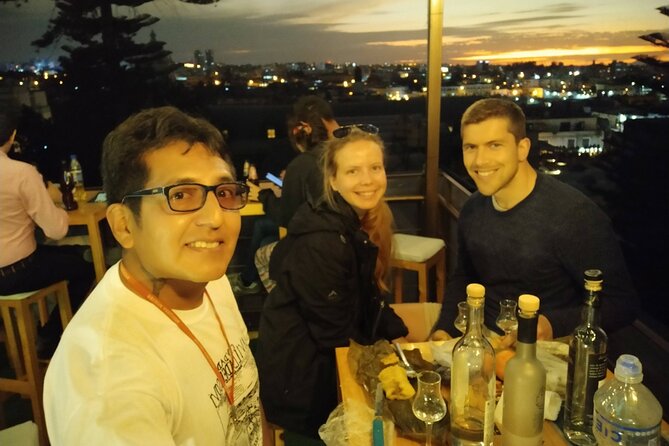
This tour is built for people who want more than a photo stop list. You get the classic Arequipa landmarks in the city center, but the route is also timed around eating opportunities—especially at the market.
The group size matters. With a maximum of 8 travelers, you’re not stuck watching the guide talk over a crowd, and you’re more likely to get answers to the random questions that pop up when you’re looking at old churches and trying to decode what you’re seeing.
I also like the balance: you’re not just getting a history shuffle, and you’re not just chasing snacks either. It’s the combination—architecture, city story, then food—that makes the tastings feel tied to place rather than random.
Price and timing: how $13 feels like value here
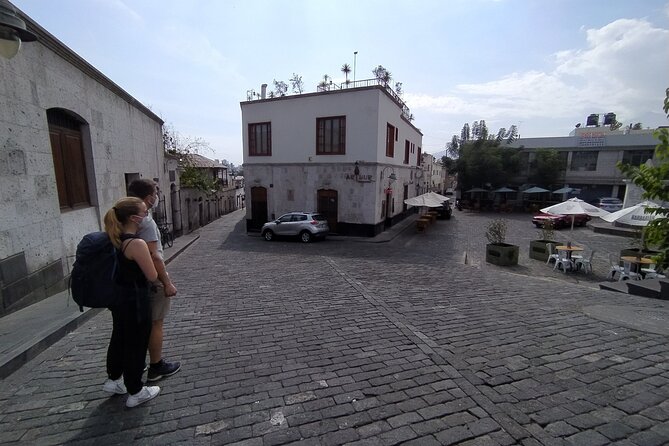
At about $13 per person for roughly 3 hours 30 minutes, the big value is what you get for the price. The tour includes a pisco tasting, a traditional dessert, and local fruits—plus it’s paired with a guided walk through multiple major sights.
You’re also getting a practical trade-off: the tour is long enough to feel like a real introduction, but short enough that you still have time to explore on your own afterward. Guides running this kind of tour tend to spend that time doing what most first-timers need most: explaining what you’re looking at and pointing out where to go next.
The pacing detail to remember: there’s a lot packed into the first half of the walk, while the tasting portion comes later. That can be perfect if you enjoy learning and snacking in sequence, but it’s not ideal if your top priority is immediate food.
Meeting point and route logic in the Arequipa center
You start at Plaza de Armas Arequipa (Arequipa 04001, Peru). The tour finishes at Plaza San Francisco (C. Zela 202, Arequipa 04001, Peru), and the tastings take place at the nearby Centro Artesanal Fundo el Fierro.
This matters because you’ll finish in an area where it’s easy to keep exploring without scrambling for transport. It’s also convenient for orientation: Arequipa’s downtown is walkable, and the route threads through the key squares that you’ll see again on your own.
Expect frequent short stops. The tour is structured around quick “look and understand” moments, not long museum-style waits. That keeps energy up, but it also means comfortable shoes are not optional.
Plaza Campo Redondo: the first stop that sets the story tone
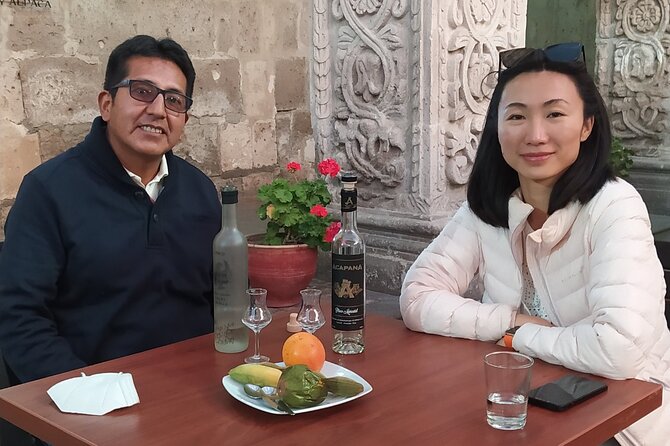
Your first stop is Plaza Campo Redondo, described as a traditional neighborhood and the first place where the conquerors settled when they arrived in the area. It’s a quick stop (around 10 minutes), but it gives you a baseline for how the city’s story is framed.
I like starting here because it primes you to notice how Arequipa’s identity is layered—Spanish-era settlement patterns over older geography, then later changes through time. Even if you’re not obsessed with early colonial history, the guide’s framing helps the rest of the walk make sense.
San Francisco Plaza and the Santa Catalina pass-by moment
Next you head to San Francisco Plaza, Church and Monastery. Before arriving, the tour passes by the Santa Catalina Convent area and the street of the same name, then continues to the imposing structures around Plaza de San Francisco.
This stop is about more than a single building. You’re looking at an architectural cluster and an artisan context too, since the tour mentions the Fundo el Fierro artisan center as part of what you’ll appreciate in this zone.
If you enjoy “walk-and-look” sightseeing, you’ll appreciate how this portion is designed: you see enough that you can later identify pieces on your own map, but you’re not stuck in one spot.
One practical note: churches and monasteries mean shade, stone, and sometimes uneven ground. Bring layers, even if the sun is strong earlier in the day.
Plaza de Armas: founding myths, earthquake changes, and where to orient
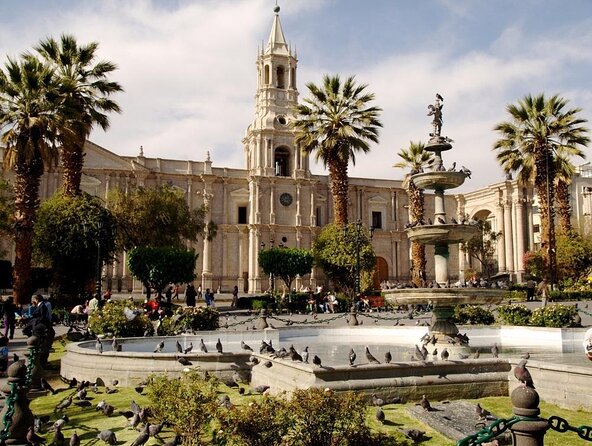
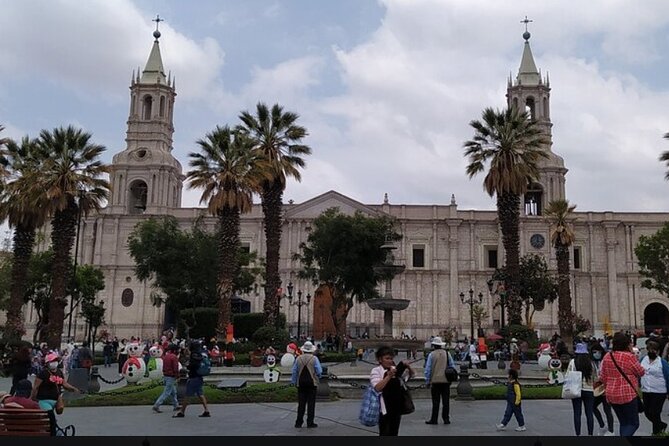
At Plaza de Armas, the group meeting point is also the city’s big stage. You get a talk about the city’s founding, how it changed over time because of earthquakes, and what you should notice about the Cathedral and the surrounding details.
This is a key stop because Plaza de Armas is your visual anchor. After this, you’ll understand why you keep seeing the same style cues and street patterns in the streets radiating outward.
I also like the earthquake angle. It’s not just tragedy for its own sake—it’s an explanation of how the city got shaped, rebuilt, and re-claimed its look over time. When you hear that context before visiting the religious complexes, the buildings feel less random.
Iglesia de la Compañía de Jesús: baroque façade, gold-leaf altars
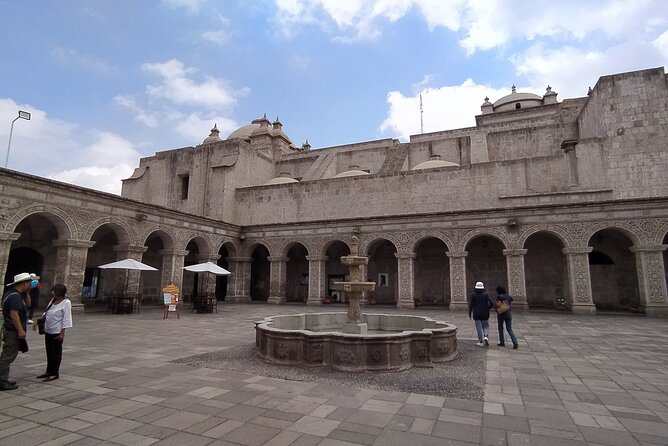
On one side of Plaza de Armas sits the old complex of the Company of Jesus, including the Church and Cloisters. The church is known for its baroque façade, while inside it’s described as having a more sober interior and altars covered in gold leaf.
This stop is short (about 10 minutes), but it’s designed to hit your senses quickly. Outside, the façade gives you immediate wow. Inside, the contrast helps you understand why people traveled across regions for these religious centers.
If you love art details, spend the extra few seconds the guide gives you to look directly at the altars. It’s the kind of thing you can miss if you’re just walking through.
Mercado San Camilo: the food stop that turns history into dinner plans
The heart of the tasting experience is Mercado San Camilo. The tour spends about 30 minutes here, and the market is described as one of Peru’s most varied and interesting markets.
What you’re looking for is exactly what you’d want on a food-focused trip: tubers, meats, fruits, and the kinds of everyday products people actually buy and cook with. This is not a “look but don’t touch” environment. The tastings here help you interpret what you saw earlier in the city—Arequipa isn’t only monuments; it’s also kitchens.
I think the market stop is the main reason so many people rate this tour so highly. It turns the walking tour into something you can taste, and it’s where local food diversity stops being theory.
If you have allergies or strong dislikes, this is the moment to speak up. The tour includes fruit and dessert, and the market tastings can include more than one thing on the table.
Cloisters of the Company: viceroyal-era religious architecture on foot
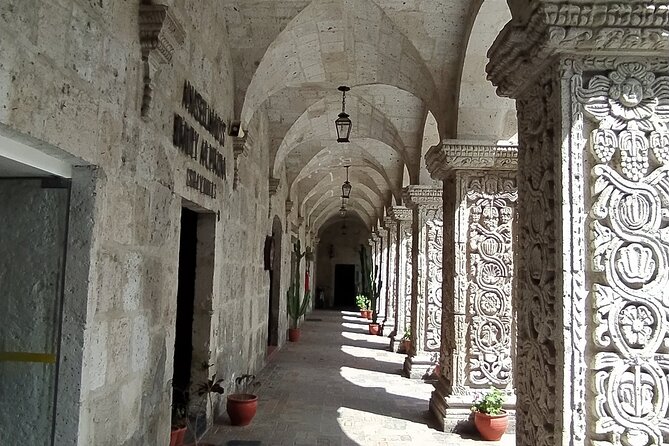
After the market, you visit the Cloisters of the Company, described as the former Jesuit school and convent. This part gets around 40 minutes, making it the longest “sight” block aside from the market.
The emphasis here is on religious viceroyal architecture in Arequipa. It’s a different vibe than the market. Expect quieter corridors, stone surfaces, and a more reflective pace.
I like this segment because it gives the tour a second emotional mode. After food, you get calm. After streets full of movement, you get stillness. That rhythm makes the final pisco tasting feel like a reward instead of a random add-on.
Pisco tasting and local sweets at Fundo el Fierro
The tour ends back in the Centro Artesanal Fundo el Fierro, where the pisco tasting takes place. This is where the experience becomes explicitly about local flavor, not just local context.
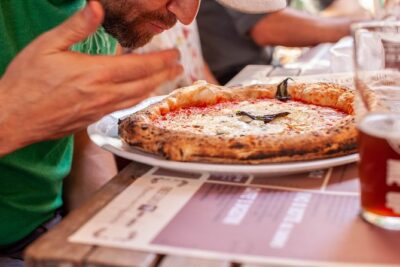
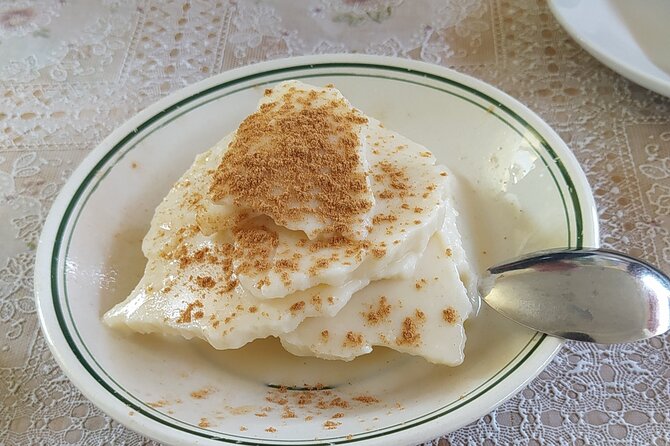
You’re also included for a traditional dessert and local fruits as part of the tasting. In several accounts of the experience, people specifically highlight trying queso helado alongside pisco, with the pisco portion framed as a real lesson—not just a quick sip.
If you’re thinking about what to do after, this ending is helpful. You finish where the artisan and tasting atmosphere is already happening, so you can stay longer if you want or head out for dinner without feeling like you’re rushing to the next thing.
One small thing to plan for: bottled water isn’t included. Even if you’re not a heavy sweater, a market-and-church walk can be thirsty work. Grab water before you start, or plan to buy it near the plazas.
What’s included (and what you should bring) for an easy experience
Included:
- Pisco tasting
- Traditional dessert
- Local fruits
Not included:
- Bottled water
- Soda/pop
- Lunch
- Entrance tickets (with many stops listed as admission ticket free, but it’s safer to assume you may pay only if something applies beyond the listed stops)
You’ll also want to eat smart based on the tour’s schedule note: for afternoon tours, it’s recommended you’ve already had lunch beforehand. Even on a shorter afternoon schedule, the walk plus tastings can still feel like a full experience.
Bring:
- Comfortable walking shoes (you’re walking multiple stops over 3+ hours)
- Sun protection (it’s Arequipa; you’ll feel it)
- Water (since bottled water isn’t included)
- A light layer for inside churches if you get cold in shade
Guides, questions, and why people seem to remember this one
The tour’s small group setup makes a difference in the guide style. Named guides like Jose, Daniel, and Jorge are mentioned in accounts of the experience, and a recurring theme is responsiveness—people get answers, and the guide keeps explaining what you’re seeing.
It also helps that the itinerary focuses on repeatable big ideas. Founding and rebuilding due to earthquakes. Jesuit architecture and religious art. Then the market as a real snapshot of what people eat and buy.
If you like talking with a guide, this setup makes it easier. If you prefer silent, head-down sightseeing, you’ll still get the basics, but you may find the story portion takes up time.
Who this tour suits best (and who might want a different option)
This is a strong pick for:
- First-time visitors to Arequipa’s downtown
- Food lovers who want the market as the main tasting moment
- People interested in architecture and religious sites but who also want the day to end with real local flavor
It may not be the best match if:
- You want heavy food sampling early (the tastings land closer to the end)
- You want a purely gastronomy-only tour with minimal history
Fitness-wise, the tour asks for moderate physical fitness. That doesn’t mean hard hiking, but it does mean you’ll be on your feet for long stretches.
Should you book the Arequipa Tasting Tour?
Yes—if you want an efficient introduction to Arequipa that ends with real local tastes. The market stop plus pisco tasting gives you a payoff, and the short, focused sight stops keep the day moving without feeling like a single long museum.
Book it sooner rather than later if you can. On average, this tour is booked about 13 days in advance, and it caps at 8 travelers, so popular times can fill.
Skip this one (or look for a food-forward alternative) if your priority is eating right away. The format is history-first, market-second, tastings-last, and it’s long enough that you’ll feel the walking before you feel the sugar-and-pisco.
If you match the vibe—curious about what you see, willing to walk, excited to finish with pisco—this tour is priced like it’s meant to be your Arequipa starter pack.
FAQ
How long is the Arequipa Tasting Tour?
It runs for about 3 hours 30 minutes (approx.).
How much does the tour cost?
The price is $13.00 per person.
Where do I start and where does the tour end?
You start at Plaza de Armas Arequipa and end at Plaza San Francisco. The pisco tasting happens at Centro Artesanal Fundo el Fierro.
What’s included in the tastings?
The tour includes pisco tasting, a traditional dessert, and local fruits.
Are there entrance tickets to pay for the stops?
Entrance tickets are listed as not included, but the specific sight stops are shown as having free admission tickets. If any additional entry is required on the day, it would fall outside what’s included.
How many people are on the tour?
The tour has a maximum of 8 travelers.
What should I do if I booked for the afternoon?
It’s recommended that you have lunch beforehand for afternoon tours.
Is the tour ever canceled for weather?
Yes. It requires good weather. If it’s canceled due to poor weather, you’ll be offered a different date or a full refund.
If you want, tell me your travel dates and whether you’re more into food or architecture, and I’ll help you decide if this pacing matches your style.