REVIEW · PETALING JAYA
Eat Like a Local: Kuala Lumpur Hawker Center and Street Food Tour by Night
Book on Viator →Operated by Food Tour Malaysia · Bookable on Viator
Street food is KL’s real front door. This small-group night tour is interesting because an English-speaking guide picks dishes for you, plus you learn the customs while hopping between stops on air-conditioned transport. I especially like the order-your-wayout setup (no menu panic), and the way guides like Charlie bring food and culture together with real energy. One thing to consider: it’s a non-halal tour, so check your dietary comfort before you book.
You’ll start at the Taman Paramount LRT area in Petaling Jaya, then head into Kuala Lumpur’s food neighborhoods for about four hours. The result is an evening where you eat a lot, move at a sane pace, and get enough context to order confidently later on your own.
In This Review
- Key things to know before you go
- A Night Market Mindset: Why KL Hawkers at 7pm Work
- Meeting Point at PJ297 Taman Paramount and the AC Van Advantage
- Stop 1: Brickfields Little India Street Snacks and Deepavali Atmosphere
- Mamak, Malay Warungs, and South Indian Plates: The Guide Solves the Menu Problem
- Hawker Centers Open-Air and Late-Night Rhythm: Where Chinese Comfort Food Shows Up
- Street Food Order-Style Tastings: Nasi Lemak, Ondeh Ondeh, and More
- What Non-Halal Means for Your Planning (and How to Stay at Ease)
- Price and Logistics: Is $62 Actually Good Value
- Who This Tour Fits Best in Kuala Lumpur
- Should You Book This Eat Like a Local Night Tour?
- FAQ
- What is the tour duration?
- Where do I meet for the tour?
- What time does the tour start?
- How much does the tour cost?
- What’s included in the price?
- Is alcohol included?
- Is this tour halal?
- How big is the group?
- Is there a cancellation policy and what affects it?
Key things to know before you go
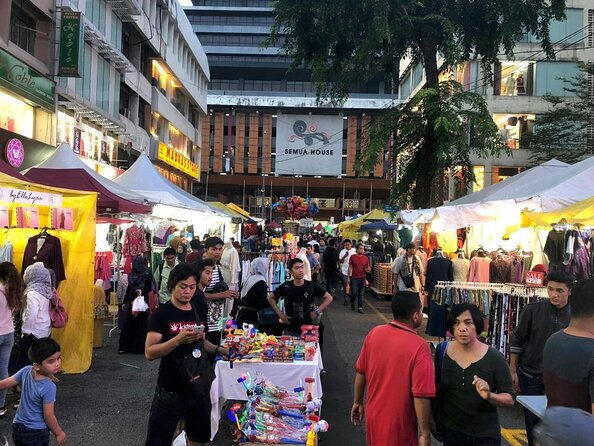
- Guide-selected dishes so you can focus on tasting instead of translating menus
- Air-conditioned transport between stops, which matters in Malaysia at night
- Cross-cultural food stops that can include mamak, Malay warungs, South Indian, and Chinese stalls
- Late-night hawker center rhythm at open-air food courts where locals actually keep eating
- Desserts and classics you might try like ondeh ondeh and even fried ice cream
A Night Market Mindset: Why KL Hawkers at 7pm Work
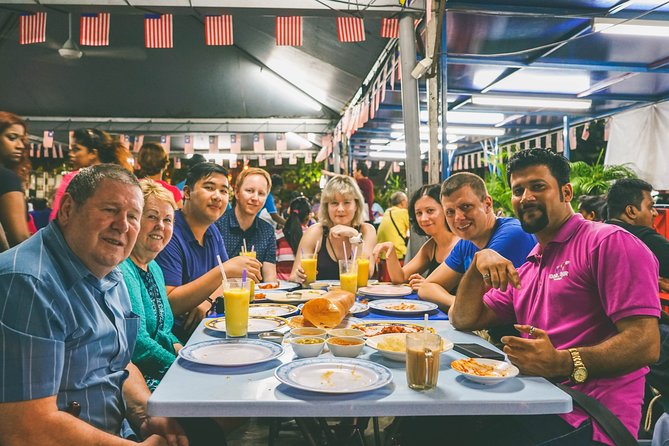
This tour is built around an idea that makes sense in Kuala Lumpur: night is when street food feels social, not rushed. You’re not just grabbing one snack and calling it a day. Instead, the plan strings together multiple styles of Malaysian food, so you can compare flavors across communities in one evening.
I like that you’re not left to “wing it.” The guide handles the ordering, and you get small lessons as you go. That means you’re more likely to taste what locals reach for, not just what looks safe on a first pass.
The other big plus is pacing. You’ll be walking some, but you’re also using air-conditioned rides between stops. That keeps the experience comfortable and helps if you’re sensitive to heat and humidity, even in the evening.
Meeting Point at PJ297 Taman Paramount and the AC Van Advantage
You meet at PJ297 LRT Taman Paramount in Petaling Jaya. The start time is 7:00 pm, and you’ll use public transportation nearby. Because hotel pickup isn’t included, arriving on time from where you’re staying matters a bit more than on tours that collect everyone.
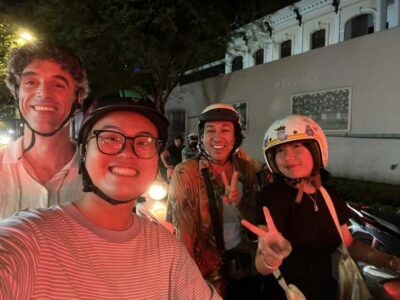
The tour includes round-trip transport between your original meeting point and the tour area, and the movement between food stops is done by air-conditioned vehicle. Based on the way the evening runs, that matters more than it sounds. You’ll cover neighborhoods without feeling like the tour is mostly transit.
Group size is also part of the value equation. The activity caps at 16 travelers, and each booking has a minimum of 2 and a maximum of 4. That typically means you get a small-group feel without the tour becoming too tight to move.
Practical tip: bring an empty stomach in the real sense. This isn’t a “one bite per stop” plan. Your guide is feeding you, and the pacing assumes you’ll keep going.
Stop 1: Brickfields Little India Street Snacks and Deepavali Atmosphere
The itinerary begins in Little India, Brickfields. Expect a scene that’s all sound and motion, the kind of place where you can’t fully process it from a distance. This part of the tour gives you a visual and sensory baseline before you start comparing other cuisines.
You spend about one hour here. That time window is long enough to get your bearings and actually enjoy what you’re trying, not just walk past it. You’ll likely see the South Indian restaurant energy and the Chinese coffee shop side of the neighborhood too, since Brickfields is where those food traditions sit close together.
A unique detail: on some nights, this area may be preparing for Deepavali. Even if you don’t follow every festival detail, you’ll feel the atmosphere in the street-level activity, and it adds context to why these food places matter to real community life.
What you’re learning in this stop is not just what to eat, but how people structure an evening meal out in public: you graze, you share, you order what makes sense for the moment, and you keep it moving.
Mamak, Malay Warungs, and South Indian Plates: The Guide Solves the Menu Problem
After Brickfields, the route typically shifts into other neighborhoods, often including areas like Bangsar or food stops around Petaling Jaya. The menu possibilities are where this tour earns its keep, because you’re switching between communities that each have their own comfort foods and kitchen styles.
You might hit:
- Mamak stalls, which serve traditional Tamil-Muslim food
- Malay warungs, with classic Malay rice and curry-style dishes
- South Indian banana-leaf restaurants, where the meal format is different from what you may be used to
- Small family-run places where you may see a mix of local and Western comfort items
The key benefit is that the guide chooses dishes. When you don’t know the language or the shorthand names on menus, that’s a real obstacle in Malaysia street eating. Here, you avoid that barrier. You also avoid the common tourist trap of picking only the safest, most familiar-sounding items.
If the idea of curry, noodles, grilled skewers, and rice-based plates feels like a lot, good. That’s the point. The tour is designed for you to taste across the major Malaysian food streams in one night.
One more thing I appreciate: the guides tend to explain what you’re eating in plain terms. So when you bite into something you haven’t had before, you usually know what makes it tick—coconut, chili heat, spice balance, or the way toppings get layered.
Hawker Centers Open-Air and Late-Night Rhythm: Where Chinese Comfort Food Shows Up
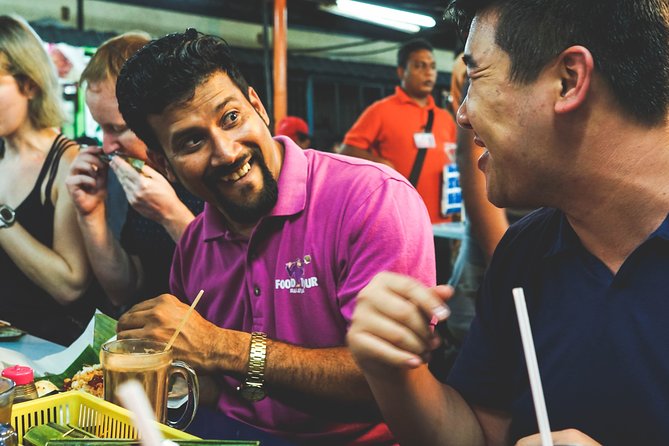
A big part of the experience is seeing hawker culture up close. Hawker centers are open-air food courts where you’ll find lots of local regulars—people who treat dinner as something you do on the street, not something you book in advance.
You may spend time at a round-the-clock style hawker center in Petaling Jaya. If you’re used to restaurant meals, hawker centers can feel chaotic at first. This tour helps because you’re not standing there deciding what to get while everyone else seems to know the system.
It’s also where Chinese food in Malaysia shows up in a way you might not get alone. You could see stalls tied to Chinese coffee shops and dishes like dim sum. Even if you’re not a dim sum expert, having a guide makes it easier to pick items that match the night’s flow.
One practical upside: hawker stops are built for sharing and sampling. Many dishes come out fast, and the atmosphere supports grazing. That suits this tour, since your guide keeps you moving to the next tasting without making you feel like you’ve missed your “real meal.”
Street Food Order-Style Tastings: Nasi Lemak, Ondeh Ondeh, and More
This is the part you actually remember later. The tour is designed around tastings that add up, and the dish list can rotate depending on what’s available that night.
Some examples that you should expect to see mentioned and tried often include:
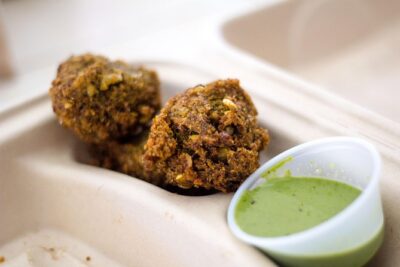
- nasi lemak, coconut rice with chili paste, peanuts, anchovies, and vegetables
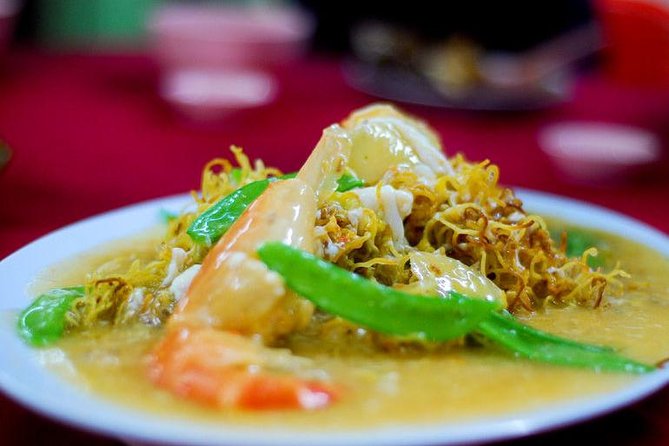
- Malaysian-style noodles (often stir-fried)
- roti and curry dishes like chicken, fish, or mutton curry
- ondeh ondeh, rice balls with palm sugar and coconut shavings
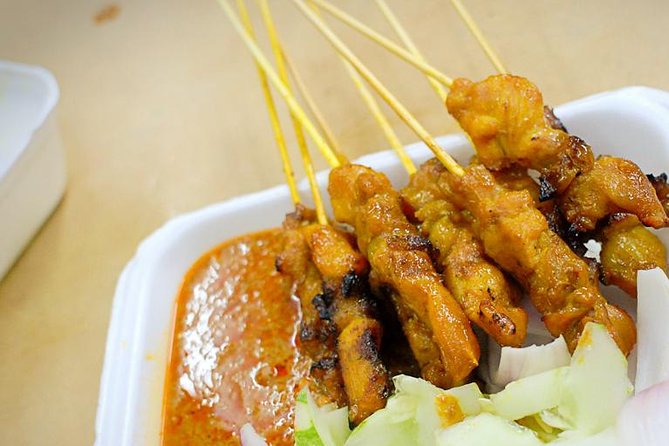
- satay (skewers) and other grilled snacks
- dessert-style hits like fried ice cream
- even snacks like Malaysian carrot cake, if the night’s lineup includes it
I like that the guide doesn’t treat this like a checklist. If you’re new to Malaysian food, you’re likely to try things you would hesitate to order on your own. That’s the whole advantage of having someone local handling the decisions.
Also, the tour includes all food tastings, including drinks (non-alcoholic). Alcohol isn’t included, but you can buy it on site. Since you’re moving between locations, having non-alcoholic drinks covered helps you stay focused on the food, not on managing your budget mid-tour.
One small caution: because there’s a lot of eating, plan for comfort. Wear shoes you’re happy to stand in, and don’t schedule anything tight right after the tour ends.
What Non-Halal Means for Your Planning (and How to Stay at Ease)
This tour is explicitly marked as non-halal. That doesn’t mean it’s “unsafe,” but it does mean you should check whether your dietary rules allow the foods and cooking environment involved.
If you’re used to halal-only eating, this is the one detail I’d circle in red before booking. If you have a strict religious requirement, this tour may not work for you.
If your diet is more flexible but you’re cautious, I’d recommend you tell the guide your boundaries when you book. The tour allows you to advise specific dietary requirements ahead of time, which is the right way to handle questions before you’re standing at a stall.
For everyone else, this non-halal tag is useful clarity. You can eat with less uncertainty about what the tour is and isn’t trying to be.
Price and Logistics: Is $62 Actually Good Value
$62 for a four-hour, small-group food tour with tastings, non-alcoholic drinks, an English-speaking guide, and transport included is usually fair value in a city where a single “great meal” can easily add up fast.
Here’s why I think it’s worth the money:
- You’re paying for decision help. The guide selects dishes, so you don’t waste time guessing or overpaying on the wrong items.
- You’re paying for access. Hawker stalls and street markets are easy to stumble into, but harder to navigate for maximum variety.
- You’re paying for time. Air-conditioned rides mean you can cover more food ground without exhausting yourself.
If you only want one or two signature dishes, you could eat on your own for less. But if you want a guided path through Malay, Chinese, and Indian food streams in one evening, the tour price starts to look like a bargain.
One drawback to keep in mind: you’re choosing a tour that’s primarily about eating and sampling. It’s not set up for long museum stops or slow-paced sightseeing.
Who This Tour Fits Best in Kuala Lumpur
This tour fits best if you want:
- a guided way to try lots of Malaysian street foods without menu stress
- a mix of mamak, Malay, South Indian, and Chinese flavors in one night
- cultural context that helps you order confidently later
- an evening plan that’s realistic and comfortable, thanks to air-conditioned transport
It’s also a great choice if you’re traveling with limited time. A four-hour slot at night lets you get a strong food snapshot without turning your schedule into a marathon.
I’d think twice if:
- you need halal-only dining
- you strongly dislike guided tours and prefer total freedom
- you’re very sensitive to eating lots of different foods in one night
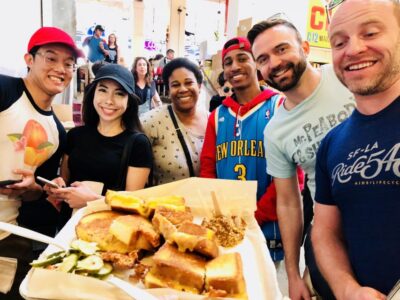
That said, several guides on this experience, including Charlie and Farah, are known for mixing food talk with humor and energy. That matters because you’re eating while learning, not just standing in front of menus.
Should You Book This Eat Like a Local Night Tour?
If you want an easy, high-impact way to eat across Malaysian food traditions, I think this is a smart book. The biggest win is the guide-led ordering and tastings. You get variety, you don’t have to translate on the fly, and you see hawker culture at the speed it actually runs.
Book it if you’re excited to try dishes you might not pick alone, and you’re comfortable with a non-halal food environment. Skip it if you have strict halal requirements or you’re looking for a quiet, slow sightseeing evening.
If you do book, show up hungry, tell the guide your dietary boundaries at booking time, and keep an open mind. This kind of tour is made for curiosity.
FAQ
What is the tour duration?
The tour runs about 4 hours.
Where do I meet for the tour?
You meet at PJ297 LRT Taman Paramount in Petaling Jaya (Taman Paramount, 46300 Petaling Jaya).
What time does the tour start?
The start time is 7:00 pm.
How much does the tour cost?
The price is $62.00 per person.
What’s included in the price?
All food tastings (including non-alcoholic drinks), an English-speaking guide, and round-trip transport between your meeting point and the tour area are included.
Is alcohol included?
No. Alcoholic drinks are available to purchase, but they are not included.
Is this tour halal?
No, it is a non-halal tour.
How big is the group?
The activity allows a minimum of 2 and a maximum of 4 per booking, and the maximum number of travelers is 16.
Is there a cancellation policy and what affects it?
Free cancellation is available up to 24 hours before the experience starts for a full refund. The experience requires good weather, and if it’s canceled for poor weather you’ll be offered another date or a full refund.