REVIEW · TROGIR
Krka Waterfalls and wine tasting Tour from Split or Trogir
Book on Viator →Operated by Tours in Croatia · Bookable on Viator
Krka hits hard even on a short bus ride. This day trip strings together Krka National Park boardwalk views and a wine tasting stop, with pickup from Split or Trogir and an English-speaking guide on an air-conditioned bus. Along the way, the stories from local guides like Darijo and Ernest can make the drive feel like part of the experience, not just the commute.
What I really like is the mix of classic waterfalls scenery with hands-on village life at Skradinski buk—restored stone houses, watermills, and workshops make the area feel lived-in. Then there’s the Roški slap break, where you get time outdoors and a real chance to cool off in the water rather than just looking at it from the shore.
One thing to plan for: you’ll pay Krka park entry tickets in cash, and the day includes a fair amount of walking—mostly manageable, but you’ll want proper shoes and a towel.
In This Review
- Key Things I’d Pay Attention To
- How This 9-Hour Day Trip From Split or Trogir Actually Feels
- Skradinski buk: Where You Don’t Just See Water, You Understand It
- The Walk in Krka: Forest Paths, Wooden Bridges, and Real “Slow Travel”
- Skradin and the River Views: Small Town Atmosphere Meets River Energy
- Roški slap: Your Best Chance to Swim (and Why You Shouldn’t Chase Waterfall Swimming)
- Canyon Panoramas, Visovac Island Views, and the Coastal Return
- Price and Value: Why This Tour Can Be a Smart Buy
- Guides and Comfort: What Makes the Day Flow Smoothly
- What to Pack So You’re Not Miserable at the Water
- Who This Tour Suits Best (and Who Should Rethink It)
- Should You Book This Krka Waterfalls and Wine Tour?
- FAQ
- How long is the Krka Waterfalls and wine tasting tour?
- How much does the tour cost?
- Do I need to speak Croatian, or is there an English tour guide?
- Where does the tour start from?
- Is the entrance ticket to Krka National Park included?
- How much is the Krka park entrance fee?
- Is lunch included?
- Can I swim at the waterfalls?
- Does the tour include wine tasting?
- How big is the group and are pets allowed?
Key Things I’d Pay Attention To
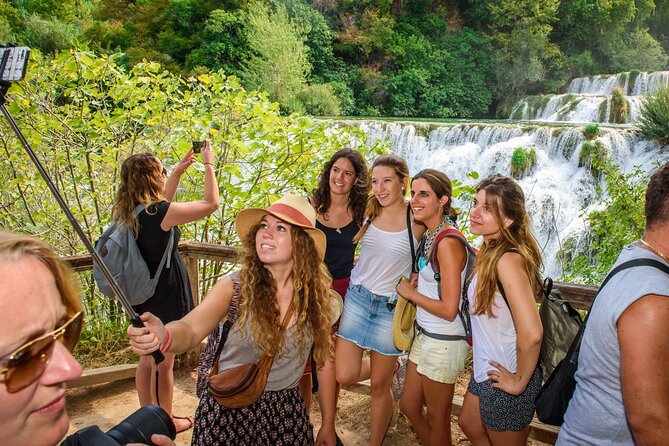
- Skradinski buk is more than falls: restored village buildings plus guided walking routes on paths and wooden bridges
- Roški slap is your main swim stop: swimming is limited to specific areas in the park
- Park tickets aren’t included: you’ll need exact cash for entry, with different prices by season
- Wine tasting is part of the day: a stop focused on local Croatian wines
- Return route gives you scenic breaks: you’ll pass places like Primosten and Marina on the coast
- Seat choice can matter: some guides suggest the left side of the bus for best road views
How This 9-Hour Day Trip From Split or Trogir Actually Feels
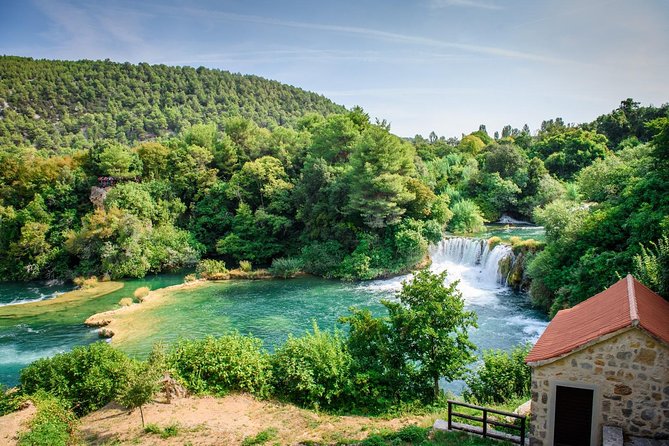
This tour is built for people who want a big-name nature day without renting a car. You’ll start with pickup from Split or Trogir at a designated meeting point, then ride out to Krka by air-conditioned bus. The drive passes that classic Dalmatian contrast—sea on one side, hinterland on the other—so the first stretch already gives you the region’s “why it looks like this” context.
The pacing is a smart mix: a guided walk where you need help finding the best routes, then longer free time where you can wander at your own speed. It’s a long day (about 9 hours), so you’ll want to treat it like a full outing rather than something to squeeze in for an hour or two.
Skradinski buk: Where You Don’t Just See Water, You Understand It
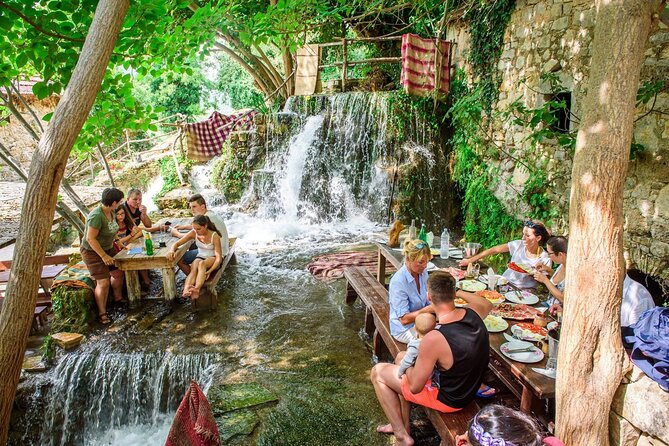
Skradinski buk is the heart of the Krka experience for first-timers, and the best part is that the visit doesn’t feel like a single viewing platform. You’ll visit Krka National Park and Skradinski buk with an official English-speaking guide, plus time to explore the area through guided walking and open wandering.
A standout element here is the restored ensemble of small stone houses, workshops, exhibits, and watermills. This is one of those details that can sound dry on paper, but it works well in person. You’re not only staring at cascading water; you’re seeing how people in this area used water to power everyday life—long before electricity and modern infrastructure.
If you like photography, this is also a strong stop. The water layers, the greenery, and the pathways that feed you toward viewpoints make it easy to get photos without sprinting across the park.
Practical timing note: you’ll typically have about 2 hours at the first Krka stop. It’s enough time to do the highlights if you keep a steady pace.
The Walk in Krka: Forest Paths, Wooden Bridges, and Real “Slow Travel”
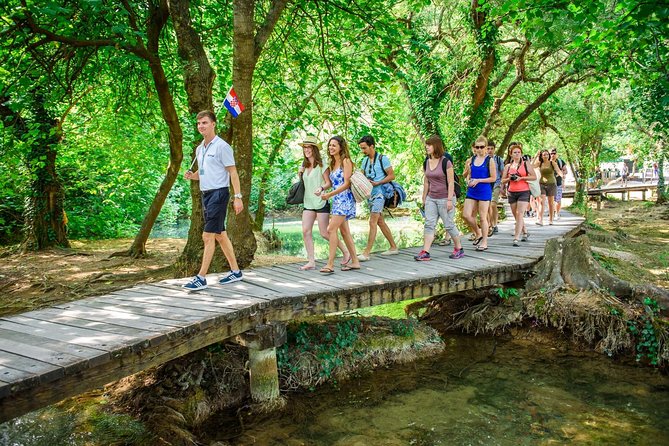
Once you’re past the main sights, you’ll move into the quieter part of Krka—forest pathways and wooden bridges. This is where you can slow down and stop treating the day like a checklist. You’ll be walking through different pockets of the park, spotting flora and fauna along the way (and, yes, you’ll hear birdsong once you get away from the busiest areas).
I like this structure because it’s not “walk, pose, walk away.” The guide gives you a framework, then you have space to enjoy the slower scenery at your own pace. Some guides—like Darijo—are praised for walking everyone through the key points clearly, so you’re not stuck guessing where to go next.
One more thing: Krka can feel warm and humid in peak season. Even if you’re a confident walker, you’ll appreciate the fact that much of this is boardwalk-style or path-based, not climbing or steep terrain.
Skradin and the River Views: Small Town Atmosphere Meets River Energy
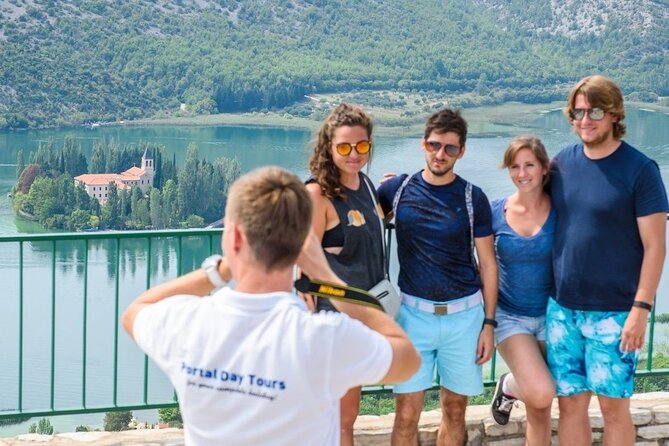
After the first Krka stop, the day shifts toward the Skradin area. This part of the experience brings in the river setting in a more town-and-water way. You’ll take in views connected to the Krka River and you’ll have time associated with Skradin while learning about conservation efforts—basically, how the park protects water, plants, and animals.
There’s also mention of cruising down the Krka River as part of this segment. If you can, lean into this portion even if you’re not a “boat person.” It’s a simple change of pace that lets you see the river corridor differently from the boardwalks.
This stop is longer (about 3 hours in the planning info), so it’s not just a drive-by. You can balance your time between photos, short walks, and settling into the day.
Roški slap: Your Best Chance to Swim (and Why You Shouldn’t Chase Waterfall Swimming)
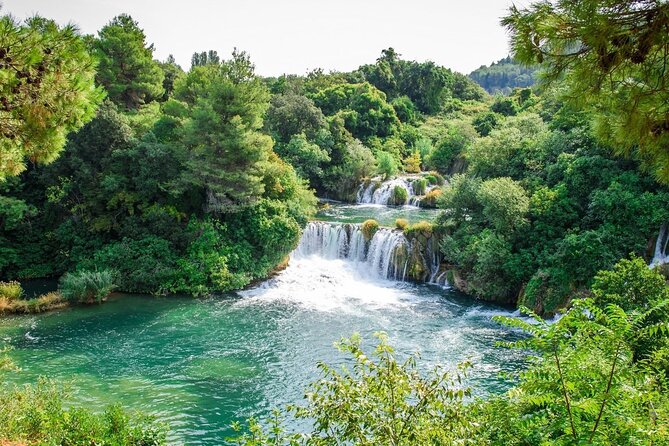
Here’s the key reality check that matters for expectations: since 2020, swimming is not allowed throughout the whole park area. The good news is that your day includes time at Roški slap, one of the specific permitted zones.
At Roški slap, you’ll have time to relax and cool off, and you can enjoy swimming in the designated area. This matters because some online photos make it look like you can wade right into waterfall zones. You can’t count on that. Instead, count on the Roški slap stop to be your “I got in the water” moment.
If you’re visiting in hotter months, Roški slap also becomes a lifesaver. You’re outdoors for a while, you’ll likely do enough walking to get warm, and then suddenly you have the option to refresh.
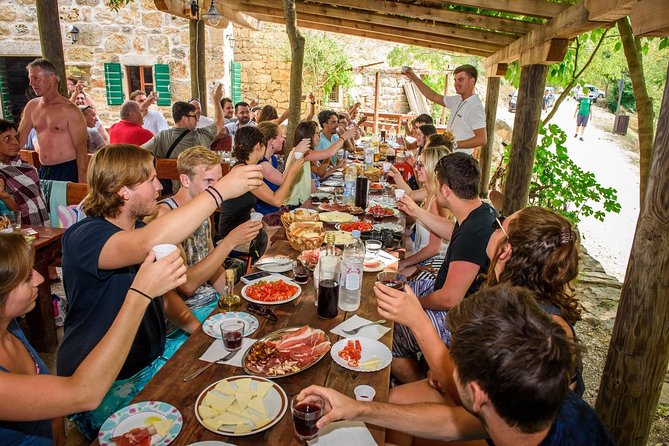
Lunch option: there’s an optional break for food at a traditional Dalmatian konoba (tavern). The type of meal described is the classic local comfort set: prosciutto, cheese, hearty bread, wine, and fresh produce. Since lunch is optional, you can also choose a lighter snack plan if you prefer.
Canyon Panoramas, Visovac Island Views, and the Coastal Return
After the swim-and-lunch stretch, the day moves into one of Krka’s “wow from above” phases. You’ll travel toward exciting canyon views along the Krka River, with panoramic outlooks that can include Visovac Island—a scene often captured by photographers.
This part of the day is great for two reasons:
1) It breaks the pattern of walking in crowds or on crowded boardwalks.
2) It gives your eyes distance, so everything you’ve been seeing up close now makes bigger sense.
Then you finish with the return drive along the coast. The route can pass places like Primosten and Marina, with views of offshore islands. If you care about road scenery, I’d take a tip from one of the practical bus comments: sit on the left side of the bus if you can. It’s one of those small choices that can make the drive feel more cinematic.
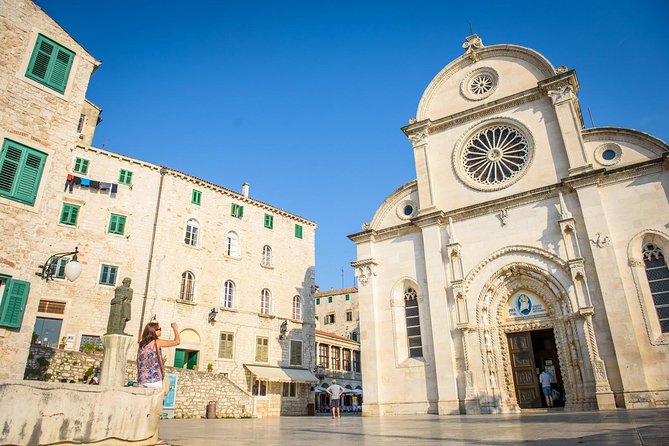
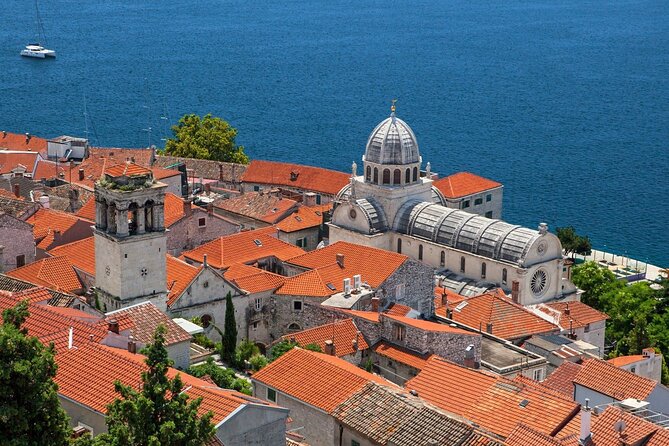
In some versions of the day, you also get time in Šibenik—a solid bonus if you want a quick old-town taste before your evening in Split or Trogir. The time can be limited, so treat it as a stroll, not a deep dive.
Price and Value: Why This Tour Can Be a Smart Buy
At $50.81 per person, the price is mostly about what you’re not doing yourself: no driving, no navigation stress, and no hunting for the right meeting spot with multiple parking hassles. The included basics are strong—air-conditioned bus transport, an official English-speaking tour guide, and help like skip-the-line admission.
One major cost that’s not included is the Krka National Park entrance ticket, which you pay in cash on the day. Ticket prices depend on season:
- June 1–Sept 30: adults €30, students/youth €15
- April, May, Oct: adults €16, students/youth €10
Children 7 and under are free (for the park entry). Exact cash matters, so it’s worth planning ahead so you’re not scrambling at a ticket desk.
So is it good value? For most people, yes—because:
- You’re getting a guided park experience (not just self-guided wandering).
- Transport is covered from Split/Trogir.
- You have multiple “Krka moments” in one day: restored village walk, scenic canyon outlooks, and Roški slap water time.
- A wine tasting stop is included as part of the day schedule.
If you’re the type who hates group timing and wants total freedom, this may feel like a lot of structure. But if you want to see the key Krka sights efficiently, it’s priced reasonably.
Guides and Comfort: What Makes the Day Flow Smoothly
The tour experience often rises or falls on the guide, and this one has a clear pattern: guides are described as energetic and funny, with strong clarity. Names you’ll see connected to great days include Darijo, Ernest/Ernesto, Silvio, Toni, and Igor. Several people specifically praise guides for giving directions and keeping the group moving without rushing them.
One useful detail from the way some guides run the day: WhatsApp group communication. Even if you don’t love message groups, it can help you get your bearings fast—where to stand, what to look for, and how to handle transitions between stops.
Group size is capped at 53 travelers. Some days feel smaller (one review mentions a group of 18), which can help with the “guide attention” feeling. Either way, it’s not a tiny private tour, so if you want quiet and solitude, you might find the most popular waterfall areas busier at certain times.
What to Pack So You’re Not Miserable at the Water
You’re going to walk. Then you might swim. Then you’ll do scenic stops and sit on a bus again. That cycle means packing smart matters.
Bring:
- Comfortable walking shoes or sandals
- Sunscreen, sunglasses
- A towel if you plan to swim at Roški slap
- Swimwear (and something dry to change into)
- A light layer if you’re going in shoulder season when evenings can feel cooler
Also, plan around weather. In peak summer, you’ll appreciate water breaks and staying hydrated.
Who This Tour Suits Best (and Who Should Rethink It)
This tour is a great fit if you:
- want Krka waterfalls scenery without a car
- like guided context (restored village watermills) rather than only viewing from one spot
- want a real outdoor break with swimming time at Roški slap
- enjoy tasting local products, since there’s a wine tasting stop
It may be less ideal if:
- you’re expecting to swim in the waterfall itself everywhere (you can’t)
- you dislike long days and steady walking
- you want maximum independence—this is scheduled and guided
Should You Book This Krka Waterfalls and Wine Tour?
If you’re visiting Split or Trogir and you want Krka on your itinerary with minimal hassle, I’d strongly consider booking. The value comes from the combination: guided Skradinski buk walking, Roški slap swim time, and a day structure that covers the best viewpoints without you having to plan every transport step.
Just book with your expectations aligned: park entry is paid separately in cash, and swimming is only for the permitted zones (Roški slap is the important one). If you can handle a long day and bring the right shoes and towel, this is one of the most efficient ways to get a big Krka experience in a single go.
FAQ
How long is the Krka Waterfalls and wine tasting tour?
It runs for about 9 hours (approx.).
How much does the tour cost?
The price is $50.81 per person.
Do I need to speak Croatian, or is there an English tour guide?
The tour is offered in English, with an official English-speaking tour guide.
Where does the tour start from?
You’ll be picked up from Split or Trogir at the designated meeting point.
Is the entrance ticket to Krka National Park included?
No. The Krka National Park entrance ticket is not included and must be paid in cash on the day of the tour.
How much is the Krka park entrance fee?
The fee depends on the season. For June 1–Sept 30, adults are €30 and students/youth are €15. For April, May, and October, adults are €16 and students/youth are €10. Children 7 and under are free.
Is lunch included?
Lunch at a local konoba is optional.
Can I swim at the waterfalls?
Swimming is not allowed in the whole park area. Swimming is allowed only in specific places, including Roški slap, where your tour includes time to refresh.
Does the tour include wine tasting?
Yes. There is a stop included for wine tasting.
How big is the group and are pets allowed?
The tour has a maximum of 53 travelers, and pets are not allowed.