REVIEW · LISBON
Lisbon E-Bike Guided Food Tour with Five Food Tastings
Book on Viator →Operated by Boost Portugal · Bookable on Viator
Lisbon on an e-bike feels like a cheat code. You glide through steep streets with a local storyteller while five food tastings act like mile markers for the flavors you’ll taste. It’s a smart mix of views, walking-free momentum, and food that feels grounded in everyday Lisbon.
I especially like that the tour starts with place and context. Praca do Comercio anchors you right after the 1755 earthquake rebuilding story, and later you hit St. Engratia (the National Pantheon) to understand why certain sites matter beyond the postcard.
One real consideration: you’ll be sharing roads and lanes with traffic. If you’re not comfortable biking around cars in a busy European city, that’s the one thing I’d weigh before spending your time and money here.
In This Review
- Key highlights worth planning for
- Starting at Praca do Comercio: Lisbon’s comeback in one big square
- Pedaling into Alfama’s medieval lanes and Santo António energy
- St. Engratia (National Pantheon): baroque detail with a time scale
- Miradouro da Senhora do Monte: the view stop that changes the pace
- Downhill to Mouraria: multiethnic streets where you’ll find plenty to eat
- Praca da Figueira: finishing where Lisbon traded its goods
- What you’ll actually eat: the classics behind five tastings
- E-bike ride reality: helmets, lessons, and sharing streets
- Guide storytelling: how Peter Mendes and Matilda (Tilly) make it click
- Price and value: is $83.13 a smart use of your time?
- Who this Lisbon e-bike food tour suits best
- Should you book this Lisbon e-bike food tour?
Key highlights worth planning for
- E-bike assist keeps Lisbon hills manageable in a roughly 3-hour loop
- Five tastings and two drinks focus on classic Portuguese bites (pastel de nata, bifana, caldo verde-style snacks)
- Story-first stops connect big landmarks to what life feels like in neighborhoods like Alfama and Mouraria
- Guides like Peter Mendes and Matilda (Tilly) bring history and food together in a way that actually makes sense
- Small groups up to 24 help you stay together while you shift between sights and bites
Starting at Praca do Comercio: Lisbon’s comeback in one big square
Your tour kicks off at Boost Portugal – Urban Thrills on R. dos Douradores 16, a central spot with practical perks like restrooms, filtered water, complimentary Wi-Fi, and seating. It’s a helpful start because you’ll want to check in about 15 minutes early, get your helmet squared away, and get comfortable before you roll out.
The first stop is Praca do Comercio, the huge river-facing centerpiece of Lisbon’s post-1755 reconstruction. This isn’t just a dramatic arrival. The guide’s framing helps you understand why so many of Lisbon’s main civic spaces look the way they do: the city rebuilt with intent, and that shows here. Even if you’ve only spent a day in town, this stop helps you map Lisbon fast.
From a food-tour angle, this opening works because it slows your brain down just enough to notice details later. When you glide onward, you’re not just chasing sights; you’re learning how Lisbon got layered—street by street, neighborhood by neighborhood.
You can also read our reviews of more food & drink experiences in Lisbon

Pedaling into Alfama’s medieval lanes and Santo António energy
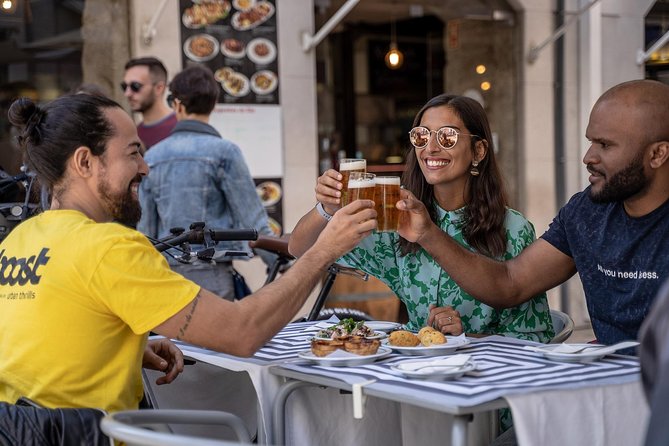
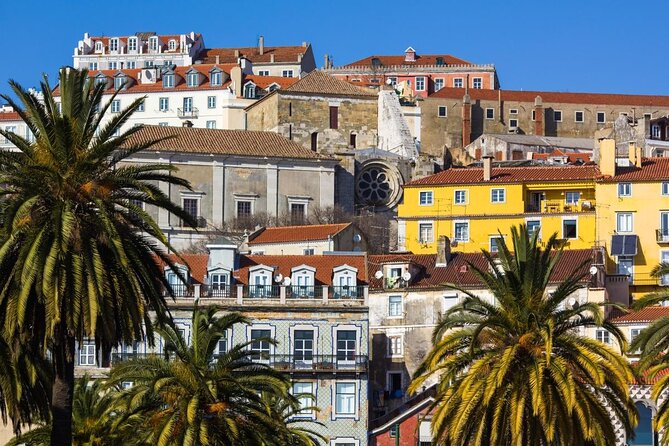
Then comes the part many people come to Lisbon for: Alfama. Lisbon’s oldest neighborhood is famous for steep cobblestoned lanes that still feel medieval, and it’s also a hotspot for fado houses. The tour route makes you feel that contrast—wide-open squares give way to tight alleys and stairs.
Alfama also ties strongly to Lisbon’s June festivities honoring Santo António. Even if you’re not visiting in June, knowing that this neighborhood survived the 1755 earthquake and kept much of its authenticity helps the whole place click. It’s one of the reasons Alfama feels so “real” rather than staged.
The ride through Alfama also gives you practical value. Because you’re on an e-bike (not a cardio test), you can actually focus on what matters: where lanes curve, how staircases shape movement, and how the neighborhood’s layout affects daily life. You get the charm without spending your energy just surviving the incline.
If you’re someone who usually skips neighborhoods because you’d rather “save energy,” this tour is a good correction. The bike makes Alfama approachable.
St. Engratia (National Pantheon): baroque detail with a time scale
Next up is the National Pantheon, also known as St. Engratia Church. It’s a major baroque monument with a long build timeline—1682 to 1966—which is the kind of detail that turns a stop from photo-op to understanding.
This church is also the resting place of some of Portugal’s most important cultural and political figures. That matters because it gives you a framework: this building isn’t just old; it’s treated like a national reference point. The guide’s storytelling is key here, because it helps you notice the scale and design choices rather than just admiring them.
The practical piece: this stop is short (about 10 minutes), so it won’t drag. But it still anchors the tour with something weighty. You go from the intimate maze of Alfama to a monument that took centuries to complete. That contrast is one of the reasons the route feels more like a guided education than a rushed sightseeing checklist.
A small tip: if you’re the type who likes to linger, don’t fight the schedule. The tour is built around cadence—sight, story, then food—so you’ll get a better overall experience by staying with the group.
Miradouro da Senhora do Monte: the view stop that changes the pace
After the Pantheon, you’ll head to Miradouro da Senhora do Monte, one of the higher viewpoints in the city. This is where Lisbon shows you its best trick: the way the neighborhoods stack, slope, and overlap until you feel like you’re looking down into an entire map.
The tour gives you just enough time at the viewpoint (about 5 minutes) to pause. It’s especially popular at sunset, but even outside golden hour, the angle helps you understand where you’ve been and where you’re heading next. That’s why this stop works so well on an e-bike food tour. It gives you a reset without stealing your appetite.
You also get a mood shift here. Before the viewpoint, the story leans toward architecture and survival. At the viewpoint, the story becomes about people and movement—how the city is organized, and how neighborhoods connect.
And then you do something smart: you start going down the hill. Lisbon hills can feel intimidating on foot; here, gravity becomes your helper.
Downhill to Mouraria: multiethnic streets where you’ll find plenty to eat
After relaxing at the viewpoint, the route goes downhill to Mouraria, Lisbon’s most multiethnic neighborhood. This is where you’ll feel the city as a living food network rather than a museum.
Mouraria is known for a high concentration of restaurants, and the tour notes that about a fifth of the population is from Asia, with roots mainly in China, Bangladesh, India, and Pakistan. That detail matters because it explains why certain food options feel so present in daily life. In other words, you’re not just learning Lisbon’s Portuguese classics—you’re seeing how Lisbon keeps evolving.
From a bike-tour perspective, the downhill is also a confidence builder. You get motion without strain, and that helps you enjoy the ride instead of bracing for effort.
Even if you don’t eat at every stop in that neighborhood (and you won’t, since the tastings are guided), you’ll leave with a better sense of where to wander next. Mouraria is the kind of place where your “what should we try?” question becomes easier to answer.
A few more Lisbon tours and experiences worth a look




Praca da Figueira: finishing where Lisbon traded its goods

You wrap up at Praca da Figueira, once Lisbon’s main marketplace. This stop has a specific historical storyline: there was a covered market built in 1885, it was demolished in the 1950s, and a bronze equestrian statue of King João I was put in place.
That shift—from market structure to monument plaza—captures how cities change what they prioritize over time. The tour helps you see why this matters: public squares are social engines. When you understand the function of a place, you can read the city differently as you stroll afterward.
It’s a strong way to end a food tour. You began at a river-facing civic centerpiece tied to rebuilding, and you end at a trade-centered public square tied to everyday commerce. That arc feels natural: Lisbon’s big stories and Lisbon’s daily rituals both belong in the same day.
If you like to take photos, this is also an easy final stop because the square is open and visually clear. You won’t be ending on a steep climb or a tight lane.
What you’ll actually eat: the classics behind five tastings
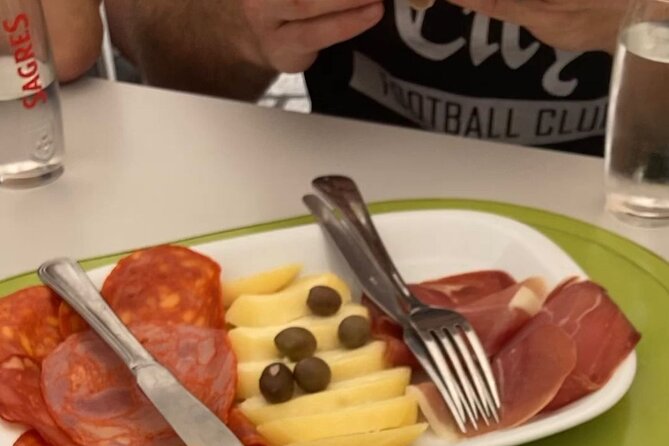
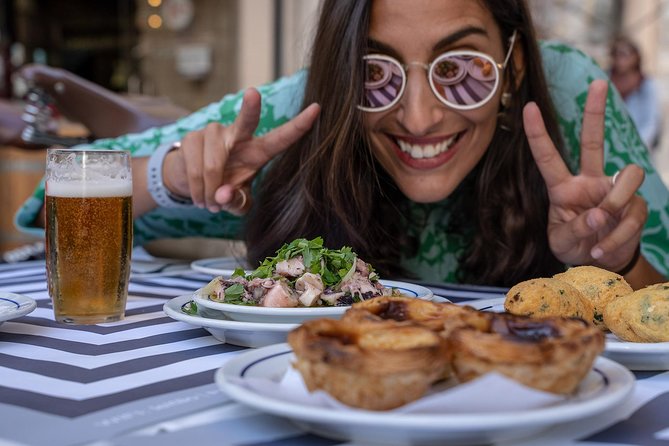
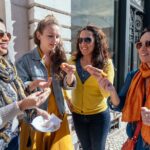
The menu is built around classic Lisbon flavors, with five food tastings and two drinks included. You’ll also get an idea of what Portugal tastes like in real life, not just in signature souvenir forms.
A typical tasting set includes:
- Pastel de Nata + coffee or soft drink as a starter. This is the iconic Portuguese pastry for a reason, and this tour treats it like a meaningful first bite rather than a random dessert stop.
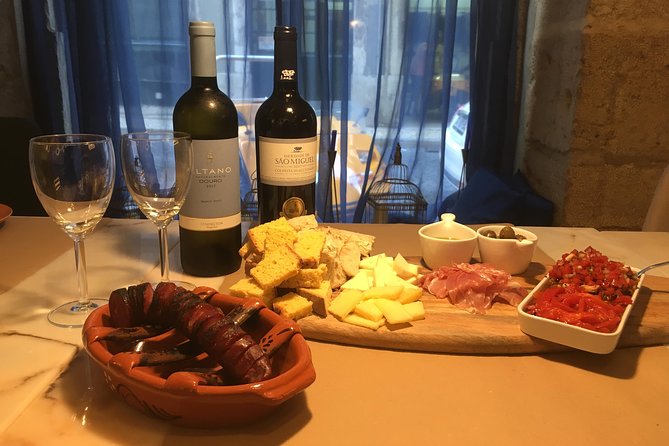
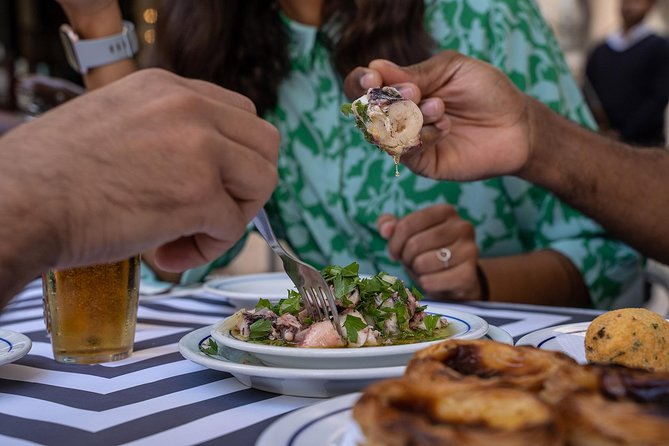
- A set of small Portuguese-style snacks: olives, bread, cheese, caldo verde, sausages or pica-pau (meat with pickles), cod pastry, and vinho verde, plus water or soft drink.
- Bifana + an Imperial draft beer or soft drink. Bifana is one of Lisbon’s most popular sandwich choices, and the tour frames it as a favorite any time of day.
Two important notes about expectations:
1) The exact places and selections can change based on availability and your profile. So if you’re picky about one specific item, don’t count on it being exactly the same every day.
2) You’re tasting enough to feel satisfied, but not stuffed. The tour is about sampling plus storytelling, and you’ll likely still want a proper meal later.
Why this food structure works: it hits different flavors and textures—pastry, savory snacks, soup-like comforts (caldo verde), and a handheld comfort-food staple (bifana). It’s a fast way to build a personal short list of what you want to seek out again on your own.
E-bike ride reality: helmets, lessons, and sharing streets
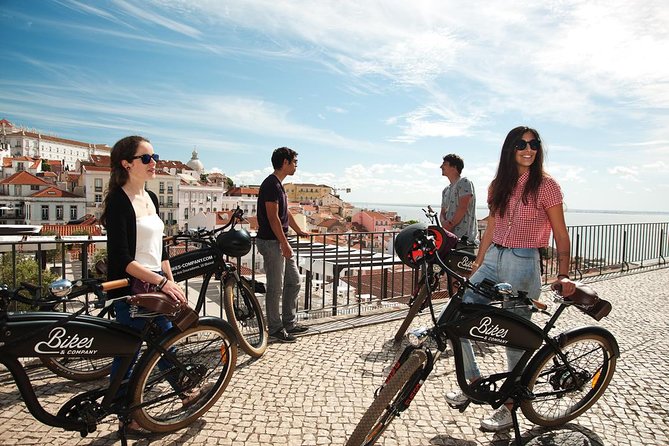
This tour is built for Lisbon hills, but it’s still a bike experience. Before you start rolling, you’ll get fitted with an electric bike and a helmet, plus an electric bike adaptation lesson. That lesson matters if you’ve never used an e-bike before, because control and confidence come fast when you know how the assist works.
The tour sets a few safety and suitability rules. Safety helmet use is mandatory. You should have moderate physical fitness level, and there are minimum height (1.5 meters) and maximum weight (118 kg) requirements. The tour is not for pregnant women, and it also isn’t for intoxicated people. It’s also not recommended for anyone who is mentally or physically incapacitated or has prosthesis.
Group size caps at 24, which helps with coordination. But your most important decision is psychological, not physical: do you feel comfortable riding where there’s traffic?
One review flagged the issue of riding in traffic and suggested the tour might not be ideal if you’re uncomfortable biking in heavier traffic conditions. I’d take that seriously. E-bikes reduce effort, but they don’t remove the reality of urban cycling.
Practical advice: wear comfortable shoes, keep a light grip on your pace, and listen when the guide cues you on movement and turns. If you start tense, you’ll feel that tension all ride.
Guide storytelling: how Peter Mendes and Matilda (Tilly) make it click
The guide is a major part of why this tour works as a whole. The tour description emphasizes a local storyteller approach, and past experiences show guides like Peter Mendes and Matilda (Tilly) delivering strong history explanations alongside the food stops.
When a guide can connect a square’s purpose, a church’s timeline, and a neighborhood’s cultural makeup to the food you’re eating, you end up with something better than a checklist. You get a mental map that sticks.
For example:
- A pastry stop feels different when you understand how Lisbon treats everyday food as culture.
- A monument stop feels less random when you know it’s a national resting place for important figures.
- A neighborhood stop feels less like a drive-by when you understand Mouraria’s multiethnic restaurant scene and background.
If you’re the type who reads signs slowly, you’ll probably love how the guide turns those details into a story you can remember on the walk back to your hotel.
Price and value: is $83.13 a smart use of your time?
At about $83.13 per person for an around 3-hour tour, you’re paying for a bundle: an e-bike experience, a helmet and insurance coverage, the guide, and the food.
What’s included in the practical sense:
- Five food tastings and two drinks
- Experienced local storyteller guide
- Electric bike adaptation lesson
- Liability and personal accident insurance
- Taxes (VAT 23%)
What’s not included:
- Monument tickets/entrance fees (the tour notes admission tickets are free where listed)
- Extra drinks or food beyond the tastings
- Hotel pickup/drop-off
So is it worth it? I think it usually is if you match the tour style:
- You want an efficient first-day orientation to Lisbon’s major areas.
- You’re happy to let the guide pick the exact food stops.
- You like the idea of a guided route that mixes history with tastings.
If you already know Lisbon well, or if you only want to eat and don’t care about riding between neighborhoods, you might feel the cost more. But if you want a structured day with less guesswork, $83.13 can be a fair trade.
The fact it’s commonly booked about 27 days in advance also suggests people find the schedule workable. And with a 4.8 rating and 92% recommending it, the odds are in your favor—still, read the traffic note if you’re anxious about riding around vehicles.
Who this Lisbon e-bike food tour suits best
This tour fits best if you want three things in one block:
1) Neighborhood flavor + guided context
2) A low-effort way to cover steep areas (e-bike assist)
3) A guided food path through classic Portuguese tastes
You’ll likely enjoy it if you’re:
- Visiting for the first time and want an easy way to learn Lisbon’s layout
- Short on time but still want history and food
- Comfortable riding a bike in a city environment
You should think twice if you:
- Are strongly uncomfortable with bike traffic
- Want private pacing with lots of extra time at viewpoints or inside sights
- Need a fully accessible or low-movement option (this isn’t presented that way, and the tour notes specific limits)
Should you book this Lisbon e-bike food tour?
Book it if you want a practical, story-led way to taste Lisbon while seeing Alfama, Mouraria, and central squares without spending your whole day grinding up hills. The included tastings hit multiple Portuguese comfort-food favorites, and the guide names you may hear (like Peter Mendes or Matilda Tilly) signal that storytelling is a real focus here.
Skip it if traffic stress would ruin your day. E-bikes make hills easier, but the ride still means sharing streets. If that part sounds uncomfortable, spend your time on a food tour that stays mostly on quieter routes.
If you do book, do this one thing: come ready to pause, listen, and sample. That mindset is what turns five tastings from a meal into a Lisbon education.