REVIEW · SOFIA
Sofia Food & Tasting Tour with Communist-Era Tram Ride
Book on Viator →Operated by Peter's Tours · Bookable on Viator
Sofia has a knack for mixing tastes and history. This 3-hour Sofia Food & Tasting Tour pairs a communist-era tram ride with short stops at Sofia’s biggest landmarks and lesser-known corners, while you rack up 5 food stops along the way.
I especially like how the tour keeps you moving between wow-factor buildings and actual places to eat, not just look. I also love that the group stays small (max 11), and Peter’s the kind of guide who adjusts when the route or pace needs tweaking.
One consideration: the stops are brief, with quick 10-minute windows at major sights, so if you want deep time inside cathedrals or museums, plan extra time on your own.
In This Review
- Key Things You Get From This Sofia Food Tour
- From St. Alexander Nevsky to quick, story-filled sight stops
- The National Assembly area: neoclassical facades and what they signal
- Sofia University and the bridge-adjacent “easy geography” trick
- Zhenski Pazar area and the Area of Tolerance idea
- Five food stops: what’s actually included (and why skipping breakfast helps)
- Food stops meet history at Ancient Serdica and the Roman street line
- Central Synagogue, Mineral Baths, and the Mollah Effendi Mosque mix
- The communist-era tram ride: practical context, not a lecture
- Logistics that actually matter: group size, pacing, and dietary needs
- Price and value: what $91.07 buys you in Sofia time
- Who should book this tour, and who might prefer something else
- Should you book the Sofia Food & Tasting Tour?
- FAQ
- How long is the Sofia Food & Tasting Tour?
- How much does the tour cost?
- What language is the tour offered in?
- What’s included with the food and drinks?
- Can you accommodate dietary restrictions?
- How many people are in the group?
- Where do you meet and where does the tour end?
- Is there a cancellation policy?
Key Things You Get From This Sofia Food Tour
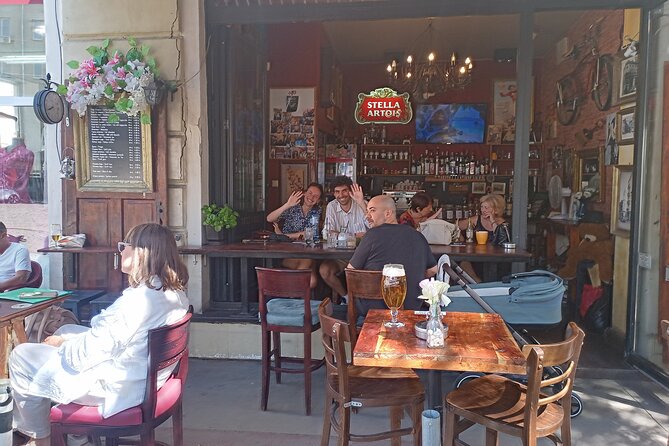
- 5 food stops plus snacks, appetizers, and dessert, with a starter that includes Bulgarian sausage/cheese
- Beer and local wine included, plus a mix of traditional meals and salad
- Major Sofia landmarks in tight time slots (Cathedral, National Library, Sofia University, West Gate, Ancient Serdica)
- Plus the communist-era tram ride that helps the city feel less like postcards
- Peter’s route skills, including pacing help when it’s hot and willingness to adapt
- A city card for the day, adding flexibility after the tastings
From St. Alexander Nevsky to quick, story-filled sight stops
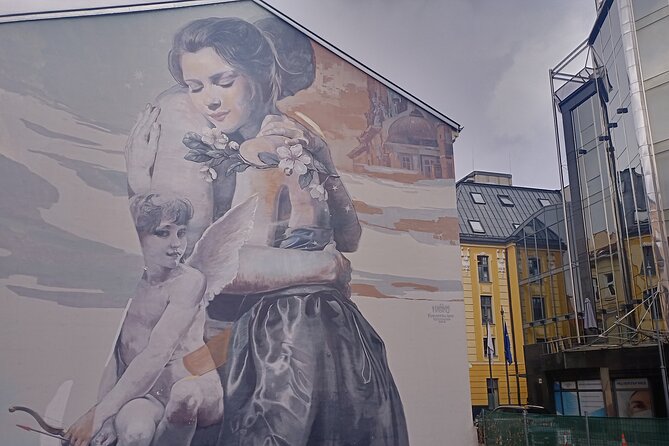
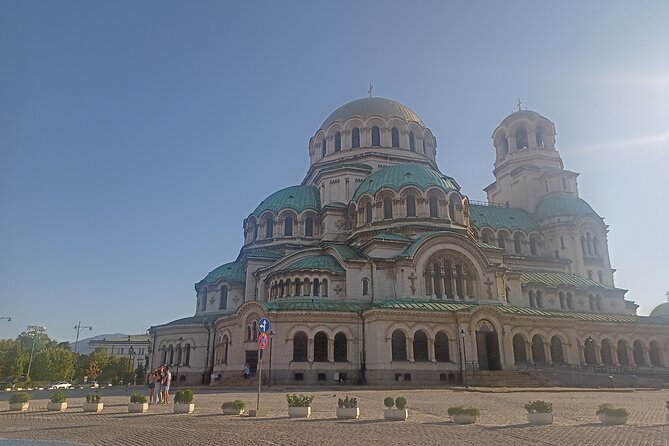
Your tour starts in front of Patriarchal Cathedral St. Alexander Nevsky in Sofia Center. This is a smart launching point because you can’t miss the scale of it, and the guide can set the tone quickly: Sofia is a city of layers—religious, political, and everyday life all stacked together.
The cathedral gets a short visit with a clear focus. St. Alexander Nevsky Cathedral, built in a Neo-Byzantine style, is one of the biggest Eastern Orthodox cathedrals in the world and a core Sofia symbol. Expect photos, a few key details, and then you move on before the experience turns into standing around with nowhere to go.
Next comes a major literary stop at the St. Cyril and St. Methodius National Library. Here, the numbers matter: the library holds 8.5 million documents, including rare materials printed between the 15th and 21st centuries (around 17,000 volumes and periodicals). You’ll also have a chance to see temporary exhibitions if they’re running—so the building doesn’t feel like a static stop on a checklist.
The National Assembly area: neoclassical facades and what they signal
As you connect between the library district and nearby historic civic buildings, you’ll get context for how Sofia grew into its modern identity. One building you’ll likely notice is designed in neoclassical style by Viennese architect Friedrich Schwanberg, built between 1881 and 1883. Another nearby landmark tied to the same period is the National Assembly building, constructed 1884 to 1886 with architect Constantin Yovanovic.
Why this matters on a food tour: architecture shapes what you can taste. When a guide explains how a city became a hub—then points you toward neighborhoods and markets—you start seeing meals as part of a living system, not just a restaurant decision.
It’s also why this tour works well as an opener. In a few hours, you’re not just filling up your stomach—you’re building a mental map of the city so later exploring feels easier.
Sofia University and the bridge-adjacent “easy geography” trick
Sofia University is another quick stop that helps you orient. The tour visits Sofia University St. Kliment Ohridski, founded on 1 October 1888. If you’re there on a Monday to Friday, you can often see the central hall with big stained glass windows, which is one of those “wait, this is right here?” moments.
I like that the tour uses stops like this to keep your bearings straight. After Nevsky and the library, you’re moving through the parts of central Sofia that make later walking feel logical instead of random.
And then the guide turns the corner from monuments to daily life, which is where the food part starts to feel even more meaningful.
Zhenski Pazar area and the Area of Tolerance idea
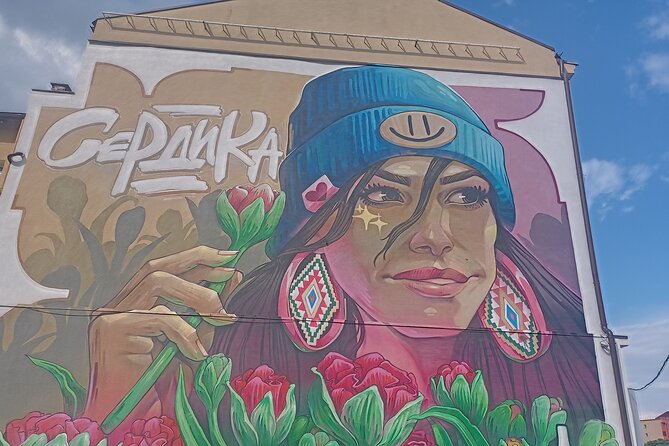
The tour route includes the market zone around Zhenski Pazar, where daily foot traffic is no joke—about 60,000 people each day. Even if you don’t linger in the market itself, this stop is worth it because it explains what makes the area unusual.
This neighborhood is called the Area of Tolerance in Sofia, and the name comes from the proximity of different official religious communities. You’ll hear about nearby religious sites such as the church Saints Cyril and Methodius, the Banya bashi Mosque, and the Central Synagogue of Sofia. That mix isn’t just trivia; it’s a helpful lens for understanding why Sofia food and culture don’t come from one single source.
Practical tip: this is the kind of stop where you’ll want to pay attention to directions and meet-ups. The market district is active, and the tour’s structure helps you avoid wandering off-track.
Five food stops: what’s actually included (and why skipping breakfast helps)
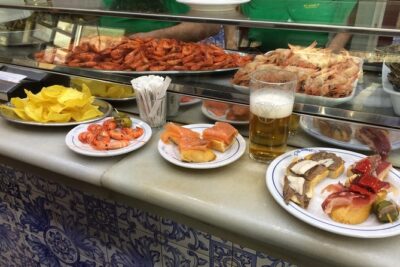
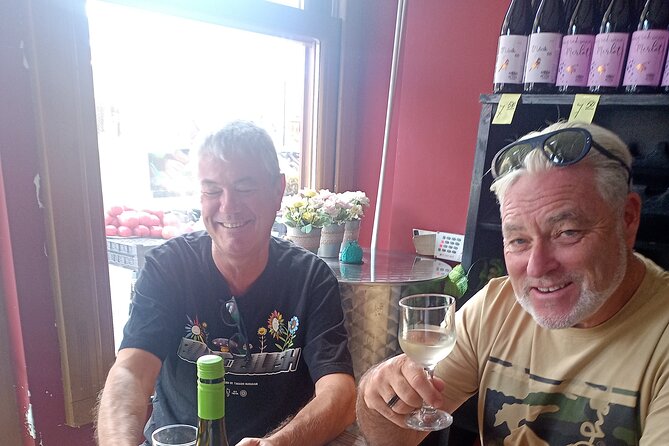
Let’s talk about the part you’re really paying for: the eating. The tour includes alcoholic beverages—Bulgarian beer and a glass of local quality wine—along with traditional meals, salad, plus appetizers and dessert. That means you’re not doing tiny bites forever. You’re eating a real sequence, built to keep you full without requiring a separate dinner plan.
A sample start includes Bulgarian traditional sausages/cheese with wine or beer. Then the rest of the tastings follow as a guided progression through local places. In other words, you’re not stuck guessing what to order while hungry, and you’re not stuck eating the same safe tourist meal twice.
One tip I’d take seriously: it’s the kind of tour where I’d skip a heavy breakfast at your hotel. The tour includes breakfast, and then you continue with snacks and multiple food stops. You’ll still have room, but only if you don’t show up already stuffed.
Also note: alcoholic drinks aren’t suitable for children 17 years old or under, so plan accordingly if you’re traveling with younger kids.
Food stops meet history at Ancient Serdica and the Roman street line
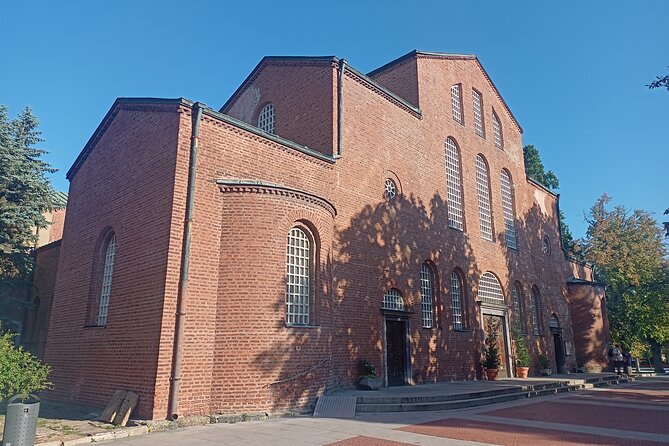
After you’ve had your fill of key central landmarks, the tour leans into Sofia’s deeper past with Ancient Serdica Archaeological Complex. This is where the city’s layout becomes more than a walking concept. You’re seeing how Roman-era Sofia connected key points: the remains of one of the town’s main streets, the decumanus maximus, linked the eastern and western gates of the city.
The site is divided into two zones. The Largo zone sits under Nezavisimost Square and integrates unearthed archaeology into an area for cultural events. There’s also a view of a large residential building covering an entire insula (urban block), plus the idea that small shops fed everyday life—food and goods sold right where people lived.
Right before or around this, you also stop at the West Gate of Sofia. The fortification wall goes back to the second half of the 2nd century AD, with a width of 2.20 meters. Later, remodeling happened at the end of the 3rd or early 4th century, and a ditch was dug in front of it—about 2 meters deep and 5 meters wide—still in use in the 4th century.
I like this pairing because it changes how you read the city. Once you understand the old street axis and gate points, central Sofia starts to feel like a connected map, not a pile of separate attractions.
Central Synagogue, Mineral Baths, and the Mollah Effendi Mosque mix
One of the best parts of this tour is that it doesn’t treat Sofia’s landmarks as a one-tradition parade. You’ll see religious and cultural spaces tied to different communities, plus a major public health and leisure tradition: the hot springs.
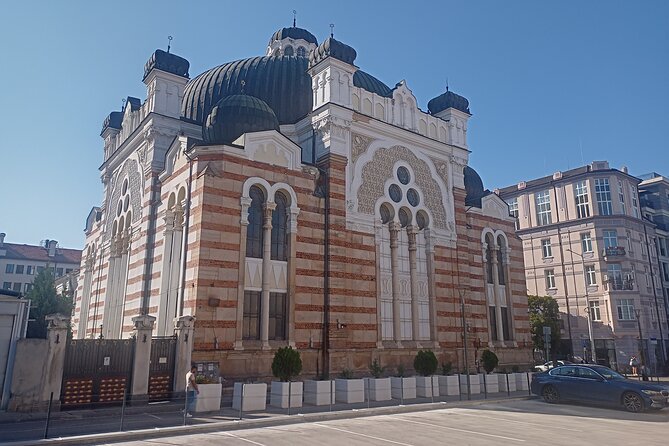
The tour includes the Central Sofia Synagogue, described as a source of pride for the Bulgarian Jewish community. It’s also one of Europe’s three largest Sephardic (Spanish-Jewish) synagogues and the largest on the Balkan Peninsula. Even if you’re not religious, the architecture and sheer scale give you a strong sense of Sofia’s community history.
Then you shift to the city’s Natural Hot Springs and the Central Mineral Baths. The hot springs are 46 degrees Celsius, and the current bath building combines Vienna Secession style with Bulgarian, Byzantine, and Eastern Orthodox ornamental elements. The architects mentioned are Petko Momchilov and Friedrich Grünanger, with approval on 30 January 1906.
Finally, the tour brings in the Mollah Effendi Mosque, also known as Mullah Effendi Kada Seyfullah Mosque. It’s tied to Mimar Sinan, the Ottoman architect linked to famous Istanbul mosques. A number above the entrance arch (974) points to a Hijri date, corresponding to 1566–1567 AD. This is exactly the kind of stop where the guide’s explanations make the building feel placed in time, not floating in space.
The communist-era tram ride: practical context, not a lecture
The tour title includes a communist-era tram ride, and that’s not just a gimmick. It gives you a moving vantage point so the city’s changes don’t feel like a static history slideshow.
In the real world, trams also solve the biggest problem walking tours have: weather. On hot days, Peter can adjust how you travel so you don’t bake between stops. The tour is designed to include travel time between places, so you’re not stuck “just getting there” while your motivation drops.
If you’ve ever done a tour where the guide only stops near monuments, this is a helpful contrast. The tram segment supports a storyline about how people moved, worked, and lived—then the food stops remind you what daily life tasted like.
Logistics that actually matter: group size, pacing, and dietary needs
This experience is capped at maximum 11 travelers, which is a big deal for quality. Small groups mean your guide can answer questions and keep everyone together without rushing you through everything.
It’s also offered in English, and you get a mobile ticket for the day. Meeting point is St. Alexander Nevsky Cathedral, and the tour ends at Central Sofia Market Hall on level -1 (Central MArket Hall of Sofia). Knowing the ending location matters because you’ll be right where you can keep exploring afterward without starting from scratch.
Dietary restrictions are supported, including vegetarian, vegan, and gluten-free options. If you have specific needs, you should list them at booking time. They also provide an allergen list that includes common triggers like gluten-containing cereals, milk, eggs, nuts, soy, and more, so it’s worth being direct if you’re sensitive.
If you’re traveling with service animals, they’re allowed, and the tour is near public transportation.
Price and value: what $91.07 buys you in Sofia time
At $91.07 per person, this isn’t a budget snack crawl. But it’s also not just a walking tour with a single tasting.
You’re paying for:
- 5 food stops plus breakfast, snacks, and dessert
- beer and a glass of local wine
- guided time across major central sights (many with free-entry time windows)
- the included travel time and the communist-era tram ride
- a city card for the day
- a small group (max 11)
That mix is what makes it feel like value instead of a splurge. You’re basically buying a guided plan that turns Sofia’s architecture and neighborhoods into something edible and understandable.
Also, this tour tends to be booked about 28 days in advance, which usually means it’s a popular way to start a Sofia visit.
Who should book this tour, and who might prefer something else
You’ll likely love this if you want a fast, structured start in Sofia. It fits travelers who enjoy walking tours with food, prefer local guidance over restaurant guesswork, and like history that ties directly into real places.
It’s also a great choice if you’re the kind of traveler who hates wasting time “looking” without learning how the city works. This route gives you stories at each stop, then rewards you with food at regular intervals so you stay energized.
If you’re someone who wants long stays inside buildings or you’re not interested in tastings and alcohol, this might feel a bit rushed. The tour moves in short stops, and the food sequence is central to the experience.
Should you book the Sofia Food & Tasting Tour?
I think you should book this if you want a high-impact first day in Sofia: big landmarks, Roman archaeology, synagogues and mosques, plus tastings that keep you satisfied. With Peter leading and the group staying small, it also sounds like the kind of tour where adjustments happen naturally instead of forcing everyone through the same rigid checklist. If you’d rather slow-travel and linger, pair it with an extra afternoon of your own exploring after you’ve finished your tastings.
FAQ
How long is the Sofia Food & Tasting Tour?
It runs about 3 hours.
How much does the tour cost?
The price is $91.07 per person.
What language is the tour offered in?
The tour is offered in English.
What’s included with the food and drinks?
It includes breakfast, snacks (appetizers and dessert), traditional meals and salad, and 5 food stops. Alcoholic beverages included are Bulgarian beer and a glass of local quality wine.
Can you accommodate dietary restrictions?
Yes. The tour can accommodate dietary restrictions such as vegetarian, vegan, and gluten-free. You should indicate requirements at booking.
How many people are in the group?
The maximum group size is 11 travelers.
Where do you meet and where does the tour end?
You meet at St. Alexander Nevsky Cathedral in Sofia Center at pl. Sveti Aleksandar Nevski. The tour ends at Central Sofia Market Hall, level -1.
Is there a cancellation policy?
Yes, free cancellation is available up to 24 hours before the experience start time for a full refund.