REVIEW · HUA HIN
Sunset Local Eats Food Tour in Hua Hin
Book on Viator →Operated by Feast Thailand · Bookable on Viator
Street food at sunset can change how you see a place. This small-group Hua Hin tour strings together market tastings with local stops reached by Songtheaw, then closes with a Thai sweets vendor and dish-by-dish context you won’t get if you wander on your own.
I love the hands-on way you learn what makes good ingredients good. You also get a guide who helps you make sense of what you’re eating, from rice-ball style snacks to Thai sweets that can be unusual at first.
One key consideration: this tour isn’t suitable for vegetarians, pescatarians, vegans, gluten intolerance, or nut allergies. If you have dietary needs, you may miss several dishes, so it’s worth telling the operator up front.
In This Review
- Key things to know before you go
- Hua Hin at 4:30 pm: the timing that makes street food work
- Price and value: what $73.34 buys you in real food
- Getting oriented fast: Clock Tower meeting point and a relaxed pace
- Stop 1: the local market and learning to spot good ingredients
- Stop 2: two lesser-known local-style stops where people actually eat
- Stop 3: Thai sweets and the final 30-minute sugar test
- Food tastings: what you’ll likely eat (and why it’s more than just snacks)
- The guide factor: English support, humor, and dish backstories
- Getting around on Songtheaw: efficient, comfortable, and avoids map stress
- Who this tour is best for
- A balanced view: what could feel “less perfect”
- Booking timing and how this tour tends to run
- Should you book Sunset Local Eats in Hua Hin?
Key things to know before you go
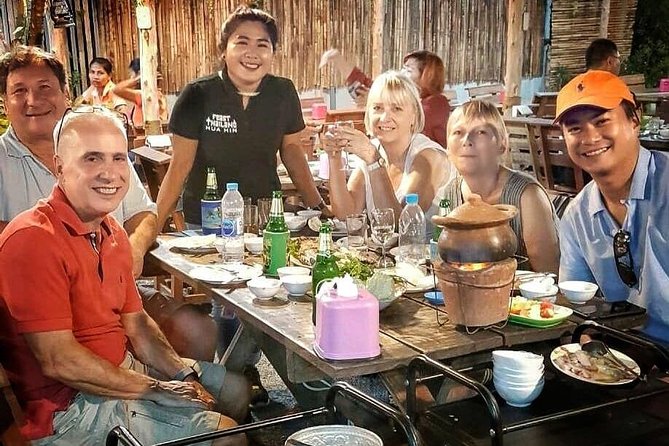
- Small group size (max 6): easier conversation, more attention, and a near-private feel on quieter departures
- 10 to 15+ tastings plus select drinks and water: you’ll snack your way through the evening, not just sample a bite
- No walking, just local transport: you move around on Songtheaw, which keeps the evening relaxed
- Start at Hua Hin Clock Tower, 4:30 pm: timed for that sunset-to-night market rhythm
- English-speaking licensed Thai guide: you get explanations, not just orders at the stall
- Capped at 3.5 hours: structured enough to be efficient, short enough to fit a normal dinner plan
Hua Hin at 4:30 pm: the timing that makes street food work
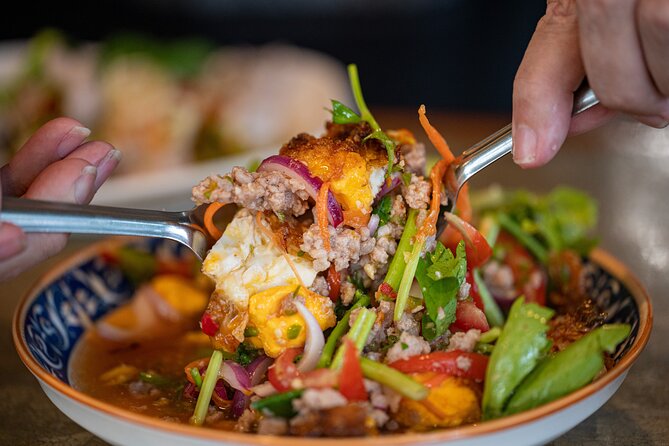
If you’re in Hua Hin during the late afternoon, this is a smart time to do street food. The tour starts at 4:30 pm and runs about 3 hours 30 minutes, right when markets and street stalls start shifting from day mode into evening mode.
That timing matters because food on the street isn’t just about flavor. It’s also about atmosphere—people are out, stalls are active, and your best choices show up when things are fresh and busy.
The tour meets at the Hua Hin Clock Tower and ends back at the same spot. That simple loop is helpful: you don’t have to figure out transit or backtracking after you’re done eating.
You can also read our reviews of more food & drink experiences in Hua Hin
Price and value: what $73.34 buys you in real food
The price is $73.34 per person, and at first glance it can feel like a lot if you compare it to buying a couple of street snacks on your own. The difference is what’s included.
You’re paying for:
- 10 to 15+ tastings (plus select drinks and water)
- an English-speaking licensed Thai guide
- all transportation during the tour via local Songtheaw
- vehicle accident insurance under the tour’s required Thai coverage
If you do the math, that’s roughly four hours of guided eating plus transport—so you’re not just buying food, you’re buying selection help. Street food success often comes down to knowing what’s worth your money and what to skip.
Also, you’re in a max-6 group, which usually means you spend less time waiting, more time eating, and more time asking questions about ingredients and preparation.
Getting oriented fast: Clock Tower meeting point and a relaxed pace
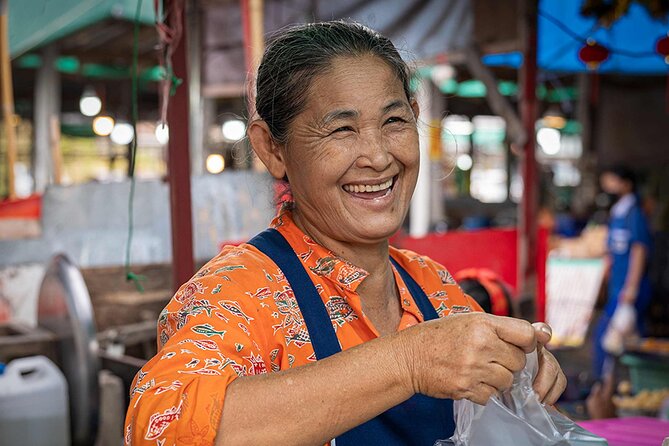
The meeting point is Hua Hin Clock Tower (HXC4+7VJ). You’ll start there at 4:30 pm and use the tour’s local transport rather than walking long distances.
This no-walking format is a big deal in Hua Hin. It keeps the evening comfortable, especially if you’ve already been walking around earlier in the day or you just want to focus on eating instead of pacing.
You’ll also get a mobile ticket, which is convenient when you’re moving around markets and don’t want extra paper.
Stop 1: the local market and learning to spot good ingredients
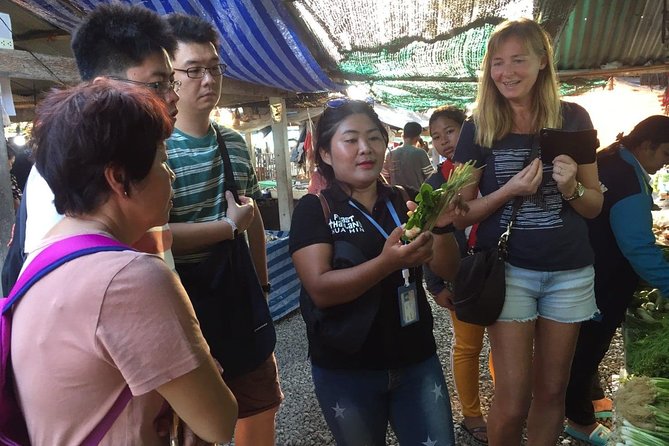
Your first major taste comes from a local food market with fresh Thai ingredients. This part is about more than eating right away. You get guidance on how to spot higher-quality produce—skills you can actually use later when you shop or cook at home.
You’ll typically have about 45 minutes here, and you’ll experience the social side of market dining. A lot of Thai street-food culture is designed for quick, stand-and-eat style meals, and that makes the market feel alive rather than staged.
What I like about starting here is that it gives you a baseline. Once you understand what “good” looks like—color, freshness, how ingredients are handled—you’re better prepared for everything that comes next.
Stop 2: two lesser-known local-style stops where people actually eat
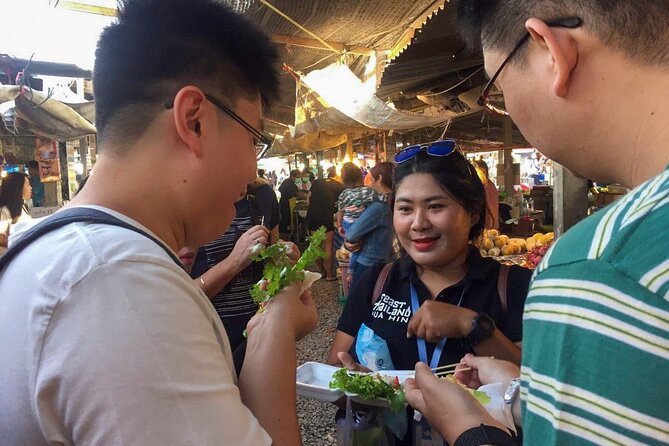
The middle stretch is where the tour earns its keep. You head to two lesser-known spots where locals eat, away from the most obvious tourist lanes. Instead of doing one big touristy stop, you get a change of scene and you sample more variety.
This section runs about 2 hours, and it uses local transport to keep things smooth.
What to expect here is practical food variety: snackable bites as well as more substantial street-menu items. The tour’s menu style is built around Thai comfort food favorites—think sausages, rice balls, and other street staples—plus explanations of what makes each dish what it is.
You may also visit a seafood-focused stop described as a salt-crusted fish restaurant. Even if you’ve tried Thai fish before, this kind of preparation changes the texture and the flavor profile, and the guide’s background makes it easier to understand why.
If you like to learn through comparison, this stop is good. You’ll see how similar ingredients show up in different forms across local stalls and casual restaurants.
Stop 3: Thai sweets and the final 30-minute sugar test
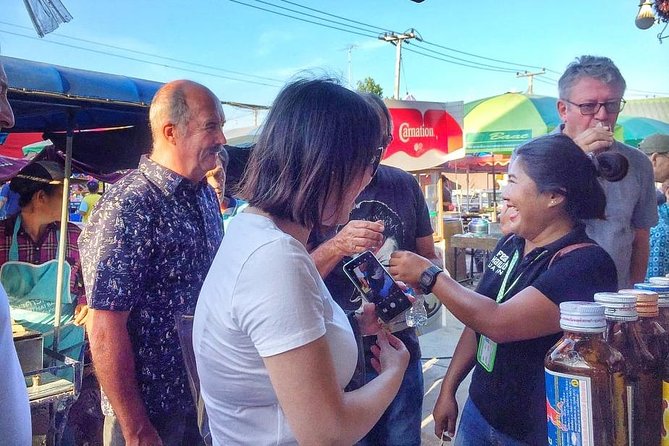
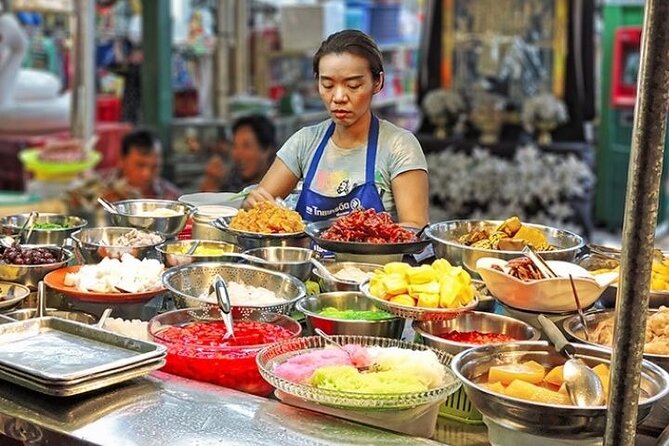
The tour ends with a popular sweets vendor, about 30 minutes. If you’re the type who usually skips dessert because it’s too sweet, don’t do that here. Thai sweets can challenge your senses at first—colors, textures, and flavors can feel unfamiliar—but they’re a big part of why street food tours are worth doing.
This is also a good moment to reset your palate. After savory snacks and salty bites, you get a calmer finish that still tastes distinctly Thai.
One practical note: sweets are often shareable, so don’t assume you need to eat everything offered. Taste, decide, then enjoy. The guide can usually help you figure out what you’re looking at.
Food tastings: what you’ll likely eat (and why it’s more than just snacks)
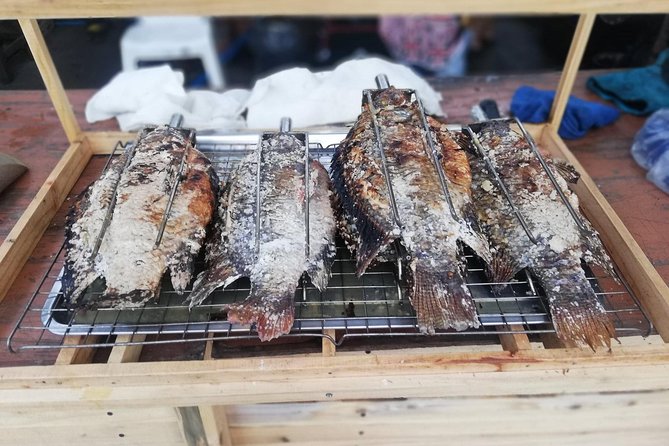
Across the evening you’ll get 10 to 15+ tastings and drink items, depending on group size, plus water. That “more than a few bites” volume is a real value point. You leave full enough that you usually won’t need a second meal immediately after.
The tour’s food direction is clear: you’ll try Thai street staples like rice balls and sausages, you’ll work through Thai sweets at the end, and you’ll get background on how these dishes are typically made and served.
Also, the structure matters. By separating the market start, the two local-style stops, and the sweets finish, you get variety in texture and flavor. That keeps the evening from feeling repetitive.
The guide factor: English support, humor, and dish backstories
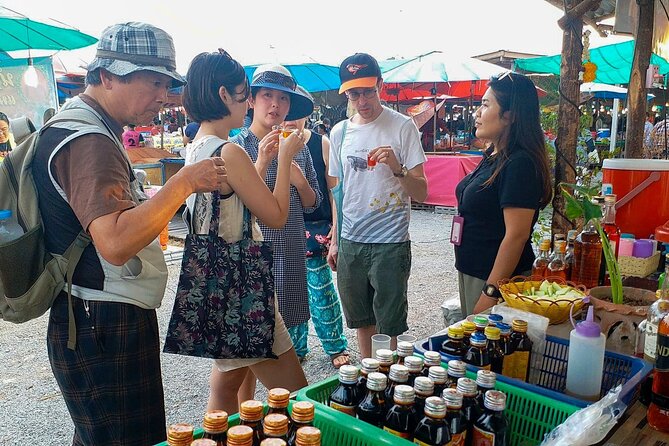
The tour includes an English-speaking licensed Thai tour guide. In practice, that means you’re not just being taken to places—you’re being taught how to read the food.
The guide’s job is to explain things like:
- what you’re tasting and why it tastes that way
- how to judge better ingredients at the market
- what to expect from Thai sweets when you get to that last stop
One guide associated with this experience, Cream, has been praised for being attentive, kind, and full of local knowledge. People also point out her humor, which matters more than you’d think. Street food eating is easier when you’re not worried about getting something wrong.
You also benefit from a smaller group. When there are only up to six people, it’s easier to ask quick questions without feeling like you’re interrupting.
Getting around on Songtheaw: efficient, comfortable, and avoids map stress
Transportation is included, and you ride on local Songtheaw. Since no walking is involved, you don’t have to worry about dragging yourself across multiple neighborhoods just to chase a few snacks.
This also reduces a common street-food-tour problem: trying to follow your own GPS while ordering from a menu in a language you don’t speak. Here, the tour takes the routing pressure off your plate.
And because you end back at the meeting point, you don’t need to solve the last-mile problem with tired legs and full stomach.
Who this tour is best for
This is a great fit if:
- you want a guided street food route rather than guessing at stalls
- you like learning what you’re eating, not just checking boxes
- you’re staying in Hua Hin for a short time and want a food-focused plan
- you prefer a small group (max 6) where you can talk to the guide
It’s not the right fit if you’re:
- vegetarian, vegan, or pescatarian, based on the stated unsuitability
- dealing with gluten intolerance
- allergic to nuts
- hoping for a fully customized menu with specific dietary needs, because you may miss 2 to 4 dishes depending on the restriction
If you have any restrictions, send them during booking. Don’t wait until the first stop—you want the guide to adjust how the tastings are handled.
A balanced view: what could feel “less perfect”
Every street food night has variables, and the tour is still no exception. Thai evenings can include rain, and even with local transport, weather can affect how pleasant the market atmosphere feels.
The bigger potential downside is food fit. If your diet is restrictive, this tour may feel frustrating because it’s built around local street favorites, not a tailored vegan or gluten-free route.
Finally, because it uses local transport rather than walking, you’ll miss some of the “wander and discover” freedom of DIY exploring. If you enjoy slow browsing and random detours on your own, you might feel the tour is a bit more structured than your style.
Booking timing and how this tour tends to run
This experience is commonly booked about 30 days in advance on average. If you’re traveling during a busy period, booking earlier gives you more date options.
Also note that the tour requires minimum numbers. If that minimum isn’t met, you may be offered an alternative date or a full refund. That’s worth knowing so you’re not caught off guard with last-minute plans.
Should you book Sunset Local Eats in Hua Hin?
Yes, if you want an easy win: a timed sunset plan with 10 to 15+ tastings, a real local-food guide, and transport handled for you. Starting at the Clock Tower, then moving from market to local-style stops to sweets gives you a complete arc for the evening.
Skip it (or look for another format) if you need a vegetarian/vegan-friendly route, have gluten intolerance, or have nut allergies. The stated limits are real, and you may end up missing multiple dishes.
If you’re a street food fan who wants to eat well without the stress of picking stalls blindly, this is one of the best ways to experience Hua Hin after the sun starts dropping.