REVIEW · YEREVAN
Yerevan Private Walking Food Tour
Book on Viator →Operated by 2492 Travel · Bookable on Viator
Six bites, six stories in Yerevan. This private walking food tour is built for getting oriented fast, with dishes that come with the why behind the taste, plus the guide’s city storytelling (I especially loved how guides like Anna, Ellen, and Lusine connect flavors to Armenian life and history). You’ll also like that the pace feels personal, not rushed. One consideration: at $220 per person, it’s a splurge, so you’ll want to be hungry for tastings and conversation, not just casual browsing.
What you’re really buying is structure. You walk between landmarks and food streets, learn what to look for in Armenian meals (and what people snack on), then end back where you started. It’s English-language and made for most travelers, and it stays “your group only,” so you’re not stuck following someone else’s agenda.
In This Review
- Key things that make this tour worth it
- How a 3.5-hour food walk helps you understand Yerevan
- Price and what you’re actually paying for
- Meeting point and start time mindset (Moskovyan pokhoc)
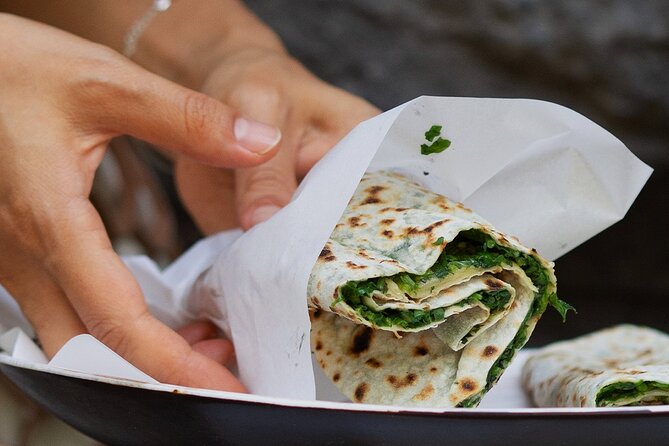
- Stop 1 at Cascade Complex: lavash with cheese and wild greens
- Stop 2 on Teryan Street: up to 20 wild herbs in grilled dough
- Stop 3 on Sayat-Nova Avenue: meat-topped round flatbread from repatriates
- Stop 4 on Ghazar Parpetsi Street: grape or cabbage leaves with rice and filling
- Stop 5 on Isahakyan Street: dumplings via the Old Silk Road, with yogurt
- Stop 6 on Mesrop Mashtots Avenue: sweet finish, afternoon donut or evening sugar-filled bread
- What’s included (and what to plan around)
- Guides, language, and the value of a personal food storyteller
- Pacing and how to get the best experience
- Who should book this private food tour
- Should you book the Yerevan Private Walking Food Tour?
Key things that make this tour worth it
- Private, group-only format: you won’t get mixed into a big crowd.
- Six focused food stops across classic Yerevan streets and avenues.
- Real food history in plain language, tied to where dishes spread and why.
- You’ll try both savory and sweet, with a different finish depending on afternoon vs evening.
- Included basics: bottled water, snacks, and gratuities (alcohol is on you).
How a 3.5-hour food walk helps you understand Yerevan
Yerevan can feel like a city you either rush through or take slow bites in. This tour is designed for the second option. In about 3 hours 30 minutes, you get a guided “route” through the city’s food culture—cheese-and-herb comfort, herb-heavy specialties, meat and dumpling styles, grape/cabbage rolls, and a sweet finish. It’s not just about tasting. It’s about learning the patterns behind the food.
I like that the stops are spread across the city in a way that also teaches you where things are. You’re not wandering randomly. You’ll start at a central meeting point near a major city landmark, then move street to street along well-known corridors, so the next day you’ll know how to navigate without second-guessing.
Price and what you’re actually paying for
At $220 per person, you’re paying for a private guide and a guided tasting sequence, with snacks, bottled water, and gratuities included. Alcohol isn’t included, which keeps the package simpler (and lets you decide if you want it). If you’re the type who likes learning through food—how ingredients travel, how recipes adapt—you’ll probably feel this is fair.
If you’re mainly after a view-heavy sightseeing day, you might find the food focus too dominant. Also, because it’s private, it’s harder to “share value” like you could on a group tour.
Meeting point and start time mindset (Moskovyan pokhoc)
The tour meets at the Alexander Tamanian Statue, 10 Moskovyan pokhoc, Yerevan 0009. It also ends back at the same meeting point. That’s practical: no end-of-day confusion, and it’s easier to plan dinner afterward.
It’s also listed as being near public transportation. In real terms, that means you won’t have to build your whole day around a taxi. Just give yourself a few extra minutes at the statue so you can spot your guide and start calmly.
One small planning note: confirmation is received at booking time in most cases, but if you book within one day of travel, you’ll get confirmation as soon as possible based on availability. So if your trip is tight, try not to leave it to the last minute.
Stop 1 at Cascade Complex: lavash with cheese and wild greens

Your first stop is the Cascade Complex, where you’ll kick off with a classic Armenia starting point: cheese and wild greens wrapped in lavash. This is one of those combinations that explains a lot about Armenian eating habits—simple ingredients, careful flavor balance, and food that works on the go.
Why this works as a first taste:
- You get the “baseline” flavor profile early (cheese + greens + lavash).
- It sets you up to recognize what’s happening in later dishes that use herbs and dough in different forms.
- It’s an easy way to start before you get too full, too fast.
The stop runs about 30 minutes, and the experience lists the admission ticket as free. That helps keep things moving.
A possible drawback here: because it’s a foundational bite, it might not feel as “dramatic” as some later items. But that’s kind of the point. It’s your palate calibration.
Stop 2 on Teryan Street: up to 20 wild herbs in grilled dough
Next up is Teryan Street, and it’s a herb-lover moment. You’ll try a traditional recipe connected with Artsakh (also known as Nagorno-Karabakh): up to 20 wild herbs stuffed in dough and grilled.
That number matters. It’s not “a little green seasoning.” This is built on the idea that mountain herbs aren’t a garnish—they’re the flavor. In plain terms, you should expect something more aromatic and layered than typical herb-forward food elsewhere.
Why I like this stop in particular:
- It shows you how Armenian cooking can be plant-driven, not only meat-driven.
- It gives you a “story” taste: herbs tied to a region, not random ingredients.
- The grilling adds a toasty, comfort-food edge to something that could otherwise feel too intense.
This stop also runs about 30 minutes with free admission ticket information. It’s a good moment to slow down, ask questions, and let the flavors register before moving on.
Stop 3 on Sayat-Nova Avenue: meat-topped round flatbread from repatriates
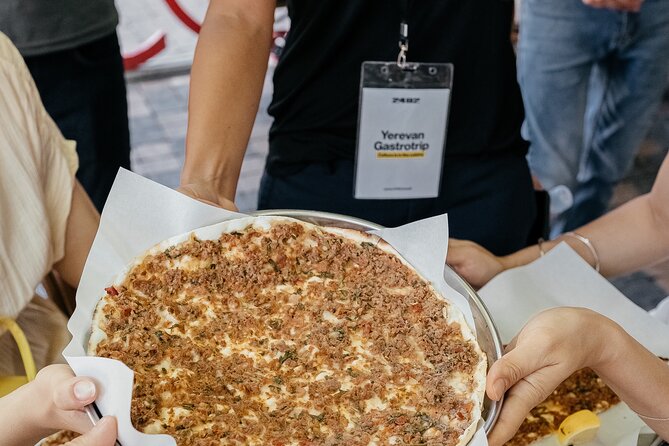
On Sayat-Nova Avenue, you’ll try an Armenian variation of a round flatbread topped with minced meat—a style popularized by repatriates from the Middle East.
This is the kind of food fact that makes a tour worth it. You’re not just eating a dish. You’re witnessing how people carry recipes when they move, then adapt them locally. It also helps you notice cultural mixing without needing a lecture.
What to expect:
- A hearty, savory bite.
- A feeling of familiarity if you’ve had similar flatbread styles in the region, but with an Armenian twist.
- A good transition from herb-heavy flavors to meat-forward comfort.
Again, it’s about 30 minutes, with free admission ticket information listed. If you’re trying to pace yourself, this is where you’ll likely realize you’re eating a full sequence, not just “samples.”
Stop 4 on Ghazar Parpetsi Street: grape or cabbage leaves with rice and filling
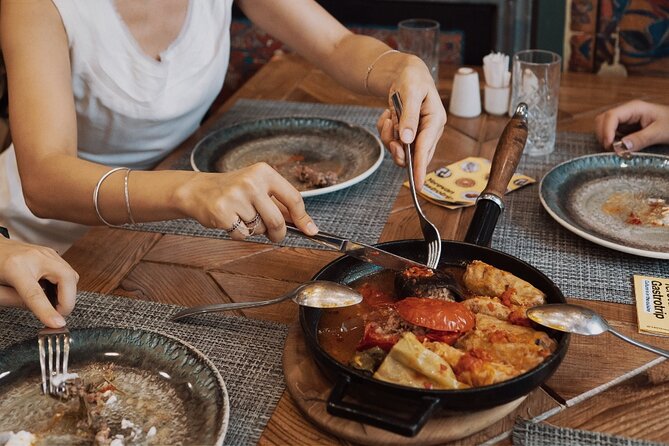
Then you get to one of the most recognizable Armenian techniques: stuffed grape or cabbage leaves. On Ghazar Parpetsi Street, you’ll taste versions filled with minced meat or vegetables and rice.
The interesting part is how this dish functions like a regional language. You can find similar stuffed-leaf styles elsewhere in the wider region, but the exact recipe changes. That’s why this stop is useful. It teaches you what’s shared and what’s distinctly Armenian in the details—filling style, herb use, and how rice is handled.
Why this stop often lands well:
- It balances earlier herb intensity with a comforting, wrapped-food structure.
- It’s filling without being heavy in the way some purely meat dishes can be.
- It’s a “home cooking” type of dish, so it helps you picture Armenian family meals.
It runs about 30 minutes as well, and admission ticket details are listed as free.
Stop 5 on Isahakyan Street: dumplings via the Old Silk Road, with yogurt
On Isahakyan Street, you’ll try crispy meat (or spinach) dumplings connected to East Asia via the Old Silk Road. You’ll get them with a fragrant sauce and yogurt drizzle.
This is a clever pairing on the tour. You’ve had herbs and flatbread and stuffed leaves. Now you get dumpling form—small, portable, and designed for street-scale eating. And you also get the “traveling recipes” story again, but in a different direction than the Middle East connection.
What makes this stop special:
- The dumpling format turns a big cultural story into something you can actually taste.
- The sauce + yogurt combination gives you contrast—savory, tangy, and aromatic.
- You’ll likely appreciate it even if you’re picky, because you can focus on sauce and texture rather than unfamiliar ingredients.
It’s also listed as a 30-minute stop with free admission ticket info. If you’re lactose-sensitive, keep in mind yogurt is part of this item.
Stop 6 on Mesrop Mashtots Avenue: sweet finish, afternoon donut or evening sugar-filled bread
You end on Mesrop Mashtots Avenue, with a sweet that changes by tour time:
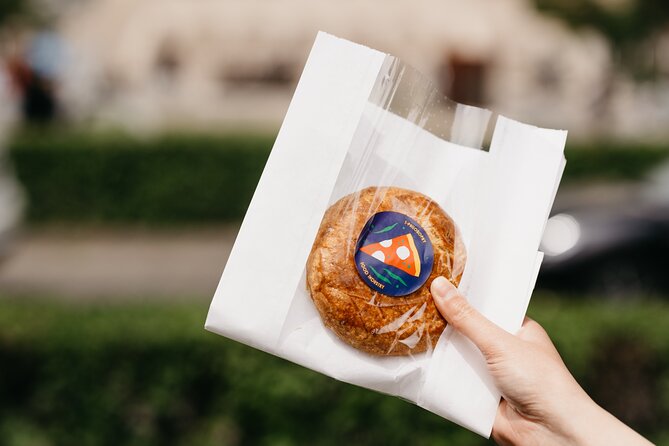
- Afternoon tour: a fried donut originally from Eastern Europe.
- Evening tour: a wheel of bread stuffed with a sugar-flour-butter filling.
This is a nice touch because it gives you a built-in reason to choose the time of day. If you want classic fried sweetness, go afternoon. If you prefer bread with a more cake-like filling, evening fits better.
Either way, it’s about 30 minutes, with free admission ticket details listed. The sweet finish helps you feel like you finished a meal, not a tasting sprint.
What’s included (and what to plan around)
The tour includes bottled water, snacks, and gratuities. That matters because food tours can quietly add costs once you start paying for basics. Here, at least the “keep you going” part is handled.
Alcoholic beverages are not included. So if you’re the kind of person who likes a glass with food, you’ll need to budget for it separately during the stops.
Guides, language, and the value of a personal food storyteller
This is where the reviews really line up: guides matter. You might meet Anna, Ellen, or Lusine, and the common theme is that the guide connects dishes to Armenian life and the city itself. You’ll hear English explanations with a conversational tone, not scripted museum talk.
What I think you’ll appreciate is how this tour gives you context without turning food into homework. The origin stories—Artsakh herbs, Middle East repatriate influences, Old Silk Road routes—help you taste with your brain turned on. You end up remembering flavors because you understand what shaped them.
Pacing and how to get the best experience
This tour is walking, and each stop is about 30 minutes. Total time is approximately 3 hours 30 minutes, which usually includes the time between points. So plan on comfortable shoes and a steady appetite.
A practical tip: don’t schedule a long dinner right before this. You’ll likely want time after the last sweet to cool down and decide what you want next.
If you’re prone to getting full fast, tell your guide at the start. Since it’s a private experience, adjustments are more realistic than on a big group tour.
Who should book this private food tour
I’d point you here if:
- You want your first Yerevan activity to teach you the city through food.
- You like tasting dishes you might not order on a menu.
- You’re interested in how recipes move and change, not just what’s on the plate.
- You want private pacing and a guide who can answer questions without rushing.
I’d skip it if:
- You mostly want scenic sightseeing and little food time.
- You don’t eat yogurt or don’t want to deal with meat-and-herb variety.
- You’re on a tight budget and can’t comfortably pay $220 per person.
Should you book the Yerevan Private Walking Food Tour?
If you’re spending any serious time in Yerevan and you like learning through what you eat, I think this is a smart purchase. You get six distinct Armenian-focused stops, a guide who brings the stories to life, and enough structure to help you understand where things are afterward.
Book it especially if it’s your first day in the city. It’s the kind of start that makes your next meals taste more intentional. And if you’re considering it because of the food origins—Artsakh herbs, Silk Road dumpling roots, Middle East flatbread influence—this tour matches that curiosity with real tastings.
If you want a quick gut check: if you can handle walking for a few hours and you actually enjoy trying unfamiliar dishes, you’ll likely have a great time.