REVIEW · KOTOR
3 Hour Kotor Food Tour – Rick Steves’ Recommended
Book on Viator →Operated by Miro & Sons Montenegro Tours · Bookable on Viator
Kotor tastes better on foot. This 3-hour walk turns the Old Town streets into a food route, with stops that mix local eats, classic drinks, and quick lessons you can use to explore on your own. I especially like the way the tour starts at the Kotor Farmers Market and then moves into the historic center without wasting time.
What I like most is the pacing and the payoff: you’re served enough food that you finish feeling satisfied, not just sampling crumbs. The guides I read about, like Ivan, Jelena, Nico, and Bogdan, come across as genuinely invested in explaining everyday Montenegro, not just listing dishes.
One thing to consider before you book: several tastings lean seafood-forward (mussels, squid/ink risotto, and related dishes). If seafood is a hard no for you, you’ll want to flag that early, because the tour’s focus is local specialties rather than menu customization.
In This Review
- Key highlights you’ll feel on the tour
- Start at Sea Gate: the walk-first design of this 3-hour tour
- Kotor Farmers Market: where prosciutto, cheese, olives, and grappa set the tone
- Amaro Montenegro in the Old Town: how a liqueur becomes a story
- St. Tryphon Cathedral square: sauces, bread, olive oil, and buzara mussels
- Black risotto with squid ink: bold flavor, paired with red wine
- Krempita finale with coffee: the sweet close that makes the whole tour stick
- Guides and group size: why people talk about the people, not just the plates
- Price and value: what $168.20 buys you in real terms
- Who this Kotor food and drink tour suits best
- Should you book this Kotor food tour?
- FAQ
- How long is the Kotor food tour?
- What time does the tour start, and where do I meet?
- Is the tour offered in English?
- What’s the maximum group size?
- What food and drink are included?
- Are alcoholic drinks included?
- Is there a dessert on the tour?
- Do I need a printed ticket?
- Can I get a refund if I cancel?
- Is it suitable for most travelers?
Key highlights you’ll feel on the tour
- Small group size (max 10) means more time for questions and a tour that stays flexible.
- Market-to-old-town route keeps things practical: food first, then drinks and dining classics in the old streets.
- Multiple Montenegrin tastings with alcohol included (18+) adds value beyond a typical snack tour.
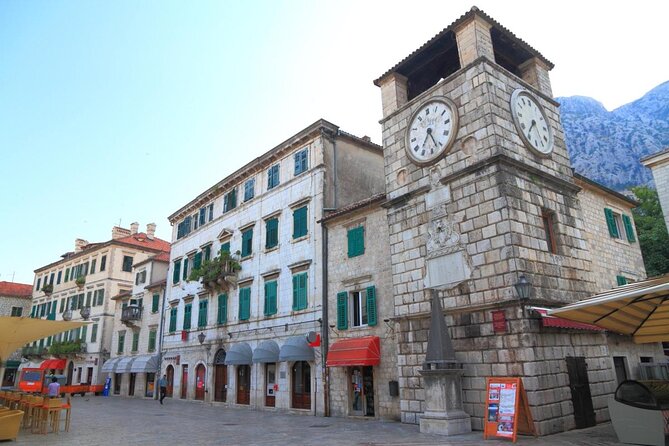
- St. Tryphon Cathedral area stop pairs breads, olives, olive oil, sauces, and mussels in buzara style.
- Black risotto with squid ink is a signature moment for people who like bold flavors.
- Krempita finale with coffee gives you a classic sweet ending instead of a rushed last bite.
Start at Sea Gate: the walk-first design of this 3-hour tour
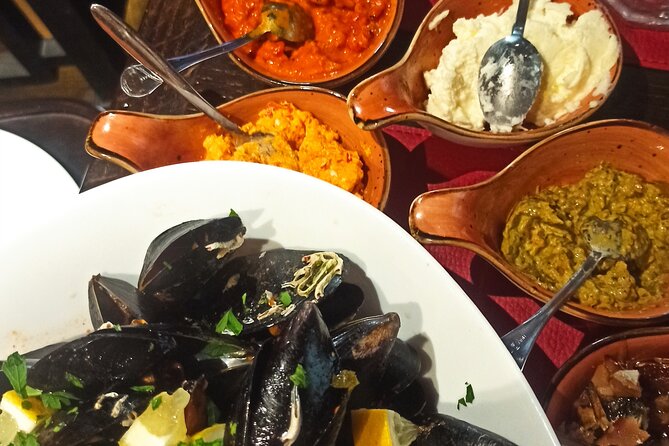
Your tour starts at Sea Gate in Kotor (the meeting point listed as Sea Gate CQF9+VVQ) at 12:00 pm, then you finish back at the same spot. That matters because it keeps the route simple: you’re already in the right part of town for the cobblestone maze of the Old Town.
The total time is about 3 hours, so think of it as a long, guided lunch plus snacks, not a half-day “see everything” sightseeing tour. With a group capped at 10 people, it’s easier to move as a unit without your schedule feeling like a stampede.
If you’re using public transit, the tour is listed as being near public transportation, which helps when you’re already planning how to get to Kotor. And since this is an English offering, you can focus on the story and the food without doing mental translation work.
Kotor Farmers Market: where prosciutto, cheese, olives, and grappa set the tone
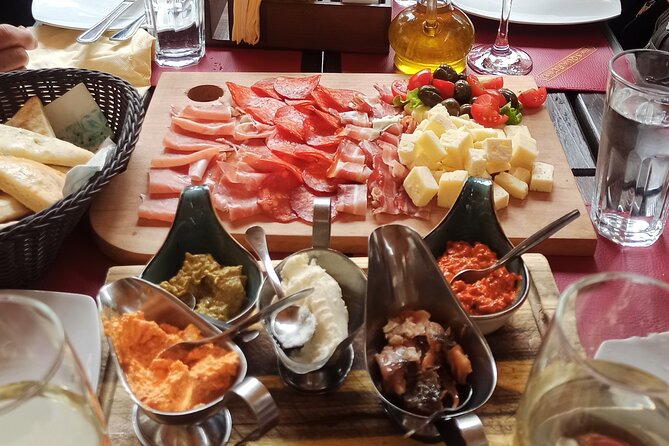
The first stop is the Kotor Farmers Market, and it’s a smart opener. Markets are where you learn what locals actually buy, not just what restaurants put on menus.
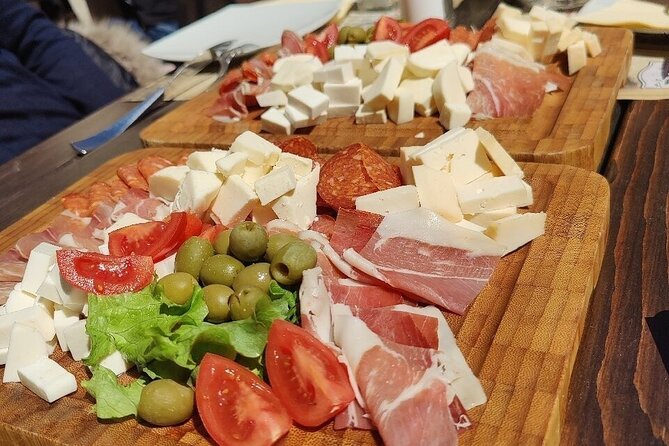
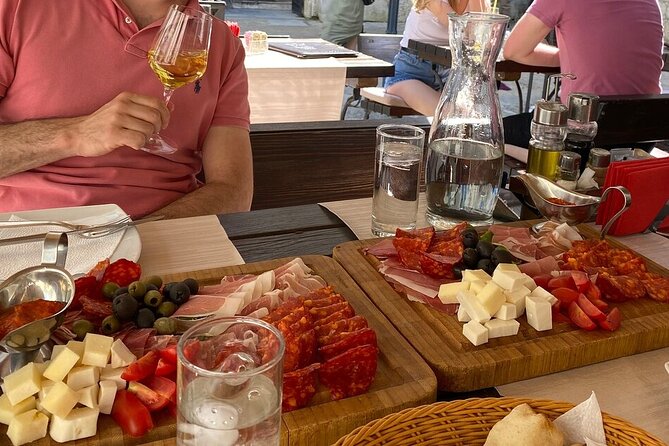
Here you’ll get a mix of local favorites: smoked ham (prosciutto), sausages, cheeses, marinated olives, and items that reflect the sea too, including fish brought in that morning. It’s not just variety for variety’s sake. This market start helps you understand the rest of the tour because the flavors you try first are the ones you’ll see again later in Kotor’s dishes and drinks.
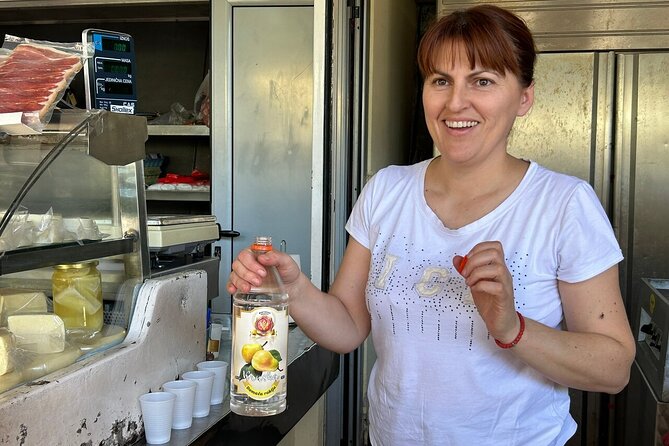
Alcohol kicks in early in a very Montenegro way: you’ll also taste grappa, which locals use to get the appetite going. If you’re the type who likes to pair food with a little local culture, this part is one of the best values on the whole schedule because you’re not just eating—you’re learning what people consider normal day-to-day.
One practical note: market stops can feel busiest with crowds, so if you’re sensitive to noise or tight spaces, keep close attention to the group and don’t aim to wander ahead.
Amaro Montenegro in the Old Town: how a liqueur becomes a story
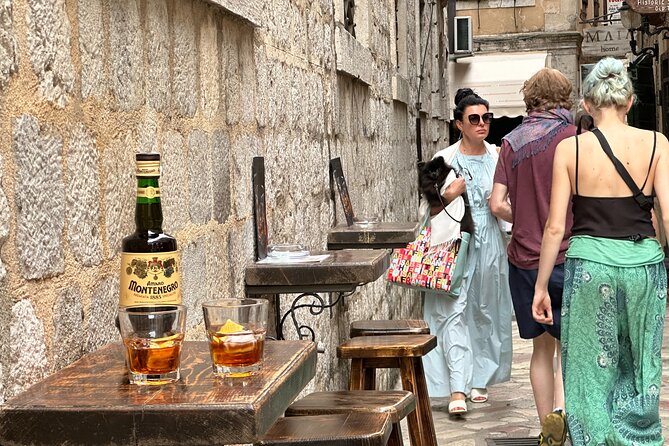
After the market, the tour moves into the Old Town for a drink stop in a historic bar setting. You’ll enjoy Amaro Montenegro, served as a tasting in a bar described as steeped in local tradition.
The tour focuses on more than the taste. Amaro Montenegro is built around a secret blend of 40 botanicals, with notes that include vanilla, orange peel, and eucalyptus. That botanical mix is why this stop works: once you taste it, the flavor feels like it belongs to the region instead of to a generic cocktail menu.
This is also where the guide stories start to matter. In the feedback, multiple guides—people such as Jelena, Nico, and Djukan—are praised for connecting history to daily life. If you like history, even in small doses, this is the stage where it clicks. You’re standing in the Old Town with a local liqueur in your hand, and the explanation makes the place feel more legible.
St. Tryphon Cathedral square: sauces, bread, olive oil, and buzara mussels
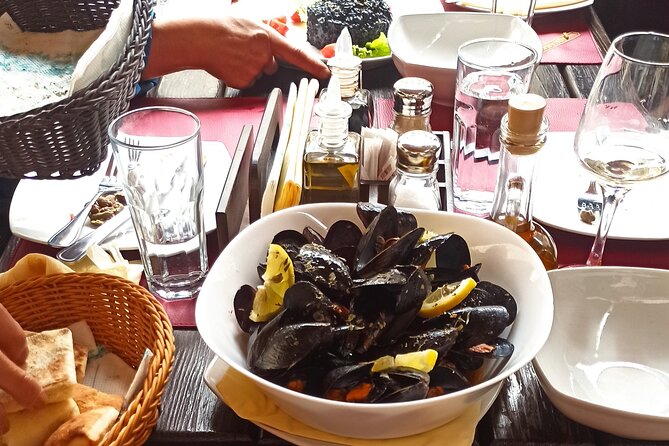
The tour then heads toward Trg Sv. Tripuna, the lively square near St. Tryphon Cathedral. This stop is built around sauces and the idea that old recipes are still alive in people’s kitchens.
You’ll get bread paired with olives and olive oil, plus an array of sauces described as coming from long-held family recipes. That matters because it teaches you how Montenegrin table flavors are assembled: not just one main dish, but the supporting cast—oil, dips, sauces—working together.
The main hot moment here is mussels served in buzara sauce, a classic style that shows up across the Adriatic, but is treated here as a Montenegro specialty. You’ll also finish this portion with a glass of Montenegrin white wine.
Why I think this stop is a highlight: it’s where the tour shifts from cold-and-easy tastings into a proper seafood plate you can’t replicate at a casual snack stall. If you’re a seafood fan, this is the place you’ll remember.
If you’re not, don’t panic—there’s still plenty of food earlier and later. But since this specific stop includes mussels, decide early whether you’re comfortable with seafood-focused tastings.
Black risotto with squid ink: bold flavor, paired with red wine
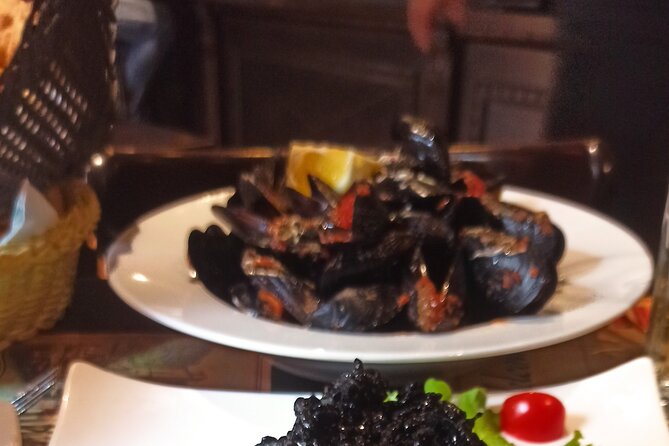
The next Old Town break takes you to a quieter corner where you’ll try black risotto made with squid ink and tender pieces of squid. You’ll also get Montenegrin red wine with this meal.
This is the tour’s signature “taste it or miss it” moment. Several guides get praised for steering the group and explaining what you’re eating, but the food choice itself is still a personal preference. Seafood lovers often rave about it, while a minority of feedback called it disappointing.
If you like strong, briny flavors and you’re curious about squid ink’s earthy, savory character, you’re in for a fun culinary challenge. If you’re on the fence, treat this as the part where you should pay extra attention to how the dish is described so you can decide whether to fully commit.
And if you hate waste? One review described a portion where the group was expected to finish what was served at the table. The broader lesson for you: come hungry, and be ready for a “real meal” feeling rather than a tiny bite.
Krempita finale with coffee: the sweet close that makes the whole tour stick
To wrap things up, you’ll finish in the Old Town with krempita cake, a cream pie made with layered pastry and vanilla cream. This stop is intentionally sweet and finishing-focused—your kind of dessert if you like custard-style flavors.
Krempita is served as the tour’s final indulgence, paired with coffee. It’s a smart ending because coffee helps balance the earlier savory and alcoholic tastings, and it also gives you something you can keep enjoying once the tour ends.
A lot of feedback specifically called out krempita as a favorite, and that tracks with how the tour is designed: the day is salty, then briny, then finally a soft, creamy finish that feels like a traditional local reward.
Guides and group size: why people talk about the people, not just the plates
This tour caps at 10 travelers, and that changes the feel. With a small group, you get more direct attention, and you can ask questions without waiting for the guide to catch every voice.
The guide names showing up in the feedback are a big part of why this tour rates so highly. People mention Ivan as knowledgeable and friendly, Jelena for humor and local stories, Nico for insights into Kotor and everyday life, and Bogdan for combining food with country context. There are also mentions of Nikola, Djukan (Djuka), Rajan, and Stephan, which suggests the guiding style is consistent even when the specific person changes.
What I’d recommend you watch for as you go: listen for the “why,” not just the “what.” When a guide can connect Amaro Montenegro to local tradition, or connect buzara style to regional cooking habits, you leave with a better mental map of Montenegro.
English is listed as the offered language, and that’s important for this type of tour. Food tours can turn into a guessing game if the guide can’t explain the flavors clearly.
Price and value: what $168.20 buys you in real terms
The price is $168.20 per person, and the value comes from the combination, not any one item. You’re not just paying for a walk and a few samples. The tour includes brunch, snacks, bottled water, coffee and/or tea, and alcoholic beverages for adults (18+)—plus all fees and taxes are included.
So if you’re trying to decide whether it’s “worth it,” I’d frame it like this: you’re paying for multiple servings spread across the Old Town, guided by someone who can interpret what you’re tasting, and you’re also buying convenience (a planned route in a compact area).
For your budget, the biggest practical win is that you’re likely to leave full. That’s not a soft claim—it shows up repeatedly in the feedback as a key satisfaction point. If you’d otherwise pay for lunch, dessert, drinks, and pay for your own wandering time, this turns into a more even comparison.
Do note the adult-only alcohol rule. If you’re under 18, the alcoholic tastings wouldn’t apply, and that’s something to confirm with the operator.
Who this Kotor food and drink tour suits best
This is a great match if you want Kotor Old Town flavor with minimal planning. You get a guided path through key areas and tastings that are closely tied to local eating habits, from market items to liqueur to mussels to black risotto to krempita.
It’s also a solid pick if you like a mix of food and storytelling. Many guide comments mention history and perspective, not just the mechanics of serving tastings.
If you’re traveling solo, the small group format can feel comfortable because you’re not stuck with a huge crowd. Multiple reviews specifically praised the experience for solo travelers.
The only real mismatch I’d warn you about is seafood preference. Several dishes on the route are seafood-based, and at least one reviewer felt the food selection leaned too far toward seafood. If you know you dislike mussels, squid ink, or squid, you should think twice or at least discuss it upfront with your guide.
Should you book this Kotor food tour?
I’d book it if you want a guided “best of” route through Kotor’s food culture in about three hours, with enough tastings to matter and a guide who explains what you’re eating. The strong scores and the repeated mentions of guides like Ivan, Jelena, Nico, and Bogdan point to a real strength: local storytelling paired with practical food stops.
I’d skip or reconsider if seafood-based dishes are a dealbreaker for you, because the tour includes mussels and black ink risotto as built-in highlights. And if you care more about shopping than eating, remember this is a tasting-focused walk, not a market-hunt with lots of browsing time.
If you’re the kind of traveler who loves to leave a place with both fuller stomach and clearer context, this one is easy to recommend.
FAQ
How long is the Kotor food tour?
The tour lasts about 3 hours.
What time does the tour start, and where do I meet?
It starts at 12:00 pm. The meeting point is Sea Gate (Sea Gate CQF9+VVQ, Kotor, Montenegro).
Is the tour offered in English?
Yes, the tour is offered in English.
What’s the maximum group size?
The group is limited to a maximum of 10 travelers.
What food and drink are included?
Included items are brunch, snacks, bottled water, coffee and/or tea, and alcoholic beverages (for adults 18+).
Are alcoholic drinks included?
Yes. Alcoholic beverages are included for adults only (18+).
Is there a dessert on the tour?
Yes. The tour ends with krempita cake, paired with coffee.
Do I need a printed ticket?
A mobile ticket is offered.
Can I get a refund if I cancel?
Free cancellation is available if you cancel at least 24 hours before the experience’s start time for a full refund. If you cancel less than 24 hours before, the amount paid is not refunded.
Is it suitable for most travelers?
Most travelers can participate. Service animals are allowed, and it’s near public transportation.