REVIEW · DENPASAR
Bali: Bites Food Tour with over 15 Tastings
Book on GetYourGuide →Operated by A Chef's Tour · Bookable on GetYourGuide
Old Denpasar is where Bali food starts making sense. This 4-hour Bali Bites Food Tour turns street snacks into a guided tour of how people actually eat, shop, and celebrate. I like the way the route keeps you moving through local warungs and old backstreets instead of only feeding you the same tourist-menu dishes.
Two things I really appreciate are the sheer number of tastes—15+ bites across multiple stops—and the small-group pace (max 8). You’ll also get taught what you’re eating and why, including references to Balinese culture and even the chance of a local blessing and arak. One drawback to plan around: it’s not set up for severe allergies, celiac disease, or strict vegan diets, and it can be risky with cross-contamination.
In This Review
- Key things to know before you go
- Old Denpasar is the best classroom for Bali food
- Where to meet: Inna Bali Heritage Hotel, then walk into the evening
- The 4-hour rhythm: 7–8 stops that add up to a full meal
- What you’ll taste: from pisang goreng to ayam betutu chicken
- The street-to-warung route: why small places matter more than big menus
- The market stop: ingredients you can actually picture
- Pacing, portion reality, and how to avoid feeling stuffed
- Arak, blessings, and the culture of why the food tastes like it does
- Price and value: $45 for 15+ tastings is a real deal
- Food safety, gluten, and who should think twice
- Logistics that make the evening smoother
- Who should book this Bali Bites tour
- Should you book Bali Bites Food Tour in Denpasar?
Key things to know before you go
- 15+ tastings on 7–8 stops gives you a real “progressive dinner” feel
- Old Denpasar backstreets + produce market show the ingredient side of Balinese cooking
- Max 8 people means you can hear your guide and actually ask questions
- Rain or shine—bring an umbrella and wear shoes you can walk in
- Not included: alcohol, and no hotel pickup/drop-off (easy meeting point instead)
Old Denpasar is the best classroom for Bali food
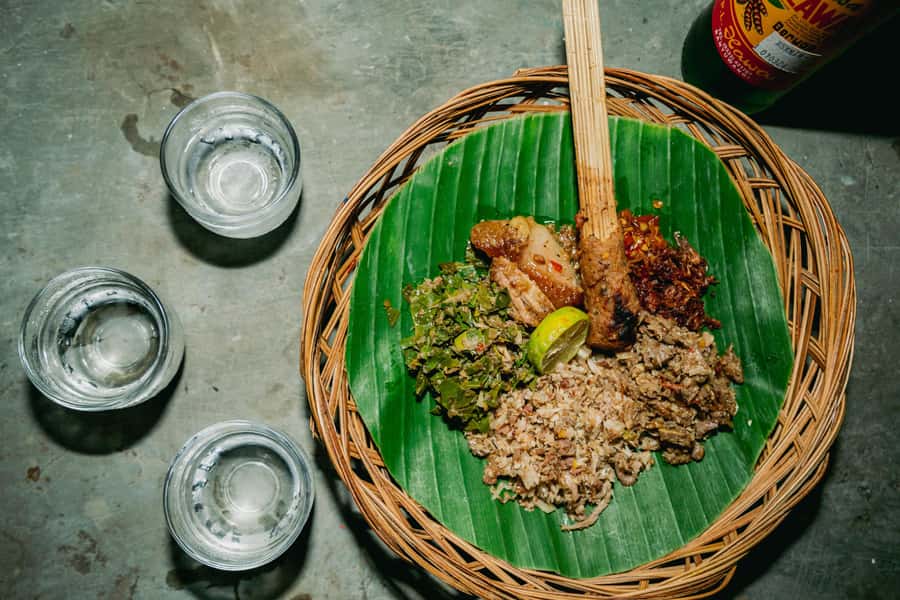
Bali’s beach strip is handy, but it can also hide what makes the island’s food special. This tour is built around the idea that if you want the real flavor logic—spice, texture, and the way sambal shows up everywhere—you have to eat where locals eat.
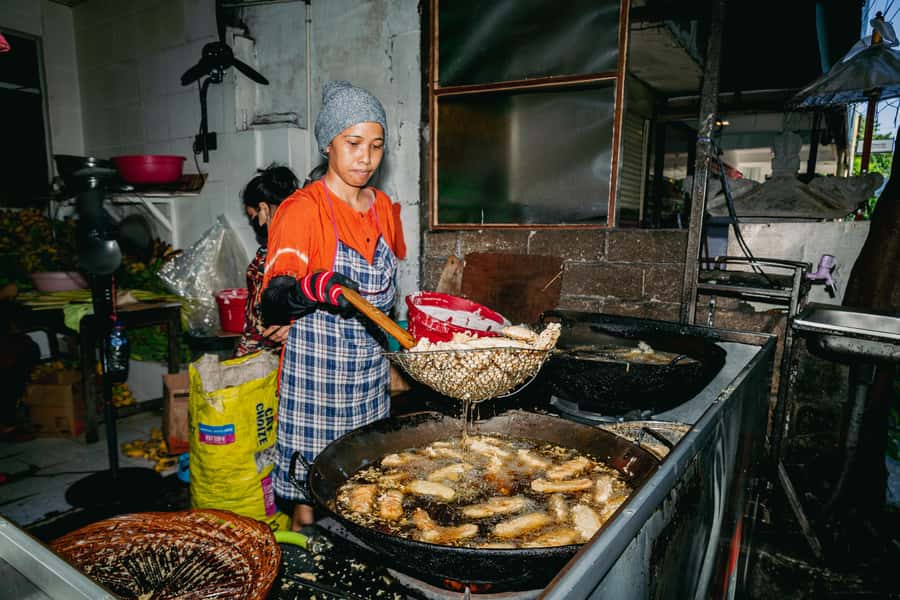
The setting matters. Old Denpasar has that “everywhere is a kitchen” energy: vendors working late, small warungs that look modest from the street, and families who’ve been running the same spots for decades. By the time you hit the Badung night market finish, you don’t just remember dishes—you start recognizing patterns in how Balinese and Indonesian food is put together.
You can also read our reviews of more food & drink experiences in Denpasar

Where to meet: Inna Bali Heritage Hotel, then walk into the evening
Your meeting point is simple: the terrace bar/restaurant of the Inna Bali Heritage Hotel, in Denpasar city. It’s at the outdoor bar area across the road from the hotel sign with white letters, and your guide is usually wearing an A Chef’s Tour t-shirt.
I like this setup because it’s easy to find by taxi from the beachside areas (Kuta, Seminyak, Canggu, Sanur, and beyond). It also means you’re not waiting around for a pickup window that can stretch a tour start time.
From there, the tour becomes a true walking night: short hops between neighborhoods, then on foot long enough to feel Denpasar’s street-food rhythm. If you’re the type who needs to know exactly where you’ll be standing, this is the kind of tour where you get your bearings fast.
The 4-hour rhythm: 7–8 stops that add up to a full meal
The promise here is straightforward: a movable feast with a small group, usually hitting 7–8 stops around old Denpasar and totaling 15+ tastings. The time is about 3–4 hours depending on pace, and the food volume is big enough that you should come hungry.
In practice, this works like a progressive dinner. You start with crispy and snackable items, then move toward heavier, slower-cooked dishes and soups. You finish with dessert at the Badung night market, which is where things feel most celebratory—sweet, casual, and very “walk-up and eat.”
You’ll also get bottled water and local drinks. Alcohol isn’t included, so keep that in mind if you were hoping the tastings come with a buzz.
What you’ll taste: from pisang goreng to ayam betutu chicken

This tour’s tastings aren’t random. They’re arranged to show range: crunchy first, then savory, then deep-flavored slow cooking, then noodles and soups, and finally dessert.
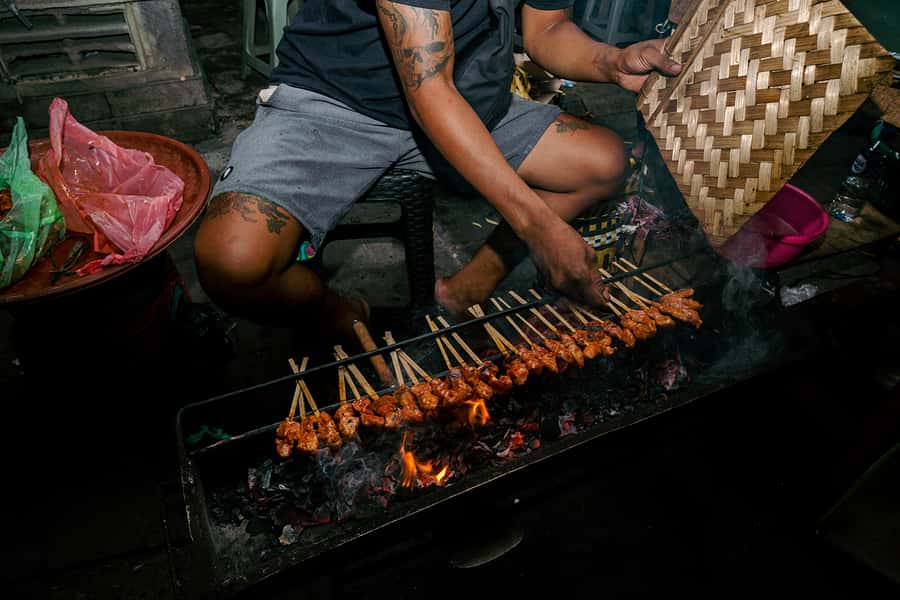
Early bites often include pisang goreng (crispy banana fritters, Indonesian-style) and a sate with sambal. Those two alone do a lot of work for you: the banana teaches crunch and sweetness, while the sate teaches how sambal brings heat and brightness without needing a fancy sauce.
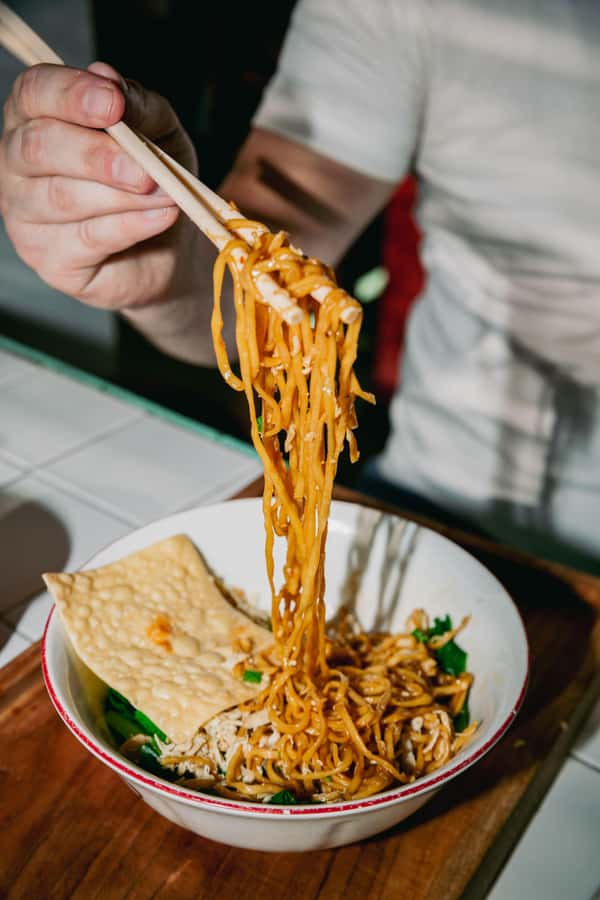
Later you might try wok-fried yamien noodles, tipat tahu (fried tofu with peanut sauce), and more complex meats like ayam betutu—a Balinese chicken known for its slow-cooked depth. One standout soup stop can be soto babat (beef tripe soup), served at a shack that’s been operating since 1969 (a real “family recipe, still going strong” kind of detail).
Dessert can include things you’d rarely order on a normal dinner run. In the tastings seen on past tours, banana pancakes, dumpling soup-style sweets, and even jackfruit ice cream have popped up. That matters because it shows how desserts in Indonesia aren’t always just a sugary afterthought—they can be a whole flavor category.
The street-to-warung route: why small places matter more than big menus
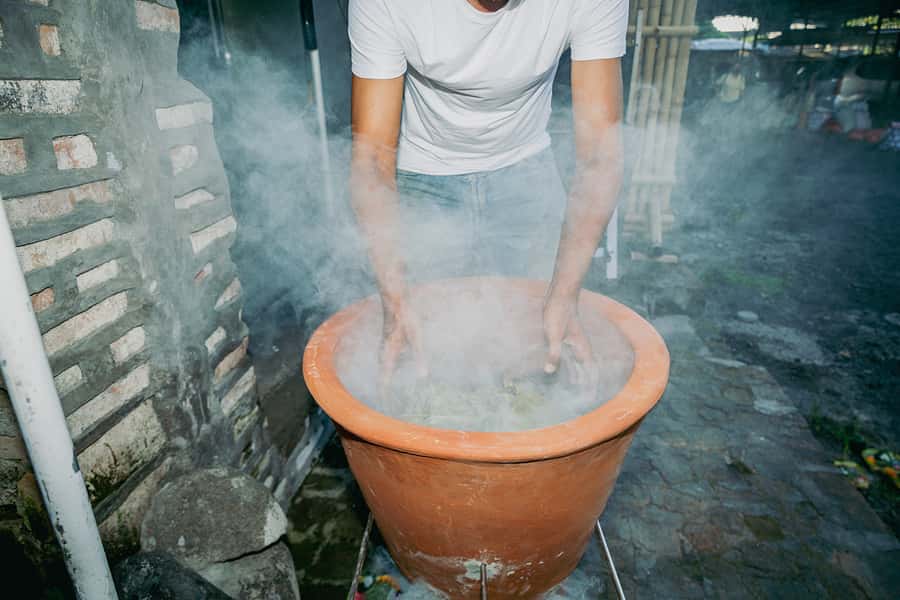
A big reason this tour feels worth it is the target: humble, beloved warung eateries and street vendors. These places are where you see the cooking pace and portioning style that defines local eating. You also get access to food you might not feel brave enough to order alone.
I also like that the stops tend to mix texture families. You’re not only getting grilled meat or only getting noodles. You’ll likely bounce between crispy fritters, saucy tofu, soups, and noodle dishes. That variety keeps you interested even when you’re getting full—because the next stop changes what your mouth expects.
And the guide does something practical here: they connect what you’re tasting to local food culture. Some guides associated with this tour—like Rasyid, Ras, and Russ—are described as weaving explanation into the walk, not turning it into a lecture. The payoff is that you’re not just eating; you’re learning what to look for next time you’re ordering in Bali.
The market stop: ingredients you can actually picture
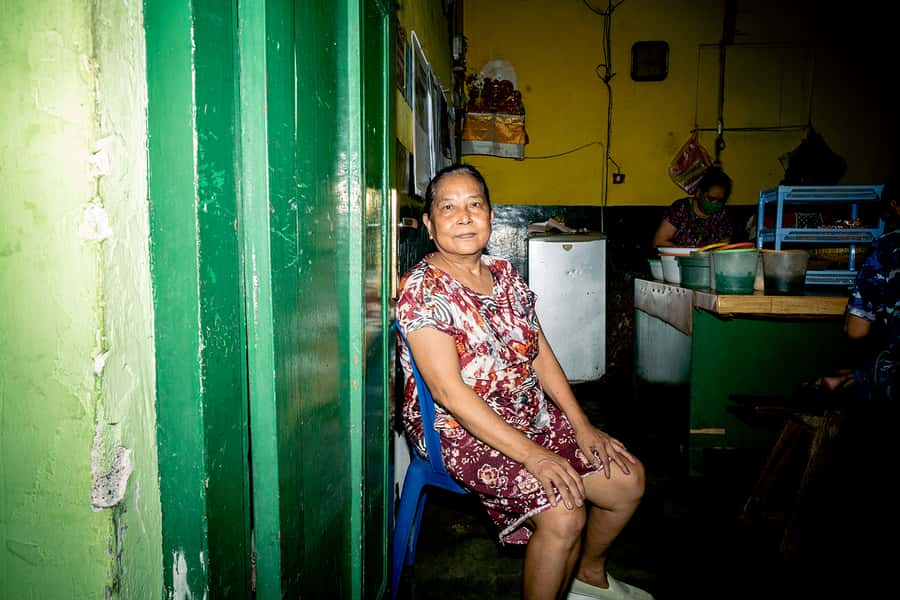
One of the best parts of this tour is the produce market time. You’ll get an amble through a local market to learn about ingredients that show up in Balinese cooking. This is the kind of stop that quietly upgrades your whole trip.
Even if you don’t memorize every ingredient, you start noticing patterns: what’s fresh, what’s chopped, what’s dried, and what gets used in spice paste. It also teaches you how “simple street food” is often built on very intentional flavor work.
By the time you return to eating—often with sauces and heat—you understand where those flavors come from. For me, that’s the difference between a fun night out and a night that makes your future meals easier.
Pacing, portion reality, and how to avoid feeling stuffed
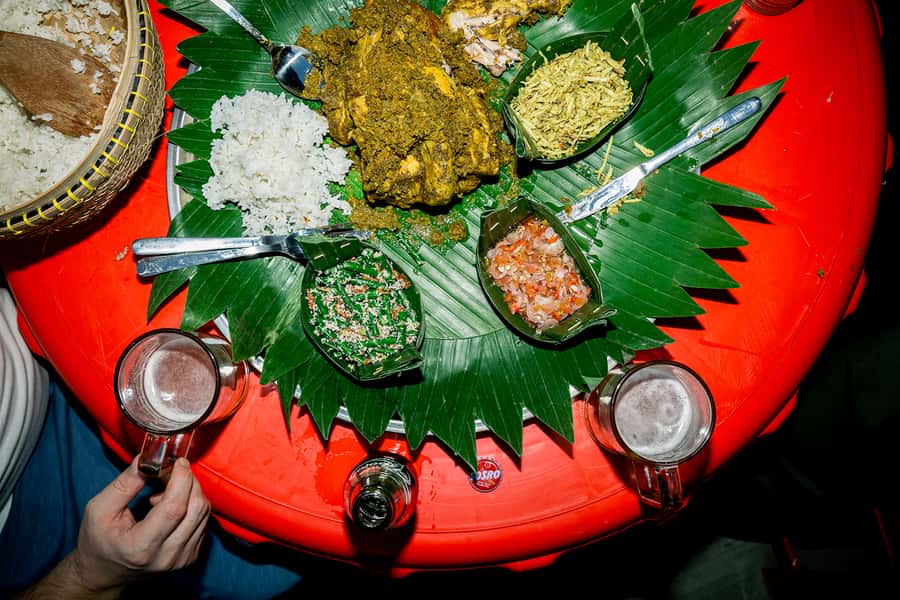
This tour gives you so much food that you should treat it like a main event, not a snack tour. You’ll probably end up eating more than you expected. Past participants often emphasize that you need room and that it can replace a full meal.
The route is also designed to keep the walking portion “easy-paced.” Still, you should wear comfortable shoes. If rain is likely, bring an umbrella—this runs rain or shine.
If you’re very sensitive to heavy meals, keep your expectations realistic: you’re sampling multiple dishes, and each stop is meant to be a proper taste, not a tiny nibble. If you have a picky palate, it helps to be open-minded but not pressured. The tour isn’t supposed to force you through every bite.
Arak, blessings, and the culture of why the food tastes like it does
Balinese food isn’t only about seasoning. It’s tied to daily life, ritual, and the island’s own way of blending flavor with meaning. This tour reflects that with moments like a Balinese blessing around the backstreets of old Denpasar.
There can also be a chance to try arak, the local firewater. Important practical note: alcohol isn’t included, so if arak appears in the program, it may be treated as a taste moment rather than a full drink. Plan for that, and also plan for your own comfort level.
Cultural details like these are why a street-food walk can feel more than just eating. You’re learning the island’s food logic—heat, sweetness, aromatics, and the role of communal spots where people gather to eat.
Price and value: $45 for 15+ tastings is a real deal
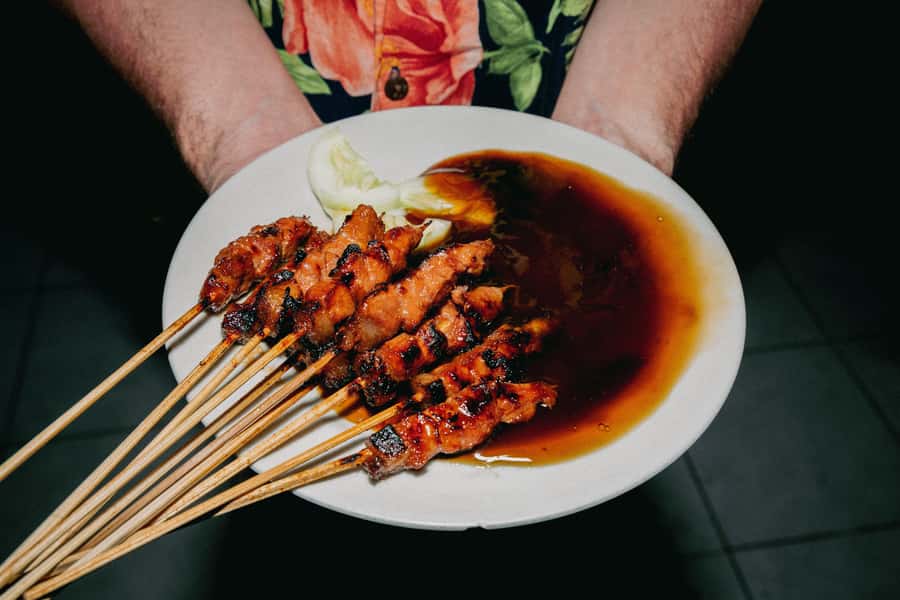
At $45 per person, the value works best if you actually use the tastings fully. This price isn’t about one fancy restaurant meal. It’s about multiple small servings across local stops, plus bottled water and local drinks.
The math is simple: if you’d normally pay restaurant prices for even half a dozen dishes, you’d blow the budget quickly. Here, your “bundle” is the movement between vendors, the small-group format, and the guided explanations that help you choose intelligently on your own later.
The only time the value feels weaker is if you arrive too full or refuse a lot of items. This is one of those tours where a light breakfast is the move, not a big lunch.
Food safety, gluten, and who should think twice
This is the part you should read closely. Street food means some risk by nature, even when vendors handle things well. The tour’s guidance is explicit about limitations: it’s unsuitable for severe allergies because of possible traces and cross-contamination.
Gluten rules are also not “safe by default.” The tour notes it can be suitable for mild gluten intolerance, but it advises against celiac disease, due to traces of gluten in a few tastings and the unavoidable use of soy sauce in about 3–4 tastings.
Diet rules are strict in ways that can surprise people:
- Vegans: not suitable
- Vegetarians: listed as not suitable
- Vegetarian diets have 3–4 fewer tastings, because some vendors have limited alternatives
Pregnancy is another hard stop. It’s listed as not suitable for pregnant women.
If you’re deciding between this tour and another food experience, these restrictions should weigh heavily. When food safety is the top priority, you’ll need to pick something with more controlled ingredients and fewer “shared kitchen” variables.
Logistics that make the evening smoother
A few practical pieces make a difference on a walking tour like this:
- The group is capped at 8 participants, so it doesn’t turn into a noisy herd.
- There’s no hotel pickup/drop-off. That’s a tradeoff: fewer delays, but you’ll need to get yourself to the meeting point.
- You’re walking in old Denpasar streets at night. Comfortable shoes matter more than style.
- Bring weather-appropriate clothing and an umbrella if there’s rain in the forecast.
One more tip: since you’re finishing at Badung Market, plan how you’ll get back after dinner. If you’re using taxis, having your phone data or a backup plan helps.
Who should book this Bali Bites tour
This fits you best if you want:
- Authentic Balinese and Indonesian street food, not a restaurant mash-up
- A guided night walk through old Denpasar with real vendor stops
- Lots of tastings so you can sample beyond your comfort zone
- A small group format where you can hear your guide and get explanations
It’s also ideal if you like learning how food is made and how local markets shape flavor. The produce market stop and the way dishes are sequenced make this more educational than many simple “eat here, then there” tours.
I’d steer you away from booking if you have severe allergies, celiac disease, or pregnancy, and if your diet is vegan or vegetarian in a strict way.
Should you book Bali Bites Food Tour in Denpasar?
Book it if you’re hungry for Bali food that feels local—warungs, street vendors, noodles, soups, and dessert—and you want your night to end at Badung night market instead of back at your hotel.
Skip it if your dietary needs are strict (especially allergies or celiac) or if you want alcohol included. Also skip if you hate walking at night. Even though the pace is easy, it’s still a walking food tour.
If you’re good with the restrictions and you come prepared with comfortable shoes, an umbrella if needed, and a light stomach, this is the kind of tour that turns one evening into a real food education.