REVIEW · BARI
Bari: Street Food Tour on Segway
Book on GetYourGuide →Operated by VELO SERVICE Tour Operator · Bookable on GetYourGuide
Bari tastes better at Segway speed. This tour pairs old-town Bari with street-food stops, so you’re learning the city’s stories while you’re eating your way through it. You start with a short riding lesson and then roll through the lanes with a local guide, with small-group energy (limit of 3) that keeps questions coming, whether you’re with guides like Carlotta, Barbara, or Debora.
I especially like the food lineup. You’ll hit a panificio for focaccia barese, then move on to a traditional rotisserie for bread paired with octopus, plus fried street snacks like sgagliozze or panzerotti, and you’ll finish with a gelato stop where you choose your favorite flavor.
One possible drawback: a Segway does require balance. Even with training, it may not feel comfortable for everyone—people who aren’t confident with the platform might prefer staying off it, and the tour isn’t suitable for mobility impairments or people under 99 lbs (45 kg).
In This Review
- Key highlights at a glance
- Segway + Street Food: why Bari’s old town fits this format
- VELO SERVICE starting point: lesson, luggage, and what to expect on Day One
- The old-town sights: Basilica of Saint Nicholas, Sabinus Cathedral, and Swabian Castle
- The food stops that matter most: focaccia, octopus bread, fried street snacks
- Wine and gelato: pacing that keeps you hungry (in a good way)
- Ending in the modern French part: squares, theaters, seafront, and the fish market
- Guides who make it click: humor, history, and handling surprises
- Price and value: what you get for about $113
- Who should book this Segway street food tour, and who should skip it
- Should you book? My practical take
- FAQ
- How long is the Bari Street Food Tour on Segway?
- Where does the tour start and end?
- What food is included in the tastings?
- Is wine included?
- What languages is the guide available in?
- Is this tour suitable for people with mobility impairments or under 99 lbs (45 kg)?
Key highlights at a glance
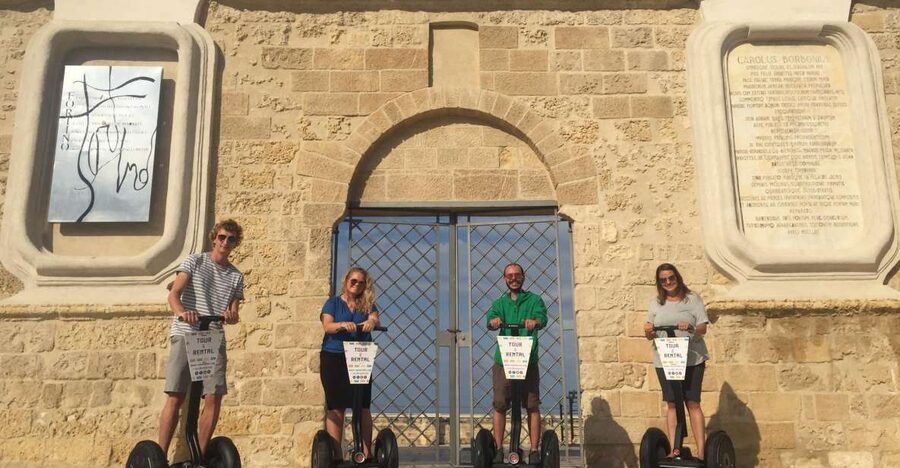
- Small group of 3: faster pacing and more guide attention
- Segway training first: a short lesson before you tackle the old town
- A full food trail: focaccia, octopus bread, fried snacks, wine, and gelato
- Old-town landmarks: Basilica of Saint Nicholas (crypt), Cathedral of Saint Sabinus, Swabian Castle exterior
- Good timing for city energy: you end near the lively seafront and fish-market area
Segway + Street Food: why Bari’s old town fits this format
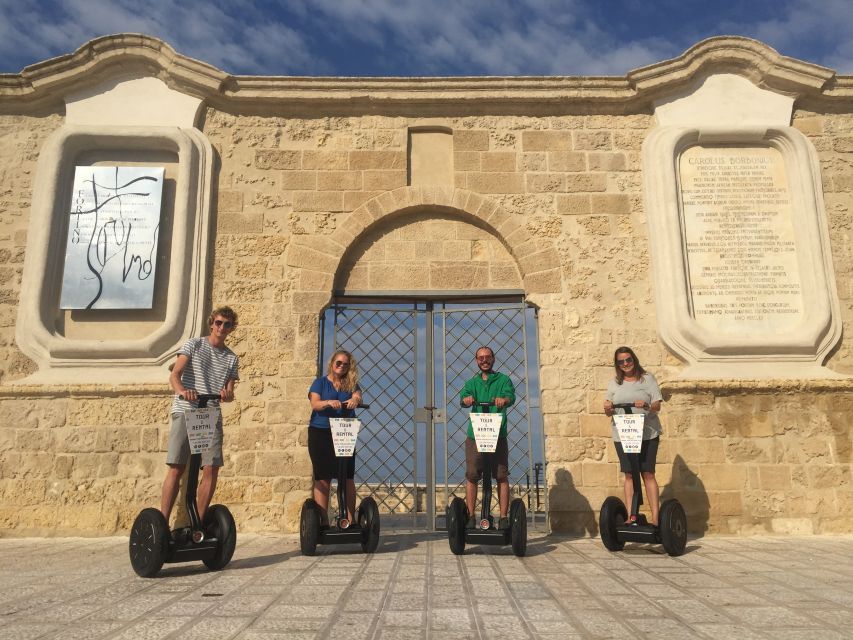
I like tours that make you move through a place the way people actually experience it. Bari’s old town is all tight lanes, sudden views, and little corners that reward slow wandering. On a Segway tour, you still get that “turn-a-corner” feeling, just faster and with less leg fatigue than nonstop walking.
The best part is how the route supports the food. You’re not just eating in random spots; you’re guided from one stop to the next with context about the local culinary culture. That matters in southern Italy, where the food scene is tied to daily rhythm—bakeries, rotisseries, and street snack counters feel like social hubs, not just fuel.
You’ll also get a guide with a sense of place. Reviews highlight that guides like Carlotta and Barbara bring a mix of history, humor, and practical explanations, which is exactly what you want when you’re trying to understand why focaccia is a big deal or why certain street snacks show up in specific neighborhoods.
And yes, there’s fun built in: gliding through the historic streets is a change of pace. You’ll likely feel more like you’re “out and about” than you are on a checklist tour.
You can also read our reviews of more food & drink experiences in Bari

VELO SERVICE starting point: lesson, luggage, and what to expect on Day One

The tour starts at VELO SERVICE, a few steps from Piazza Mercantile. That’s a convenient anchor point because it’s easy to orient yourself in central Bari before you head into the older lanes.
Before you go cruising, you’ll learn the basics in a short training session. This is important. A Segway isn’t hard once you get the hang of it, but the first minutes matter. The training is part of why this tour is usually a good fit for visitors who want the experience without guessing.
Good news for practicality: luggage storage is included. If you’re traveling with bags and don’t want to haul everything through the old town, this helps. It also keeps you from having to worry about where to put your stuff at each food stop.
Also, check your comfort level honestly. The tour says it isn’t suitable for mobility impairments, and it lists a minimum weight of 99 lbs (45 kg). Reviews reinforce that some people weren’t comfortable on the Segway and chose to switch to biking instead—so if you’re on the edge, decide early and talk with the staff about what will work for you.
Finally, this is a small group (max 3 participants). That’s a big deal on a Segway tour because it keeps the pace manageable and reduces “wait time” while someone gets a refresher.
The old-town sights: Basilica of Saint Nicholas, Sabinus Cathedral, and Swabian Castle
Once you roll out, the tour focuses on Bari’s historic center in a way that fits the “short time, high variety” reality of a food tour.
You’ll first head toward major religious landmarks, including the Basilica of Saint Nicholas and its precious crypt. Even if you’re not deep into church architecture, the crypt is the kind of place that makes you slow down and look—because the point is atmosphere and significance, not just photos.
Next is the ancient Cathedral of Saint Sabinus. You’ll see it as part of the guided route, with commentary to help you connect the dots between the religious sites and the city’s older layers.
Then you’ll pass by the exterior of the millenary Swabian Castle. You’re not doing a full castle visit here, but seeing the exterior on your Segway ride gives you a sense of place. It’s a good “big landmark” reference that grounds the rest of the tour when you’re later turning through smaller streets.
Why I like this approach: it avoids turning your experience into two separate tours—one for sightseeing and one for eating. Instead, the food stops sit inside the history you’re watching unfold around you.
The food stops that matter most: focaccia, octopus bread, fried street snacks

This tour earns its keep on the eating. The tastings are structured so you taste both everyday classics and iconic street foods—without it turning into a chaotic free-for-all.
Focaccia at a panificio. One stop is in a bakery where you learn how focaccia barese is made and then taste a slice. This is the kind of stop that makes the rest of your meals more meaningful. Focaccia isn’t just bread in Bari—it’s culture, and the workshop-style explanation helps you understand why it tastes the way it does.
Octopus at a traditional rotisserie. Next comes a stop where you enjoy bread with octopus. If you’ve only had seafood in more generic settings, this is where the local flavor logic clicks: bread as the carrier, and octopus as the star.
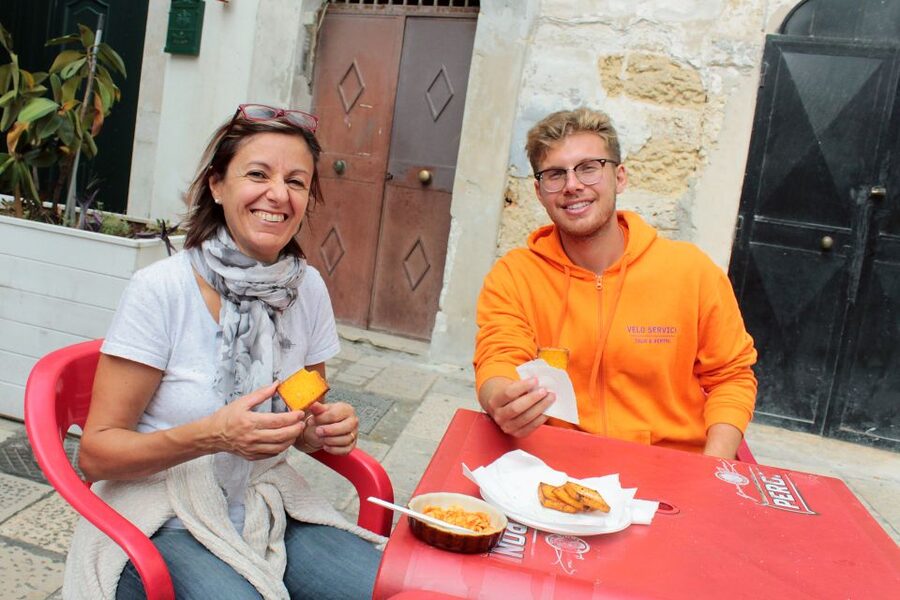
Fried street snacks: sgagliozze and panzerotti. You’ll also stop in a characteristic corner for fried street food with strong flavors—often sgagliozze or panzerotti. This is where Bari shows off its street-snack mentality: quick, hot, and meant to be eaten on the move.
One realistic consideration: bread shows up a lot. A review notes that the first two items felt bread-heavy, and that the last two tasting stops were the most impressive. That doesn’t mean you’ll dislike everything—it just means you should go in expecting a lot of “bread + filling” flavors, not a variety of totally different dishes.
If you’re the kind of eater who loves focaccia, street snacks, and handheld foods, you’ll probably be in heaven. If you want more salads or lighter bites, you might want to balance this later with another meal that’s not primarily built around bread.
Wine and gelato: pacing that keeps you hungry (in a good way)
A glass of wine is included with the tastings. It’s a smart choice in a food-focused tour because it ties into the idea that eating in Bari is social—done in bursts, with conversations and pauses, not just standing over your plate.
After that, you’ll hit a gelateria for ice cream. You get to choose your favorite one, which is great because you’re not stuck with whatever the shop thinks is best for the group.
The tour is built with short segments and stops spaced out enough that you’re not overwhelmed. You’ll have time to reset between tastings while still feeling like you’re steadily moving through the city. Reviews also mention that the timing of stops feels right, not rushed.
And if you’re visiting during a holiday moment, you might get a bonus. One review mentions catching a Good Friday processional and spotting the street with women selling pasta—those are the kinds of street-level sights that make you remember the day, not just the flavors.
A few more Bari tours and experiences worth a look


Ending in the modern French part: squares, theaters, seafront, and the fish market
The tour doesn’t end deep in the old maze. It winds you back toward the lively squares that border the modern French part of the city.
Here you’ll learn about the area’s important theaters, shopping streets, and the monumental seafront. That shift matters. It helps you feel how Bari expands beyond the old town stonework and into a broader city rhythm.
And then there’s the folkloric fish market. Even if you don’t plan to shop, the market atmosphere is part of why Bari feels like a working port city rather than a museum town. The guide’s context helps you read what you’re seeing.
I like ending this way because you finish closer to the places you’ll want to return to on your own—walking the seafront, grabbing another bite, or just lingering in squares.
Guides who make it click: humor, history, and handling surprises
What separates a good food tour from a memorable one is the guide’s voice. The guides mentioned in feedback—Carlotta, Barbara, Debora, Alessia—show up as people who are not just reciting facts. They’re bringing the city to life with explanations you can actually use, plus a sense of humor that keeps things light.
One detail worth knowing: on one tour run, a Segway had some problems during the first half, but it didn’t turn into a disaster. That’s reassuring. It suggests the operators and guides know how to keep the experience moving even when a machine acts up.
If you’re someone who enjoys being guided through both culture and practical details, you’ll likely feel looked after. A small group helps here too—less waiting, more chance to ask what you’re curious about.
Price and value: what you get for about $113
At $113.29 per person for roughly 2.5 hours, this is not a budget snack crawl. But it also isn’t just paying for food. You’re paying for a whole package:
- a local multilingual guide (Spanish, English, French, German, Italian)
- multiple tastings, including wine
- Segway training plus guided riding through the old town
- free luggage storage
- a small group size (up to 3)
Entrance fees aren’t included, and souvenir photos aren’t included, so if you’re expecting museum-ticket items, you’ll need to plan separately. But for what this tour delivers—historic routing plus guided eating—it’s solid value.
The biggest “value multiplier” is the combination: tasting stops plus historic context plus Segway mobility. Without the guidance, you’d likely be stuck either walking around with vague direction or eating at random places. With the guide, you get a coherent trail.
Who should book this Segway street food tour, and who should skip it
This tour is a strong match for you if:
- you like food that’s built for handheld eating (focaccia, octopus bread, fried street snacks)
- you want old-town sightseeing but don’t want it to turn into a full-day slog
- you’re comfortable riding a Segway after a short lesson
- you enjoy small-group tours where you can actually talk to the guide
It may not be the best fit if:
- you have mobility constraints (it isn’t suitable for people with mobility impairments)
- you’re under 99 lbs (45 kg)
- you don’t want a Segway component at all, because part of the experience is the riding
Also consider appetite. If you don’t like bread-forward meals, you might feel the early tastings are heavy. If you love focaccia and street snacks, you’ll likely love the arc of the meal.
Should you book? My practical take
I’d book this tour if you want Bari in a time-efficient way—Segway + food + guided history in one go. It’s especially worth it when you’re short on time but still want more than just a meal. The route connects landmarks like the Basilica of Saint Nicholas (and its crypt) with the kind of street food that makes Bari feel lived-in.
Skip it only if Segways don’t sound fun for you, or if you know you won’t feel comfortable on the platform even after training. In that case, you might prefer a traditional walking food tour instead.
If you do book, my only advice is simple: come hungry, and go in expecting bread to be a main character.
FAQ
How long is the Bari Street Food Tour on Segway?
The tour lasts about 2.5 hours.
Where does the tour start and end?
It starts at VELO SERVICE Tour and Rental store, a few steps from Piazza Mercantile, and it ends back at the same meeting point.
What food is included in the tastings?
You can expect focaccia barese from a panificio, bread with octopus from a traditional rotisserie, fried street food such as sgagliozze or panzerotti, and gelato at a gelateria.
Is wine included?
Yes. A glass of wine is included.
What languages is the guide available in?
The tour offers a local guide in Spanish, English, French, German, and Italian.
Is this tour suitable for people with mobility impairments or under 99 lbs (45 kg)?
No. The tour is not suitable for people with mobility impairments, and it also isn’t suitable for people under 99 lbs (45 kg).