REVIEW · HO CHI MINH CITY
Ho Chi Minh Street Food Tour By Motorbike (Unique & Authentic)
Book on Viator →Operated by 102 Saigonese · Bookable on Viator
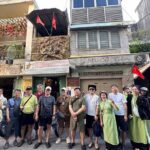
Four hours on a motorbike, eating Saigon. This tour turns Ho Chi Minh City into a street-food map you can actually follow, with a student guide guiding traffic-side chaos into something comfortable and delicious. I love that all food and drinks are included, so you just show up hungry. I also like how the guides (I saw names like Linh and Kim in the guide team) focus on safety and attention to what you want to eat. One possible drawback: this is mostly food-first, so if you crave long history lectures, you may find it a bit too light.
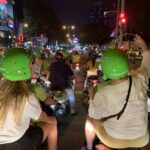
You’ll be picked up for a quick start from the area of the Saigon Opera House, then roll past major landmarks like Notre Dame Cathedral before slipping into smaller streets where your options would be harder to find solo. The route is designed for the scooter advantage: fast movement, short walks, and lots of neighborhood texture—District 3 corners, the Ho Thi Ky Flower Market area, and the Chợ Lớn Chinatown-adjacent streets.
It’s also built for a full day in your schedule. You get about 3–4 hours tasting and riding, then the rest of the day is yours to explore on foot or by your own plan. If you’re comfortable on a scooter (and you’re okay with a practical, sometimes fast-paced ride), this format is a strong way to get a real Saigon feel without turning your vacation into a research project.
In This Review
- Key things that make this scooter food tour work
- Scooter street food: why this beats trying to DIY it
- Getting started at the Opera House and getting street-ready
- A landmark ride that sets the tone: Notre Dame Cathedral to real neighborhoods
- Stop 1 in District 3: from apartment buildings to chuoi nep nuong
- Stop 2 at Ho Thi Ky Flower Market: where sizzling pancakes steal the show
- Stop 3 toward Chợ Lớn and District 10: chè at a decades-old shop
- The last ride across Ba Son Bridge: Thu Thiêm views and District 1 skyline
- Price and value: what $28 covers and why it feels fair
- Food pacing: what to do so the tour doesn’t feel rushed
- What makes the guides matter: safety, flexibility, and a real local vibe
- Who should book this scooter food tour in Ho Chi Minh City
- Should you book? My take
- FAQ
- How long is the Ho Chi Minh street food tour by motorbike?
- Is food and drink included in the price?
- What is the meeting point?
- Do you get pickup and drop-off?
- Is this a private tour?
- What food stops are part of the route?
- What if it’s raining?
- Can I cancel for a full refund?
Key things that make this scooter food tour work
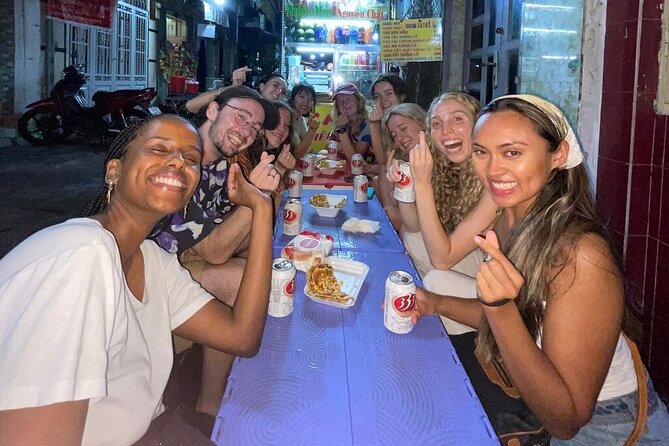
- Everything you eat is included (bites, snacks, drinks, and local beer), so you’re not budgeting cash stop-by-stop
- Student-led guides with safety focus, and many reviews call out feeling secure on the motorbike and wearing helmets
- Real cooking in front of you at the Ho Thi Ky Flower Market, including sizzling bánh xèo-style preparation
- You’ll hit multiple districts, which is hard to do efficiently on your own without spending a fortune on rides
- A long-running sweet stop with an owner who has 45 years of experience selling truyền thống chè
- The finale includes a scenic ride across Ba Son Bridge toward Thu Thiêm, with a District 1 skyline view loop
Scooter street food: why this beats trying to DIY it
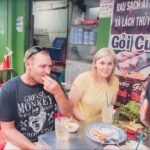
Saigon food is everywhere, but “everywhere” can also mean you waste time second-guessing where to go and what’s worth ordering. This tour solves the biggest DIY problem: you get guided routing plus ordering help, so you’re eating instead of standing there translating a menu with one hand and holding your phone in the other.
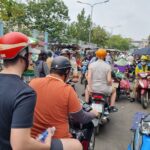
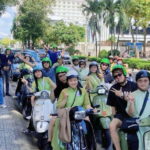
The scooter format matters too. On a bike, you can move between neighborhoods in minutes instead of dragging your day out. That’s especially useful here because the route jumps across areas with very different vibes—busy landmark zones, market cooking areas, and older residential stretches where a family vendor can be the main event.
And then there’s the value angle. At $28 per person, what you’re paying for isn’t just “food.” You’re paying for transport, a guide, multiple tasting stops, and the convenience of not paying separately at each stall. It’s the kind of deal that makes sense if you want dinner covered and you like variety rather than a single big meal.
You can also read our reviews of more food & drink experiences in Ho Chi Minh City

Getting started at the Opera House and getting street-ready
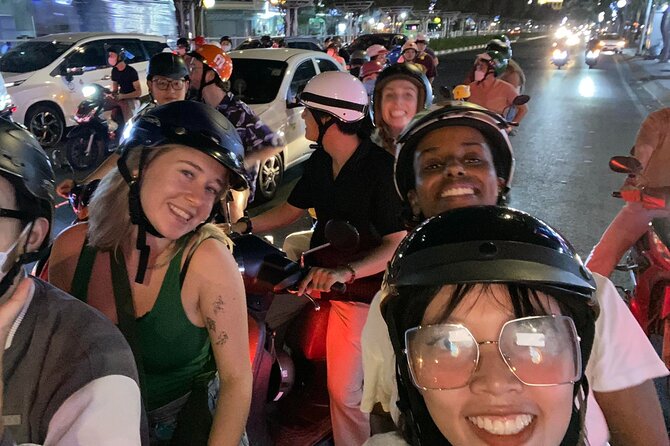
The tour starts near the Saigon Opera House (that’s your anchor point in the center of District 1). If you’re in the pickup zone, you can also get free pickup and drop-off from accommodations in Districts 1, 3, 4, 5, and 10 or from the Opera House area. This is one of those details that makes the whole experience feel smoother—less time figuring out meeting points, more time actually eating.
You’ll be on a private, student-led tour with only your group. That’s a big deal in Saigon, where a group that doesn’t get along with scooters can turn into an awkward traffic puzzle. A private setup gives the guide room to pace your comfort level and adjust what you order.
You’ll also get practical gear like a poncho if needed. And based on guide feedback from reviews, riders are generally set up with helmets, with safety emphasized throughout. If you hate feeling rushed on a bike, ask yourself honestly: can you handle short, moving segments through traffic? If yes, you’ll probably love the pace.
A landmark ride that sets the tone: Notre Dame Cathedral to real neighborhoods
Early on, you’ll ride past Notre Dame Cathedral, and your guide shares its history and significance. In evening light it’s especially photogenic, and the ride-by approach helps you see it without losing time queuing or wandering.
Then the tour pivots from “I’ve seen this before” to “oh, this is where food lives.” That transition is the real magic. It’s one thing to read about Saigon; it’s another to glide past apartments and street corners where meals are made for the neighborhood, not for sightseeing.
One small caution: this tour doesn’t read like a museum program. Explanations are there, but they’re meant to support the food stops and the route—not replace a dedicated history tour. That’s not a flaw for most people. It just means you should pair expectations with what the experience is trying to do.
Stop 1 in District 3: from apartment buildings to chuoi nep nuong
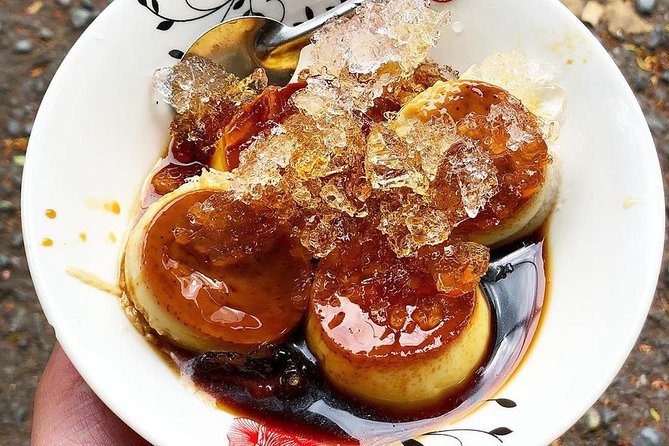
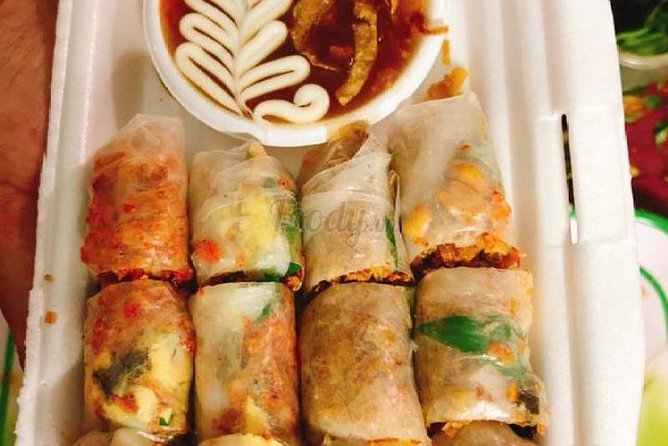
The first tasting area is in District 3, starting near Nguyễn Thiện Thuật apartment buildings before you move to a street vendor at Chuối nếp nướng on Vo Van Tần.
This is a classic kind of Saigon setup: a small corner food stall where a family has been preparing something day after day. Chuối nếp nướng is one of those desserts/snacks that feels simple—banana and sticky rice—but that’s exactly why it works as a first stop. It’s a “wake up your taste buds” dish. You get sweetness, comfort, and a quick win without starting the night with something heavy.
What I like about a first stop like this is the pacing. Before you hit the more intense market smells, you get acclimated to the flavor style and the portion sizes. You also get oriented on the scooter rhythm—how the guide turns, how often you stop, and how long each food stop actually lasts.
Stop 2 at Ho Thi Ky Flower Market: where sizzling pancakes steal the show
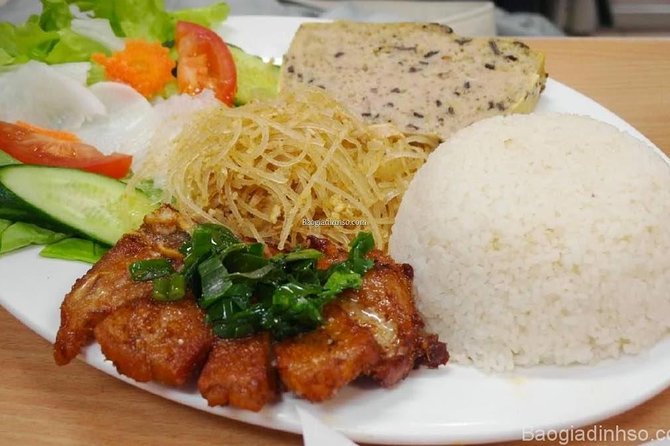
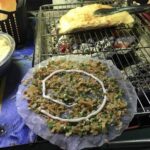
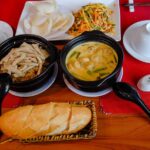
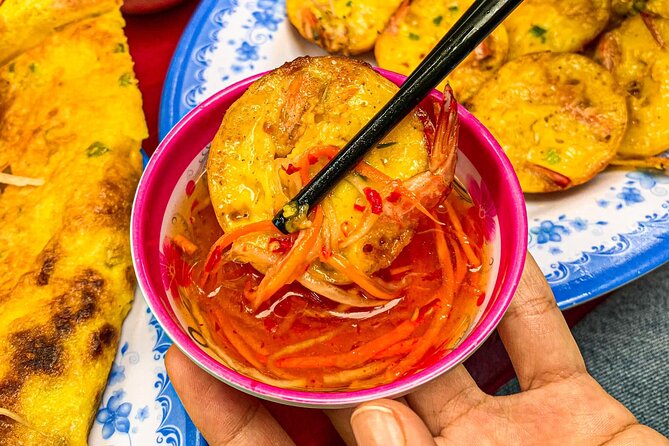
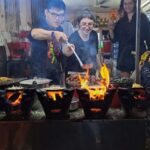
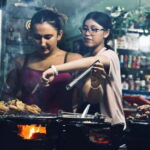
Next, you head to Ho Thị Ký Flower Market, where the food emphasis gets more cinematic. You’ll watch bánh xèo and bánh khọt being made right in front of you, which is one of the best ways to understand Vietnamese street cooking: you see the batter, the heat, and the timing.
Here’s why this stop is worth your time. Both dishes are strongly tied to the regional flavors of Vietnam’s food culture, including origins from the Mekong Delta for bánh xèo. And bánh xèo’s name is tied to the sizzle—which you can literally hear when it’s cooked properly. That sensory part is hard to recreate at a restaurant.
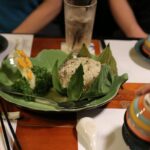
Bánh xèo and bánh khọt are also a great “variety without chaos” combo. They’re different textures and serving styles, but they still sit in the same taste family. That means you can sample without feeling like you need to take notes on five unrelated foods.
A practical tip: go with the flow of the guide. Street food comes fast. If you try to slow down too much or ask for major modifications at every stop, you’ll feel the tour speed increase and it can start to feel rushed. Most guides handle preferences well, but the structure is built for multiple stops in one ride session.
A few more Ho Chi Minh City tours and experiences worth a look

Stop 3 toward Chợ Lớn and District 10: chè at a decades-old shop
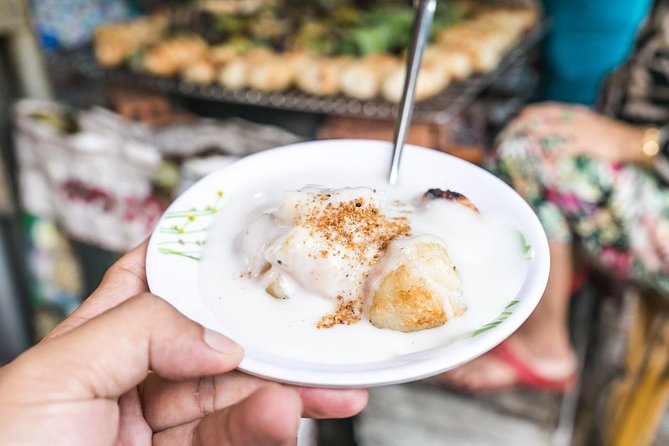
The tour then moves into the Chợ Lớn (District 5) side of the city, before landing at a final sweet-soup stop in District 10 near Chinatown. The sweet you’re aiming for is chè, specifically at Che Mắm Khanh Vy.
This last stop is where the tour slows down on purpose. You’re not just eating; you’re wrapping the experience with something traditional and comforting. The owner has 45 years of experience, which matters because chè shops aren’t just about a recipe—they’re about consistency, texture, and knowing how to balance sweetness and ingredients.
If you’ve only had dessert at cafes, chè can feel like a surprise. It’s often served in a way that’s meant to be shared or enjoyed without fuss. It’s also a nice contrast after savory bánh xèo and bánh khọt-style bites.
Also, this part of the route is where you’ll start to feel how different Saigon neighborhoods are from each other. It’s not just a new restaurant; it’s a new street rhythm.
The last ride across Ba Son Bridge: Thu Thiêm views and District 1 skyline
After the final tasting, you get a short scenic ride. You’ll cross Ba Son Bridge toward Thu Thiêm, then loop back for a panoramic view of District 1’s skyline.
This matters more than it sounds. Food tours can become a string of stops with no “big picture” moment. This section gives you that reality check: you’re in a city that’s still moving forward, and the contrast between older neighborhoods and modern skyline is part of the Saigon experience.
If it’s raining, the poncho inclusion becomes more than a checkbox. And if you’re the type who likes photos, this is usually the most satisfying segment for them—moving wide shots, lights reflecting off buildings, and a chance to look up instead of down at menus.
Price and value: what $28 covers and why it feels fair
Let’s talk numbers. The price is $28 per person for about 4 hours (with the tour structure built around a 3–4 hour experience plus free time after). You get all food plus snacks and drinks, including local beer, and you also get coffee and/or tea.
That’s why this is a “value tour,” not just an “eat on a schedule” tour. In many cities, you can pay $28 and still be hungry by the end, because street bites add up fast, and transport is extra. Here, you’re paying up front for the full tasting flow.
You also get transport by private vehicle and a private group setup. Even if you’re traveling as a couple, it can reduce the awkwardness of mixing with strangers on scooters.
The one thing you should keep in mind: gratuities are optional, not included. If the guide takes great care of you—stops adjusted, food preferences handled, safety attention—you’ll probably want to show appreciation. But the tour isn’t built to force it.
Food pacing: what to do so the tour doesn’t feel rushed
One review note that’s worth taking seriously: this experience leans food-focused, with shorter explanations. If you’re traveling with kids or you want heavier background, you might feel the pace is tight. On the flip side, if you’re the kind of person who wants to eat more than learn every date and dynasty, the format is exactly right.
Here’s how to pace yourself:
- Come hungry, not “already full from lunch.”
- Don’t over-order at the first stop. Let the guide handle variety.
- Use the sweet stop as your end-of-tour reset.
- If you want specific adjustments, say it early. Several reviews mention guides checking preferences, and one person even requested adding Bò Lá Lốt.
Also, wear clothes and shoes you’re comfortable sitting in while wearing a helmet. You don’t need to dress up. You do need to dress for movement.
What makes the guides matter: safety, flexibility, and a real local vibe
The best tours don’t just pick places. They pick the right pacing and the right kind of guide energy. Here, the guide feedback is consistent: people repeatedly mention feeling safe on the motorbike, getting cared for, and enjoying the fun of being treated like you’re part of the street-food night rather than a passenger.
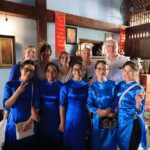
Names that show up in reviews include Linh, Kim, Tran, Tracey, DA, and guides like Nguyễn Phạm Đức Anh, plus teams such as Win, Khoa, and An. You’ll notice a pattern: guides are considerate about how you’re feeling, they help with food choices, and they keep the ride comfortable with helmets.
A practical upside of student-led tours: the experience often has a “we actually love this” tone. That’s not just sales talk—it shows up in how guides describe why a stall matters, not just what dish you should eat.
If you’re the kind of traveler who cares about getting an explanation while you walk and eat, this is still a tour that gives you something. Just don’t expect a full lecture.
Who should book this scooter food tour in Ho Chi Minh City
This tour fits best if you want:
- Street food variety in one evening without turning it into a scavenger hunt
- A fun, active way to see neighborhoods across multiple districts
- A guide who helps you order and keeps the ride safe
- A schedule that gives you the rest of the day free after
It might not be your best choice if:
- You don’t want motorbike riding at all (even short segments)
- You’re seeking a deep, history-heavy tour rather than food-focused explanations
- You get easily overwhelmed by traffic movement and want a slower walking-only plan
Most travelers can participate, and the structure seems built to work for typical visitors. Still, be honest about your comfort level with scooter travel.
Should you book? My take
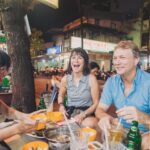
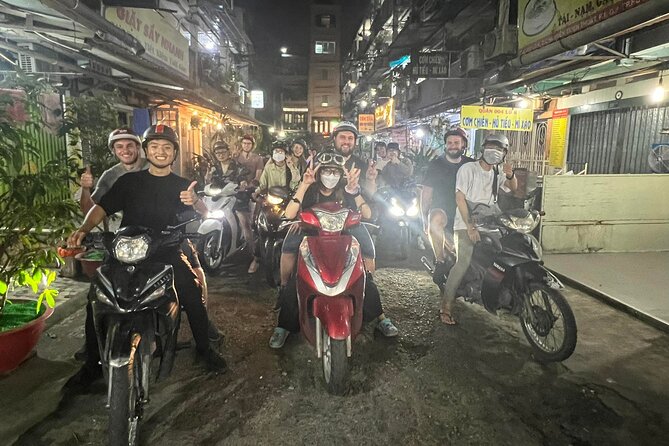
I’d book this if your main goal is authentic Saigon food with minimal planning. The included bites, drinks, and beer, plus the route that spans District 3, the market area, and the chè stop near Chinatown, make it a strong first-night activity—or a great way to fill a food-focused evening early in your trip.
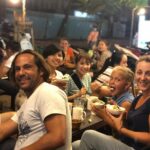
It’s also a nice “group-friendly” format because it feels social: shared laughs, photos, and the fun of riding together. If your top priority is history, pair it with another activity. But if your top priority is eating your way through real street life, this is one of the more efficient and genuinely enjoyable options in Ho Chi Minh City.
FAQ
How long is the Ho Chi Minh street food tour by motorbike?
It runs about 4 hours (around 3–4 hours).
Is food and drink included in the price?
Yes. Dishes, snacks, drinks, and local beer are included, plus coffee and/or tea. There’s no need to pay money on the spot for food.
What is the meeting point?
The tour starts at Saigon Opera House, 07 Công trường Lam Sơn, Bến Nghé, Quận 1, Thành phố Hồ Chí Minh.
Do you get pickup and drop-off?
Free pickup and drop-off are available at accommodations in Districts 1, 3, 4, 5, and 10 (or Opera House area).
Is this a private tour?
Yes. Only your group participates.
What food stops are part of the route?
You’ll visit places that include chuối nếp nướng, bánh xèo and bánh khọt at Ho Thị Ký Flower Market, and a chè sweet soup stop (Che Mắm Khanh Vy) near Chinatown/District 10. The tour also includes a final scenic ride.
What if it’s raining?
You’re provided a poncho (if needed).
Can I cancel for a full refund?
Yes. You can cancel up to 24 hours in advance for a full refund.