REVIEW · MANILA
Manila Food Tour: Explore World’s Oldest Chinatown
Book on Viator →Operated by Explore Manila Tours · Bookable on Viator
Chinatown in Manila hits your senses fast. This small-group food tour threads you through Binondo with a focused tasting plan, starting at the Minor Basilica and National Shrine of Saint Lorenzo Ruiz and ending back where you met your guide. I especially love how practical it is: you get help navigating the area and you leave fed, not just informed.
The second thing I like a lot is the mix of flavors and textures. You’re not stuck with one type of food, either, since the stops cover savory bites and sweets, including lumpia-style snacks, handmade dumplings, mami noodle soup, classic dim sum, and hopia pastries. One consideration: this tour is not suitable for vegans, so your options may be limited if you avoid all animal products.
In This Review
- Key Things You’ll Notice (Before You Book)
- Binondo Church to Food Heaven: The Setup That Matters
- How Much Food Is Really Included (And Why You’ll Appreciate It)
- What the Walk Feels Like: Pace, Walking Shoes, and Group Size
- Stop-by-Stop: What You’ll Eat in Binondo
- Binondo Church: Starting at a Real Anchor
- Carvajal Street Snacks: Lumpia Aroma and Kuchay Ah Pie
- Handmade Dumplings: Where Craft Takes Over
- Mami Noodle Soup: Filipino Comfort in a Chinese-Filipino Wrapper
- Dim Sum Stop: Classic Bites You Can Actually Compare
- The Hopia Bakery Finish: Flaky Sweetness to Close the Day
- Your Guide Changes Everything: Watch for the Energy
- Pricing: What You’re Paying For (And What You Get)
- Timing Tips That Actually Help
- Who This Tour Suits Best
- Should You Book This Manila Chinatown Food Tour?
- FAQ
- How long is the Manila Food Tour in Binondo?
- Where do I meet the guide?
- What’s included in the price?
- Is transportation included?
- How much does the tour cost?
- Is this a small group tour?
- Is the tour suitable for vegans?
- What kind of food will I try?
- What if the weather is bad?
- What if I need to cancel?
Key Things You’ll Notice (Before You Book)
- Small-group format aimed at keeping the walk enjoyable and the tasting paced (max 15 travelers overall)
- 8 different food items plus drinks, covering both sweet and savory favorites
- Start point you can find easily at Binondo Church, with the tour ending back at the same meeting place
- Real Chinatown food culture focused on Chinese-Filipino staples, not tourist-style replicas
- Good walking plan for around three hours, with the rest of your day left open
- Guides make the difference, with standout energy from guides like Nel, Jian, Chloe, and Jenelle
Binondo Church to Food Heaven: The Setup That Matters
If you’ve ever wandered Chinatown in a big city, you know the trap: you see a hundred choices, and somehow end up with one meal you didn’t really plan. This tour fixes that. You meet at the Minor Basilica and National Shrine of Saint Lorenzo Ruiz, right in Binondo, and you start moving with a clear sequence of tastings. It’s a relief to get your bearings fast—especially in a neighborhood where signs, vendors, and crowds can blur together.
You also get a built-in value advantage. At $60 per person for about three hours, you’re paying for time saved and meals handled. The tour includes snacks (8 different food items), plus soda/pop, tea, and bottled water—so you’re not doing the math in the middle of your day while you’re hungry.
The other practical win: the tour ends back at the meeting point. When you’re done and stuffed, you don’t need to figure out where your guide left off or how to get back across town.
You can also read our reviews of more food & drink experiences in Manila
How Much Food Is Really Included (And Why You’ll Appreciate It)
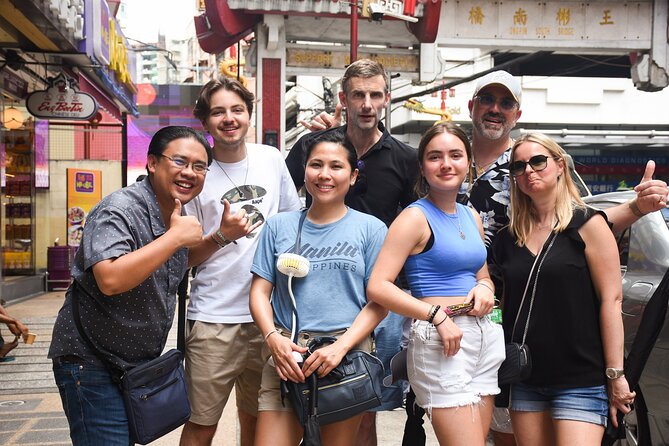
The tasting is designed to land you in that sweet spot between snacky and full. You should expect to try 8 different food items, described as a spread of sweet and savory bites. Drinks are included too: soft drinks, tea, and bottled water.
In real terms, this matters because Chinatown food can be a little overwhelming when you’re on your own. You can read a menu, but you might not know what’s best, what’s freshly made, or what’s worth the line. A good tour turns that chaos into a guided set of stops—so you can eat first, then understand what you just ate.
One heads-up: the tour isn’t suitable for vegans. If you follow a vegan diet, this is a problem for your needs. If you can handle non-vegan ingredients, you’ll likely be able to enjoy the tasting as planned.
What the Walk Feels Like: Pace, Walking Shoes, and Group Size
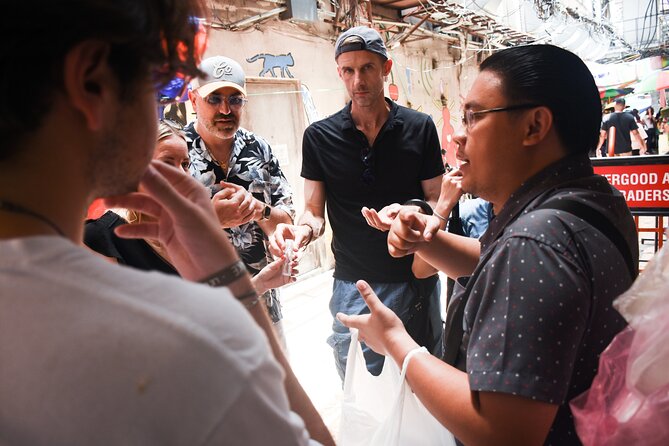
This is a 3-hour experience that’s meant for comfortable walking. It’s short enough to fit into a half-day schedule, but long enough that you’ll actually move through multiple areas of Binondo and not feel like you’re just hopping between doorways.
Group size is kept small. The highlights talk about a max group of 10, while the additional info lists a maximum of 15 travelers. Either way, it’s clearly not a huge bus-style food crawl. That matters for two reasons: you get tables more easily at busy spots, and your guide can explain without yelling over a crowd.
You should still bring the basics. Based on what I saw emphasized in guide behavior and customer notes, plan on comfortable walking shoes and an appetite you’re willing to use. This tour is the type where you might skip breakfast if you go in the morning.
Stop-by-Stop: What You’ll Eat in Binondo
The flow of the tour is built around key Chinese-Filipino staples, placed in an order that helps your taste buds reset between savory and sweet.
Binondo Church: Starting at a Real Anchor
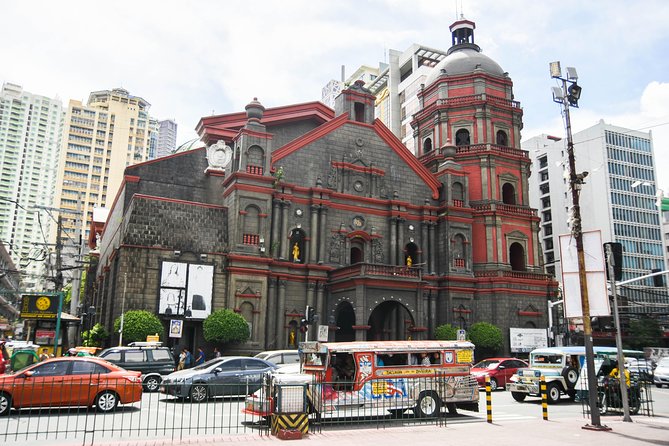
You begin at the Minor Basilica and National Shrine of Saint Lorenzo Ruiz. This is more than a convenient meeting point. Starting at a landmark helps you orient yourself in Binondo, and it also signals that this neighborhood has deep roots tied to community life.
It’s a strong start for first-timers. Even if you don’t know anything about Chinatown in Manila, you get a sense of place right away.
Carvajal Street Snacks: Lumpia Aroma and Kuchay Ah Pie
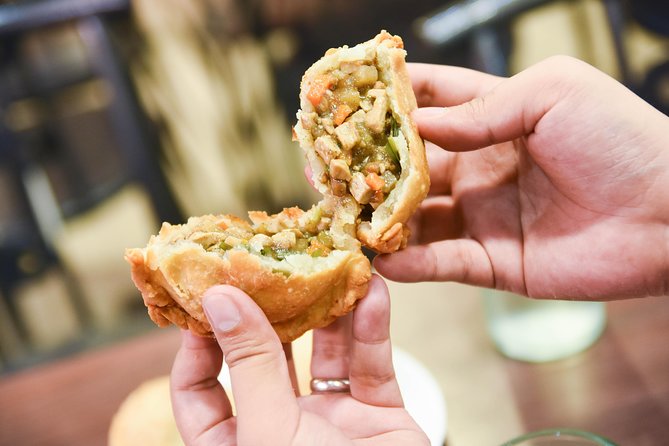
From the church area, the tour shifts into the heart of the food scene. One of the first stops focuses on snack-style bites, with fresh lumpia mentioned as a highlight. You’ll also have Kuchay Ah Pie, which is a type of Chinese-Filipino pastry known for its savory appeal.
What I like about this approach: early snacks give you immediate payoff. You’re not waiting an hour to taste something. And because these are handheld and fast, they’re easier to enjoy without breaking the walking rhythm.
A small drawback: if you’re sensitive to crowds, you’ll still be in a busy food neighborhood from early on. That’s normal for Binondo. Your best move is to keep moving with the group and not linger too long at the edges.
Handmade Dumplings: Where Craft Takes Over
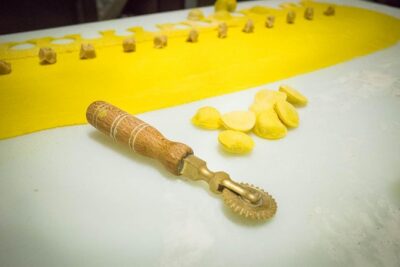
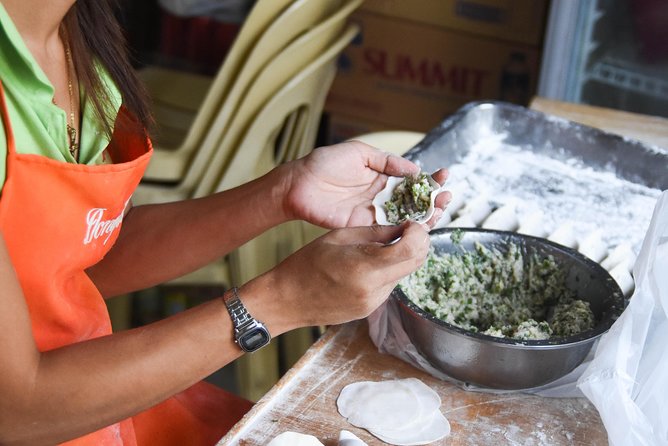
Next, you get into dumpling territory, where the tour description emphasizes dumpling making as an art form. The dumplings you try are handmade, and this is the kind of food stop where you can taste the difference between something mass-produced and something made with care.
Dumpling lines can happen, and you might see a queue. The good part? The guide arrangement helps with speed so you’re not standing around forever. The dumpling stop is also where the history and technique feel most tangible, because dumplings are both food and tradition.
Mami Noodle Soup: Filipino Comfort in a Chinese-Filipino Wrapper
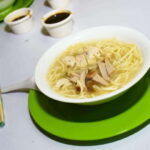
Then the tour moves to mami, a beloved noodle soup that shows up as Filipino comfort food with Chinese roots. This is one of those dishes that works well mid-tour because it’s warm, filling, and balanced after snacks.
This is also where guides often shine. You’re not just eating noodles—you’re learning what makes this style distinct and why people keep coming back.
Dim Sum Stop: Classic Bites You Can Actually Compare
After mami, you go to a classic dim sum destination. Expect dim sum to be a key part of your tasting, including crystal shrimp dumplings mentioned in the tour description.
I like dim sum as a tour food because it creates an easy “compare and contrast” moment. You’ll taste different dumpling and small-plate styles and start noticing texture differences—skin thickness, filling density, and how each piece is finished.
If you’re the type who likes food structure, this stop will click.
The Hopia Bakery Finish: Flaky Sweetness to Close the Day
You end at a historic bakery famous for hopia. Hopia is a Chinese-Filipino pastry with a flaky exterior and sweet filling. The tour includes a variety of flavors, which is perfect for finishing strong without needing a full dessert stop later.
This last stop also gives you a satisfying arc: savory snacks → dumplings → soup → dim sum → sweet pastry. It feels like an intentional meal, not random sampling.
Your Guide Changes Everything: Watch for the Energy
One reason this tour has such strong ratings is that the guides don’t just point. They talk and they pace the group like they’ve done it a lot.
Different guides show up in the experience history, including Nel, Jian, Chloe, and Jenelle. Even when the food menu stays similar, the tour’s tone can shift based on who’s leading it. In particular, guide styles described as engaging, friendly, and helpful with group flow stand out.
You’ll also appreciate guides who understand the neighborhood logistics. Several reviews highlight that the guide gets you to places you wouldn’t find alone, and that you can land tables at busy spots.
Pricing: What You’re Paying For (And What You Get)
At $60, you’re not just buying snacks. You’re buying:
- the guide to navigate Binondo
- a designed tasting path through multiple food stops
- drinks included with your food
- around three hours of time structured for maximum payoff
When you add up what it would cost to order eight items plus drinks across multiple places on your own—especially if you hit lines and don’t know what’s best—this pricing starts to look reasonable. You also get the benefit of not having to coordinate transport mid-walk; the tour doesn’t include private transportation, but you’re also not paying for it here.
If you only want one quick bite and a photo, this may be more than you need. If you want a full, guided food day starter, it’s a strong value.
Timing Tips That Actually Help
The tour lasts about three hours and leaves you free the rest of your day. That makes it ideal for planning around the rest of Manila.
Based on what people emphasize in their experience notes, going in the morning can be smarter because it’s cooler and you can start your day on a full stomach without feeling like you’ll crash early. If you take a morning tour, consider skipping breakfast so you don’t blunt the tasting experience.
Also, pack light and move with the group. Binondo is a neighborhood where the best plan is often the simplest one: follow the route, eat what’s served, and ask questions as you go.
Who This Tour Suits Best
This is a great fit if you:
- want to eat a variety of Chinese-Filipino foods in one organized walk
- like learning while you snack, especially about how dishes connect to neighborhood culture
- prefer a small group (not a huge crowd) with a guide who keeps you on track
- want a strong afternoon start by doing the tour earlier and then exploring more on your own
It’s a weaker fit if you:
- are vegan (the tour is not suitable for vegans)
- dislike walking or tight schedules (three hours includes steady movement)
- hate being in a busy food area around mealtimes
Should You Book This Manila Chinatown Food Tour?
I think you should book if you’re choosing one food-focused plan in Manila’s Chinatown area and you want it to feel both practical and memorable. The tour’s biggest strength is the way it turns Binondo into a guided tasting path: you start at a landmark, you eat your way through the neighborhood’s best-known Chinese-Filipino favorites, and you finish with hopia sweetness you can savor without chasing a second dessert stop.
Book it if you love dumplings, noodle soups like mami, and classic dim sum—and if you’re comfortable eating meat or seafood. If you’re vegan, skip it and look for a different option that fits your diet.
Finally, go hungry, wear comfortable shoes, and bring a curious attitude. This kind of tour rewards you for participating, not just photographing.
FAQ
How long is the Manila Food Tour in Binondo?
It runs for about three hours.
Where do I meet the guide?
You meet at the Minor Basilica and National Shrine of Saint Lorenzo Ruiz (Binondo Church), at 1006 Plaza Lorenzo Ruiz, Binondo, Metro Manila.
What’s included in the price?
The tour includes snacks made up of 8 different food items, plus soda/pop, tea, and bottled water.
Is transportation included?
No, private transportation is not included.
How much does the tour cost?
The price is $60.00 per person.
Is this a small group tour?
Yes. It is listed with a small-group limit, including a maximum of 15 travelers.
Is the tour suitable for vegans?
No. It is not suitable for vegans.
What kind of food will I try?
You can expect Chinese-Filipino favorites such as lumpia, Kuchay Ah Pie, handmade dumplings, mami noodle soup, dim sum (including crystal shrimp dumplings), and hopia.
What if the weather is bad?
This experience requires good weather. If it’s canceled due to poor weather, you’ll be offered a different date or a full refund.
What if I need to cancel?
Cancellation is free up to 24 hours in advance for a full refund. If you cancel less than 24 hours before the start time, the amount paid is not refunded.