REVIEW · PARIS
Paris: Pastries Food Tour in Le Marais with a Culinary School
Book on Viator →Operated by Maison Fleuret — The Baking School · Bookable on Viator
Pastry in Paris, minus the tourist traps. This 3-hour walk through Le Marais is built around chef-level tastings at multiple stops, so you get variety fast and you also leave with a short list of what to try later. The only real catch is that you’re eating plenty of sweet baked goods in a single session, so it can feel a bit much if you prefer lighter snacks.
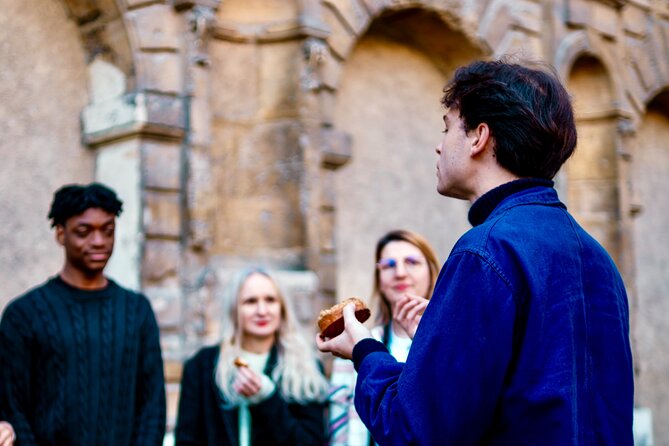
I like that it’s a small-group experience (maximum 8), which means the guide can slow down, explain technique, and give you personalized recommendations as you go. You’ll also spend a lot of time just wandering on foot, so you can pause for photos and landmarks as your route naturally unfolds.
In This Review
- Key Things I’d Watch For
- A 3-Hour Le Marais Pastry Walk Built Like a Mini-Course
- Price and Value: What $114.65 Really Covers
- Walking Logistics: Pace, Group Size, and Where It Ends
- The Route: Rue de Turbigo to Place des Vosges (Stop by Stop)
- Stop 1: Rue de Turbigo and a Modern Pain au Chocolat
- Stop 2: Rue Montorgueil and Chef Connections
- Stop 3: Historic Baba au Rhum and an Eclair Twist
- Stop 4: Maison de Nicolas Flamel and Le Marais Landmarks
- Stop 5: Rue de la Verrerie and French Pastry With Oriental Influences
- Stop 6: Rue du Roi de Sicile and a Local Favorite for Seasonal Craft
- Stop 7: Eglise Saint-Paul Saint-Louis and Versailles Architect Details
- Stop 8: Place des Vosges and Your Final Custom Pick
- Stop 9: Cour et jardin de l’Hotel de Sully and a Secret Passage Feel
- What the Guide Adds: Recommendations You Can Use Immediately
- Pastry Nerd Notes: How to Taste Smarter on This Tour
- Should You Book This Pastry Tour?
- FAQ
- How long is the Paris Pastries Food Tour in Le Marais?
- How many people are in a group?
- What food is included on the tour?
- Is the tour offered in English?
- Where do I meet and where does the tour end?
- Is private transportation included?
- Is water provided?
- Can I cancel for a full refund?
Key Things I’d Watch For
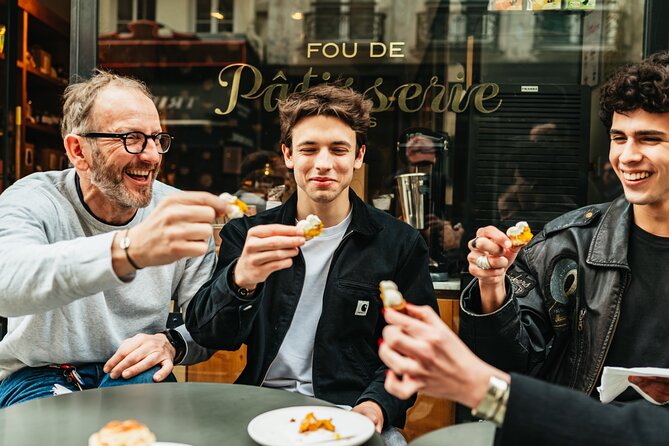
- Six pastry tasting locations with generous portions, not tiny samples
- On-foot route through Le Marais so you can stop for photos and street details
- Chef-focused insight into how modern and classic pastries differ in real life
- Historic backdrops between tastings, from Louis XV era pastry lore to 17th-century architecture
- Personalized follow-up ideas so your remaining time in Paris is easier to plan
A 3-Hour Le Marais Pastry Walk Built Like a Mini-Course
This tour is run by Maison Fleuret, a baking school in Paris, and the whole experience feels like class meets wandering. You’re not just buying desserts and moving on. You’re learning how pastry styles evolved, why certain flavor combos work, and how the craft shows up in the texture you feel on your tongue.
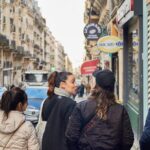
The route stays concentrated in central Le Marais. That matters because pastry is at its best when you’re not rushed across the city. Here, you’re moving at a human pace—enough time to enjoy each stop and still stay on schedule.
You’ll also see why Le Marais is such a strong food neighborhood. It isn’t only about today’s trend shops. You’ll pass by long-tied institutions and architecture while the guide connects the dots between place, people, and what ended up on menus.
You can also read our reviews of more food & drink experiences in Paris
Price and Value: What $114.65 Really Covers
At $114.65 per person for about 3 hours, you’re paying for three things: guided access, multiple included tastings, and education you’d otherwise have to piece together on your own.
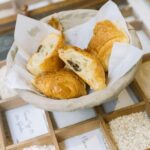
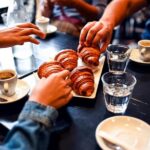
The tastings aren’t just a couple of bites. The tour includes pastries and viennoiseries from six different locations, plus water. The description also promises generous amounts, and that’s key value in Paris, where it’s easy to spend a lot while only getting small tastes.
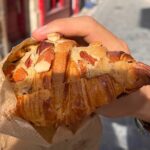
You’re also paying for the guide’s selection. Instead of randomly picking bakeries, you get a deliberate mix of classic and modern pastry styles—things like a modern pain au chocolat variation, historic baba au rhum, and flavor experiments that reflect Le Marais’ multicultural layers.
If you’re the type who wants a structured plan for food (and hates guessing), the price usually feels fair. If you already know exactly which bakeries you want and you love building your own route, you might question the cost. But most people come away glad someone handled the hard parts.
Walking Logistics: Pace, Group Size, and Where It Ends
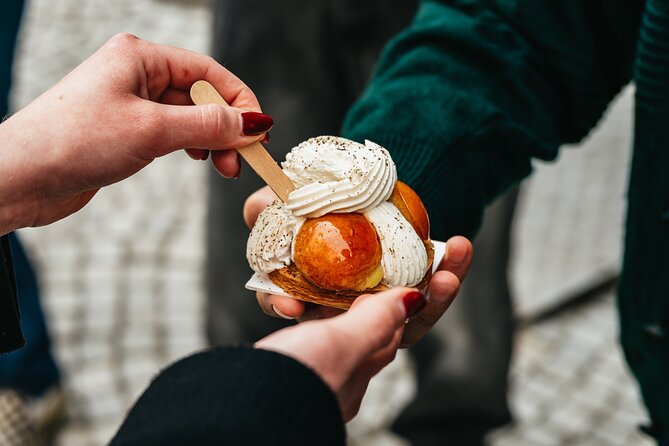
The tour is designed to be walked. You’ll be on foot for photo stops and transitions, and that’s part of the experience. It also means comfortable shoes are a must—especially if you’re visiting in cooler weather when you might want to linger less.
The group size caps at 8 travelers, which is a huge difference from big, noisy food tours. In practice, that smaller size helps the guide keep explanations clear and it makes it easier to hear what’s being said at each bakery counter.
Meeting starts at 18 R. de Turbigo, 75002 Paris, and it ends near Place des Vosges at 6 Rue du Pas de la Mule, 75003 Paris. The ending location is about 5–10 minutes on foot from metro lines 8 and 5, which is convenient if you want to continue exploring right after your final tasting.
The Route: Rue de Turbigo to Place des Vosges (Stop by Stop)
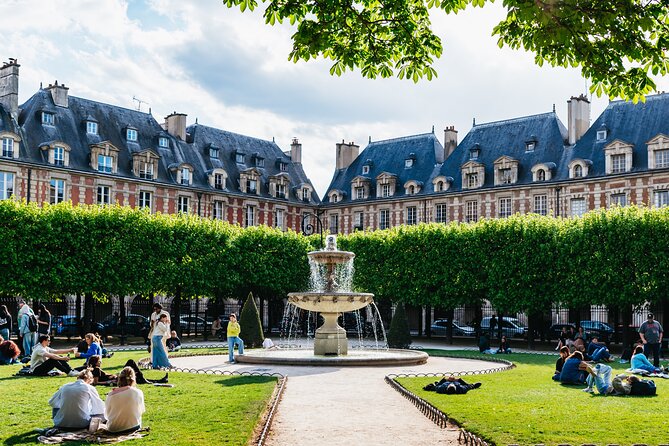
Here’s how the day flows, and what each part adds.
Stop 1: Rue de Turbigo and a Modern Pain au Chocolat
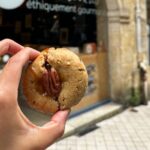
You kick off with a pain au chocolat praliné, a modern twist on a classic. Expect a mix that leans into caramelized hazelnuts plus chocolate—basically a clue that the tour won’t be stuck in old-school flavors.
This first stop is also useful as a baseline. Once you taste the opening bite, the rest of the tour makes more sense because you can start comparing sweetness, crunch, and chocolate intensity across shops.
A few more Paris tours and experiences worth a look




Stop 2: Rue Montorgueil and Chef Connections
Next you stroll through Rue Montorgueil, a well-known culinary artisan area. Here, the tour focuses on pastries connected to notable pastry names—like Nina Métayer, Nicolas Guercio, and Pierre Chirac—in an innovative pastry shop format.
The practical value of this stop is variety. You’re seeing how different pastry chefs influence style, not just tasting one baker’s signature. It’s also a smart primer if you want to understand why certain pastries look and taste the way they do.
Stop 3: Historic Baba au Rhum and an Eclair Twist
A few minutes away, you taste a baba au rhum at a place tied to an origin story going back over 300 years. This stop is described as Paris’s oldest pastry shop, founded in 1730 by the official pastry chef of Louis XV.
Alongside the baba, you also try a chocolate éclair. That pairing gives you a nice comparison: baba is all about syrup-soaked softness, while éclair leans into pastry shell structure plus cream balance.
You’ll also get interiors to look at, tied to Paul Baudry, the artist behind frescoes at the Opéra Garnier. Even if you don’t care about art, it adds context for why certain places become cultural anchors in Paris.
Stop 4: Maison de Nicolas Flamel and Le Marais Landmarks
By now, the tour shifts into a more story-driven rhythm. You move into Le Marais and pass the Maison de Nicolas Flamel, plus hidden passages and a stop where you can admire impressive 17th-century National Archives.
This is one of the strengths of this tour: it uses food as a lens. You’re learning why Le Marais became the kind of neighborhood where talented artisans, craft traditions, and customers who care about quality could all thrive.
The only drawback here is that this section is more walking and sight-focused. If you’re looking for nonstop eating, you may want to pace yourself and keep moving between photo moments.
Stop 5: Rue de la Verrerie and French Pastry With Oriental Influences
At Rue de la Verrerie, the tour offers pastries that blend oriental flavors with French technique. Le Marais has long been shaped by many cultures, and this stop is where that shows up in how flavors are combined.
Why this matters for your taste memory: it trains you to recognize seasoning style and flavor direction, not just sweetness. You start to notice whether a pastry is guided by spices, fruit notes, nuts, or chocolate depth—and how French baking methods frame those flavors.
Stop 6: Rue du Roi de Sicile and a Local Favorite for Seasonal Craft
Then you reach Rue du Roi de Sicile, where the tour stops at a pastry shop described as a local secret: strong technique, careful seasonal ingredient choices, and a balanced flavor style.
This stop is valuable even if you’re not sure what you’ll like. The guide is pointing you toward quality signals. You’re tasting something selected for craft, not just trend.
If you’re someone who loves figuring out which bakery to revisit, this is one of the best moments to pay attention. The guide’s recommendations after tastings can help you decide which shop matches your personal preferences.
Stop 7: Eglise Saint-Paul Saint-Louis and Versailles Architect Details
Between desserts, you’ll see Eglise Saint-Paul Saint-Louis, a 17th-century church built by Jules Hardouin-Mansart, the architect behind the Palace of Versailles.
This part turns the street walk into a mini architecture lesson. It also helps break up the sugar load. Even a quick look up at details like rooflines and façades gives you a reset before the last tasting stretch.
Stop 8: Place des Vosges and Your Final Custom Pick
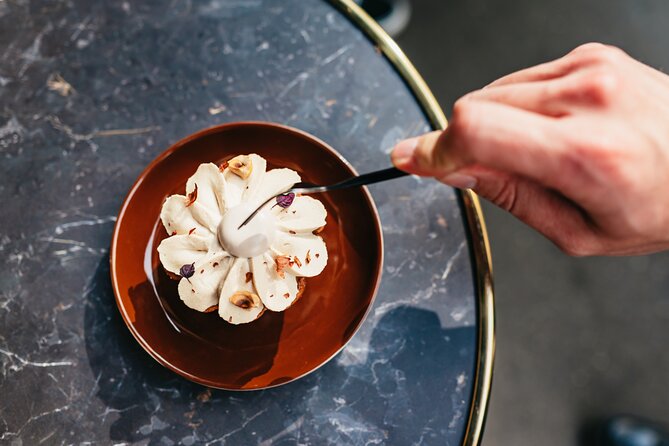
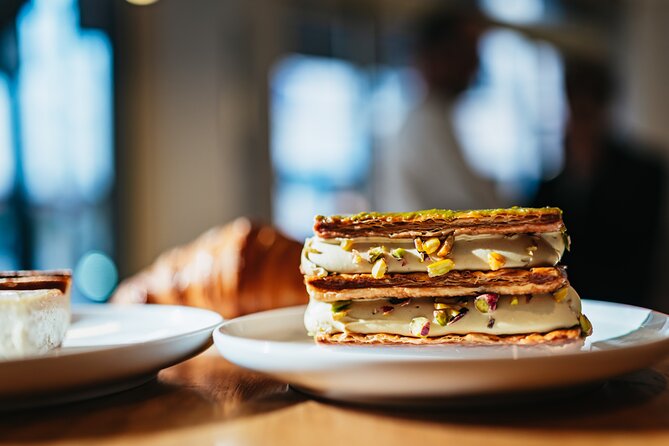
You then reach Place des Vosges, one of Paris’s most photogenic squares. The tour ends with a final bakery tasting where you choose a signature pastry option such as pistachio millefeuille, flan, or a tiramisu-inspired entremets.
This is a clever design choice. Instead of locking everyone into the same dessert, you get to steer your final bite toward your preferences. It’s also a good way to end the tour without forcing you into something you don’t like.
Stop 9: Cour et jardin de l’Hotel de Sully and a Secret Passage Feel
Finally, the experience includes a hidden courtyard and garden at Cour et jardin de l’Hotel de Sully. You’ll be led through a secret passage experience that ties back into the Place des Vosges area.
This is the kind of moment that makes the tour feel more like wandering with a local friend than following a checklist. It also gives you a visual memory that’s separate from the food—so even if a pastry isn’t your favorite, you still leave with a mental snapshot of Le Marais in action.
What the Guide Adds: Recommendations You Can Use Immediately
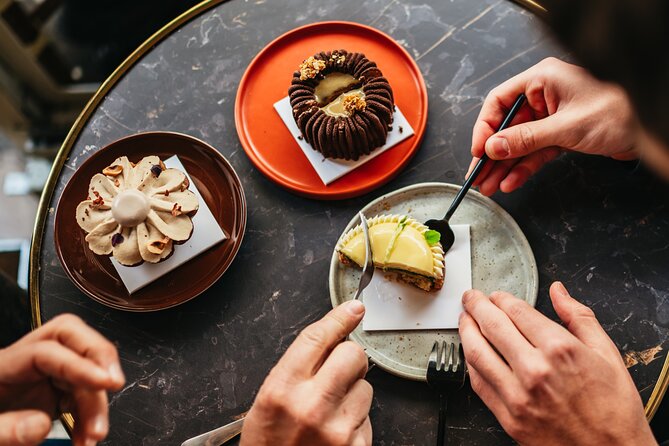
One of the most useful parts of a food tour isn’t the food. It’s what you learn that helps you buy the right things later.
Here, the guide’s role is to connect tastings to what’s worth your time. After tasting multiple styles—modern takes, historic classics, and flavor-influenced creations—you’re in a better position to recognize what you like and why. Then you can ask for recommendations that match your taste, not generic advice.
The tour also gives you short, practical context at each stop. That turns each bite into information you can repeat later when you’re standing in a bakery and trying to decide what to order.
Pastry Nerd Notes: How to Taste Smarter on This Tour
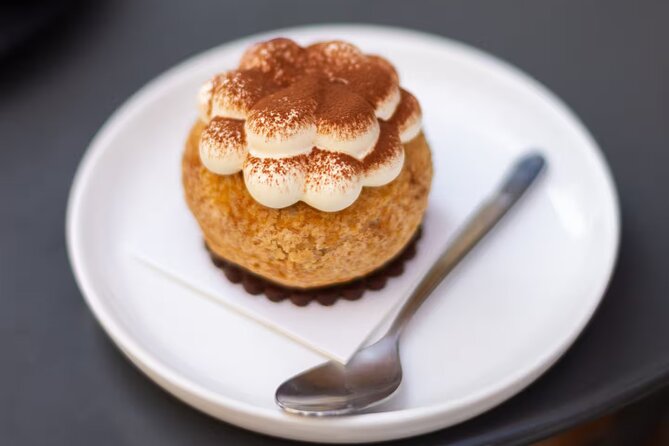
You don’t need to be a pastry expert to get value out of this. But if you want to taste more than just sugar, here’s how you can approach it.
At each stop, focus on three things:
- Texture: flaky, airy, soft, syrupy, or creamy
- Sweetness vs balance: does chocolate feel heavy or does something lighten it?
- Flavor direction: hazelnut, caramel, rum notes, spice cues, or pistachio character
You’ll get a range of styles in about three hours, and that’s why paying attention is worth it. Comparing bite to bite makes it easier to remember the details that matter when you’re ordering again later.
Also, because the tour includes multiple pastries and viennoiseries, pace yourself. You’ll likely want water between stops. If you tend to get overwhelmed by sweets, take smaller bites, save your favorites, and keep a comfortable rhythm.
Should You Book This Pastry Tour?
Book it if you want a structured Le Marais food plan with included tastings and guide-led context. It’s especially good for first-timers who don’t want to waste time hunting, and for anyone who likes understanding technique instead of just chasing desserts.
Skip it (or consider another option) if you’re traveling with very strong dietary restrictions not covered in the details you have, or if you prefer fewer stops with more time in each place. Also, if you’re sensitive to sugar-heavy snacks, know that this tour is built around multiple pastry tastings.
If your goal is to leave with both satisfied taste buds and a short list of what to order next, this is a strong fit.
FAQ
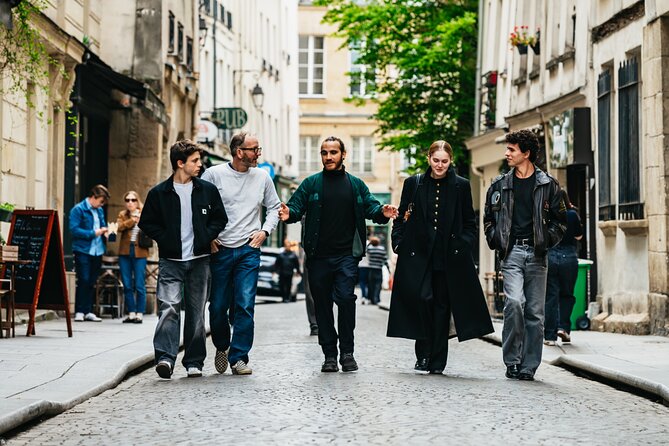
How long is the Paris Pastries Food Tour in Le Marais?
The tour lasts about 3 hours.
How many people are in a group?
The maximum group size is 8 travelers.
What food is included on the tour?
You’ll taste pastries and viennoiseries from 6 different locations. All tastings are included and provided in generous amounts, plus water.
Is the tour offered in English?
Yes, the tour is offered in English.
Where do I meet and where does the tour end?
You start at 18 R. de Turbigo, 75002 Paris, France, and the tour ends at 6 Rue du Pas de la Mule, 75003 Paris, France, near Place des Vosges.
Is private transportation included?
No, private transportation is not included.
Is water provided?
Yes, water is included.
Can I cancel for a full refund?
Yes. You can cancel up to 24 hours in advance for a full refund.