Osaka food walks are a sport here. This 3-hour crawl pairs an English-speaking guide with stops in Namba and Dotonbori, so you get local bites without wandering in circles. I especially like the way it funnels you through off-the-radar places where ordering is half the battle.
The one catch to plan for: food and drinks aren’t included, so your total spend depends on what you choose to eat and drink.
In This Review
- Quick hits before you go
- Namba after dark: where your Osaka food sense starts working
- Hozen-ji Temple stop: a short break from the neon
- Dotonbori lights: famous for a reason, but still worth it
- The food plan: classics, pub snacks, and Osaka-style variety
- Why the guide is the real value (and why guides matter)
- Pace, group size, and how long 3 hours really feels
- Nailing the cost: what $42.28 buys you, and what you should budget
- How to get the most out of the night (even if your Japanese is limited)
- Quick “who is this for?” guide
- Should you book this Osaka food crawl?
- FAQ
- How long is the Osaka food crawl?
- What does the tour price include?
- Is lunch or dinner included in the price?
- Where does the tour take place?
- How many people are in a group?
- Where do I meet the guide?
- Is there an English-speaking guide?
- Are dietary needs handled?
- Do I need to pay transportation costs?
- Is free cancellation available?
Quick hits before you go
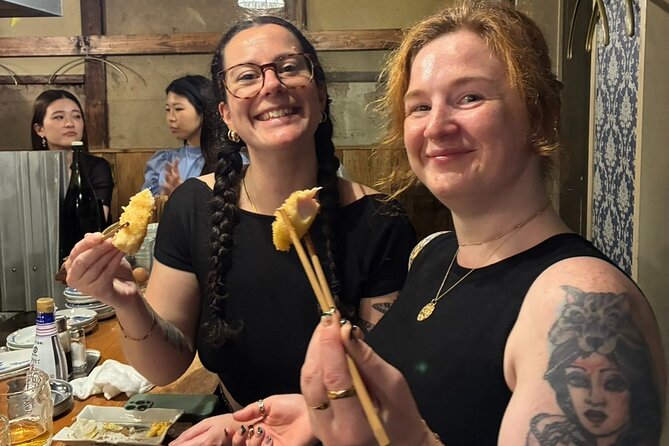
- Small group size (max 8) keeps things relaxed and makes it easier to adjust to your tastes
- Guide-led ordering help matters in tiny izakayas and food counters
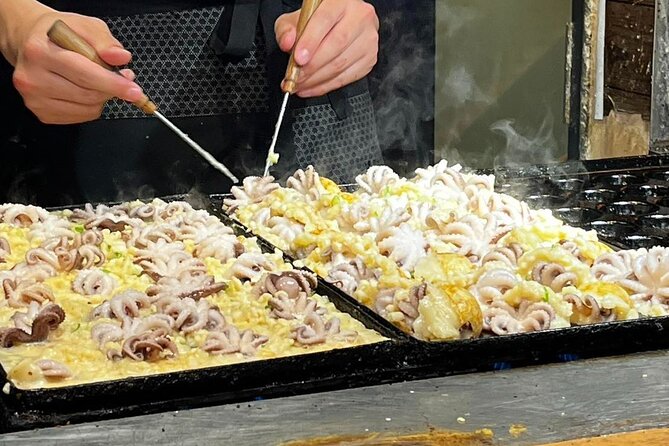
- Osaka classics plus lesser-known dishes like takoyaki, kushikatsu, okonomiyaki, and doteyaki
- Namba + Dotonbori at night gives you the street-food energy with real neighborhood atmosphere
- Hozen-ji Temple stop adds a quick cultural reset between food stops
- You pay for food as you go, which can be cheaper than a fixed menu if you want lighter bites
Namba after dark: where your Osaka food sense starts working
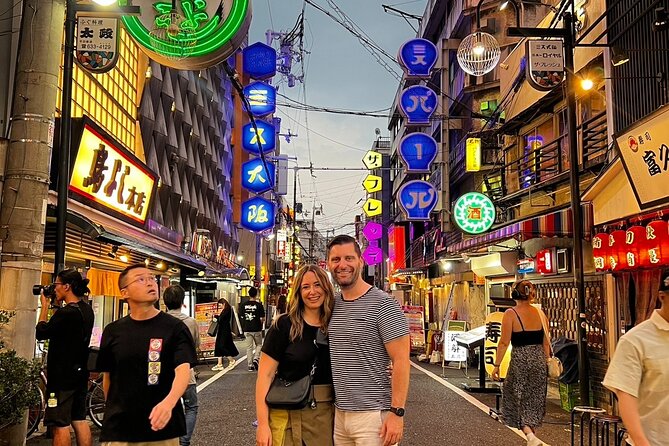
Namba is the launchpad for this crawl. You’ll feel the rhythm of the area right away: narrow lanes, constant foot traffic, and plenty of places that look like they’ve been there forever. The nice part is that you’re not just sightseeing. You’re learning how locals move through the food streets—when to step in, what to look for, and how to order without turning it into a research project.
What I like here is the pace. The tour uses Namba as a “food navigation” zone, which makes the rest of Osaka’s flavors easier to understand. When you later see Dotonbori’s big neon signs and louder scene, you’ll know what you’re looking at. And you won’t feel like you missed something important—you’ll just feel like you’re finally in the right place.
Hozen-ji Temple is the calm breather later, so don’t worry if Namba feels like a sensory workout at first. You’ll get a short, meaningful pause before the lights and cravings pick back up.
Hozen-ji Temple stop: a short break from the neon
This is a quick stop—about 20 minutes—but it serves a purpose. Hozen-ji Temple sits right in the downtown flow, so it gives you a “real Osaka” moment without needing a big detour.
In plain terms, it helps your brain switch gears. Between food counters and busy streets, a temple pause keeps the night from feeling like one long line. It also adds a tiny dose of tradition that makes the rest of your evening feel more grounded. You can take a breather, look around, and get that sense of place that just doesn’t happen in a “straight to food” night plan.
If you like photos, you’ll also appreciate the contrast. Temple quiet against street energy is one of those simple travel wins that never gets old.
Dotonbori lights: famous for a reason, but still worth it
Dotonbori is the recognizable name, and yes, it can be crowded. But this tour doesn’t treat it like a theme park. Instead, it uses Dotonbori as a food-and-souvenir corridor, the place where you’ll see the ads, the famous billboards, and the shops tied to Osaka’s food culture.
A key benefit: you’re not just standing there. You’re walking with a guide who can point out what’s worth your attention—both for eating and for spotting the character of the area. This is where you’ll often see massive food-related signs and figure displays that scream Osaka identity. Even if you’ve seen photos before, it hits differently in person.
In a good tour, the famous spot becomes useful, not just loud. That’s how Dotonbori fits here.
The food plan: classics, pub snacks, and Osaka-style variety
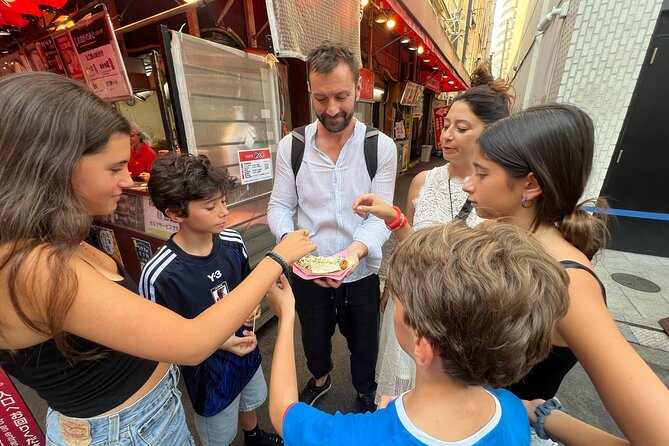
Food isn’t included, so you’re making choices during the tour. That sounds like a downside until you realize it’s how you keep control of your budget and your diet. If you want more sweets, you can lean that way. If you’re not in the mood for heavier items, you can skip or swap.
Here’s what the tour is built around, with the idea that you’ll hit a mix across textures and styles:
- Takoyaki (octopus balls): the iconic Osaka street bite, usually your first “we’re really doing this” moment
- Kushikatsu (deep-fried skewers): meats, seafood, and veggies—fun because you can try small bites instead of committing to one dish
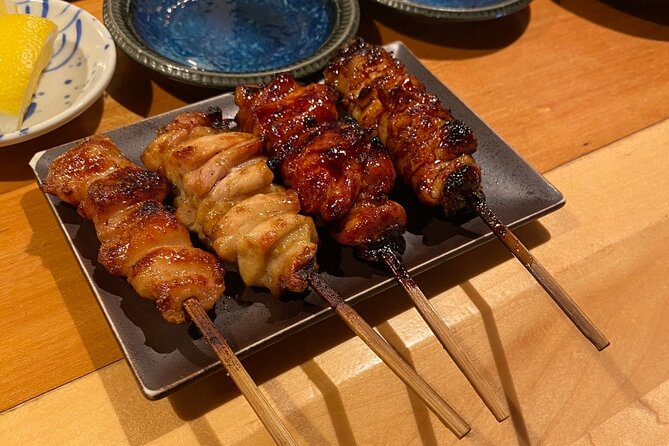
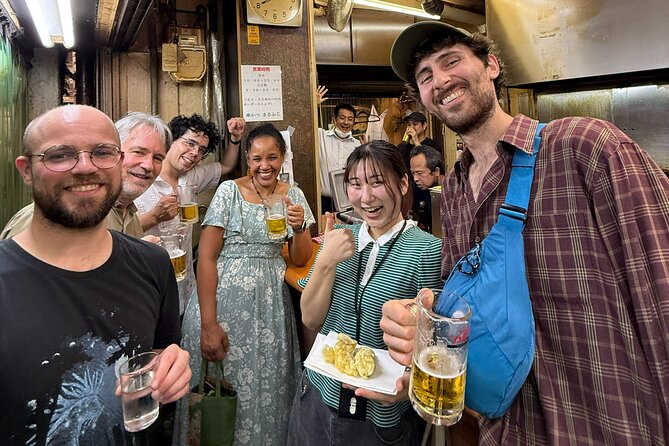
- Izakayas (Japanese pub snacks and drinks): where you’ll sample multiple items in one stop rather than ordering one big meal
- Sushi / sashimi: Japan’s soul food side, often a good anchor if you’re hungry for something lighter
- Yakitori: chicken skewers, a great option when you want variety without getting lost in menus
- Oden (hot pot): cozy and crowd-friendly, especially if it’s cooler when you go
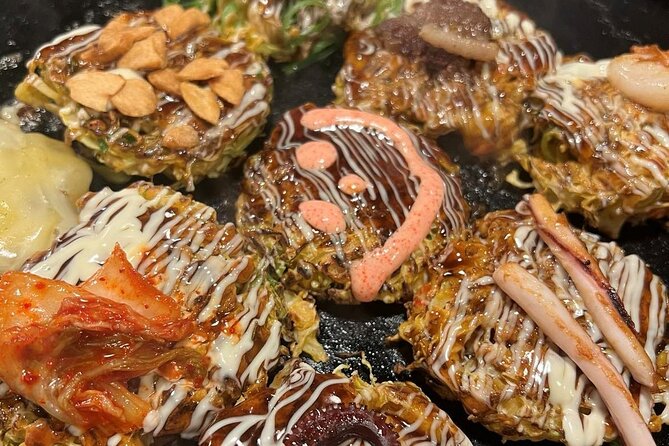
- Okonomiyaki (cabbage pancake): a must for many first-time Osaka nights—savory, filling, and very shareable
- Doteyaki: one of Osaka’s lesser-known comfort foods that can be a fun “only-in-this-city” move
- Local shops: you’ll spend time where regular people eat, not just where postcards are sold
What you should expect is variety, not repetition. The tour is designed to show you how Osaka can feel like street food, then pub food, then proper sit-down dishes—all in one evening.
And because a guide is there, ordering usually gets easier. Even when the food is simple, the menu language and pace of the place can be confusing. A good guide helps you avoid the awkward moments and focus on eating.
Why the guide is the real value (and why guides matter)
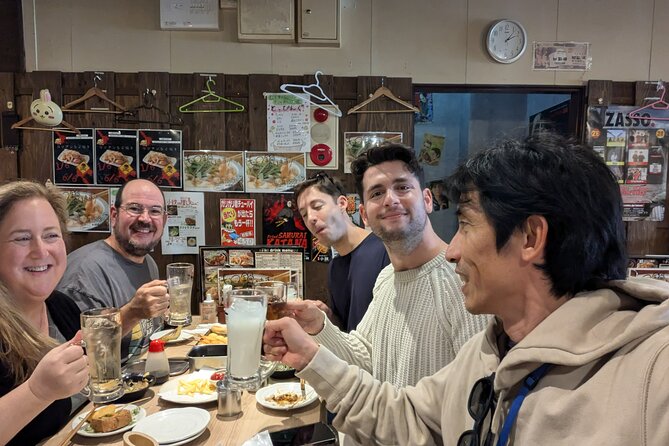
For a base price of $42.28 per person, you’re not buying a full meal—you’re buying direction, timing, and local sorting. That’s good value if you hate guessing. Osaka has lots of tiny spots where the only thing more intimidating than the menu is the idea of getting stuck outside while everyone else is already inside eating.
This tour runs with an English-speaking guide, and from the guide names people mention, you can see there’s real local connection. Guides like Kota, Gil, Tony, Kazu, Sue, Ken, Momomi, Ryu, Kyoko, Shehab, Haru, Minori, Miki, and Koba have been part of these crawls. The common thread is not just knowing food—it’s knowing the flow: where to go next, how to read what you’re looking at, and how to handle ordering in small, cozy places.
One standout theme from guide comments: the tour can be adjusted. People describe experiences where guides worked with preferences, including dietary needs like gluten-free. That matters because Osaka’s food culture is strong, but some items can be flexible and some can’t. If you need options, you want someone who can steer you toward dishes that still feel local.
Pace, group size, and how long 3 hours really feels
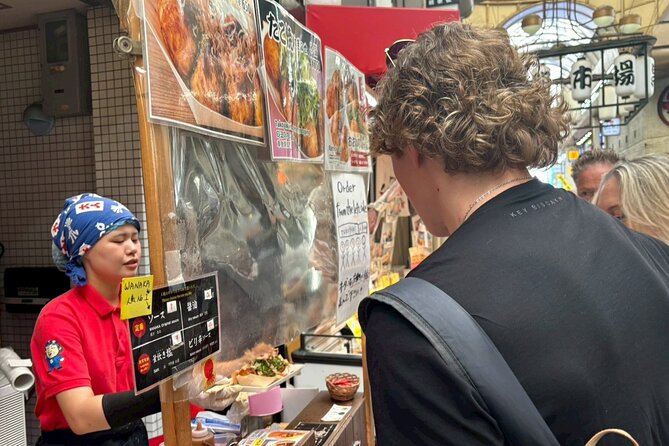
The duration is about 3 hours. For many people, that’s the sweet spot: long enough to taste multiple things, short enough that you don’t feel like you’re doing homework for dinner.
The group size is capped at 8, which keeps the vibe from turning into a school trip. Smaller groups are easier to manage at crowded stalls and in compact izakayas. You also tend to get more attention for ordering questions, especially if your Japanese isn’t strong.
There’s another practical angle: meeting and ending back at the start point means you’re not dealing with “where do we regroup” confusion at the end of a long walk.
If you’re jet-lagged or exhausted, 3 hours can feel like a lot. But if you’re in “eat and walk” mode, it’s a smart length.
Nailing the cost: what $42.28 buys you, and what you should budget
Here’s the honest math. The price covers the guide (and the mobile ticket), not lunch or dinner food and drinks. Transportation fees and breakfast aren’t included either.
So think of the total cost as:
- base tour fee for guidance
- plus what you choose to eat and drink during the stops
This setup can still be a good deal because it’s flexible. If you want 5 mini tastings, you might spend less than someone who orders a fixed “tour meal” that includes stuff they wouldn’t normally pick.
Also, multiple comments note that many places accept credit cards. Still, I’d keep some yen in your pocket because Japan loves variety in payment options depending on the shop.
A useful strategy: decide what you want most—usually it’s one comfort classic (like okonomiyaki) plus two street-style bites (like takoyaki and kushikatsu). That helps you enjoy the night without turning it into a spending sprint.
How to get the most out of the night (even if your Japanese is limited)
You don’t need fluent Japanese for this tour, but you’ll enjoy it more if you come prepared.
A few smart moves:
- If you have dietary limits, say them early. The tour is designed to match preferences, and a guide can recommend alternatives.
- Go hungry. This is a crawl, not one big plated dinner.
- Keep an open mind with the lesser-known items like doteyaki—this is where a local guide earns their keep.
- Ask what’s best to order at each stop. You’ll get choices that fit the place, not just random picks.
- Wear shoes you can walk in. Namba and Dotonbori are a lot easier with comfortable footwear.
If you’re the type who likes to “eat first and learn later,” this tour plays well with that style. You’ll get food, context, and direction in one evening.
Quick “who is this for?” guide
This experience is especially a fit if:
- you’re a first-time visitor to Osaka and want an organized path through street food culture
- you like trying multiple styles in one night: street bites, pub snacks, and sit-down plates
- you want help ordering and picking spots you’d probably miss on your own
It’s also a decent fit for solo diners because you’ll still get a small-group feel. The main condition: you should be comfortable paying for your food and drinks separately.
Should you book this Osaka food crawl?
If your goal is to eat your way through Osaka’s night scene without wasting time guessing, this tour makes sense. The value comes from the guide-led route and the ability to hit a mix of famous staples and lesser-asked-for local choices like doteyaki.
I’d book it if:
- you want local ordering help at small spots
- you like variety over one big meal
- you’re okay budgeting extra for food and drinks
Skip it (or reconsider) if:
- you want a single set-price meal with no added spending
- you’re looking for a long history lecture instead of a food-focused night
Overall, it’s a practical way to see Osaka through the lens of what locals actually eat—and to do it with a group small enough to feel personal, not rushed.
FAQ
How long is the Osaka food crawl?
It runs for about 3 hours.
What does the tour price include?
The tour includes the guide and English-speaking guidance, with a mobile ticket. Food and drinks are not included.
Is lunch or dinner included in the price?
No. Lunch food and drinks aren’t included, and dinner food and drinks aren’t included either.
Where does the tour take place?
It focuses on downtown Osaka, with time in Namba, Hozen-ji Temple, and Dotonbori.
How many people are in a group?
The tour has a maximum of 8 travelers.
Where do I meet the guide?
The start point is at Osaka JOINERJapan in Namba Walk (B1), and the tour ends back at the same meeting point.
Is there an English-speaking guide?
Yes. The tour includes an English speaking guide.
Are dietary needs handled?
The experience is set up so the guide recommends places based on your tastes and desires, and there are mentions of alternatives like gluten-free during the tour.
Do I need to pay transportation costs?
Transportation fees are not included.
Is free cancellation available?
Yes. You can cancel for a full refund up to 24 hours before the experience starts.