REVIEW · NEW DELHI
Old Delhi: 3-hour Street Food Tour
Book on GetYourGuide →Operated by Go City Adventures · Bookable on GetYourGuide
Old Delhi tastes better with a guide. This 3-hour street food route turns Chandni Chowk lanes and the spice market into a clear tasting plan, with stops for ten distinct bites plus the 150-year-old Parathewali Galli. I love how it mixes food with context—starting at Gurudwara Sis Ganj—so you’re not just eating, you’re understanding the neighborhood. The main catch: the tour is strictly vegetarian (not vegan), and some items include dairy, so lactose intolerance is a real concern.
You’ll roll through Old Delhi with a small group (up to 12 people), guided in English, plus short rides that help you cover ground without tiring out. You also get a free Polaroid picture per booking, which sounds fun on paper and is even better after you’ve finished a stretchy, full-plate tasting.
If you hate crowds or you’re picky about dairy, plan accordingly—but if you’re curious about how Delhi’s food culture works, this is one of the most efficient ways to get your bearings fast.
In This Review
- Key takeaways before you go
- How the 3-hour route flows through Old Delhi
- Starting at Gurudwara Sis Ganj: where context beats guesswork
- Jalebi, samosa, and Raj Kachori: the tasting lineup you’ll actually want
- Parathas and chaat stops: where the tour gets heavy (in a good way)
- Asia’s largest wholesale spice market: see it, then taste it
- Lassi, chole bhatura, and rabri-faluda: the meal-style finale
- Kulfi with more than 50 flavours: the sweet ending you’ll remember
- Price and what you’re really paying for at $51 per person
- Comfort, crowds, and keeping your stuff safe
- Picking the right guide: why names matter here
- Who should book this Old Delhi street food tour
- Should you book? My decision shortcut
- FAQ
- What time does the Old Delhi 3-hour Street Food Tour start?
- Where do I meet the guide if I’m taking the metro?
- Is this tour vegetarian?
- Is it suitable for vegans or lactose intolerance?
- What food stops are included?
- Is bottled water included?
Key takeaways before you go
- Gurudwara Sis Ganj first: you start with the community kitchen story, not just snack hopping.
- Ten vegetarian tastings: jalebi, samosa, Raj Kachori, parathas, fruit chaat, and more.
- Parathewali Galli parathas: a legendary, 150-year-old stop built for food lovers.
- Asia’s largest wholesale spice market: you see the spices up close, then eat the results.
- Metro plus short local rides: you get mobility without turning the whole trip into walking endurance.
- Guide quality can make or break it: multiple guides (Isha, Suraj, Kiran, Deepak, Naha) get praised for timing, clarity, and handling the street.
How the 3-hour route flows through Old Delhi
This tour is designed like a food walk that stays fun instead of turning into random sampling. You meet in Connaught Place at 3:00 PM, then head into Old Delhi by metro. In the Old Delhi portion, you move through narrow lanes where traffic, vendors, and foot crowds all overlap—so having a guide matter is not a nice-to-have.
You’ll also use short rides (tuk-tuk/rickshaw-style movement is part of the experience) so you can focus on the stops instead of constant repositioning. The tour ends back at the meeting point area via metro, which is a simple finish after you’ve eaten your way through the afternoon.
Small group size (max 12) is part of the value here. You get enough group energy for fun street chaos, but not so many people that food lines become slow and stressful.
You can also read our reviews of more food & drink experiences in New Delhi

Starting at Gurudwara Sis Ganj: where context beats guesswork
The first stop is Gurudwara Sis Ganj, a Sikh gurdwara with an important historic reference. What you’ll take from this stop isn’t a long lecture—it’s a chance to understand why community kitchens matter in Sikh tradition and how that connects to the way people think about feeding others.
You also get a behind-the-scenes flavor of how a place like this functions. One of the better notes from guides is that they explain symbolism and meaning in ways that help you see more than just the buildings. If you’ve ever walked through a place of worship and wondered what to notice, this is the kind of start that fixes that problem early.
Even if you came mainly for snacks, this first stop changes the feel of the whole tour. You’re not just chasing taste—you’re learning why certain foods and rituals show up where they do.
Jalebi, samosa, and Raj Kachori: the tasting lineup you’ll actually want
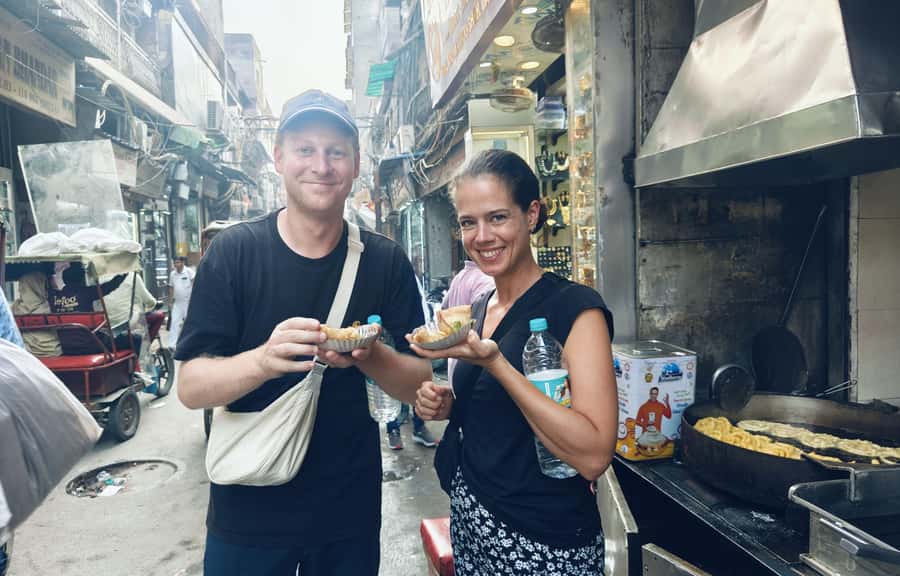
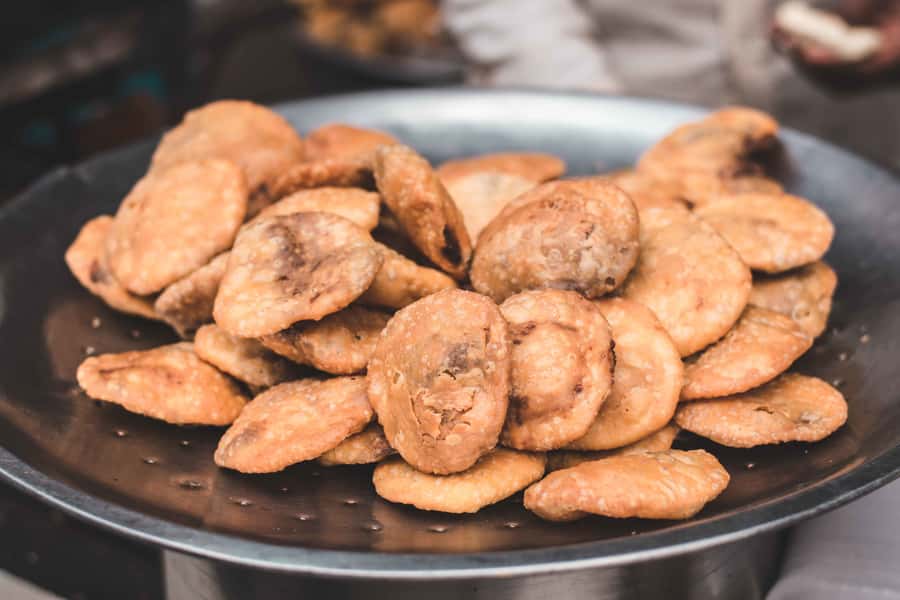
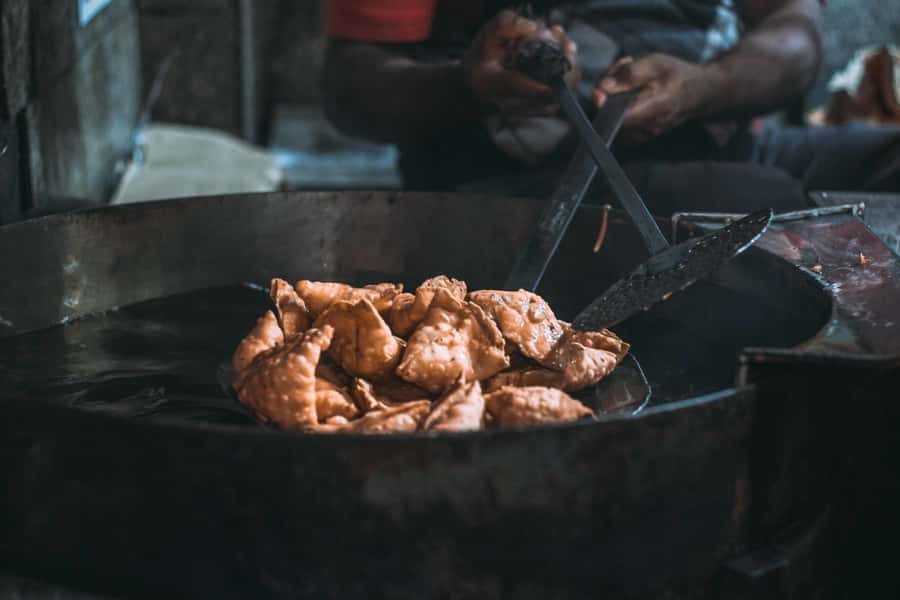
Once you begin the food walk, the tour ramps up quickly. You start with classic sweets and snacks from a shop that’s been around for about 100 years—jalebi (deep-fried sweet made with corn flour and sugar syrup) and samosa (fried triangular pastry stuffed with potato).
This is a smart opening because it sets expectations: Old Delhi street food isn’t shy about sugar, spice, crunch, and heat. Then the guide leads you into something more layered: Raj Kachori. It’s essentially a crispy edible bowl filled with fresh yogurt plus sweet and sour sauces. The point isn’t just that it tastes good; it’s that you learn how Delhi builds flavor using contrasting elements in one bite.
If you want a quick way to judge whether you’ll enjoy the rest, pay attention to your first two minutes on this tour. If you like jalebi and samosa, you’ll likely love the tangy, saucy direction that Raj Kachori points toward.
Parathas and chaat stops: where the tour gets heavy (in a good way)
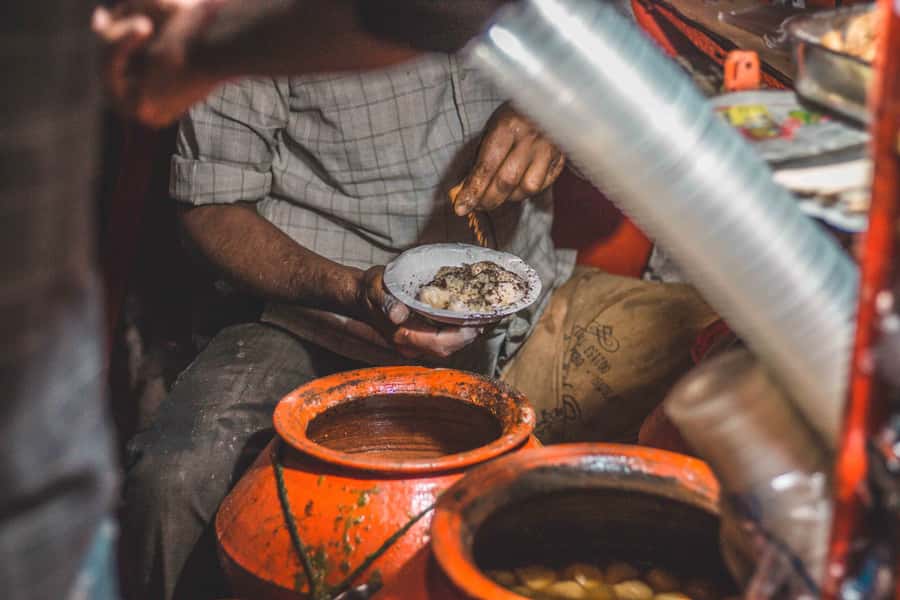
After the first set of snacks, you’ll move into the heart of the meal-building portion: parathas plus multiple chaat-style dishes.
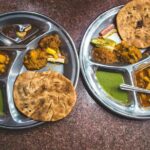
The parathas are filled with a range of options such as cheese, cashews, chilli, and lemon. That variety is a big part of why this tour feels like more than “just tasting.” You’re getting a sense of how street food adapts—sweet notes alongside savory spice, and rich add-ins alongside sharper citrus flavors.
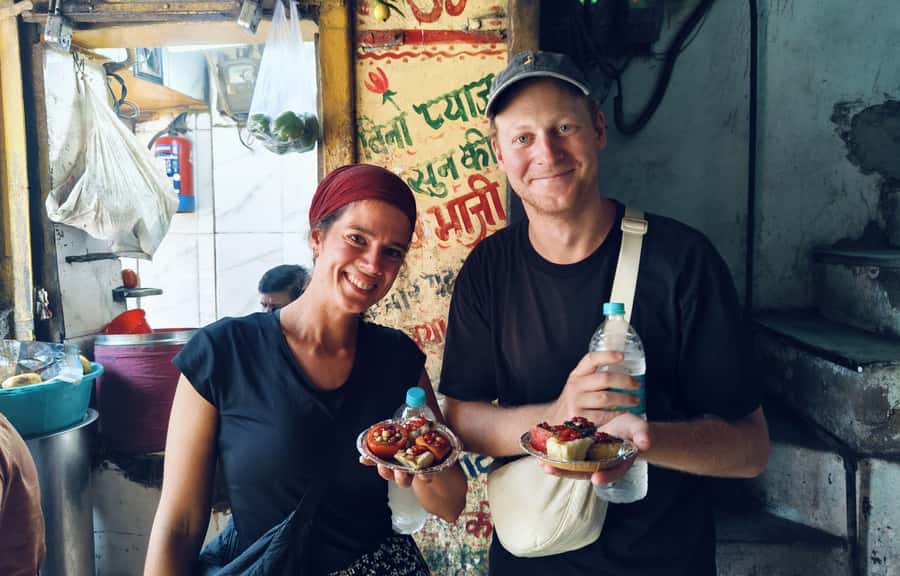
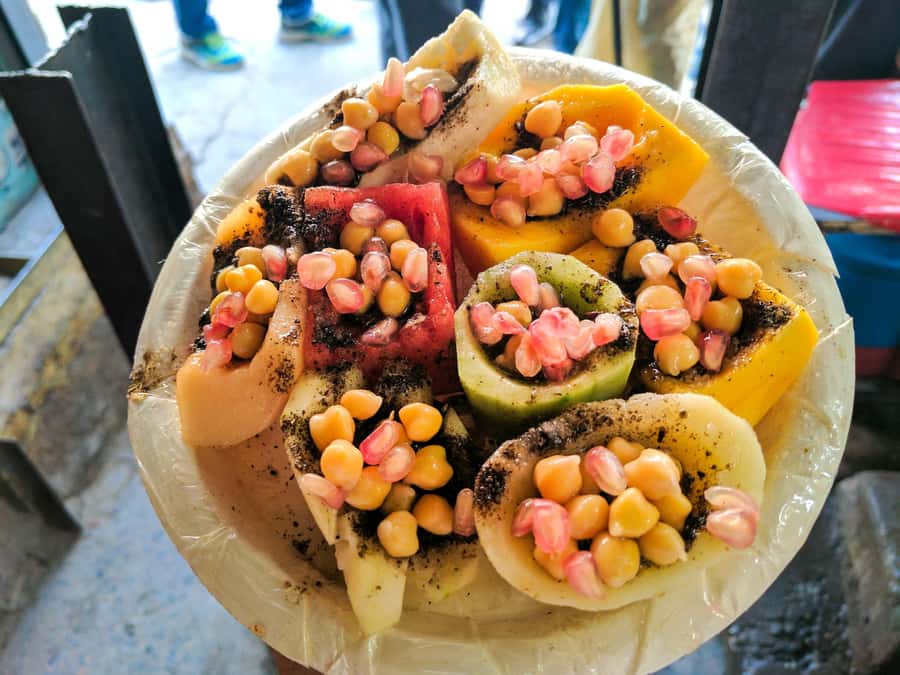
Next comes Kulia ki chaat: fruit bowls mixed with chickpeas and masala. This is one of those dishes that surprises first-timers because it mixes textures—juicy fruit, chickpeas, and spiced seasoning—so you don’t just keep eating fried things back-to-back.
You’ll also try a unique fruit sandwich. It’s exactly the kind of stop that earns the street-food label, because it’s not something most visitors stumble into on their own. It also gives your palate a break before you head into the spice market area.
The practical takeaway: this is not a light snack tour. You’re doing a full sequence of bites, and you’ll feel it around the spice market and the lassi/kulfi portion.
Asia’s largest wholesale spice market: see it, then taste it
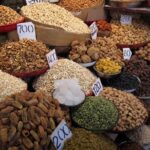
The tour then moves toward the spice market—described as Asia’s largest wholesale spice market. Even if you’ve seen spice piles in photos, there’s a difference between “spice as decoration” and spice as a working ingredient environment. Here, you’re walking through a place where spices are the main event.
What I like about this part is that it doesn’t feel like a detour. You see the spices, then you eat again shortly afterward, which helps your brain connect smell and flavor.
This is also where a strong guide really matters. Streets like these reward attention: you’ll notice how spices show up as aroma, color, and seasoning choices. Guides who handle the crowd well help you stay focused instead of getting lost in it.
A few more New Delhi tours and experiences worth a look




Lassi, chole bhatura, and rabri-faluda: the meal-style finale
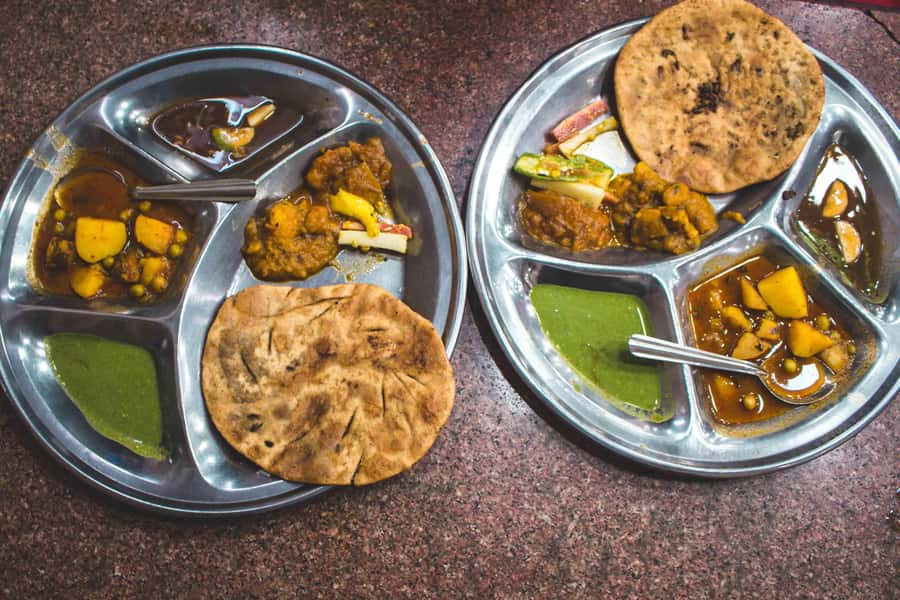
After the spice market segment, you’ll keep eating with dishes that feel more like a proper Old Delhi meal than a snack tasting.
You’ll try rabri-faluda, with rice noodles mixed in the rabri-style sweet base. Then there’s chole bhatura: chickpeas curry paired with fried bread. This is a classic comfort combo—spiced, filling, and built for big flavor impact.
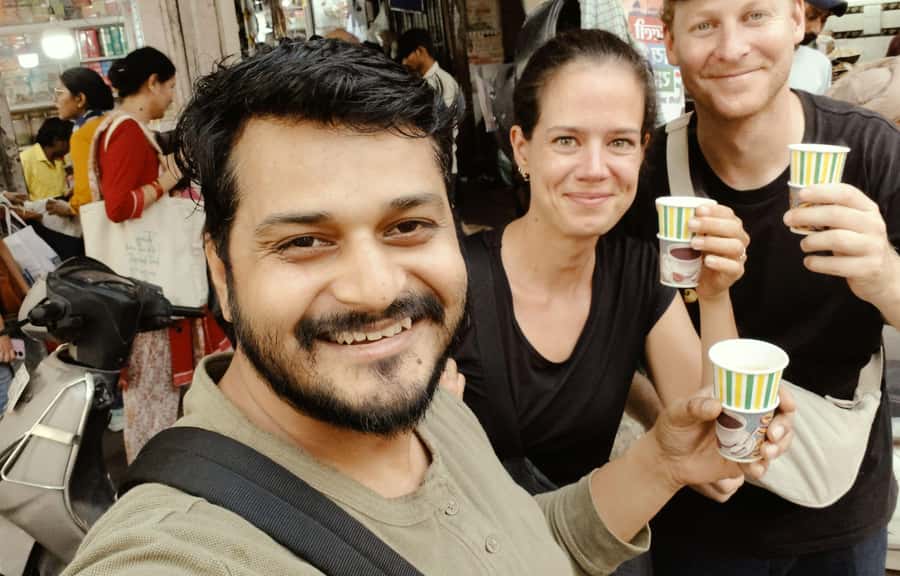
You’ll also have a chilled glass of Lassi (sweetened yogurt). When you’re eating multiple rich items in a row, lassi isn’t just dessert-adjacent. It acts like a palate reset. It’s one of those drinks that makes the “street food marathon” feel manageable.
And here’s a helpful tip from the tour experience: plan to arrive hungry. One of the best practical bits shared is to do the 3 PM tour and not eat beforehand. If you arrive already full, the later bites—especially the fried bread and the kulfi—won’t hit the way they’re meant to.
Kulfi with more than 50 flavours: the sweet ending you’ll remember
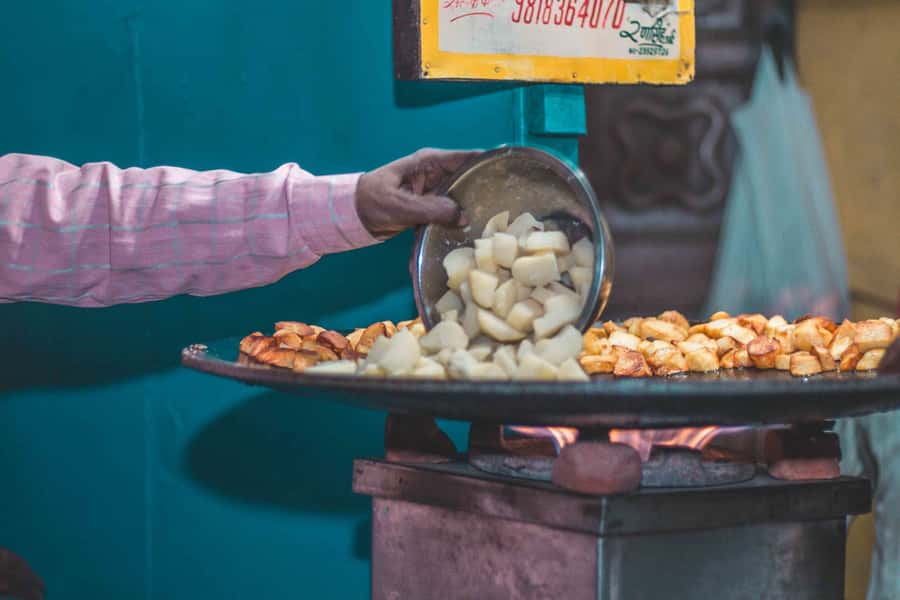
The final food stop is kulfi, described as Indian ice cream with more than 50 flavours. Kulfi tends to feel denser than Western ice cream—creamy, slower-melting, and strongly flavored—so it works well as a finish after all the savory and sweet snacks.
This ending also gives you an easy time buffer. You’re not rushing into the last minute of a long day. You’ve done the tasting, you’ve seen the markets, and then you get something cool and satisfying to close it out.
Price and what you’re really paying for at $51 per person
At $51 per person, this tour isn’t the cheapest way to eat in Delhi. But the value comes from what’s included for that price.
You get:
- An English-speaking local guide
- Metro and tuk-tuk rides to and from the meeting area portion
- Food and drink items that are part of the tour (ten unique items)
- A free Polaroid picture per booking
- Optional private hotel pickup and drop-off in an air-conditioned car (if that option is chosen)
Here’s how I’d think about it: street food can be affordable, but building a smart route takes time and local knowledge. This tour pays for planning, timing, and navigating the right places in the right order—so you spend your energy eating rather than guessing.
If you want to sample a lot in a short window, $51 can feel fair. If you only want one or two items, it probably won’t be worth it. The tour is best when you’re truly ready for the full tasting cadence.
Comfort, crowds, and keeping your stuff safe
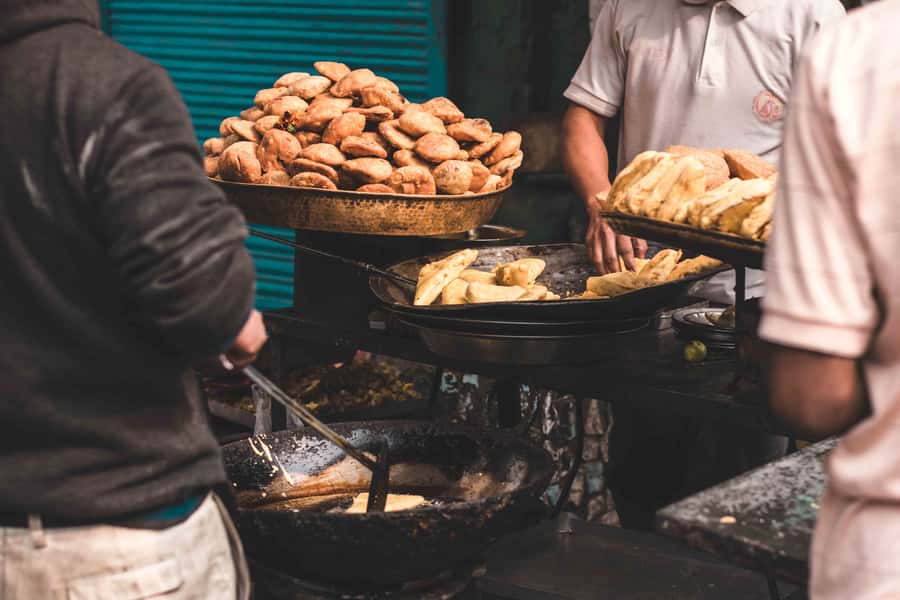
Old Delhi lanes can be crowded, narrow, and a little chaotic. The tour itself recommends comfortable walking shoes, which is good advice because you’ll be on your feet through busy market sections.
Also, keep an eye on your belongings. The tour notes pickpockets as a real risk in crowded areas. This is one of those times when a zippered crossbody and hands-on awareness beat bravery.
One more practical point: this tour is vegetarian, but it’s not automatically vegan, and it includes dairy. If you’re lactose intolerant, don’t treat that as a minor detail. Speak up in advance so the guide can steer you toward the best options.
Picking the right guide: why names matter here
Guide quality is a recurring theme in the positive feedback. Different names show up with the same core strengths: clear English, good pacing, and real control of the street.
- Isha is praised for taking care of guests like family, explaining meaning and symbolism at holy sites, and managing traffic and hawkers with confidence.
- Suraj gets credit for explaining the areas you walk through and keeping the group moving with solid organization.
- Kiran is praised for efficient time control and showing great places beyond just food.
- Deepak is described as energetic and especially strong for combining food with the Old Delhi experience.
- Naha is praised for a fantastic overall tour and for making the route easy to follow.
If you have any choice in guide assignment, I’d treat it as an important part of your decision. This kind of street tour lives or dies on timing and comfort.
Who should book this Old Delhi street food tour
This is a strong match if you:
- Want ten vegetarian tastings in a short time
- Enjoy street food and don’t mind that the route is in crowded lanes
- Like learning why things taste the way they do (especially starting at a historic gurdwara)
- Prefer guided navigation over spending your vacation time figuring out where to go next
You should think twice if you:
- Are vegan or have strict dairy limits (it’s vegetarian but not suitable for vegans)
- Are lactose intolerant
- Want a quiet, low-stimulation tour
- Need an option for unaccompanied minors (children must be accompanied by an adult)
Should you book? My decision shortcut
Book this tour if you’re visiting Delhi for the first time and you want an efficient, guide-led way to eat your way through Old Delhi without turning it into logistics math. The mix of Gurudwara Sis Ganj context, Parathewali Galli’s long-running paratha tradition, and the spice market stop gives the experience structure—so the food doesn’t feel random.
Skip it if dairy is a deal-breaker or if you’re the type who only wants light snacking. And if you do book, come hungry, wear comfortable shoes, keep your valuables secure, and tell your guide about any restrictions before the tour starts.
FAQ
What time does the Old Delhi 3-hour Street Food Tour start?
It starts at 3:00 PM, with the meeting point outside of United Coffee House in Connaught Place.
Where do I meet the guide if I’m taking the metro?
If you’re coming by metro, exit from Gate No. 4 of Rajiv Chowk Metro station.
Is this tour vegetarian?
Yes. The tour offers only vegetarian food options, and some items contain dairy products.
Is it suitable for vegans or lactose intolerance?
No. It is not suitable for vegans, and it also isn’t suitable for people with lactose intolerance.
What food stops are included?
You’ll try items such as jalebi, samosa, Raj Kachori, parathas, Kulia ki chaat, a fruit sandwich, dishes including rabri-faluda, chole bhatura, Lassi, and finish with kulfi.
Is bottled water included?
No. Bottled water is not included, so you’ll want to plan for it if you need it.