REVIEW · HANOI
Street Food Tour Hanoi and Train Street Experience
Book on GetYourGuide →Operated by DragonflyCruise · Bookable on GetYourGuide
Hanoi’s Old Quarter turns eating into a walk. This 3-hour street food tour blends local tastings with a guide-led tour of the 36 trade streets, then adds a visit to Train Street where a real train still runs through a narrow residential alley. I especially like how much food you get for the price, and how the guide explains what you’re eating as you go. The one catch is that Train Street and the surrounding Old Quarter lanes are tight and crowded, so this isn’t a good fit for wheelchair users.
I also like the small-group feel, capped at around 8–10 people, which makes it easier to stop for photos and ask questions without the guide rushing you. You’ll try a mix of savory street staples, sweet treats, and coffee (including the egg coffee vibe people wait for at Train Street). If you want to eat like a local without guesswork, this tour is built for that.
For the best experience, wear comfortable shoes and expect some time on foot in busy lanes. The good news: with an English-speaking guide and a safety briefing, you’ll feel more confident navigating the Old Quarter on your own later.
In This Review
- Key things I’d watch for before you book
- Hanoi Old Quarter on foot: why the 36 streets matter for your stomach
- Meeting at 31 Lò Sũ: starting in the center of the action
- What you actually eat: street food tastings that feel like a real meal
- Market time: shopping like locals instead of hunting souvenirs
- Coffee and tea stops: why timing matters in Hanoi
- Train Street Hanoi: the 1902 alley, the crowds, and how not to miss the moment
- Beer, wine, and dessert: pacing your way through a full 3 hours
- Walking the Old Quarter with a local guide: what you gain beyond food
- Practical value: is $28 really fair for this Hanoi combo?
- Who should book this street food and Train Street experience
- Should you book this tour
- FAQ
- Where does the tour start?
- How long is the street food tour?
- How much does it cost?
- What’s included in the price?
- Is pickup available?
- Will I be able to skip lines?
- Is the tour suitable for wheelchair users?
- What should I bring?
- Are pets or smoking allowed?
Key things I’d watch for before you book
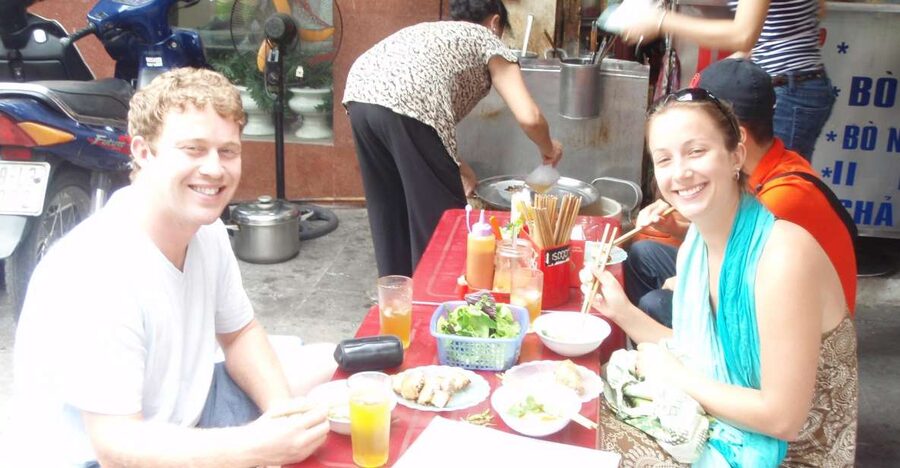
- You’re paying for guidance, not just food: an English-speaking guide leads the route and helps you choose what to order.
- Train Street is a photo-and-wait game: the alley gets busy while locals and cafe tables wait for the train.
- Food pacing matters on this route: you’ll get multiple tastings, plus dessert and drinks, so come hungry.
- It’s about the 36 streets, not random stops: the guide connects each area with historic trades like silver, silk, paper, and headstone makers.
- You may meet different guides: names like Tee, Ryan, Ning, Ha, Harry/Hà, Mia, and others have led tours, so you’re getting real local perspective.
- The group stays small: past tours have emphasized a relaxed size where you can actually talk with your guide.
Hanoi Old Quarter on foot: why the 36 streets matter for your stomach

The Old Quarter isn’t one “place.” It’s a patchwork of 36 historic streets, each tied to a trade. The guide typically frames what you’re seeing in practical terms: blacksmiths, silver shops, paper sellers, headstone makers, silk traders, and jewelers weren’t random labels. They were how people located goods and services before modern addresses.
That matters on a food tour because you’re not just chasing famous dishes. You’re walking through the setting where food stalls, small eateries, and supply shops made sense. Even if some of the original trades have shifted over time, the streets still feel specialized. You’ll notice it in storefronts, in the clustering of certain ingredients, and in the way market life spills into the sidewalks.
And here’s the other reason I like this setup: the route doesn’t feel like a checklist. It feels like a story you can taste. When your guide points out why a dish fits this corner of town, your orders start making sense instead of feeling like you’re rolling dice.
You can also read our reviews of more food & drink experiences in Hanoi

Meeting at 31 Lò Sũ: starting in the center of the action
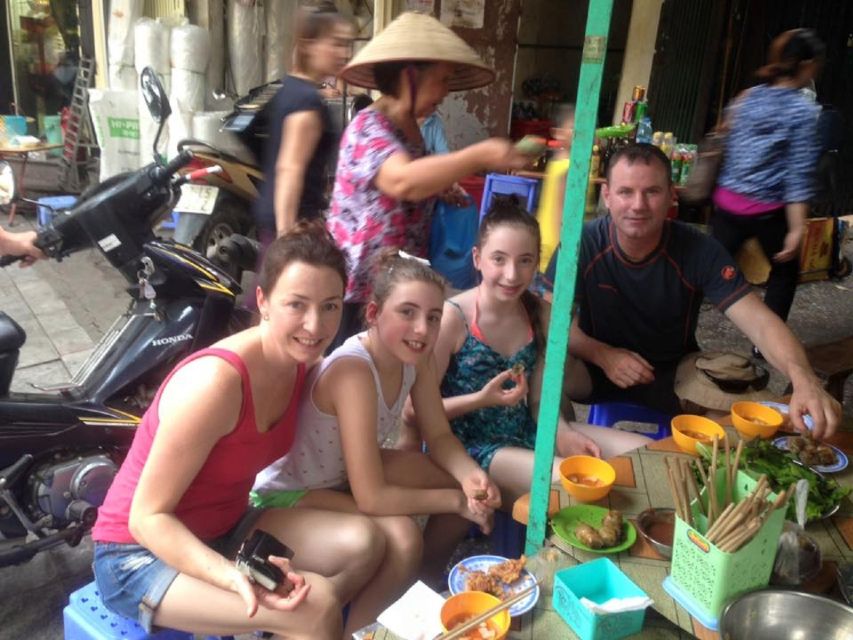
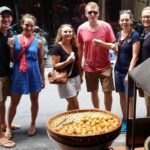
You meet your guide at 31 Lò Sũ Street, in the Hoàn Kiếm district, right in the heart of the Old Quarter, close to the Water Puppet Theater. That location is handy because it puts you where you can immediately feel Hanoi’s rhythm—street food, storefronts, and people moving between lanes.
If you choose optional pickup, it’s limited to hotels in the Old Quarter. For planning, I’d treat pickup as a bonus, not a guarantee you should rely on. Either way, expect to start walking pretty quickly after you meet.
Practical tip: if you’re trying to time a sunset moment later, this central meeting point makes it easier to flow with the day instead of commuting across town.
What you actually eat: street food tastings that feel like a real meal
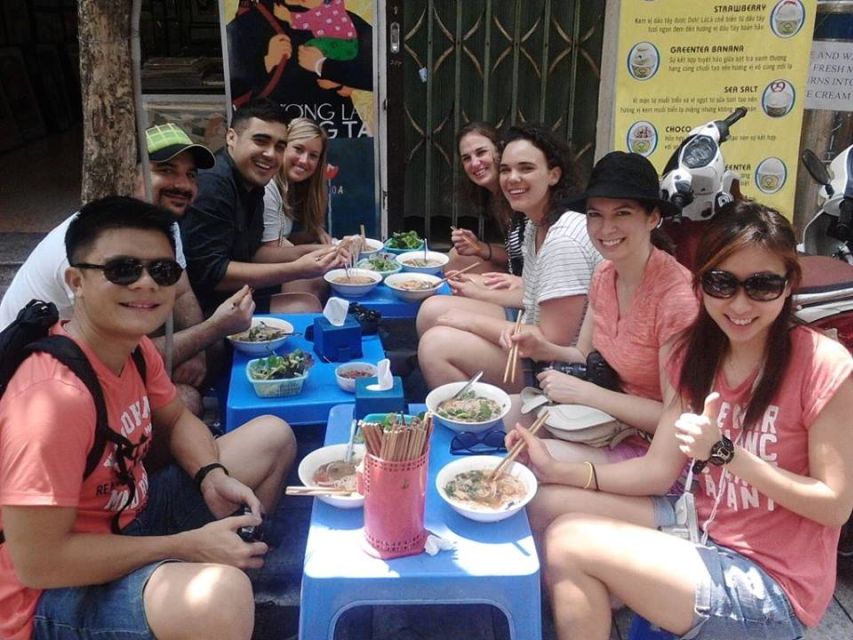
This tour isn’t just “a couple bites.” You’re set up for multiple food tastings, plus an authentic Vietnamese meal, dessert, and drinks. The price is $28 per person for about 3 hours, which is strong value when you consider what you’d spend trying to replicate this alone: guided choices, sit-down ordering help, and a route that lands you in good spots.
So what does that look like on the ground?
- You’ll sample street food and local snacks in different places, not all from the same style of stall.
- You’ll also do coffee and tea stops, and you’ll get a dessert as part of the pacing.
- The tour includes an arts-and-crafts market visit, so you might do a quick browse between food stops rather than spending the whole time only eating.
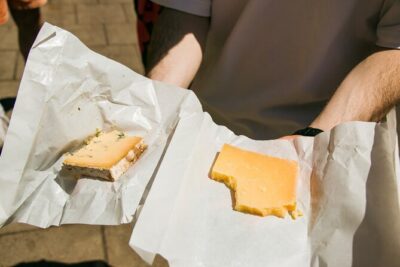
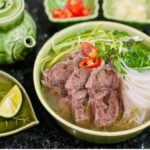
In terms of dishes, the tour experience is structured around variety. Even if the exact items change by day, you should expect a mix of classic Vietnamese flavors and regional favorites. Past guests have highlighted starting with familiar street staples like bánh mì and phở-style comfort foods, then moving into less-obvious picks and local specialties.
One more thing: the portion size tends to be generous. People describe leaving full with enough food to last most of the day. That’s the kind of tour where your “just one more bite” instinct should be treated with caution.
Market time: shopping like locals instead of hunting souvenirs
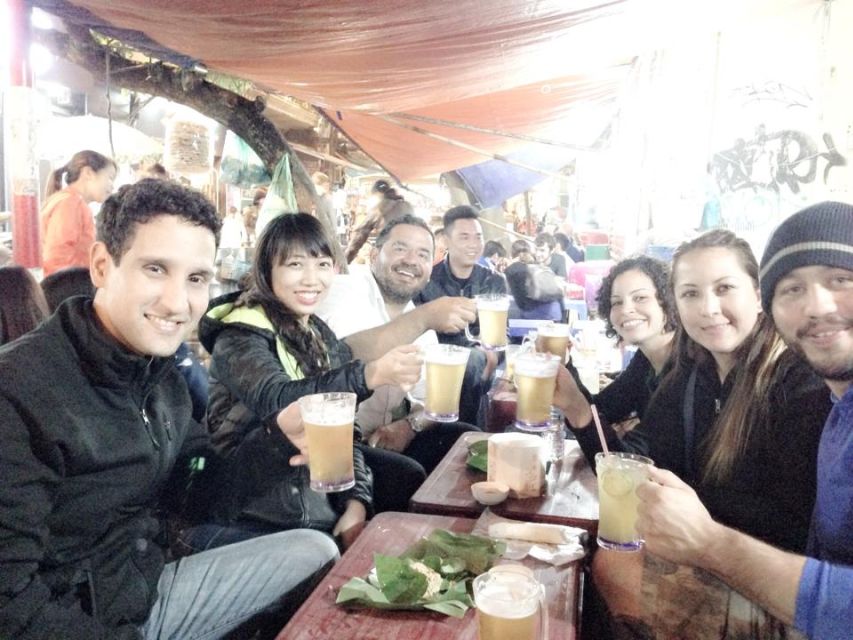
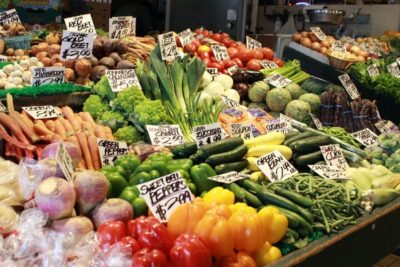
A big part of the fun is joining locals at the market rather than only watching from the outside. You’re not forced into shopping, but you do get the context that makes markets make sense: how vendors present items, what people buy routinely, and how small stalls create a daily routine.
This is also where your guide’s role really shows. Markets can be loud and visually chaotic. With an English-speaking guide, you’ll get clearer on what you’re seeing and why locals choose certain items.
If you like bringing back food memories, this is the time to think about it. The tour notes that personal shopping isn’t included, so you’ll pay your own way for items you take home. But your money goes farther when you know what you’re buying and how it’s used locally.
Coffee and tea stops: why timing matters in Hanoi
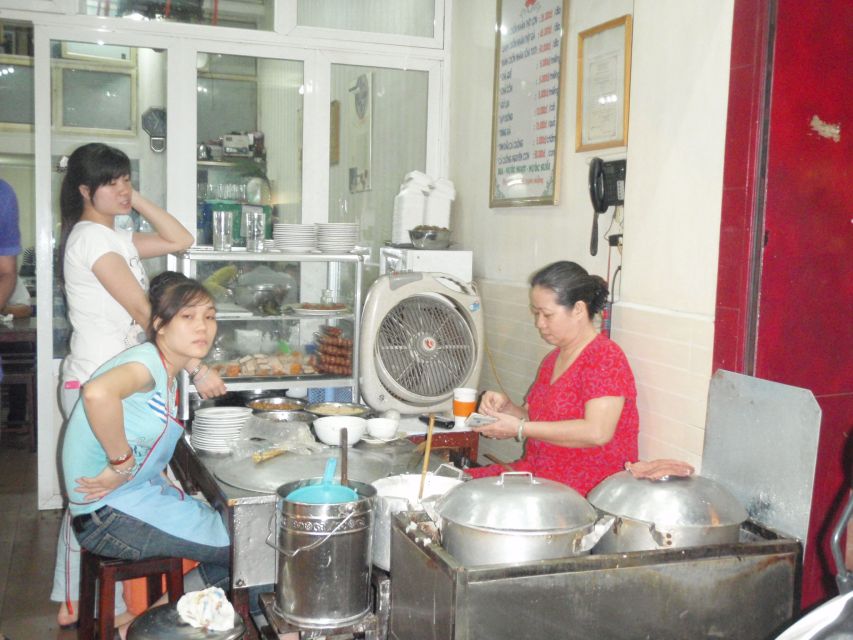
Hanoi runs on small breaks: tea, coffee, juice, and quick bites between errands. On this tour, those pauses aren’t random. They help you reset your appetite and they keep you on schedule for Train Street timing.
You’ll do coffee tasting as part of the experience, and Train Street is famous because many locals convert parts of the area into tiny cafés. The vibe is simple: sip and wait for the train. Even when the exact café choices vary, the core idea stays the same—this is a residential alley where everyday people built a routine around the train passing through.
If coffee is your thing, treat the coffee stops as part of the show. Don’t rush them. The tour’s pacing is set so you can enjoy the drinks without feeling like you’re sprinting from one place to another.
A few more Hanoi tours and experiences worth a look


Train Street Hanoi: the 1902 alley, the crowds, and how not to miss the moment
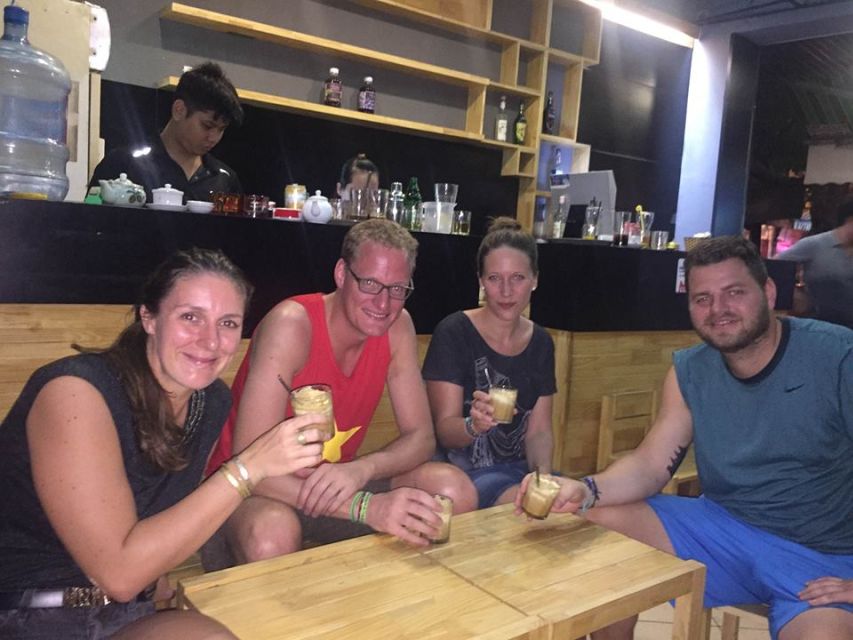
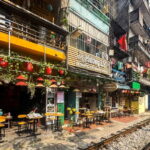
Train Street sits inside the Old Quarter area, and it’s famous for good reason. The railway line in this narrow alley traces back to 1902, built by French people during the colonial era. Today it’s a strange, practical mix: a residential lane where people live, run small cafés, and keep daily life going—while a train passes through.
What to expect:
- The alley is narrow, so when the train approaches, it gets really busy.
- A handful of times throughout the day, you’ll have the chance to see a train whisk by.
- Your guide helps manage the chaos, including a safety briefing and help with photo stops.
About photos: you’ll want to balance getting your shot with staying out of other people’s way. Don’t plant yourself in the middle of foot traffic. Instead, follow your guide’s cues about where to stand for the best angle.
Also, don’t assume there’s one single perfect moment. Think of it like waiting for a bus in the world’s tightest street: you’ll have a window, you’ll see it, then the lane shifts back to human-scale life.
And yes, you can often enjoy egg coffee-style drinks from nearby cafés while waiting, which is a very Hanoi twist on “tourist photography time.”
Beer, wine, and dessert: pacing your way through a full 3 hours
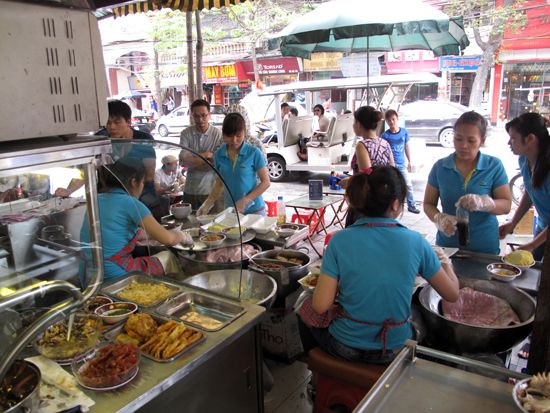
This tour includes drinks like beer, tea, and coffee, and it also lists wine as part of the experience. Dessert is also included. That means the tour is designed as a guided food run, not a light snack stroll.
The pacing is your friend here. With multiple stops, the guide spreads things out so you’re not trying to cram everything into one place. Still, go in prepared: eat a normal meal beforehand, not a huge one. Many people arrive hungry for a reason.
A small strategy that works well in Hanoi: aim to taste first, then decide. When you’re offered options, ask your guide what’s best for first-time tasters, and save your “most adventurous order” for the moment when you’ve got enough time to enjoy it properly.
Desserts and drinks help cap off the experience without feeling like a sudden sugar crash. It’s part of why the tour tends to leave people satisfied rather than just stuffed.
Walking the Old Quarter with a local guide: what you gain beyond food
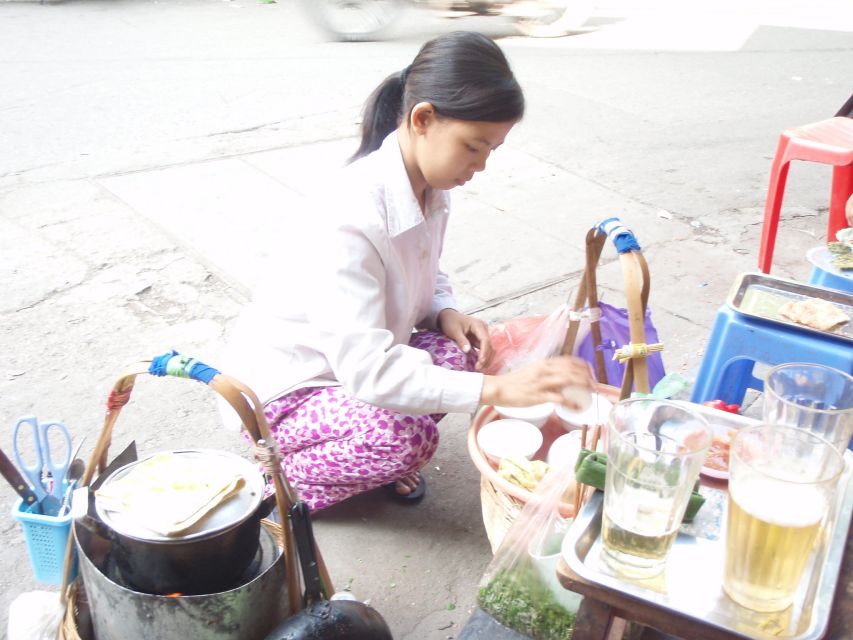
Food tours get hyped for taste. This one also gets praised for interpretation—why a dish exists, what trade streets changed over time, and how local life shapes what ends up on tables.
You’ll also get sightseeing moments as you walk. The tour includes walks with scenic viewpoints on the way and a sunset element, so if you like photos that aren’t only street-scene closeups, there’s room for that.
The guide factor matters a lot. Past guides include people like Tee, Ryan, Ning, Ha, Harry/Hà, Mia, and more. Names vary by date, but the pattern is consistent in what people liked: friendly conversation, clear explanations, and the ability to adapt when families or different dietary needs show up.
One practical example: vegetarian accommodation has come up in past experiences. If you’re vegetarian, it’s worth mentioning it when booking so the guide can steer you toward satisfying options.
Practical value: is $28 really fair for this Hanoi combo?
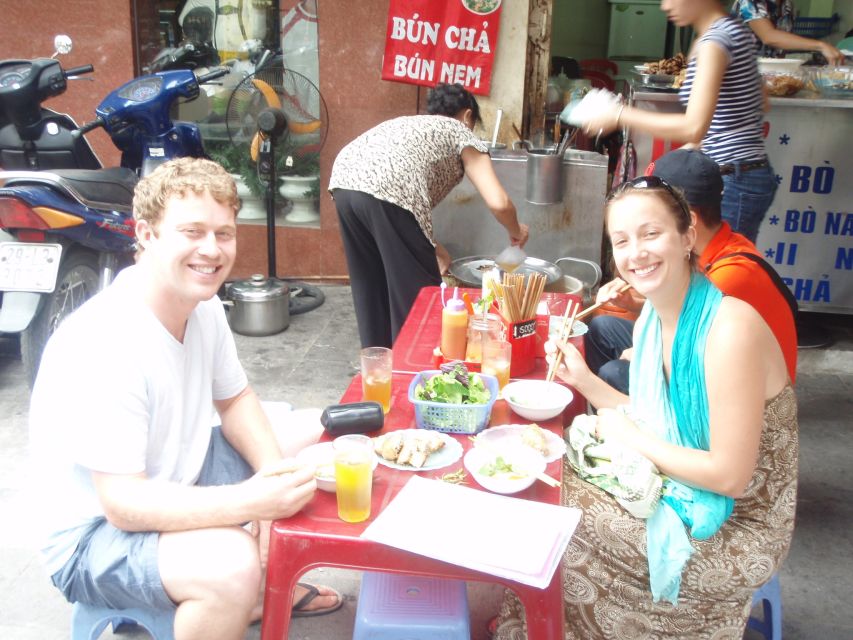
Let’s talk money in plain terms.
For $28, you’re getting:
- an English-speaking guide
- a small group format
- an authentic Vietnamese meal
- dessert and drinks
- street food tastings
- a walk through the Old Quarter’s trade-street system
- a Train Street experience with a safety briefing and photo guidance
Could you do something similar by yourself? Maybe. But you’d lose the route logic, the ordering confidence, and the “we know where to go” advantage that matters in a maze of tiny lanes.
The tour also includes skip-the-line value. You might not always need it, but when you do, it saves time and keeps the day moving.
Downside on value: personal shopping isn’t included, and additional drinks aren’t included either. If you’re tempted by markets and cafés, budget a little extra so you don’t feel surprised halfway through.
Who should book this street food and Train Street experience
This is a great fit if:
- you want a guided introduction to Hanoi’s Old Quarter without studying maps for hours
- you like street food but don’t want to guess what to order
- you want Train Street as more than a quick photo stop
- you enjoy chatting with locals and learning why certain dishes show up in certain areas
It may be less ideal if:
- you have mobility limitations, since Train Street and Old Quarter lanes are tight and not suitable for wheelchair users
- you hate busy crowds and prefer quiet, slow sightseeing
Should you book this tour
If you’re short on time in Hanoi, I’d book it. This is one of the more efficient ways to combine Old Quarter walking, a real meal, coffee breaks, and the Train Street moment in about 3 hours.
I’d still make one decision before you go: confirm that this pace matches your comfort level. If you love eating your way through a city and you’re ready for some crowded waiting during Train Street, you’ll likely come away feeling like you learned Hanoi through its food.
If you want, tell me your travel dates and whether you’re vegetarian or have any dietary limits. I can suggest how to approach the tastings (and what to prioritize) so you feel great all the way through.
FAQ
Where does the tour start?
Meet your guide at 31 Lò Sũ Street, Hoàn Kiếm district, in the center of Hanoi Old Quarter, close to the Water Puppet Theater.
How long is the street food tour?
It lasts about 3 hours.
How much does it cost?
The price is $28 per person.
What’s included in the price?
An English-speaking guide, authentic Vietnamese meal, dessert, and drinks, plus small-group tour time. Authentic meal and tastings are part of the experience.
Is pickup available?
Pickup is optional for hotels in the Old Quarter of Hanoi.
Will I be able to skip lines?
Yes, it includes skipping the ticket line.
Is the tour suitable for wheelchair users?
No. It’s not suitable for wheelchair users.
What should I bring?
Wear comfortable shoes.
Are pets or smoking allowed?
No pets and no smoking.