REVIEW · HANOI
The 10 Tastings of Hanoi With Locals: Private Street Food Tour
Book on Viator →Operated by Withlocals · Bookable on Viator
Hanoi’s Old Quarter feeds you fast. This private street food tour mixes a walk through classic sights with 10 tailored tastings led by a local host, so you’re not just eating, you’re learning what to order and how locals do it. I really like the undivided attention of a private guide, plus the balance of familiar favorites and Hanoi specialties like bánh mì, pho, bún chả, and egg coffee. One thing to consider: you’ll be walking and tasting a lot, so if you’re a light eater, plan to go slow and ask for smaller bites early.
I also like how the stops are practical. You start near the water puppet theater area, then move through temple streets and market-adjacent lanes, ending back at the meeting point, which keeps the whole evening feeling tight and easy. A possible drawback is that the experience depends on the guide’s energy level; if you want lots of chat, tell your host what you prefer right at the start.
In This Review
- Key highlights you’ll actually feel during this tour
- Old Quarter walking, with a local guide who handles the details
- Price and value: what you’re paying for in real terms
- What you’ll taste: the logic behind the 10 stops
- Stop 1 and 2: water puppet theater area, then Ba Da Temple
- Stop 3: pho roll and shrimp pastry, the warm-up bite
- Stop 4: French-era architecture stop that explains Hanoi’s “why”
- Stop 5 and 6: bún chả and steamed rice rolls, where Hanoi turns up the flavor
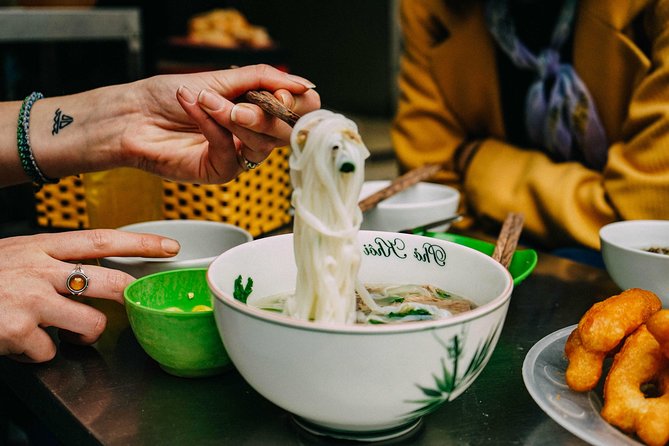
- Stop 7: pho on the street, not in a postcard bowl
- Stop 8: bánh mì time, baguette fusion in bite-size form
- Stop 9: Traditional medicine street, a stop that changes how you look at the lanes
- Stop 10: fruit dessert with coconut milk and condensed milk
- Stop 11: egg coffee at a family-run café
- Stops 12 and 13: French-styled house and Ba Da Pagoda for a quieter finish
- Vegetarian options, plus how to ask for changes without stress
- How the route and pacing affects the experience (good and bad)
- Guides you may meet: Lien, Jessica, Leanne, Há!, and Annie
- Who this Hanoi street food tour is best for
- Should you book The 10 Tastings of Hanoi With Locals?
- FAQ
- How long is the 10 Tastings of Hanoi tour?
- What does the tour cost?
- Where does the tour start?
- Is pickup or drop-off included?
- What’s included in the price?
- Are admission tickets included?
- How many people are on the tour?
- Can the tour accommodate dietary restrictions?
- What if I need to cancel?
Key highlights you’ll actually feel during this tour
- Private one-on-one format: just you and your local guide, so you can steer pace and preferences.
- Up to 10 food and drinks tastings: enough variety to compare flavors without needing a full meal plan.
- Old Quarter walking route: you get city flavor along with eating spots, not just a food checklist.
- Clear Hanoi classics on the list: pho, bún chả, bánh mì, steamed rice rolls, fruit dessert, and egg coffee.
- Dietary alternatives offered: vegetarian options are included, and at least one review mentions safe planning for gluten-free needs.
- Small cultural stops between bites: temples, French-era architecture, and a traditional medicine street help the flavors make sense.
Old Quarter walking, with a local guide who handles the details
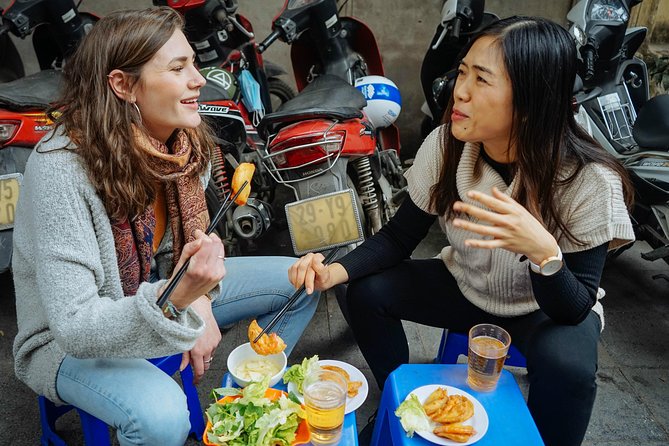
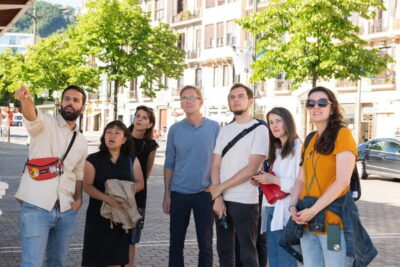
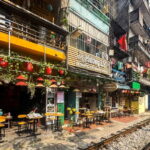
This is the kind of Hanoi tour that works because it stays simple: you walk, you stop, you eat. The route runs through the Old Quarter area around Hàng Trống and Hoàn Kiếm, with the focus on street-level life rather than big museum stops.
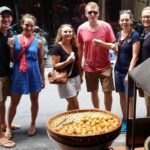
The private format matters more than you might think. With only you and your guide, you’re not squeezed into group timing, and you can slow down if a stall is busy or if you’re tasting something new. And if you’re picky—too salty, too spicy, certain ingredients—you can usually steer the order rather than guessing.
You can also read our reviews of more food & drink experiences in Hanoi
Price and value: what you’re paying for in real terms
At $78.52 per person for about 3 hours, this tour isn’t the cheapest thing in Hanoi. But it lines up well with what you actually get: private guidance, 10 tastings, and built-in direction on what to eat and where.
Street food tours can fail when they feel like a random buffet. This one feels more like a guided plan. You’re not just paying for food; you’re paying for someone who knows how to place you at the right kind of stall and how to keep the experience moving without turning it into a frantic sprint.
Also, the “booked about 19 days in advance” detail is a quiet clue. This is a popular format, especially for first-timers who want the Old Quarter without the stress. If you’re traveling in a busy window, you’ll be happier locking it earlier rather than hoping.
What you’ll taste: the logic behind the 10 stops
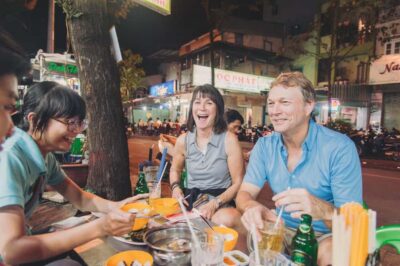
The tour is built around variety: one snack leads into the next, and the menu mix helps you understand Hanoi flavors in context. You’ll see the French influence in bánh mì and architecture-related stop points, the Vietnamese balance of herbs and grilled flavors in bún chả, and the coffee culture in egg coffee.
You’ll also get “compare and learn” value. For example, pho shows up as a bowl you can actually taste and judge—broth, lime, pepper, onions—while other stops like the pho roll and steamed rice rolls teach you how Hanoi wraps flavors differently.
And yes, this is a lot of food. The practical move is to keep your expectations honest: you’re likely to leave happily full, not just lightly sampled. If you’re not a big eater, bring that up early and ask your guide to adjust portions.
Stop 1 and 2: water puppet theater area, then Ba Da Temple
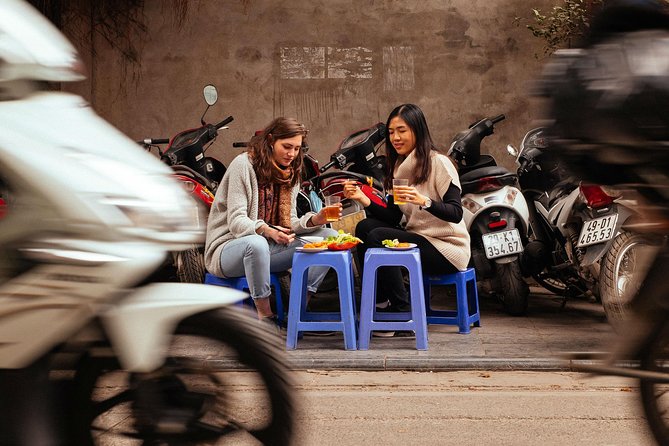
The tour starts at 16 P. Lê Thái Tổ, Hàng Trống, Hoàn Kiếm. From there, the first stop is the Thang Long Water Puppet Theatre area, where you meet your guide and get oriented. The theater admission ticket is noted as not included, so you’re mostly using the location as a landmark while you settle in.
Then you head to Chùa Ba Da, a temple stop that gives you a breather from the food buzz. It’s one of Hanoi’s sacred temples, and even though you’re not stuck in a long indoor visit, it helps you understand the city’s layered identity: sacred spaces right next to the everyday street rhythm.
Practical tip: if you’re sensitive to sun or you run hot easily, this early part is where you can slow down and regroup before the tasting train really hits.
Stop 3: pho roll and shrimp pastry, the warm-up bite
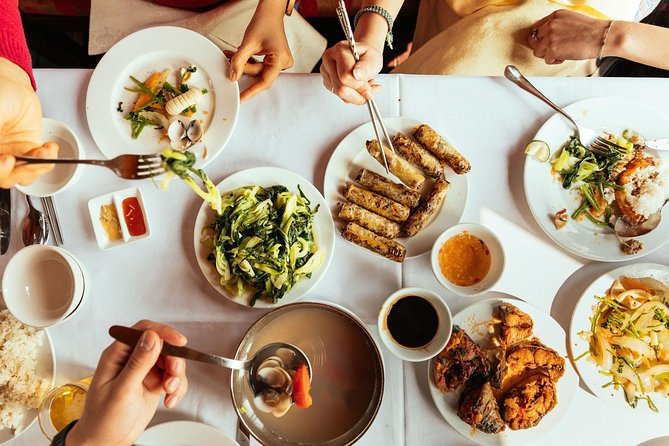
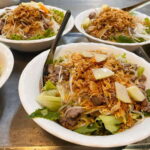
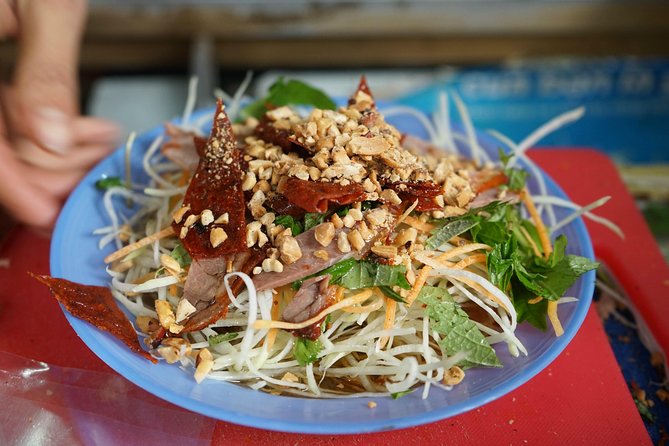
This is your first real “taste moment.” You’ll try a pho roll—noodles and beef finished with herbs—built on a dish style that’s local and easy to eat while walking. It’s a smart opener because it sets the flavor direction: savory broth-adjacent taste, fresh herbs, and a noodle texture that’s distinct from later dishes.
Right after, you’ll also encounter a shrimp pastry specialty. In practice, this is your chance to test your appetite for salt-forward street snacks versus lighter, herb-driven bites. If shrimp is a yes for you, this stop is often one people remember because it’s different from the big headline foods.
A few more Hanoi tours and experiences worth a look

Stop 4: French-era architecture stop that explains Hanoi’s “why”
Stop 4 is not a tasting stop. You’ll see a villa with French architecture and hear the story behind it, plus how locals use that space now. Even if you never become an architecture person, this kind of stop helps you connect dots.
Why it’s worth it: Hanoi’s food and Hanoi’s streets don’t exist in a vacuum. The baguette story later leads to bánh mì tasting, and the French-era structure stop gives you a physical clue before you hit the food that followed.
If you’re the type who likes photos, this is also a good pause. No frantic crowding, just a quick look and a few minutes of context.
Stop 5 and 6: bún chả and steamed rice rolls, where Hanoi turns up the flavor
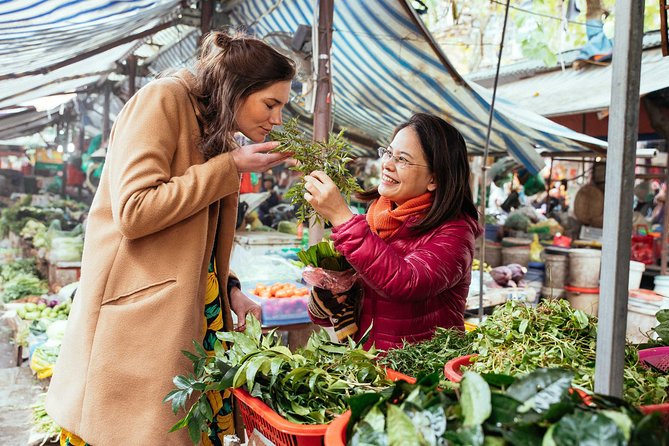
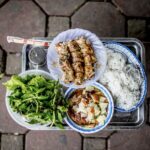
Next you’ll hit Phố Đường Thành for bún chả—grilled pork over noodles with pickled vegetables and a dipping sauce. This dish is a strong “Hanoi signature” because it balances smoky grilled meat with tangy pickles. It also makes it clear that dipping sauces are not optional; they’re the system.
Then it’s onward to Hàng Điếu for a classic street eat: steamed rice rolls stuffed with pork and mushrooms (or both). You’ll typically see it served with fried shallots, adding crunch and depth.
These two stops work together. Bún chả teaches you the grilled-meets-tang play. Steamed rice rolls teach you the soft-meets-savory wrap style. By the end of this pair, you can start spotting patterns: Hanoi loves contrast—hot and cool, soft and crunchy, sauce and herb.
Stop 7: pho on the street, not in a postcard bowl
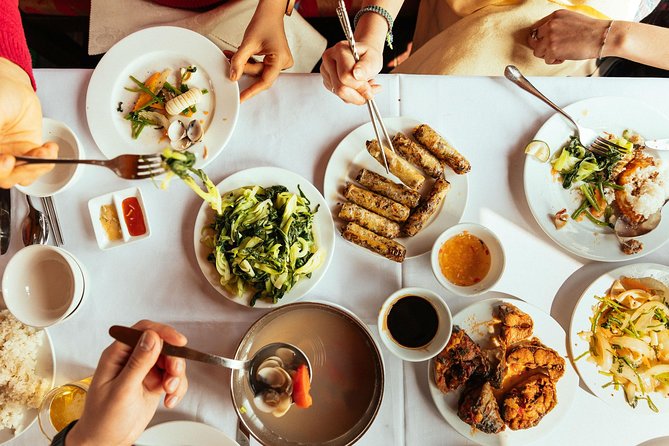
At Phố Hàng Vải, you’ll taste pho prepared with the classic combination you’ll recognize: broth, beef or chicken, vinegar, spring onions, pepper, and lime juice. The key is how these toppings change the bowl.
Practical advice: don’t just dump everything in right away. Start with a baseline sip, then add lime or vinegar gradually and watch how the broth flavor shifts. That’s how you learn what the dish is actually trying to do.
Stop 8: bánh mì time, baguette fusion in bite-size form
At Phố Bát Sứ, it’s bánh mì. The tour frames the baguette introduction during Vietnam’s French Indochina era and how it became a staple by the early 20th century. You’re not asked to memorize a timeline, but you do get a ready-made bite-size history lesson.
How this helps you: when you taste bánh mì here, you’re tasting the result of that cultural mix. You’ll get a fusion food that’s now fully Vietnamese in style and street identity, not just a foreign snack.
Stop 9: Traditional medicine street, a stop that changes how you look at the lanes
Stop 9 goes to Phố Lãn Ông, a street known for traditional medicine. You’ll walk through a street with specialized industry, named after a physician, and your guide can share what that means.
You’re not ordering herbal medicine here. You’re getting a lens. When you later see ingredients, packaging, or the way people shop in these lanes, you start understanding that Hanoi’s street system includes health, not just food.
Stop 10: fruit dessert with coconut milk and condensed milk
Now it’s sweet time at Phố Tố Tịch. You’ll taste a fruity dessert with coconut milk, condensed milk, and crushed ice, mixing fruits in a chilled bowl.
This stop does something useful: it cools your palate after savory-heavy dishes. It also gives you a contrast texture—icy, creamy, and fruity—so the meal doesn’t blur together into one long salty string.
If you’re watching sugar intake, you still might want to taste a small portion. The goal here is balance, not a dessert overload.
Stop 11: egg coffee at a family-run café
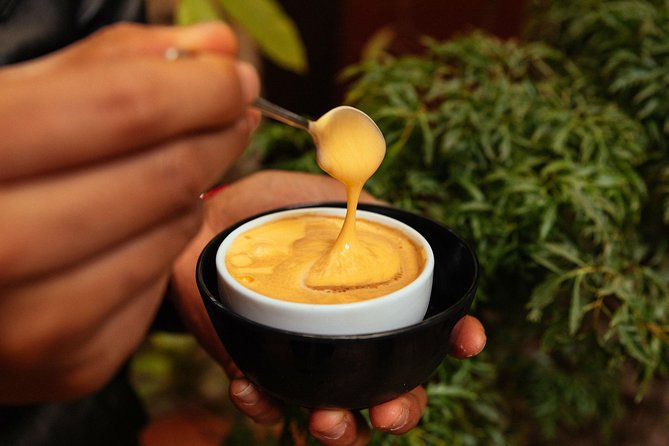
Stop 11 is a coffee break at a family-run café that locals return to. You’ll try egg coffee, invented around 1940 when eggs were whisked into coffee as described in the tour notes.
This is one of those Hanoi items that sounds odd until you taste it. The egg component brings a smooth, custard-like texture, changing the feel of the drink even if the coffee base stays coffee.
If you’re sensitive to dairy flavors, tell your guide before ordering or ask about how it’s prepared. You’ll get the best experience when you’re not surprised.
Stops 12 and 13: French-styled house and Ba Da Pagoda for a quieter finish
The final part includes two more architecture and temple points: a French-styled house and then Ba Da Pagoda, described as a Buddhist pagoda built in 1056 with a serene vibe.
You’re not staying for hours. This is more like a soft landing: you’ve eaten your way through the Old Quarter, and then you walk into a calmer moment. The best part is that it makes the entire tour feel less like a food run and more like a city walk.
Vegetarian options, plus how to ask for changes without stress
The tour includes vegetarian alternatives, so you’re not forced into a sad “no” for every bite. The key is to communicate your preferences early so your guide can plan swaps.
The supplied feedback also includes an example of a guide successfully planning for gluten-free needs safely. That doesn’t mean every restaurant will be fully identical, but it does show you the tour can handle restrictions with care when the guide is attentive.
When you message or speak to your guide, keep it simple:
- What you avoid
- How strict it is for you
- Whether you still want to participate in every stop or you prefer fewer swaps with larger replacements
How the route and pacing affects the experience (good and bad)
The tour is designed as a walking loop that ends back at the meeting point. That matters. Hanoi can be confusing if you’re moving on your own, and returning to the start keeps you from losing time.
The positive pacing is that each stop is about 15 minutes. That keeps decision fatigue low and keeps you from spending most of the tour staring at menus you can’t read.
The possible drawback is the amount of food and drink. If you don’t eat quickly, you might feel full before the last tastings. In that case, ask early to share bites or reduce orders so you still enjoy the later stops like fruit dessert and egg coffee.
Guides you may meet: Lien, Jessica, Leanne, Há!, and Annie
A big reason this tour scores so well is guide quality and warmth. Past guides named in feedback include Lien, Jessica, Leanne, Há!, and Annie, and the common theme is that they move you around with confidence and explain what you’re eating and why.
Still, not every guide communicates the same way. One review mentions a guide who was quieter and on the phone, which can make the tour feel less lively. If you care about conversation, say it up front. A good guide will match your style.
Who this Hanoi street food tour is best for
This tour is ideal if you:
- Want a first-night or first-two-days plan for the Old Quarter
- Like food variety more than one perfect dish
- Prefer a private pace over group logistics
- Want city context without a long sightseeing day
It’s also a strong fit for couples and small groups because private means you can choose pace and handle preferences without negotiation.
If you already know Hanoi street food and you’re hunting only for one signature item, this might feel like too much variety. But if you’re building a map of what to eat next, it’s excellent.
Should you book The 10 Tastings of Hanoi With Locals?
If you want an easy, structured way to taste Hanoi classics while learning how to order and what to expect, I think you should book it. The private host setup is the real advantage, especially if you have dietary needs or you’re traveling with picky eaters.
Book it soon if your trip dates are fixed. The tour’s demand suggests it sells out in popular windows.
Skip it—or adjust your expectations—if you hate walking or you’re the kind of eater who gets overwhelmed by lots of small dishes. You’ll still taste a lot, and you should plan for that. The good news is that you can manage portions if you communicate early.
FAQ
How long is the 10 Tastings of Hanoi tour?
It’s about 3 hours.
What does the tour cost?
It costs $78.52 per person.
Where does the tour start?
It starts at 16 P. Lê Thái Tổ, Hàng Trống, Hoàn Kiếm, Hà Nội 100000, Vietnam.
Is pickup or drop-off included?
No. Pickup and drop-off are not included.
What’s included in the price?
You get a private tour with a local guide and 10 food and drinks tastings, plus vegetarian alternatives.
Are admission tickets included?
Admission ticket for Thang Long Water Puppet Theatre is not included. Other stops are marked free in the tour details.
How many people are on the tour?
It’s private, so it’s only you and your local guide.
Can the tour accommodate dietary restrictions?
Vegetarian alternatives are included. Also, one review specifically mentions safe planning for gluten-free needs.
What if I need to cancel?
Free cancellation is available up to 24 hours in advance for a full refund.