REVIEW · NEW DELHI
Chandni Chowk Old Delhi Food Tour with Spice Market
Book on Viator →Operated by Tour4Fun · Bookable on Viator
Old Delhi turns your nose into a compass. This Chandni Chowk food tour is built for moving fast through tight lanes while you sample vegetarian street food, stop at major religious sites, and learn what you’re seeing in markets like Khari Baoli.
I like the guided navigation most. In a maze like Chandni Chowk, a guide helps you get your bearings fast and keeps the focus on food and sites instead of getting turned around. I also like the vegetarian street food snacks included along the way, so you aren’t stuck deciding between multiple vendors.
The main thing to consider: this is a 3-hour walking tour in a crowded area, and timing can affect which temple moments you’ll catch—Digambar Jain Lal Mandir is closed from 12 to 5 PM.
In This Review
- Key Things I’d Put on Your Radar
- Chandni Chowk in 3 Hours: Why You Want a Guide
- Price and Value: What $45 Buys You (and What It Doesn’t)
- The Route That Starts With a Jain Temple (and a Surprise Timing Note)
- Gurudwara Sis Ganj Sahib and Langar: Food as Service
- Khari Baoli: Asia’s Biggest Spice Market in Real Life
- Gadodia Market: Old Haveli Spice Village and a Rooftop View
- Kinari Bazar and Naughara Havelis: Wedding Trade Without the Pressure
- A Famous Old Delhi Street and the Cycle Rickshaw Reset
- Food You’ll Actually Understand: Vegetarian Snacks With Context
- Practical Tips: Shoes, Timing, and Weather
- Who This Tour Fits Best
- Should You Book This Chandni Chowk Food Tour With Spice Market?
- FAQ
- How long is the Chandni Chowk Old Delhi Food Tour?
- What is the price per person?
- What is included in the tour?
- Is there shopping included?
- Where is the meeting point?
- Which markets and stops are visited?
- How long do you spend at Khari Baoli and other markets?
- Are admission tickets needed for the markets?
- What should I know about temple hours and weather?
- What are the cancellation rules?
Key Things I’d Put on Your Radar
- Small-group feel with a maximum of 20 people keeps it manageable in tight lanes
- Khari Baoli’s scale: Asia’s biggest spice market with more than 1000 shops
- A built-in food plan with coffee/tea and vegetarian street snacks included
- Two major faith stops: Digambar Jain Lal Mandir and Gurudwara Sis Ganj Sahib
- Views that break up the walking via a rooftop stop at Gadodia Market
Chandni Chowk in 3 Hours: Why You Want a Guide
Chandni Chowk is famous for a reason, and also famous for the reason you might lose your place. The lanes twist. The crowds thicken. And if you’re doing it solo, you can spend the first hour figuring out which way is forward.
This tour solves that problem by keeping you on a guided route through the parts of Old Delhi you might not naturally notice, including markets that are tightly packed with specific goods. You’ll go with your guide through winding streets so you can focus on eating and looking, not navigating.
A big plus for me is that guides in this program are known for clear explanations. Names that come up in the feedback include Gajendra and Achaleshwar, both praised for communicating well and walking people through what they’re tasting. That matters here because street food is often less about the dish name and more about the spice mix, the method, and the reason it’s eaten where it’s sold.
Practical takeaway for you: if you want Old Delhi food without the stress, a guided route is the best shortcut.
You can also read our reviews of more food & drink experiences in New Delhi


Price and Value: What $45 Buys You (and What It Doesn’t)
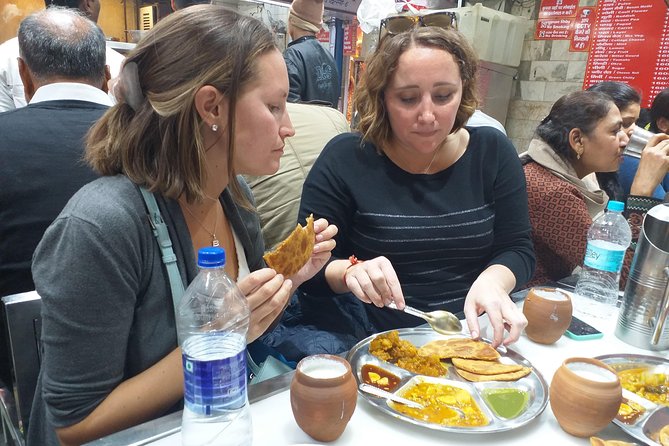
At $45 per person for about 3 hours, the real question isn’t only cost—it’s what’s bundled into that time. In this case, you’re not just paying for a walk. You also get:
- Coffee and/or tea
- Snacks of vegetarian street food
- A cycle rickshaw ride
Add in the fact that the group stays capped at 20 people, and you’re getting a planned circuit rather than a casual wander. That’s why this price can feel fair even if you’re trying to watch costs: the tour handles the structure, and you get the “cover charge” equivalent for guides + included food + the ride.
What’s not included is shopping. That can be liberating. You can browse without being pressured to buy. And you’ll still learn enough about markets like Khari Baoli and Kinari Bazar to understand what you’re looking at.
Book it if you want a guided introduction to Old Delhi’s food-and-market rhythm. Skip it if you already know exactly where you’re going and have a reliable plan for finding vendors, ordering, and managing the crowd.
The Route That Starts With a Jain Temple (and a Surprise Timing Note)
One of the first stops is Digambar Jain Lal Mandir, built in 1656. The details here aren’t subtle: the temple features gold-plated painting, and it also has a birds hospital. It’s the kind of place where the architecture and the care for animals sit side by side, and you get a calmer pause from the market noise.
Here’s the one timing note you should care about: the temple is closed from 12 to 5 PM. Since the tour runs for around three hours, you could miss that portion depending on your start time. A good guide will adjust what you see, but you can help by picking a departure that gives you a better chance of catching the temple’s open hours.
Also, keep your expectations realistic. You’re not arriving for a long sit-down visit. You’re stopping to see, understand, and move on—then you return to the world of spices and snack stops.
Why this stop matters: it adds texture. Old Delhi isn’t just markets; it’s also places where religious life and daily practice overlap with the city’s hustle.
Gurudwara Sis Ganj Sahib and Langar: Food as Service
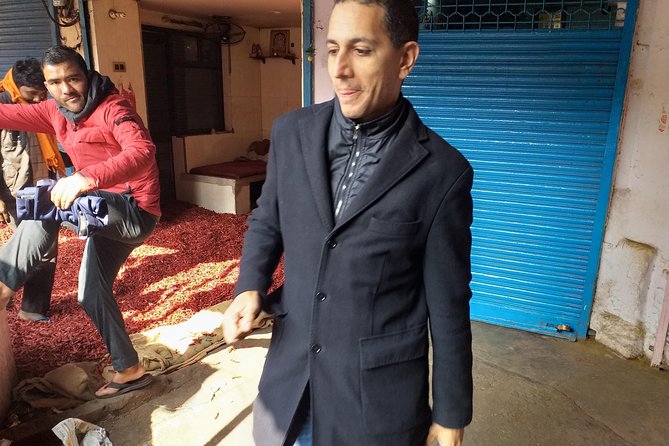
Next up is Gurudwara Sis Ganj Sahib, dedicated to the Ninth Guru Teg Bahadur. If you’re looking for a deeper reason people eat in Old Delhi besides taste, this is a strong moment to understand the culture of shared meals.
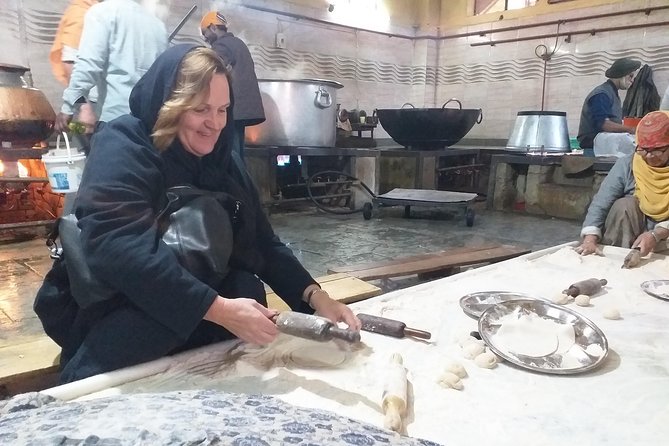
You’ll visit the Langar, the free kitchen. The scale is part of the story: more than 10 thousand people eat there every day, and people also do service as part of the process. Even if you’re just observing briefly, it helps you see street food and food culture in a wider frame.
Langar also changes how you think about eating on this tour. You’re not just sampling snacks. You’re watching how food functions as community—then you move straight into markets where spices and vendors are the daily engine.
What to do in this stop: be respectful with your posture and quiet volume. It’s not the time to treat this like a photo break. If you want good photos, wait for a moment that feels appropriate, and follow your guide’s cues.
Khari Baoli: Asia’s Biggest Spice Market in Real Life
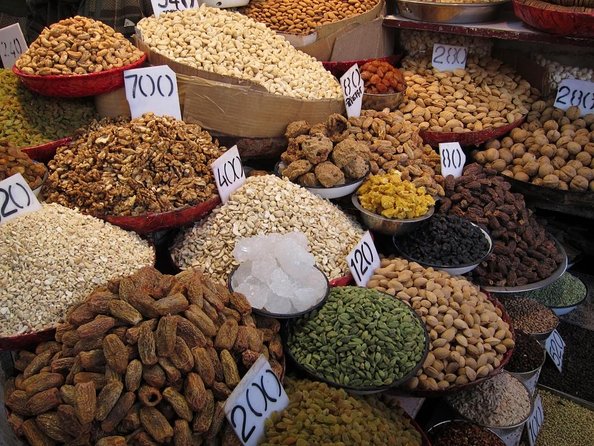
Now you hit the part most people came for: Khari Baoli, described as Asia’s biggest spice market with more than 1000 shops. That number sounds big on paper, but in-person it’s a sensory lesson. Spices aren’t just background—saffron-yellow, smoky-brown, sharp-green, and layered mixes are everywhere.
The tour time here is about 20 minutes, with admission ticket free. That’s enough to understand the layout and see how merchants present goods, but it’s not enough to wander endlessly. That’s a good thing for you. Left to your own devices, you could get pulled in fifty directions and end up spending the day shopping instead of learning.
This stop is also where a guide’s explanation becomes more than nice-to-have. When you know what different stalls are specializing in, you stop seeing the market as one huge blur of jars and bags. It becomes a map of micro-markets.
Fast tip for you: during the spice market stop, focus on smells and packaging style rather than trying to memorize everything. You can’t absorb 1000 shops in 20 minutes. Instead, aim to learn how the spice trade is organized—then go back later on your own if you want deeper shopping.
A few more New Delhi tours and experiences worth a look





Gadodia Market: Old Haveli Spice Village and a Rooftop View
Just adjacent to the larger spice world, the tour includes Gadodia Market, which is described as an old haveli and part of the spice market. Think of it like a small spice village where people both live and work.
You get about 20 minutes here, again with admission ticket free. The key difference from Khari Baoli is pace. Gadodia Market feels more tucked-in and local, less like a giant commercial maze.
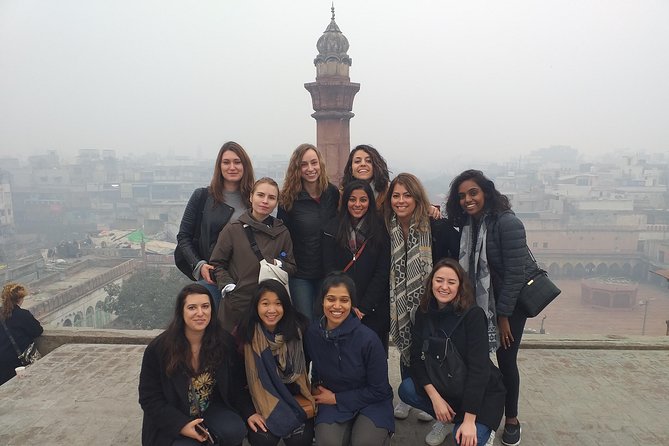
And then there’s the reason I like this stop: you’ll go up to the rooftop of the haveli for a birds-eye view of Old Delhi. That kind of viewpoint does two things. First, it gives your brain a reset after tight-lane walking. Second, it helps you understand how the lanes connect, which makes the rest of the city easier to interpret later.
Why this matters for value: it breaks up the market intensity with a perspective change. You’re not only tasting and looking at stalls—you’re building mental geography.
Kinari Bazar and Naughara Havelis: Wedding Trade Without the Pressure
From spices to silk-and-lace world: Kinari Bazar. This is a market of wedding goods and decorative items, including dress-related accessories for women and home decoration pieces. It’s a different kind of shopping logic than spice markets, which can help you notice how Old Delhi’s economy is divided into specialized lanes.
You’ll spend about 30 minutes here with admission ticket free. The tour also includes a visit to some 350 years old havelis (Naughara). Even if you’re not the type who normally ge rips through heritage architecture, these stops give you a sense of how long these trade networks have existed in the area.
One of the quiet benefits of Kinari Bazar is that it’s visual. Colors, patterns, and handcrafted trims tell you more than a list of items ever could. And since shopping isn’t part of what’s included, you can treat it as a cultural read rather than a spending plan.
If you care about photos: dress size matters here. Wear comfortable shoes and plan for short indoor/exterior movement rather than long museum-style wandering.
A Famous Old Delhi Street and the Cycle Rickshaw Reset
Between markets, the tour includes time on one of the famous streets of Old Delhi. The exact street name isn’t listed, but the purpose is clear: you get a taste of the everyday city rhythm in addition to the big specific highlights.
Then there’s the cycle rickshaw ride, included as part of the experience. Even though it’s a short segment, it’s a great break. Walking through crowds all morning can make your senses feel overloaded. A quick ride helps you regain your rhythm, and it’s also a fun way to shift how you’re taking in the city.
What this means for you: you’re not stuck in a single tempo. The tour blends slow looks, snack stops, short market sprints, and at least one change of pace with the rickshaw.
Food You’ll Actually Understand: Vegetarian Snacks With Context
Street food tours fail when they act like food is just a checklist. This one does better because it links what you eat to what you’re seeing.
You’re given vegetarian street food snacks, plus coffee and/or tea. Since the itinerary focuses on spice markets and key markets, the food fits the setting: spices aren’t just merch—they’re a living ingredient base for what you taste. When a guide can explain what makes each bite different, you leave knowing more than what you ate.
This is where I’d trust guides like Achaleshwar for clear explanations and Q and A, and Gajendra for friendly communication and helpful navigating through the lanes. Not every guide will be identical, but the pattern is consistent: your questions matter and the guide works to make the experience make sense.
Food safety note (practical, not dramatic): eat what looks busy and handled quickly, and follow your guide’s lead on what’s been prepared for the tour. Keep water handy and take breaks if your stomach needs it.
Practical Tips: Shoes, Timing, and Weather
This tour requires good weather. If conditions are poor, the operator will offer a different date or a full refund. That’s not a small detail in Old Delhi, where rain can make crowded lanes even less fun to move through.
Because it’s a walking-focused route in a crowded area, plan for:
- Comfortable shoes you can walk in for about three hours
- A light layer, since weather can shift
- A flexible mindset about crowds and timing
Also, remember the one specific closure: Digambar Jain Lal Mandir is closed from 12 to 5 PM. If your tour start time lands in that window, don’t be surprised if that portion isn’t available in the same way.
Lastly, aim to arrive a bit early. The meeting point is described with a specific address near Lal Quila metro station: Shani mandir gate no 01, Netaji Subhash Marg, Netaji Subash Place, Lajpat Rai Market, Old Delhi, Delhi 110006, India. This matters in a city where a few wrong turns can cost time.
Who This Tour Fits Best
This tour is a good match if you:
- Want a structured way to see Old Delhi without getting lost
- Are excited by spice markets like Khari Baoli and food that connects to those flavors
- Prefer vegetarian street snacks and coffee/tea as part of the plan
- Like a route that includes both markets and faith sites
It’s also ideal if you value learning—especially if you enjoy asking questions and getting explanations rather than just following along.
If you hate walking in crowds or you’re expecting a long sit-down temple visit, it may feel too fast-paced. The experience is designed for movement and short stops.
Should You Book This Chandni Chowk Food Tour With Spice Market?
I’d book it if you want an efficient, guided introduction to Old Delhi that combines food, markets, and landmark stops in about three hours. The inclusion of coffee/tea, vegetarian street snacks, and a cycle rickshaw ride makes the price feel practical, not inflated. And the strongest pattern from feedback is communication—guides like Gajendra and Achaleshwar are known for explaining what you’re eating and making the whole route easier to follow.
Skip it if you already have a tight plan for exploring Chandni Chowk solo and you don’t need help navigating the lanes. Also consider your timing if you’ll be in the area around midday, since Digambar Jain Lal Mandir is closed 12 to 5 PM.
FAQ
How long is the Chandni Chowk Old Delhi Food Tour?
The tour lasts about 3 hours.
What is the price per person?
The price is $45.00 per person.
What is included in the tour?
It includes coffee and/or tea, vegetarian street food snacks, and a cycle rickshaw ride.
Is there shopping included?
No. Shopping is not included.
Where is the meeting point?
The start point is Shani mandir gate no 01 near Lal Quila metro station, Netaji Subhash Marg, Netaji Subash Place, Lajpat Rai Market, Old Delhi, Delhi 110006, India. The tour ends back at the meeting point.
Which markets and stops are visited?
You’ll visit Khari Baoli (spice market), Gadodia Market, and Kinari Bazar, plus Digambar Jain Lal Mandir and Gurudwara Sis Ganj Sahib. You’ll also walk through one famous street of Old Delhi.
How long do you spend at Khari Baoli and other markets?
Khari Baoli is about 20 minutes, Gadodia Market is about 20 minutes, and Kinari Bazar is about 30 minutes.
Are admission tickets needed for the markets?
Admission tickets are listed as free for Khari Baoli, Gadodia Market, and Kinari Bazar.
What should I know about temple hours and weather?
Digambar Jain Lal Mandir is closed from 12 to 5 PM. The tour requires good weather; if canceled due to poor weather, you’ll be offered a different date or a full refund.
What are the cancellation rules?
You can cancel for a full refund if you cancel up to 24 hours in advance. Within 24 hours, the amount paid isn’t refunded.