REVIEW · NEW YORK CITY
East Village Noho Food Tour
Book on Viator →Operated by CityShuffles · Bookable on Viator
Street-food storytelling starts at Astor Place. This walk packs two top downtown neighborhoods into one time-saving route, and I like that it mixes classic NYC eats with visible local landmarks. I also like the pay-as-you-go setup, since you only buy what you actually want to eat. One thing to factor in: food is not included, so the total cost can climb if you say yes to every recommended bite.
You’re covering East Village and Noho by foot for about 2 hours 30 minutes, with a small group capped at 25 people. Expect around 5,000 steps, so good shoes matter. Still, if you want an authentic-feeling afternoon that costs less than a pre-paid tasting menu, this tour has a strong value pitch.
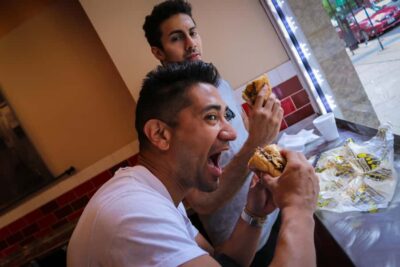
The route doesn’t just point at restaurants. It tees you up with context, so pizza, egg cream, and dessert feel tied to the neighborhood instead of random stops. Guides such as Mike or Jon Moto are known for story-driven walking that turns the sidewalk into part of the meal.
In This Review
- Key things to know before you go
- East Village and Noho in 2.5 hours without tourist-trail fatigue
- The $32 ticket value: you’re paying for the guide, not a buffet
- Where you meet at Astor Place and finish at Veniero’s
- Cooper Union to the Public Theater: seeing history while you walk
- Cooper Union Foundation Building
- The Public Theater
- McSorley’s to St. Mark’s Place: old-school New York with a street-scene pause
- McSorley’s Old Ale House (but no drinking)
- St. Mark’s Place
- Hamilton-Holly House: Eliza Hamilton’s home story on the walk
- Egg creams at B&H Dairy and pizza at Ray’s: the classic bites that land
- B&H Dairy: an egg cream moment
- Ray’s Pizza & Bagel Cafe: slice plus a restroom break
- Korean dumpling-style flavor adds range to the menu
- Street art and pop culture: the Kobra Michael Jackson mural stop
- Veniero’s finish: cannoli, cream puffs, and coffee when you’re ready
- The guide style: why Mike and Jon-type storytelling makes it feel personal
- Practical tips so you get full without overpaying
- Should you book the East Village Noho Food Tour?
- FAQ
- How long is the East Village Noho Food Tour?
- What is included in the $32 ticket?
- Is food included, or do I pay at each stop?
- Where do I meet, and where does the tour end?
- Is this tour ticket mobile-friendly?
- What happens if I need to cancel?
Key things to know before you go
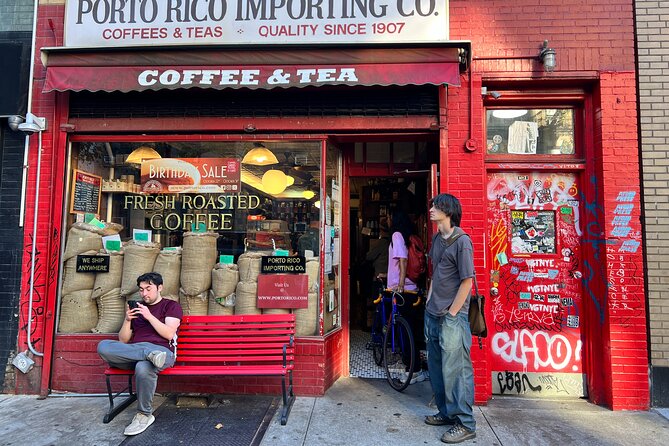
- Pay-as-you-go food stops let you control how much you spend
- East Village + Noho in one go without wasting time hopping between areas
- Landmarks on the route help you understand what you’re seeing while you eat
- Classic NYC bites like an egg cream at B&H Dairy and pizza at Ray’s
- Small group size (up to 25) keeps the pace manageable
- Finish at Veniero’s so dessert is built into the end of your walk
East Village and Noho in 2.5 hours without tourist-trail fatigue
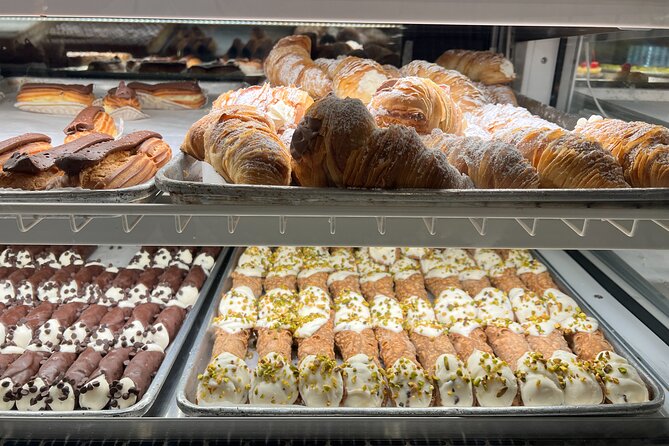
This is the kind of food tour that works because it has a rhythm. You’re not stuck in line after line, and you’re not herded into a single restaurant hallway experience. Instead, you move block by block between East Village and Noho, with short landmark stops that help you place each neighborhood flavor in real geography.
The pacing is also a practical win. If you’ve got one afternoon and you want to get your bearings fast, 2 hours 30 minutes is long enough to feel like a proper walk, but short enough that it doesn’t dominate your whole day. And because the group is capped at 25, you typically get a tour that feels active rather than chaotic.
You can also read our reviews of more food & drink experiences in New York City



The $32 ticket value: you’re paying for the guide, not a buffet
At $32 per person, the smart question isn’t just what you get for the price. It’s how the tour keeps you from paying for food you didn’t plan to eat.
Here’s the deal: the guide is included, but the food itself is pay-as-you-go. If you choose to get one of every food item the guide recommends, you’ll pay an additional $11 per person. That means many people can stay close to the ticket price if they sample lightly, while others who want a fuller range can still budget in advance.
In NYC terms, that’s a sensible value structure. A lot of tours lock you into a set tasting amount and you’re stuck finishing things you didn’t crave. With this format, you can say yes to the bites you’re excited about—like egg cream or pizza—and skip the rest without blowing up your budget.
Where you meet at Astor Place and finish at Veniero’s
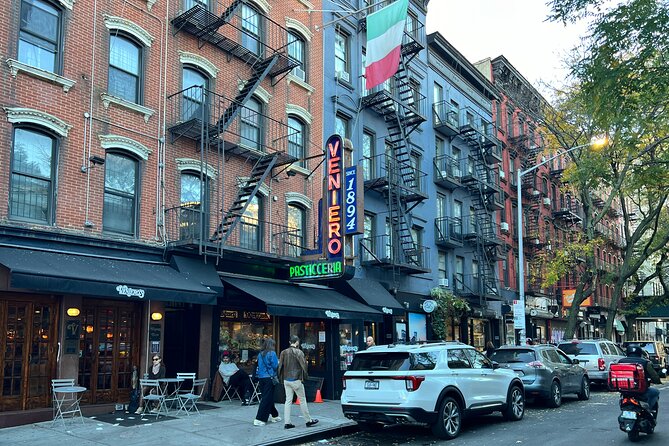
The tour starts at Astor Place (Astor Pl, New York, NY 10003) and ends at Veniero’s Pasticceria & Caffe (342 E 11th St, New York, NY 10003). That ending matters more than you might think.
Veniero’s is a classic “end-with-dessert” payoff. You’ll reach it right after the walk’s final photo-stop with street art, which makes it feel like a natural finish line instead of a random location. And because Veniero’s is literally part of the tour’s flow, you’re more likely to pace yourself for dessert instead of wandering off hungry later.
Cooper Union to the Public Theater: seeing history while you walk
The early part of the route sets a tone: this tour isn’t only about eating. It’s also about understanding why East Village and Noho feel like they do.
Cooper Union Foundation Building
You start with the Cooper Union Foundation Building and a statue connected to Abraham Lincoln’s political moment—yes, tied to a story about the oldest man to ever run for President, plus why Lincoln’s speech at Cooper Union mattered. It’s the kind of stop that would be easy to ignore on your own, but on the tour it becomes a clue for how downtown New York built its identity: ambitious, argumentative, and deeply tied to public life.
A small practical note: it’s a quick stop, designed to keep you moving.
A few more New York City tours and experiences worth a look




The Public Theater
Next is The Public Theater, a historic venue where landmark productions like Hair, Hamilton, and A Chorus Line debuted. The value here is that you’re walking in the footsteps of shows that shaped modern theater culture. Even if you’re not a super-theater person, you’ll leave with a new mental map: this neighborhood isn’t just nightlife. It’s a performance engine.
McSorley’s to St. Mark’s Place: old-school New York with a street-scene pause
After the theater context, the tour shifts into classic neighborhood character.
McSorley’s Old Ale House (but no drinking)
You’ll stop at McSorley’s Old Ale House, described as the oldest ale house in New York. Here’s the smart bit: the tour notes you won’t be drinking because it’s an early afternoon stop (it’s “only 1 in the afternoon”). Instead, you get the history while you’re still fresh for the rest of the walk.
Even if you don’t care about beer culture, it’s worth paying attention to how places like this keep showing up across decades. The neighborhood’s food story isn’t separate from its institutions—it’s the same street-level continuity.
St. Mark’s Place
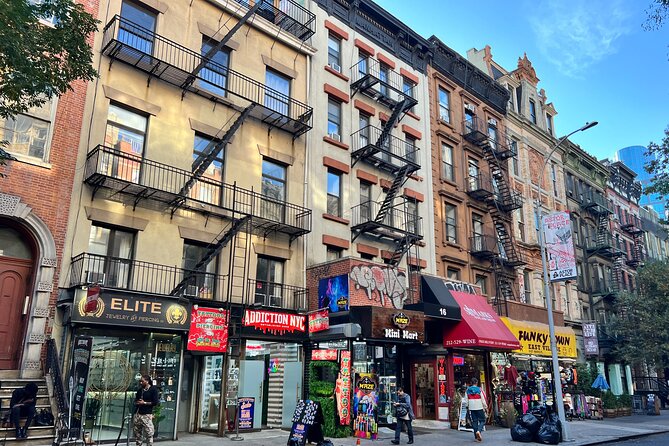
Then you get St. Mark’s Place, a hip street stop that’s less about a single building and more about atmosphere. The time built into this segment helps you actually look around, not just march past.
This is also where the tour becomes a “feel the area” experience. If you want street art, people-watching, and that scrappy downtown energy without planning extra stops, St. Mark’s helps you do it.
Hamilton-Holly House: Eliza Hamilton’s home story on the walk
One of the quieter but memorable moments is Hamilton-Holly House, tied to Eliza Hamilton after her husband’s death. This stop gives you a human-scale anchor for the neighborhood.
Why it works: food tours usually chase only cuisine history. This adds a different layer—who lived here, what personal stories unfolded here, and how downtown life had meaning beyond the next storefront.
It’s also a relief to have a stop that doesn’t demand you stand near a menu. You can pause, listen, and let the day’s context build.
Egg creams at B&H Dairy and pizza at Ray’s: the classic bites that land
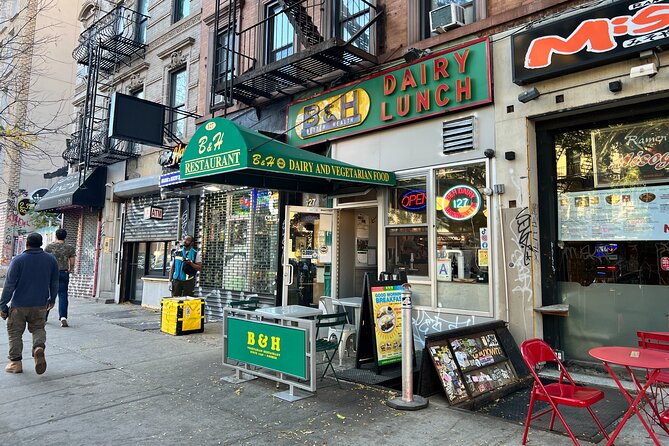
Now you hit the food that makes the tour feel like New York instead of just walking and talking.
B&H Dairy: an egg cream moment
At B&H Dairy, you’ll focus on an egg cream. It’s one of those NYC foods that works as a cultural signal: it’s not a tourist “thing” in the fake-souvenir sense. It’s a local treat that shows up in old-school downtown food habits.
Even if you’ve had dessert drinks elsewhere, egg cream is its own category. This stop is short, so you don’t spend half the tour in a line. It’s built for tasting and moving.
Ray’s Pizza & Bagel Cafe: slice plus a restroom break
Then comes Ray’s Pizza & Bagel Cafe, where you get a slice and a chance to use the restroom. That restroom part sounds boring—until you’re walking 5,000 steps in weather and you’re halfway through your afternoon. Having it near the middle-to-late stretch makes the tour feel more livable.
Ray’s is also a good “energy” stop. Pizza is a simple crowd-pleaser, and it keeps the tour moving before dessert time.
Korean dumpling-style flavor adds range to the menu
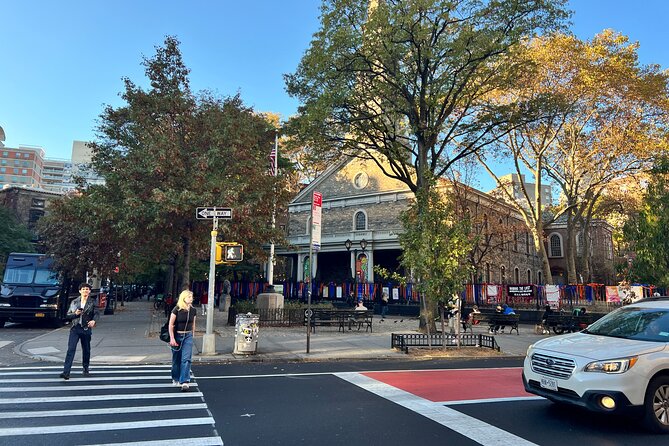
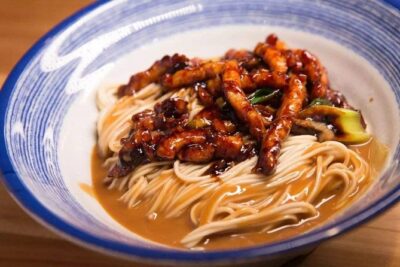
The tour’s big selling point is range: you might start thinking pizza and egg cream, but the experience is set up to include other cuisines depending on the day and guide recommendations. The overview specifically points to flavors beyond American classics, including Korean dumplings, alongside familiar downtown comfort food.
That’s a value point, too. If you only eat one cuisine on a food tour, you leave feeling like you did one thing. Here, the goal is to give you a wider snapshot of what people actually buy and share in this part of NYC.
Street art and pop culture: the Kobra Michael Jackson mural stop
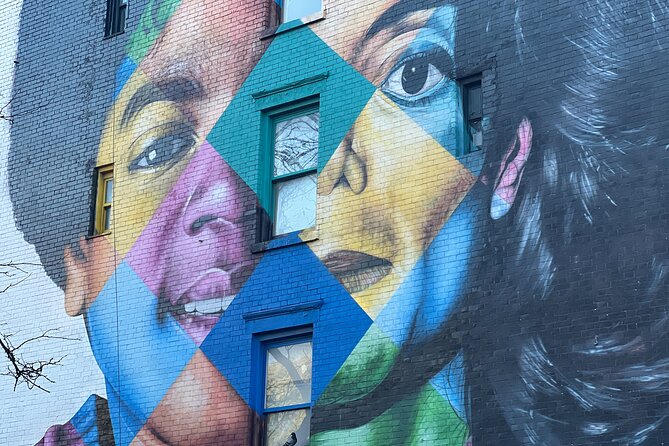
You’ll walk past the Kobra’s Michael Jackson Mural, with an explanation of the artwork by Brazilian artist Kobra. This stop is more than a photo moment.
It connects the idea of “downtown food culture” to street culture. In neighborhoods like the East Village, food, art, and identity all share the same sidewalks. The mural gives you something visual to remember, so the tour sticks in your mind beyond taste alone.
Plus, the mural is just across the street from the final dessert stop, which helps the ending feel tightly planned.
Veniero’s finish: cannoli, cream puffs, and coffee when you’re ready
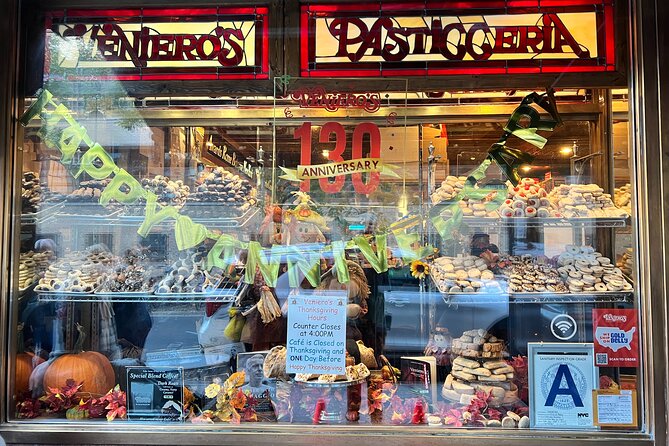
The last stop is Veniero’s Pasticceria & Caffe, where you’ll get the dessert payoff: cannoli, cream puffs, and eclairs, plus a cup of coffee. Because it’s built at the end, you can approach it with actual appetite instead of snack regret.
This is also a smart end-of-tour strategy. Dessert is the easiest thing to overspend on in NYC, but since the tour ends here, you can decide how you want to close the day. If you want to taste a bit more, you can. If you’re done, you’re not stuck buying a set.
The guide style: why Mike and Jon-type storytelling makes it feel personal
In the feedback you’ll find a common thread: the guides don’t just point and name. They tell stories.
Guides such as Mike and Jon Moto / Jon Noto are described as using humor and real local passion, and that matters because it keeps the walk from turning into a lecture. When your guide explains why a stop is there—Lincoln’s Cooper Union connection, theater debuts at the Public Theater, the meaning behind a mural—you stop seeing downtown as random streets.
You also start thinking like a local. That’s the real payoff of a food tour that includes landmarks: it trains your eye for what to notice on your own later.
Practical tips so you get full without overpaying
A pay-as-you-go tour can be awesome, but only if you plan your choices. Here’s how to make it smooth.
- Bring a budget mindset: your tour cost is $32, and one of-everything adds about $11 more. If you go in expecting that, you won’t feel surprised.
- Eat the classics strategically: egg cream at B&H Dairy and a slice at Ray’s are core stops. If you skip too much, the tour becomes more like a walking history stroll than a food experience.
- Use the timing built into the route: the stops are short, so don’t linger with huge orders. This is a tasting walk, not a sit-down dinner.
- Wear shoes for 5,000 steps: that’s the tour’s own guidance for most people. If it’s rainy, dress for the weather and keep your pace steady.
- Bring hydration for the walk: NYC weather can go from mild to harsh fast, and 2.5 hours walking adds up.
If you follow those, you’ll come away feeling like you ate enough to enjoy the day and still left with money in your wallet.
Should you book the East Village Noho Food Tour?
Book this tour if you want an affordable, guided way to see East Village and Noho with real local stops and a dessert finish at Veniero’s. The pay-as-you-go structure is the big reason it’s worth considering: it helps you stay flexible, and you can build your own tasting plan.
I’d skip it (or at least rethink it) if you’re expecting all food to be included in the $32. You’re paying for the guide and the route; food is extra based on what you choose to buy. Also, if you don’t handle long walking days well, note the guidance about around 5,000 steps.
Overall, it’s a strong option for anyone who wants downtown NYC to feel like more than just restaurant hopping—more context, more variety, and a practical budget structure that lets you enjoy the flavors without getting trapped by a fixed tasting menu.
FAQ
How long is the East Village Noho Food Tour?
The tour runs about 2 hours 30 minutes (approx.).
What is included in the $32 ticket?
Your ticket includes a professional licensed guide. Food is not included.
Is food included, or do I pay at each stop?
Food is pay-as-you-go. If you get one of every food item the guide recommends, the additional cost is listed as $11 per person.
Where do I meet, and where does the tour end?
You meet at Astor Place (Astor Pl, New York, NY 10003) and the tour ends at Veniero’s Pasticceria & Caffe at 342 E 11th St, New York, NY 10003.
Is this tour ticket mobile-friendly?
Yes, the tour includes a mobile ticket.
What happens if I need to cancel?
You can cancel for a full refund if you cancel at least 24 hours before the experience’s start time.