REVIEW · MARSEILLE
Marseille Food Tour – Full Meal of Local Tastes by Do Eat Better
Book on Viator →Operated by Do Eat Better Experience · Bookable on Viator
Marseille tastes like a port city. This 3.5-hour walk is built around a full meal of samples across multiple neighborhoods, starting at the Vieux Port area and ending in Noailles with at least one alcoholic drink included for adults.
I love how the food mix lands on real Marseille staples, from roasted camembert à la Provençale to panisses and sardines. I also like the small-group feel, where guides like Inga, Laura, Ben, and Simon (names that come up often) tend to keep things friendly and moving. One possible drawback: if you’re expecting a deep, museum-style history tour, the experience can feel more about eating than big-picture cultural lectures.
In This Review
- Key things you’ll notice on this tour
- Marseille’s food map: why this route makes sense
- Price and timing: what you’re really paying for
- Start point at 66 Quai du Port: roasted camembert and the apéritif vibe
- Le Vieux Port brasserie stop: panisses, sardines, and real port-city flavors
- La Canebière sweets stop: how Marseille confectionery tells its own story
- Noailles finale in the belly of Marseille: pastries, crunchy bites, and oriental sweets
- Drinks and pacing: eating a full meal without feeling rushed
- Do you get history and culture, or just food?
- Who this tour is best for (and who should skip it)
- Should you book the Marseille Food Tour by Do Eat Better?
- FAQ
- How long is the Marseille Food Tour?
- What are the start and end points?
- Is the tour offered in English?
- What’s the group size?
- Is alcohol included?
- Is it a good option for vegetarians?
- Are there restrictions for food allergies?
- What happens if the weather is bad?
Key things you’ll notice on this tour
- A sample lineup that adds up to a full-meal feel across at least four stops
- Vieux Port seafood energy, with fish-forward bites like sardines and seafood tapas
- Sweet Marseille stops tied to confiserie and famous confection like nougats and calissons
- Market-district finale in Noailles, often a standout for pastries and North African–influenced sweets
- Small group max of 12, which usually means better pacing and more time for questions
Marseille’s food map: why this route makes sense
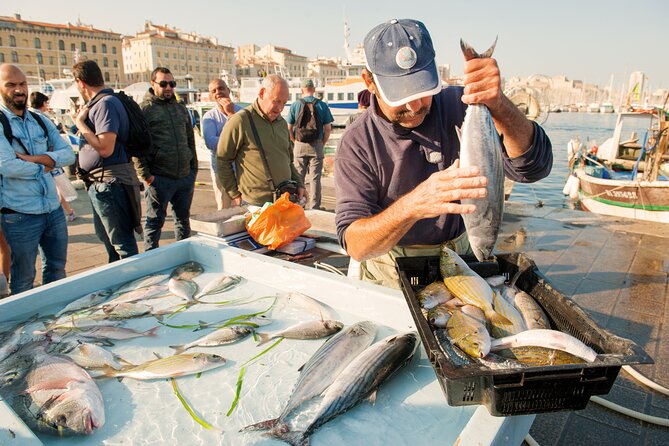
Marseille isn’t one uniform flavor. It’s Southern France’s biggest port city, with layers of influence showing up in what people eat every day. This tour leans into that idea by moving you through classic places: the Vieux Port area first, then over to the Canebière, and finally into Noailles, the market district locals call le ventre de Marseille.
The value here is the structure. You’re not just tasting random snacks. You’re getting a coordinated spread that starts savory, keeps going through the seafood and brasserie stage, and ends with both French-style confectionery and sweets inspired by North Africa. If you like to eat in the way locals do—small bites in multiple places instead of one formal sit-down lunch—this format fits perfectly.
You also get a built-in drink moment. The tour includes at least one alcoholic beverage for guests over 18, plus water throughout. If you’re doing Marseille for the first time and want your meals to feel like a guided plan rather than a guess, it’s a smart setup.
You can also read our reviews of more food & drink experiences in Marseille
Price and timing: what you’re really paying for
At $89.49 per person for about 3 hours 30 minutes, you’re paying for three things at once: curated stops, guided local storytelling, and multiple food tastings that add up to a full meal equivalent.
Is it cheap? No. But it’s not priced like a single appetizer and a stroll either. The tour is designed so you eat the equivalent of a full meal across multiple stops (at least four). That matters because Marseille can be hit-or-miss if you’re choosing places on the fly—especially near the most touristy edges. Here, you’re spending most of your time eating and only some of it walking.
The 11:00 am start also helps. By lunchtime, a lot of the best stalls and brasseries are already in their rhythm. And because you’re on foot, you’re seeing the city at the pace that actually matches its food culture.
Start point at 66 Quai du Port: roasted camembert and the apéritif vibe
Your tour begins at 66 Quai du Port, 13002 Marseille. This is a great way to start because you’re already in the city’s food-and-activity heart. The Vieux Port area gives you the Marseille “now” feeling: boats, chatter, and that casual sense that eating is part of the city’s daily schedule.
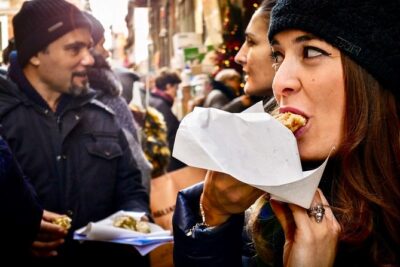
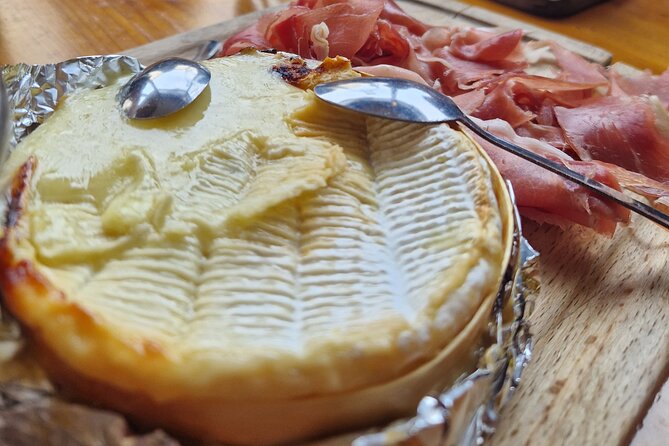
At the first stop, the tour focuses on roasted camembert à la Provençale—hot, soft, and meant for dipping. You’ll often get the chance to dip a crouton. If you’re not craving camembert right away, you may also try Provençal cheese, paired with local drinks like pastis, the famous anise-flavored apéritif Marseille is known for.
What I like about this first bite: it’s simple but very “Marseille,” and it gives you an easy anchor flavor to remember as the tour shifts from classic Provençal to seafood to sweets.
A small consideration: pastis and strong apéritifs aren’t everyone’s thing. The good news is that the tour states non-alcoholic options are available, so you can keep the apéritif moment without forcing it.
Le Vieux Port brasserie stop: panisses, sardines, and real port-city flavors
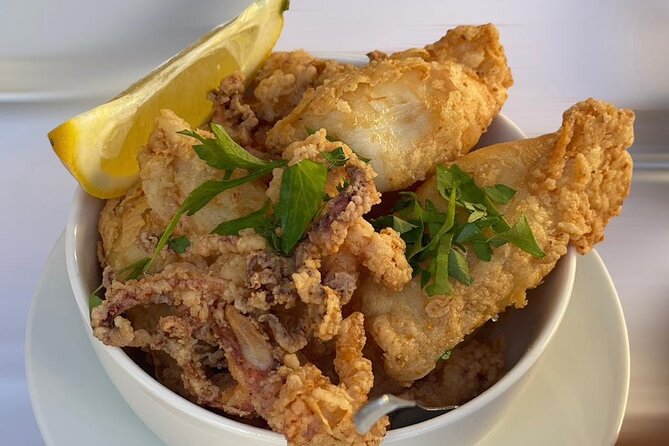
From Quai du Port, you spend time around the Vieux Port again, hopping into some of the best-feeling brasseries in the area. This stop is where the tour turns more clearly toward seafood traditions—exactly what you’d expect from a Mediterranean port.
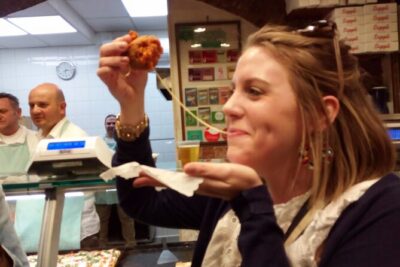
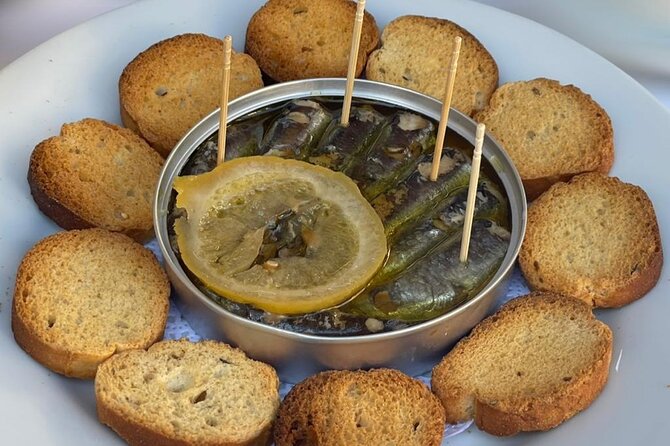
You’ll try tapas-style bites such as panisses and sardines, along with other fish-based dishes depending on season. Panisses are a Marseille classic: chickpea fritter cakes that are crunchy outside and soft inside. Sardines bring the ocean straight to your plate.
Why this stop matters: panisses and sardines aren’t just “food.” They’re a way to taste the geography. You’re eating something people associate with Marseille’s working-port culture, not just a fancy tourist menu.
The pacing here tends to be a highlight for people who want a relaxed experience. Still, remember that menu items can shift based on season and availability, so your exact seafood and tapas may differ slightly.
La Canebière sweets stop: how Marseille confectionery tells its own story
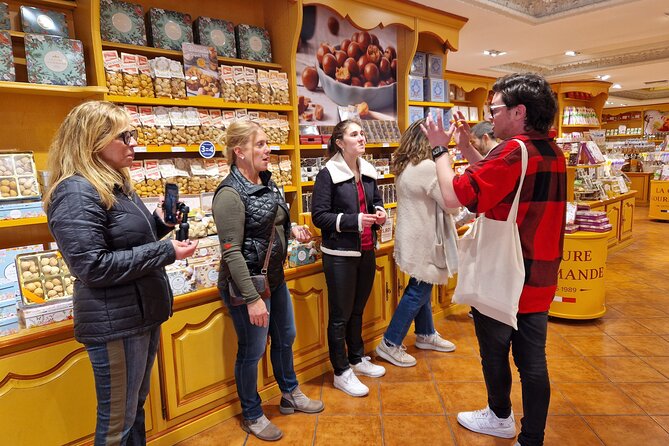
Next comes La Canebière, one of Marseille’s most famous historic streets. This part helps you connect food with place. The street name ties back to hemp (canabe), and that detail matters because Marseille has always been a trade-and-cargo city. Food culture and street culture grew from the same networks.
At this stop, you get into the confectionery side of Marseille: nougats and calissons. You’ll visit an adorable boutique where artisans’ techniques and tradition are part of the experience. This is also where the tour makes a smart switch: you stop treating food as only savory fuel and start treating it as a craft.
If you’ve never had calissons, this is a good moment to try. The sweets are often a mix of fruit-and-nut flavors with a precise, polished texture. And if you’ve already had enough savory by this point, it’s a relief to slow down with something that tastes like a regional trademark.
Noailles finale in the belly of Marseille: pastries, crunchy bites, and oriental sweets
Your tour ends in Noailles (13001 Marseille) in the market district people call le ventre de Marseille. This is where the city feels most like a daily neighborhood, not just a sightseeing stop.
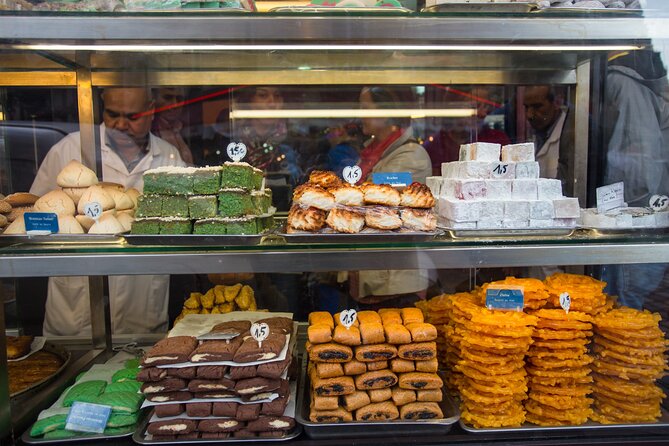
The tour leans into the market energy with pastries and street-style bites—crunchy and melting options, plus chances to graze on sweets without overcommitting to a single sit-down dessert.
The sample menu points to two dessert categories:
- Confiserie sweets tied to Marseille confection makers (like nougat and calisson artisans)
- Oriental sweets such as loukoums (Turkish delight–style) and makrout
This is one of the most interesting parts of the route because it shows Marseille’s “melting pot” character. North African-inspired desserts aren’t a random add-on here—they fit the city’s history and food influences.
One consideration: if you’re expecting only French bakery classics at the end, this stop may feel surprising. Some people loved the mix; others wanted a more traditional-French bakery finish. For me, the trade-off works because the finale ties together the tour’s bigger theme: Marseille is a crossroads.
Drinks and pacing: eating a full meal without feeling rushed
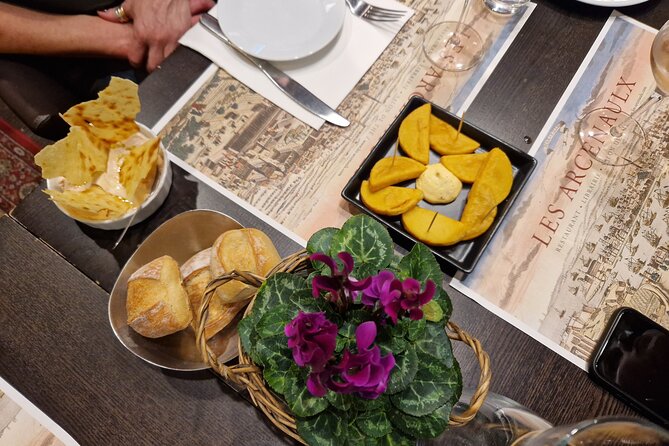
A big strength of this tour is that it tries to feel like an actual meal, not a sequence of tiny bites that barely fill a person’s stomach.
The tour includes water, and for adults at least one alcoholic drink. In Marseille, that apéritif moment can change how the food lands. Pastis or a regional wine pairing makes the cheese and seafood bites feel more connected, less like separate snack stops.
Pacing also matters. This is a walking tour with moderate fitness expected, and it’s small—maximum 12 travelers. That helps in two ways:
- You’re not stuck waiting for a big group to finish a bite.
- Guides can adjust the flow if someone needs a slow moment or if a place has a line.
In the feedback people share, the guides stand out when they keep the rhythm. Some guides are described as lively and funny (and yes, sometimes very chatty). A few notes also mention extra walking stairs in some cases, so if stairs tire you quickly, keep that in mind and move at a comfortable pace.
Do you get history and culture, or just food?
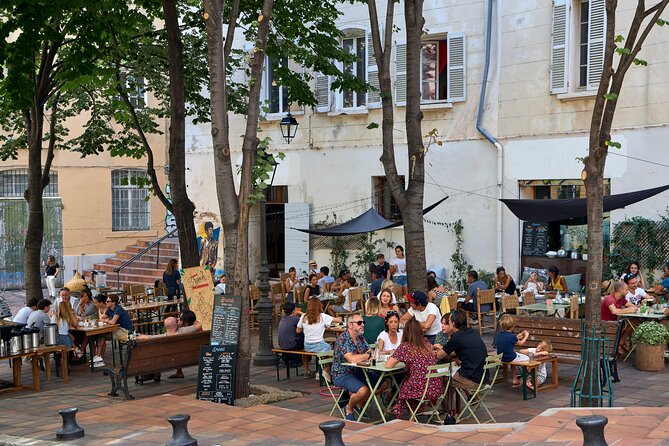
The tour is marketed as a food walk with pieces of town history and culture, and it generally does that through short neighborhood context between tastings. For many people, that’s enough: a few clear facts about Marseille streets, market districts, and why seafood and sweets matter here.
Still, there’s a pattern in how people talk about the experience: it tends to prioritize food first. If you love history, you’ll probably enjoy the neighborhood cues. But if you want a heavy, structured lecture on politics, immigration, or urban change, you might find it lighter than you hoped.
My advice: treat it as a guided way to eat your way across Marseille’s key flavor zones. You’ll leave with more taste memory than lecture memory—and that’s not a bad thing.
Who this tour is best for (and who should skip it)
This is a great fit if you:
- Want a guided “where to eat” plan without having to research five places yourself
- Like Marseille specialties such as camembert à la Provençale, panisses, and sardines
- Enjoy sweets that reflect the city’s Mediterranean and North African connections
- Prefer a small group walking experience rather than a crowded food bus
You might want to rethink it if:
- You want a guaranteed, step-by-step lineup every time. The tour notes tastings can change by season and partner availability.
- You’re extremely price-sensitive and want a restaurant-style lunch where you know the exact portions and quality before paying.
- You have severe food allergies or need medical-level certainty. The tour states guests with severe or life-threatening food allergies can’t participate.
Vegetarian options are available, and non-alcoholic options are noted too, so you have some flexibility—just ask your question about restrictions before booking.
Should you book the Marseille Food Tour by Do Eat Better?
I’d book it if you want to eat Marseille like a local plan, not like a tourist scavenger hunt. The strongest reason is the way the stops add up: Provençal cheese and apéritif, seafood-forward Marseille classics, then confection and market sweets in Noailles. That spread makes it feel like a real meal.
I’d be cautious if you’re hunting for deep history or if you’re the type who needs every bite to be a slam dunk. Some people found certain stops more “standard” than others, and the ending includes oriental sweets, which isn’t everyone’s preference if you’re craving only French bakery flavors.
If you go in with the right mindset—eat first, walk second, ask questions often—you’ll likely have a fun, satisfying half-day that teaches Marseille through what’s on the plate.
FAQ
How long is the Marseille Food Tour?
It runs for about 3 hours 30 minutes.
What are the start and end points?
The tour starts at 66 Quai du Port, 13002 Marseille and ends in Noailles, 13001 Marseille. The end point may change slightly depending on partner availability.
Is the tour offered in English?
Yes. The tour is offered in English. The guide may also speak both English and French.
What’s the group size?
The tour has a maximum of 12 travelers.
Is alcohol included?
At least one alcoholic beverage is included for guests over 18. Non-alcoholic options are available too.
Is it a good option for vegetarians?
Yes, vegetarian options are available.
Are there restrictions for food allergies?
For safety reasons, guests with severe or life-threatening food allergies can’t participate. You should contact the provider for food restrictions before booking.
What happens if the weather is bad?
The tour requires good weather. If it’s canceled due to poor weather, you’ll be offered a different date or a full refund.