REVIEW · NAMBA
Osaka Delights: Traditional Japanese Food Tour
Book on Viator →Operated by Amigo Tours Japan · Bookable on Viator
Osaka tastes better when someone else points. This 3-hour evening walk stacks classic bites in smart order, starting at Kuromon Market and ending at the Glico Man photo spot.
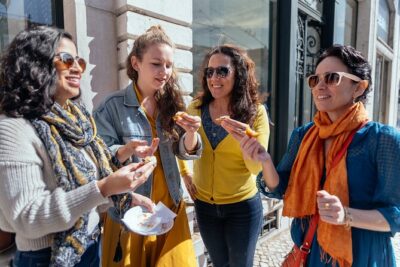
I love how the tour mixes hands-on food stops with city context, so you’re not just eating, you’re learning why Osaka snacks in particular ways. And I especially like that you’ll try a spread of favorites: savory takoyaki, sweet three-color dango, and proper meal-style plates like okonomiyaki and kushikatsu.
One thing to consider: the tour is bilingual Spanish and English, and that can matter if the group language mix ends up skewed. In one unhappy experience, an English-only participant felt sidelined because the guide leaned mainly toward Spanish in a mixed group.
In This Review
- Key things to know
- Why this Osaka food tour starts in Namba and runs about 3 hours
- Kuromon Market takoyaki: the crispy opener you’ll remember
- Three-color dango at Mitoya: sweet, simple, and quietly meaningful
- Okonomiyaki and kushikatsu: Osaka’s comfort-food two-pack
- Egg tart finish: warm custard, flaky crust, and a clean landing
- Dotonbori neon walk and the Ebisu Bridge Glico photo stop
- Guides, inclusion, and why the person matters as much as the menu
- Price and value: what $84 covers in Osaka terms
- Who should book this tour, and who should skip it
- Should you book Osaka Delights: Traditional Japanese Food Tour?
- FAQ
- What’s the duration of the Osaka Delights tour?
- Where does the tour start, and what time does it begin?
- How many stops and what food do you try?
- Is the tour ticket digital?
- Are entrance fees included?
- What’s included in the price?
- Is the tour accessible for people with mobility issues?
- Can I cancel for a full refund?
- What group size should I expect?
Key things to know
- Kuromon Market first: you start with fresh, street-ready takoyaki before the crowds fully crank up.
- Three-color dango lesson: you’re tasting a snack with cultural meaning, not just sugar on a stick.
- Two Osaka icons together: okonomiyaki and kushikatsu show up in the same stretch, which helps you compare flavors and textures.
- Sweet ending with egg tart: a warm, custardy finish helps the tour feel complete.
- Dotonbori + Ebisu Bridge photo stop: you get the neon walk and the classic canal view for a memorable end.
Why this Osaka food tour starts in Namba and runs about 3 hours
This tour is built for an evening rhythm. It starts at 5:30 pm near Namba at Hotel Royal Classic Osaka, then stays walkable for about 3 hours. You’ll cover a chunk of Osaka’s food core without needing trains, and that’s a big deal when you want to enjoy dinner on time instead of chasing it all night.
The group size is capped at 30, which usually keeps things moving and makes it easier to hear your guide. You also get a mobile ticket, so you’re not hunting for paper while holding a tray of snacks.
At $84 per person, the value is about “enough tasting” rather than “a full sit-down dinner.” You’re paying for guided access to popular stalls and local rhythm, plus multiple tastings that add up to a real meal plus dessert. If you show up hungry, this tour makes sense.
The route also ends where the energy spikes: Dotonbori. That’s smart logistics. You eat first, then you stroll under neon while the city feels like it’s on at full volume.
You can also read our reviews of more food & drink experiences in Namba
Kuromon Market takoyaki: the crispy opener you’ll remember
The evening starts with a quick walk to Kuromon Market, often called Osaka’s kitchen. This is where you get that street-food feel fast—busy aisles, quick service, and food that’s meant to be eaten right away.
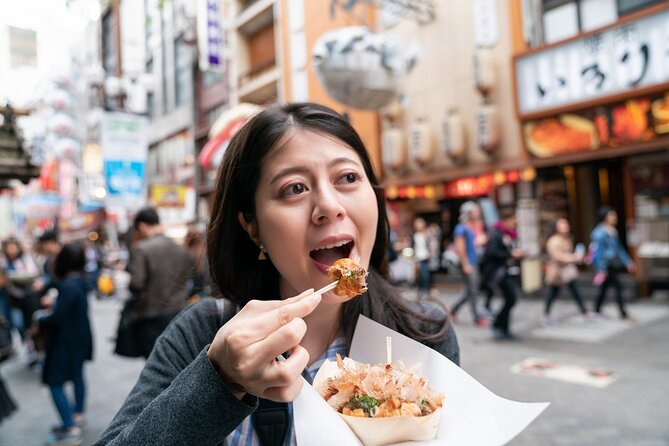
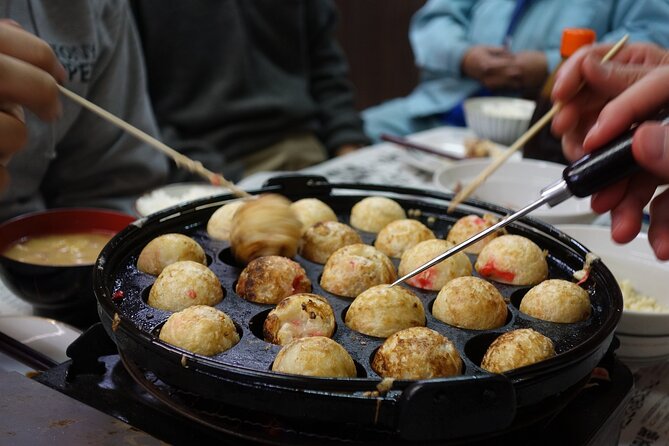
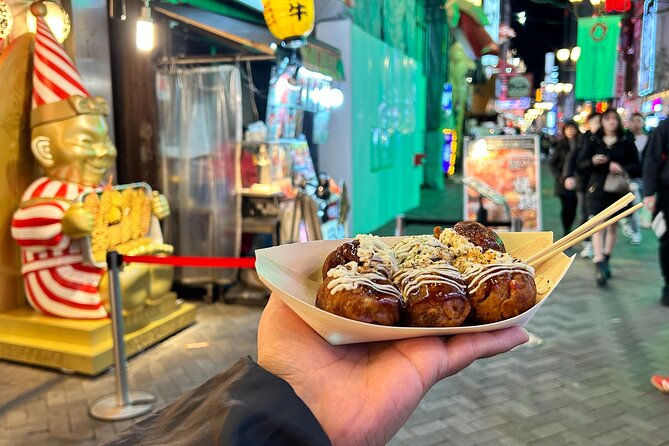
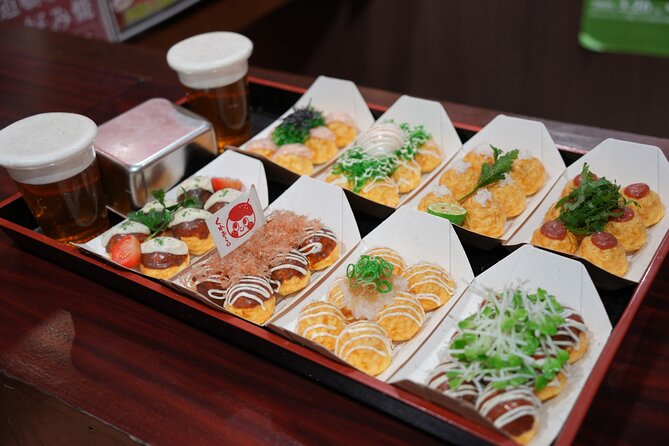
Your first food stop is a well-known takoyaki stall at Wanaka. Takoyaki are small, round batter balls cooked until crisp on the outside and tender inside, usually filled with octopus. They come topped with sauces and bonito flakes, which means you’ll see them react as the heat keeps the flakes moving. That matters because it’s part of the experience, not just the flavor.
Why this stop works: takoyaki is a forgiving first bite. Even if you’re new to Japanese street snacks, it’s easy to love—salty, savory, a little tang from the sauces, and a satisfying crunch. It also sets your baseline for Osaka flavors before you switch to sweets and then to heavier “meal” items later.
If you’re the type who likes to compare bites across a city, starting at Kuromon helps you notice differences. You’ll learn the Osaka habit of fast, hot, handheld food that you can eat while walking.
Three-color dango at Mitoya: sweet, simple, and quietly meaningful
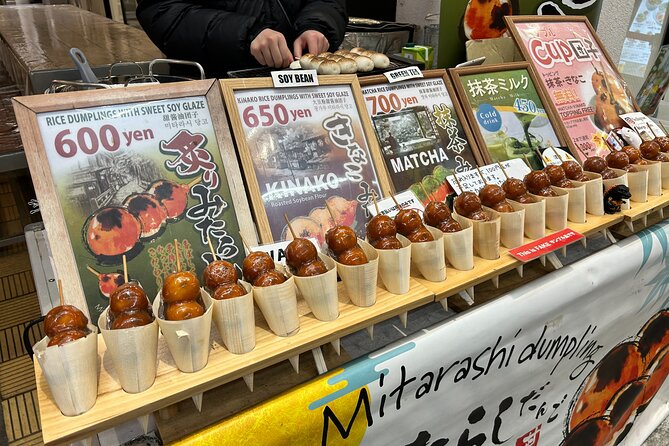
After the savory opener, you move to a dango specialist at Mitoya. Dango are chewy rice dumplings served on skewers. This stop’s twist is the three-color presentation, traditionally linked to Japanese symbolism.
You’ll try dango in those three colors, and that’s where this stop becomes more than a sugar break. Your guide can help you read the snack as culture—why different colors show up, and how people treat dango as something seasonal and ritual-like, not only dessert.
Taste-wise, dango are softer and less sauce-heavy than takoyaki. You get a gentle sweetness, a chewy bite, and a calmer texture after all the crisp savory food. It’s a nice palate reset.
One practical tip: if you’ve been snacking all day, don’t overload beforehand. Dango are small, but the tour keeps feeding you. You want to taste things clearly, not just survive them.
This is also a good moment to slow down. You’ll spend around 30 minutes here, which gives you a breather in the middle of the route.
Okonomiyaki and kushikatsu: Osaka’s comfort-food two-pack
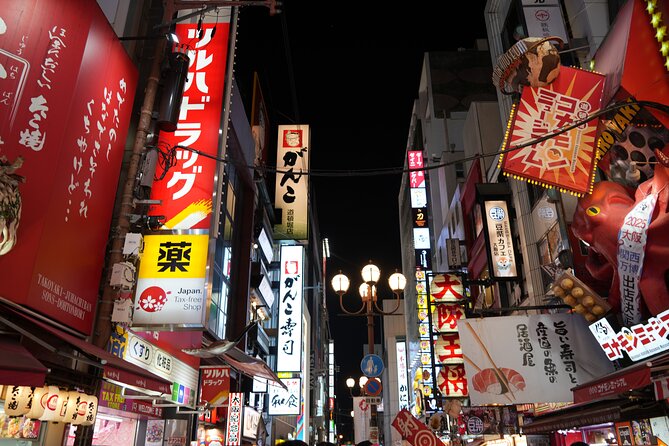
Next comes the heart of the Osaka comfort-food lineup at Kushikatsu Yokozuna Hozenji, where you’ll try both okonomiyaki and kushikatsu.
Okonomiyaki is the savory pancake people talk about when they say Osaka takes food seriously. It’s built around a batter-and-vegetable base, cooked until it firms up, then topped and finished in layers. The key is that it’s hearty. It tastes like a meal, not a snack, even though you’re still eating it in a casual street-food style.
Then you get kushikatsu—crispy skewers coated in breading and fried. This one gives you that loud crunch. You also learn why dipping matters in this style of eating; it’s part of how the texture stays right and how the stall culture works. (Your guide will point out the rules so you don’t accidentally do the wrong thing.)
This pair is valuable because it lets you compare two different “satisfying” directions:
- okonomiyaki: thick, savory, layered
- kushikatsu: crisp, fried, single-bite focused
Also, this is where the tour’s pacing really helps. You’re not just hopping from place to place at random. There’s a clear logic: start with street bites, then add sweet, then hit the filling comfort foods, then finish with dessert and lights.
Egg tart finish: warm custard, flaky crust, and a clean landing
After savory and fried favorites, the tour gives you a sweet reset with a freshly baked egg tart from a popular bakery. The description is simple: a smooth custard filling inside a flaky pastry.
This stop lasts about 20 minutes, so it’s enough time to enjoy it without turning the tour into a dessert marathon. You’re also at a point where your appetite is usually still alive. That’s the real trick of the order: you get sweetness after you’ve had real food, which makes the tart feel like a reward instead of a forced stop.
One small consideration: if you expected a different dessert style (like something richer and cake-like) you might feel slightly underwhelmed. The tour is very consistent about this being an egg tart as the final sweet offering. For many people, that’s perfect. For others, it’s not what they had imagined from social posts.
My advice is to treat it as what it is: a classic, warm, custardy bite that ties the evening together nicely.
Dotonbori neon walk and the Ebisu Bridge Glico photo stop
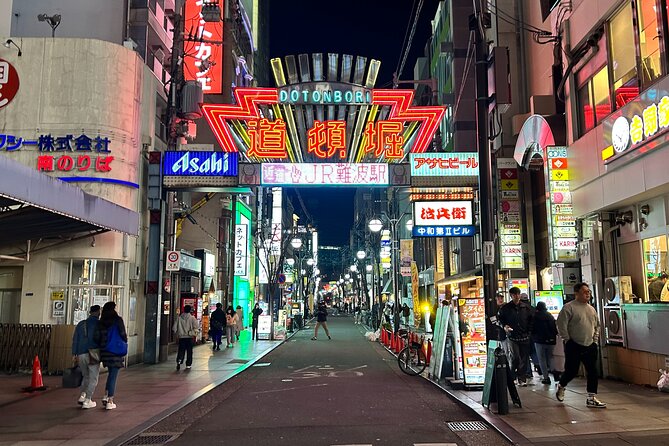
Once dessert is done, it’s time to switch from eating to seeing. You’ll head to Dotonbori, the iconic nightlife strip along canals with bright signage, crowds, and constant street energy. Even if you’ve walked Namba before, Dotonbori feels like a different level.
You’ll get a focused walk-through experience, with time to enjoy the area rather than just rushing past it. And yes, you’ll hit the Ebisu Bridge area, where you can take that classic photo with the Glico Man sign glowing overhead.
This part matters because it helps your food tour feel like a complete evening. You eat your way through Osaka, then you end in the most recognizable scene. It’s a strong “final frame” for photos and memory.
If you’re planning to go out afterward, this is also convenient. You’ll already be in the right zone. Just remember: you’ll likely have eaten enough that casual drinks and a walk might feel better than trying to squeeze in a full second dinner right away.
Guides, inclusion, and why the person matters as much as the menu
The tour is guided by a local expert and runs in Spanish and English. In practice, that’s great when the guide can match your language and pacing.
From the guide names mentioned in past experiences, Paula, Angeles, Helimar, and Eli have all led groups and were praised for food-finding skills and clear explanations. That kind of guide makes the difference between eating and understanding.
But here’s the honest part: language grouping can go sideways. In at least one unhappy experience, an English-speaking participant felt the guide spoke mostly to Spanish speakers in a mixed group, and they felt ignored enough to leave early. That’s the main “risk factor” of a bilingual tour in a mixed-language crowd.
My practical advice: if you’re an English-only traveler (or Spanish-only), book with realistic expectations that your experience depends on group makeup that day. If inclusion is a top priority for you, choose tours that clearly guarantee a fully separated language group—or be ready to switch between languages politely and quickly.
Price and value: what $84 covers in Osaka terms
Let’s talk value. $84 isn’t cheap for a street-food tour, but it’s not random either. You’re paying for:
- multiple tastings across key Osaka foods
- guided ordering and stops in busy areas
- a route that blends eating with iconic city sights
You’re not just grabbing one item and calling it a day. The tour includes tastings of takoyaki, three-color dango, okonomiyaki, kushikatsu, and a warm egg tart. That’s the core lineup, and it usually covers the “dinner + dessert” feeling for most appetites.
What’s not included is also clear: additional drinks or meals beyond the tastings, and any extra entrances to attractions (though this is mainly food and streets). So if you tend to order extra drinks, consider that your final bill could rise.
The best way to get your money’s worth is to arrive ready to eat. Come with an empty stomach or at least a small appetite. And do yourself a favor: don’t plan a big late-night meal immediately after unless you know you can handle it.
Who should book this tour, and who should skip it
This is a good fit if you want an easy, guided route through Osaka’s food centers without getting lost or guessing where to eat. It also suits people who like variety: you’ll get both fried and griddled savory bites plus two sweets.
It’s less ideal if:
- you have mobility limitations, because it can’t accommodate travelers with mobility issues
- you strongly depend on a specific language, because bilingual groups can sometimes shift how the guide communicates
If you’re traveling solo or with friends who want the same thing (street food, iconic sights, no stress), this format works well. And if you’re visiting Osaka for the first time, it’s a smart sampler.
Also, because the tour ends near Dotonbori and the Glico sign, it’s a great “start your night” plan. You’ll eat early enough to keep energy up, then finish with photos and a lively walk.
Should you book Osaka Delights: Traditional Japanese Food Tour?
I’d book it if you want a guided, high-impact evening that mixes Osaka street snacks with the city’s best-known neon backdrop. The itinerary is built on recognizable favorites—takoyaki, dango, okonomiyaki, kushikatsu, and an egg tart—and the timing makes it feel like a true dinner plan.
I would hesitate only if you have very strict needs around language inclusion or mobility. If language matters a lot, it’s smart to pick the right moment to ask questions before you go, so you know how your group will be handled.
If you like to eat well and move efficiently, this tour is a solid pick. It’s not just food for food’s sake. It’s Osaka in bite-size form.
FAQ
What’s the duration of the Osaka Delights tour?
The tour runs for about 3 hours.
Where does the tour start, and what time does it begin?
It starts at Hotel Royal Classic Osaka in Namba at 5:30 pm.
How many stops and what food do you try?
You’ll visit food spots around Kuromon Market, then have tastings including takoyaki, three-color dango, okonomiyaki, kushikatsu, and an egg tart, plus stops for the Dotonbori area and Ebisu Bridge photo.
Is the tour ticket digital?
Yes, it uses a mobile ticket.
Are entrance fees included?
Admission tickets for attractions are listed as free, and the tour focuses on tastings and walking. You should expect no extra entrance fees for the listed stops, but any personal extras outside the tour aren’t included.
What’s included in the price?
The price includes a bilingual guide in Spanish and English and tastings of the dishes mentioned in the itinerary.
Is the tour accessible for people with mobility issues?
No. The tour cannot accommodate travelers with mobility issues.
Can I cancel for a full refund?
You can cancel up to 24 hours in advance for a full refund.
What group size should I expect?
The tour has a maximum of 30 travelers.