REVIEW · SEVILLE
Seville Food Tour: Vermut, Churros & 10+ Tasty Local Dishes
Book on Viator →Operated by Secret Food Tours · Bookable on Viator
Food plus Seville sights. That’s the magic combo. This 3.5-hour tour mixes vermut and churros with big landmarks like Alcázar and Seville Cathedral zones, all while you move on foot.
I love the small group cap of 12, because it keeps things conversational instead of chaotic. I also love the mix of flavors, from sweet (churros and hot chocolate) to salty classics like Iberian ham and local cheese, plus dishes such as pringa, fried eggplant with molasses, and anchovies in vinegar.
One watch-out: this is a walking tour, so comfortable shoes matter. And since it uses no microphone, in busy spots you may need to lean in and catch the guide between footsteps and chatter.
In This Review
- Key things I’d prioritize before you book
- Why This Seville Vermut and Churros Walk Works
- The Food Stops: 10+ Dishes and Drinks You Actually Get to Taste
- Wooden Rooftop Views to Parque de María Luisa: See the City While You Eat
- Seville Cathedral Bell Tower and Alcázar: Moorish Roots Meet Christian Power
- A 13th-Century Watchtower Prison Stop That Adds Context
- Triana Finish: Why the River Neighborhood Is the Perfect Ending
- Guide Style and Group Size: What 12 People Changes
- Walking, Timing, and Comfort Notes That Save Your Feet
- Price and Value: Is $105.21 Worth It in Seville?
- Who Should Book This Tour (and Who Might Prefer Another Plan)
- Book it or pass: my quick decision guide
- FAQ
- How long is the Seville Food Tour?
- How much does it cost per person?
- How many people are in the group?
- Is the tour offered in English?
- What food and drinks are included?
- Are there any transport costs included?
- Where does the tour start and end?
- Can the itinerary or menu change?
- What should I do if I have dietary requirements?
- What happens if the tour is canceled due to weather or low demand?
Key things I’d prioritize before you book
- 12 people max keeps the pace friendly and the food instructions clear
- Vermut, wine, beer, and hot chocolate show up as part of the tastings
- 10+ local dishes includes sweet and savory, not just snacks to nibble
- UNESCO-listed Alcázar is worked into the route, not treated like a separate stop
- Triana is the finish area, so you can roll into your next tapas round right away
Why This Seville Vermut and Churros Walk Works
Seville can feel like you’re always between two modes: history-heavy streets and food temptations around every corner. This tour threads those together on purpose. You get a guided path through old-town landmarks, and the tastings are scheduled so you’re not sprinting from one restaurant to the next with nothing to anchor the experience.
The “small group + native speaker” angle is doing real work for you here. With a maximum of 12 travelers, you’re more likely to hear explanations about what you’re eating and where you are in the city. That matters because Seville food is not random. It’s seasonal, regional, and full of small choices like sauces, textures, and how things are traditionally served.
And yes, you’ll drink too. The included list covers vermut, tinto de verano (summer red wine), local beer, and hot chocolate—so you’re not stuck with only water or only one flavor profile.
You can also read our reviews of more food & drink experiences in Seville

The Food Stops: 10+ Dishes and Drinks You Actually Get to Taste
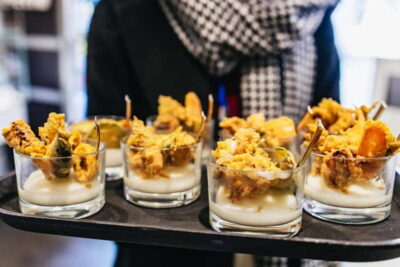
This is built around a classic Seville approach: small portions, multiple flavors, and learning by tasting. You’re not just collecting samples. You’re trying a series of local dishes that represent different styles—sandwiches, fried bites, skewers, cured meats, and briny seafood.
Here’s what you can plan on from the included tastings:
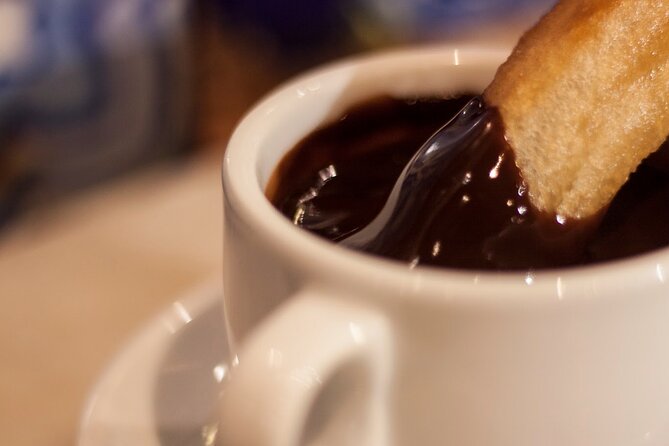
- Churros plus hot chocolate
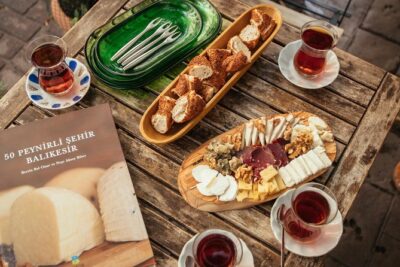
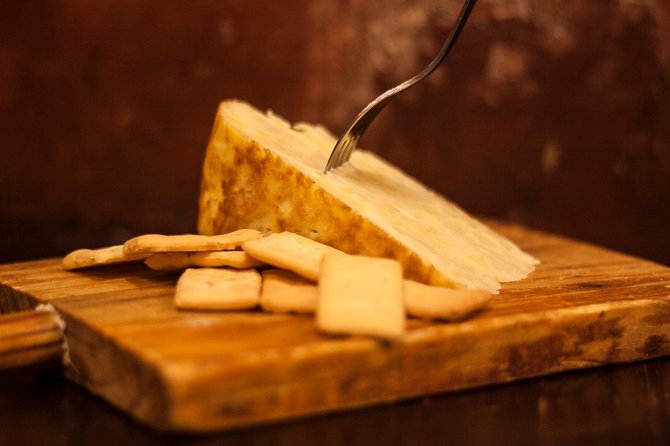
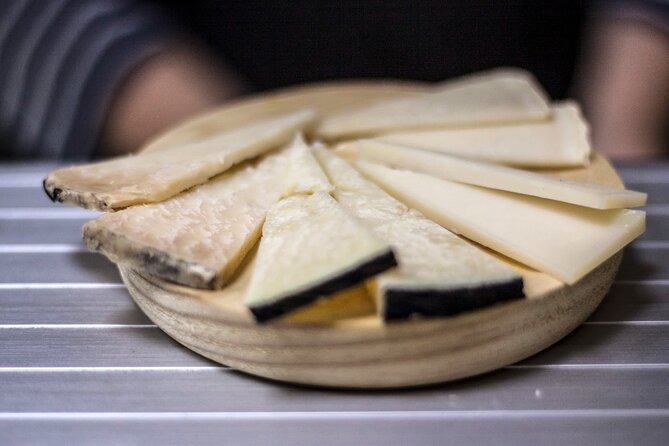
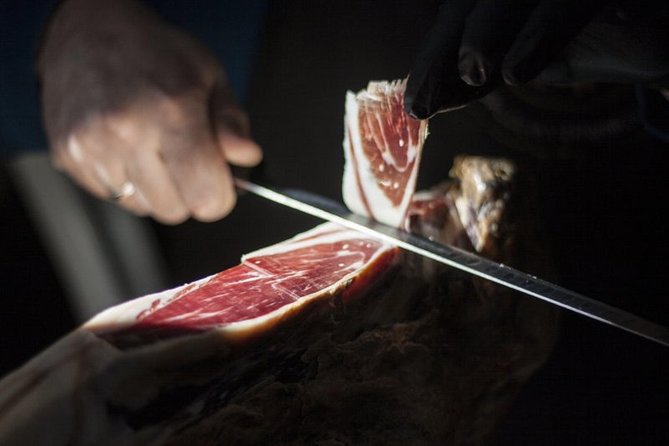
- Iberian ham and local cheese
- Fried eggplant with molasses (sweet-savory, sticky, and very Andalusian in feel)
- Pringa, an Andalusian-style sandwich
- Anchovies in vinegar (sharp, salty, and a good lesson in how Seville balances extremes)
- Pinchito, an Andalusian pork skewer
- Vermut plus other drinks like tinto de verano and local beer
- A secret dish that you only find out when you reach that stop
The “secret dish” part is worth highlighting. It keeps the evening from feeling like a checklist. You know the broad plan, but one course is intentionally held back, so you stay curious as the tour builds.
Menu changes can happen. The tour notes that the itinerary and menu are subject to change based on location availability, weather, and other circumstances. In practice, this means you should expect the overall spirit of the menu—local bites and drinks—but the exact pairing at each stop can shift.
Wooden Rooftop Views to Parque de María Luisa: See the City While You Eat
Before the tour becomes a full-on food rhythm, you get place-setting views. One early stop is that sculptural wooden structure with an archaeological museum, plus a rooftop walkway and viewpoint. If you’ve ever wanted a fast way to orient yourself in Seville, this kind of stop is useful. You’re getting a perspective lift before your feet start doing the heavy work.
Then you move into Parque de María Luisa, with a plaza that’s a strong example of Regionalism architecture. The description matters because it tells you what to pay attention to as you look: it blends Renaissance Revival ideas with Moorish Revival style (Neo-Mudéjar). That’s not just design trivia. It helps you understand why Seville often feels like layers—different eras still visible in the same street scene.
In other words, you’re not only eating. You’re building a mental map of how the city’s design language evolved. The tastings land more meaningfully when you can connect them to where you are and what period the surrounding buildings reflect.
Seville Cathedral Bell Tower and Alcázar: Moorish Roots Meet Christian Power
One of the major visual moments comes with the bell tower of Seville Cathedral. The key detail here is that it was originally built as the minaret for the Great Mosque of Seville during the Almohad dynasty. That single fact changes how you see the structure. You stop treating it as only a Christian landmark and start noticing it as a converted, repurposed space.
If you want a quick practical takeaway: keep an eye out for how the same site can represent more than one chapter of Seville. This is a city where history isn’t locked behind glass. It’s repurposed, reused, and repainted—sometimes literally.
After that, you reach the Alcázar route point: a royal palace built for Christian king Peter of Castile. The tour data also flags two big reasons this stop is meaningful. It’s described as the oldest royal palace still in use in Europe, and it was registered by UNESCO as a World Heritage Site in 1987. When a place is still actively used, it tends to feel different than a fully museum-based stop—you can sense the continuity.
For you as a food-tour participant, the timing works. You get your major architectural and historical anchor early enough to keep the evening from turning into only “wander and snack.” Then you still finish with tastings in neighborhoods that feel lived-in.
A 13th-Century Watchtower Prison Stop That Adds Context
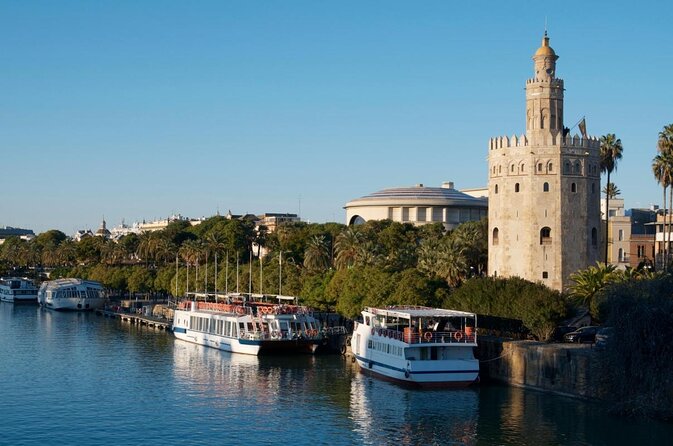
There’s also a dodecagonal military watchtower on the route. It was constructed in the first third of the 13th century and served as a prison during the Middle Ages.
That might sound like a random detour until you remember what this tour is really doing: it’s not separating food from place. Even the “less food-like” stops help explain Seville’s story—how power was defended, how spaces were used, and how daily life was shaped long before tapas became a leisure plan.
The octagon-and-more-than-octagon shape (a dodecagon) is the kind of detail you’ll remember later. It’s unusual enough that it gives your brain a visual hook, and those hooks make the rest of the city easier to navigate after the tour.
A few more Seville tours and experiences worth a look

Triana Finish: Why the River Neighborhood Is the Perfect Ending
The tour includes a Triana connection, and the meeting and end points make it feel intentional. You start in Casco Antiguo near Pl. del Salvador and the tour ends close to the Isabel II bridge on the Triana side.
Triana is more than a “pretty neighborhood name.” It’s described as a colorful neighborhood and administrative district on the west bank of the Guadalquivir River. If you finish here, you can keep your momentum. You can look for your next snack, dessert, or sit-down drink without feeling like you’ve arrived at the end of the city.
Also, finishing near a major bridge is a practical move. If you want to get back to your hotel, it’s simpler. If you want to keep exploring, you’re in an area that supports more walking and more food options.
Guide Style and Group Size: What 12 People Changes
In a food tour, the guide often decides the quality of the whole experience, not just the restaurants. The pattern in the feedback you provided is consistent: guides like Albania, Sarah, Cristina, Camila, Xavier, Adrian, and Mario show up as people who connect food with stories and local context.
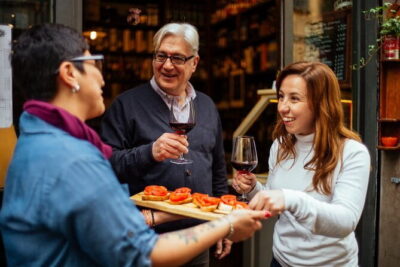
You should expect a “walk-and-explain” rhythm more than a lecture. The tour is offered in English and is clearly designed for an intimate setting (maximum 12). That keeps the conversation human. It also means you can ask what something tastes like, what to order next time, or how to spot a dish you’ll like.
One practical consideration: because there’s no mention of microphones, you may have to work a little in loud places. If you’re the type who struggles in noisy bars, consider where you’ll stand at each stop. Position yourself so you can see the guide and hear them between the clink of glasses.
Walking, Timing, and Comfort Notes That Save Your Feet
This runs about 3 hours 30 minutes, and you’re told there’s a fair amount of walking. That’s not a soft suggestion. It affects your comfort, your ability to enjoy each tasting, and your energy level for whatever you do after.
Here’s what you can do to make it smoother:
- Wear comfortable shoes you trust for long old-town walks
- Plan to come ready for multiple short tastings instead of one big meal
- If you get food-slowed by big crowds, accept that queues can happen at popular places
One review line you included includes a very simple tip: do not eat before the tour. That matches how these tastings are designed—by the time you hit churros, you should still feel hungry enough to enjoy them.
Price and Value: Is $105.21 Worth It in Seville?
$105.21 per person sounds specific, and it is. But the value isn’t only in the number—it’s in what that price buys you:
- Time with a guide during a compact 3.5-hour window
- A small-group format (max 12)
- A multi-stop menu with 10+ local dishes plus drinks like vermut and wine
- Admission-related elements included for certain food items and tastings (the tour includes churros, ham, cheese, and multiple prepared dishes)
If you try to recreate this yourself, you’d need to plan your own route, find places willing to serve tourists quickly, and figure out what to order without turning it into a guessing game. This tour solves that with a pre-built sequence where sweet and savory balance out.
Also, the fact that it includes drinks changes the math. In Seville, ordering drinks can add up fast, and many tours under-deliver by giving you only water. Here, you have multiple drink types included, from vermut to tinto de verano to local beer.
Who Should Book This Tour (and Who Might Prefer Another Plan)
This is a great fit if you:
- Want to learn Seville through food and architecture at the same time
- Like the idea of tasting multiple dish styles instead of committing to one restaurant
- Enjoy small-group walking tours more than big group bus-and-bites
- Want a starting point for Triana after the tour ends near Isabel II Bridge
You might reconsider if you:
- Hate walking or struggle with long old-town routes
- Have trouble hearing in noisy settings and can’t tolerate a no-microphone setup
- Are very picky about foods without a lot of flexibility
The tour does note dietary needs can be accommodated best if you contact in advance. If you have allergies or strict dietary rules, reach out before you go so they can plan accordingly.
Book it or pass: my quick decision guide
If you want Seville in one evening—architecture cues, a guided route, and a real spread of local bites—this is an easy yes. The combination of small-group size, included vermut and wine, and a menu that moves from savory to sweet makes it feel like value, not just a dinner with a walk.
Book it if you’re here for a first or second night and want a food map. Skip it only if walking and crowded bars are deal-breakers for you, or if you can’t eat a variety of tapas-style dishes.
FAQ
How long is the Seville Food Tour?
The tour runs about 3 hours 30 minutes.
How much does it cost per person?
The price is $105.21 per person.
How many people are in the group?
This experience has a maximum of 12 travelers.
Is the tour offered in English?
Yes, it is offered in English.
What food and drinks are included?
Included items include churros, Iberian ham, local cheese, fried eggplant with molasses, pringa, anchovies in vinegar, pinchito, hot chocolate, local beer, tinto de verano, vermut, and a secret dish.
Are there any transport costs included?
Private transportation is not included.
Where does the tour start and end?
It starts at Pl. del Salvador, 8, Casco Antiguo, 41004 Sevilla. It ends at Puente de Isabel II, 30, on the Triana neighborhood side of the bridge.
Can the itinerary or menu change?
Yes. The itinerary and menu are subject to change based on availability, weather, and other circumstances.
What should I do if I have dietary requirements?
Contact the tour provider in advance so they can cater for you as best as possible.
What happens if the tour is canceled due to weather or low demand?
The experience requires good weather. If it’s canceled due to poor weather, you’ll be offered a different date or a full refund. It also requires a minimum number of travelers; if that isn’t met, you’ll be offered a different date/experience or a full refund.