REVIEW · BORDEAUX
Traditional Gourmet Food & Wine Tour in Bordeaux
Book on Viator →Operated by The Bordeaux Foodie · Bookable on Viator
Bordeaux tastes best when you follow it on foot, with cannelés and wine leading the way. I like how this tour mixes iconic sights with very practical stops where you actually sample the food you’d otherwise miss. I also love that the guide, Alexandra, keeps it personal by steering you toward what you enjoy.
The main consideration is simple: it’s a 3.5-hour walk, and you’ll be on your feet for a lot of short windows of time. If your day depends on tight pacing, wear comfortable shoes.
In This Review
- Key moments that make this tour work
- A 3.5-hour Bordeaux loop that feels like a real plan
- Place Pey-Berland: the fastest way to fall for Bordeaux
- Saint-André Cathedral: faith, architecture, and pilgrimage paths
- Hotel de Ville and the feeling of civic Bordeaux
- Rue des Remparts: where the tastings turn into shopping
- Porte Dijeaux and La Galerie des Grands Hommes
- Place de la Comédie: chocolate, opera views, and luxury on both sides
- The Chartrons wine cellar finish: where the tasting becomes a meal plan
- The 11-hectare garden stop: a calmer breath in the middle
- Price and value: what $123.09 buys you (and what it doesn’t)
- Who should book this tour
- Should you book The Bordeaux Foodie Gourmet Food & Wine Tour?
- FAQ
- How long is the Bordeaux food and wine tour?
- Where does the tour start and end?
- What’s included in the tasting portion?
- What language is the tour offered in?
- How big are the groups?
- Is there a mobile ticket?
- Is it held indoors or outdoors?
- When will I receive confirmation after booking?
- Can I cancel for a full refund?
- What if the tour is canceled due to weather or too few travelers?
Key moments that make this tour work
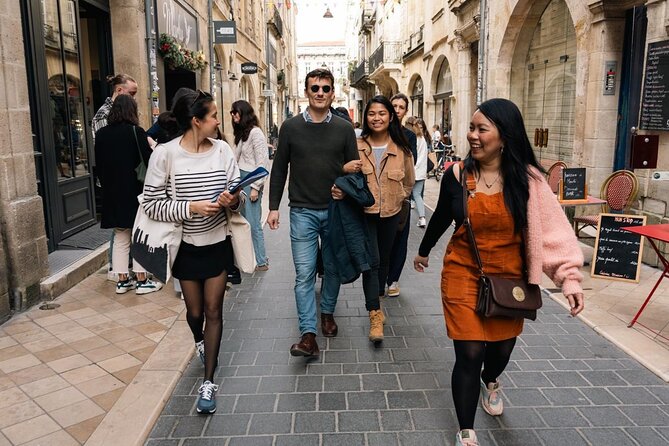
- Start in Place Pey-Berland for a classic first bite and quick orientation in the city center
- Cathedral stop in the heart of Bordeaux, tied to the Camino de Santiago route
- Rue des Remparts food lane, built around bread, honey tasting, and charcuterie buying
- Chocolate near Place de la Comédie with views of major landmarks and high-end dining zones
- Finish in a Chartrons wine cellar with regional wines and a full flavor lineup
- Small group format (max 8), which keeps the pace friendly and the tour more interactive
A 3.5-hour Bordeaux loop that feels like a real plan
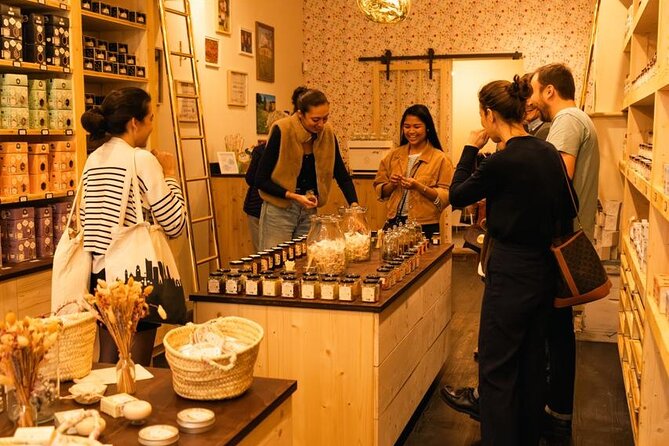
This tour is designed for travelers who want more than a checklist. You get a walking route through central Bordeaux, but it’s not just sightseeing. Each stop is tied to something you can taste and something you can take home—like bread, charcuterie, and sweets you’ll want again later.
With a maximum group size of 8, the pacing stays human. That matters in Bordeaux, where the streets are pretty but they’re also busy, narrow in spots, and best enjoyed without rushing. The route also connects major “you are here” landmarks, so you leave with a stronger sense of where things are.
The duration is about 3 hours 30 minutes, which is long enough to feel like an experience but short enough to fit into a first-timer schedule. You’ll also be offered English guidance, so you can follow the food stories and the historical context without guessing.
You can also read our reviews of more food & drink experiences in Bordeaux
Place Pey-Berland: the fastest way to fall for Bordeaux
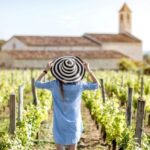
The tour begins at Place Pey-Berland, right in the center where you can feel how the city moves. This square is named after the Pey Berland Tower, and it’s the kind of place where architecture and everyday life overlap. You’ll get a clear intro to the area before you start sampling.
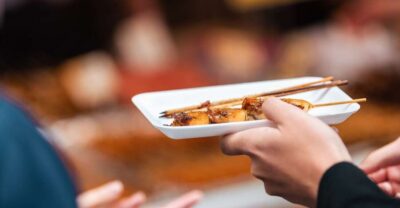
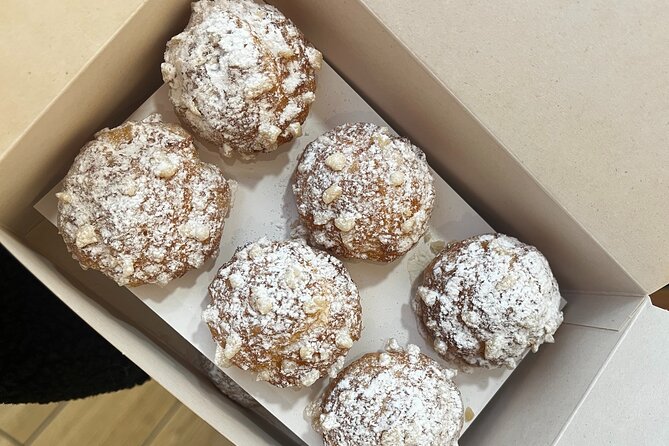
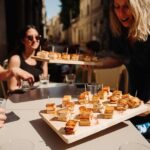
One of the first highlights is the chance to try the tour’s best cannelés in Bordeaux nearby the cathedral. Cannelés are one of those foods that sound simple but are hard to do right. On this kind of walking tour, you’re not stuck ordering blindly from a menu. You’re sampling early, so the rest of the walk makes sense—sweet, caramelized, and unmistakably local.
There’s also a historical thread in this opening stretch. The guide ties together what you see around you—like the bell tower and the Saint-André Cathedral—along with the local stories people associate with the square, including famous wedding moments that took place there. That background gives you a “why this place matters” feeling without making it feel like a lecture.
Practical tip: this is a great stop to pay attention to orientation. After Place Pey-Berland, the rest of the route starts to click.
Saint-André Cathedral: faith, architecture, and pilgrimage paths
Next you spend a short, focused moment at Cathedrale Saint-Andre Bordeaux, right in the middle of the action. The cathedral isn’t just pretty from the outside—it has layered significance that connects Bordeaux to larger European storylines. It’s also noted for its place along the Camino de Santiago pilgrimage route, which adds meaning if you’ve ever followed that theme in Spain or France.
Even with only a brief stop time, it’s worth it. Why? Because Bordeaux often gets discussed for wine and port, but the city’s center is also where identity shows up in stone. Standing near the cathedral and hearing how it links to both faith and pilgrimage helps you understand why locals care so much about the core neighborhoods you’re walking through.
You’ll also learn how the cathedral area connects to iconic weddings in the region. That doesn’t make the stop sentimental—it makes it local. Bordeaux isn’t only a destination; it’s a living place with traditions that keep playing out.
Consideration: because this is a quick stop, don’t treat it as a “sit and read” moment. Think of it as a snapshot that sets context for the tasting stops that follow.
Hotel de Ville and the feeling of civic Bordeaux
A short walk later, you pass by Hotel de Ville de Bordeaux, which started life between 1771 and 1784. At that time it served as the Archbishop’s Palace. Today it functions as the city’s administrative hub.
This is one of those stops that might feel minor if you’re expecting big museums. But it’s actually valuable because it explains how power and identity worked in the city center—first through church leadership, now through civic leadership. It also helps you read the streets better: Bordeaux wasn’t built in a blank space. It grew in layers, and you’re watching the layers as you walk.
Most importantly for you, this kind of civic landmark keeps the tour balanced. You get food. You get sights. But you also get a sense of how Bordeaux organized itself—so the city feels coherent rather than random.
Rue des Remparts: where the tastings turn into shopping
One of the most practical parts of the tour happens on Rue des Remparts. This street translates to Street of Ramparts, and it’s lined with buildings and small shops that feel made for wandering. Historically, it was connected to the idea of defensive walls, which makes the street name more than a label.
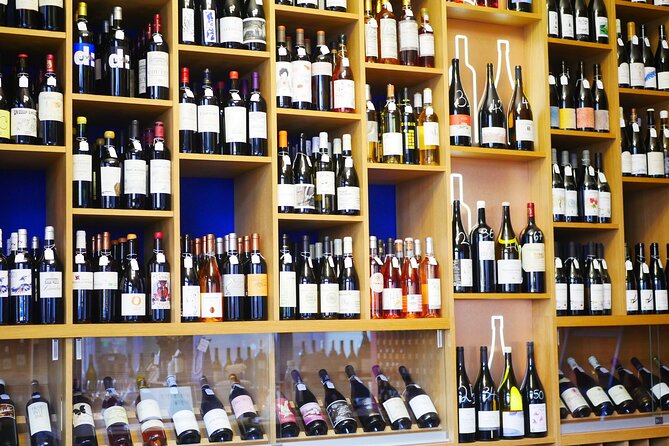
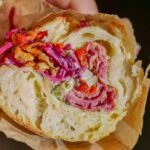
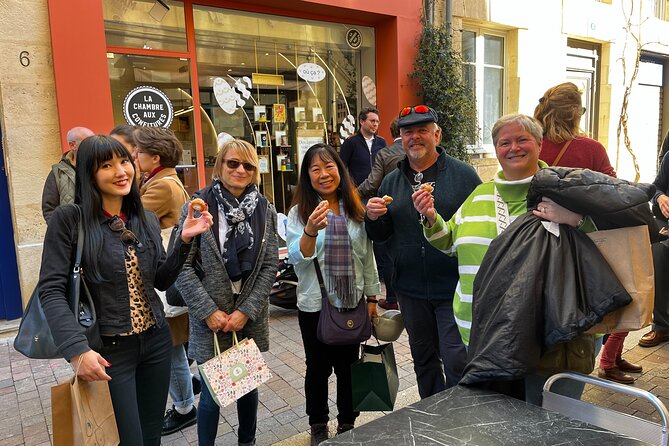
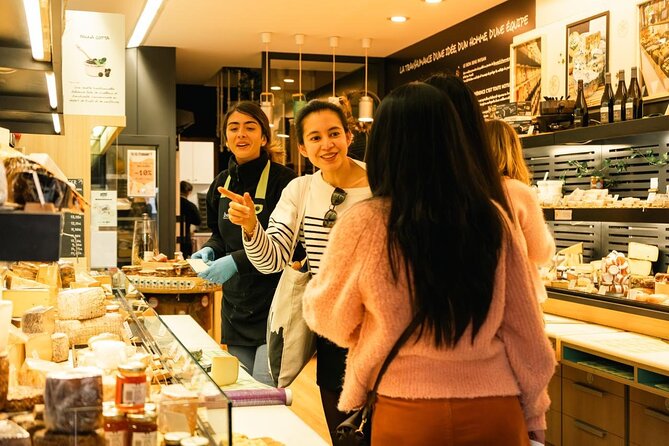
This is also a real eating-and-buying section of the tour. You’ll stop by several places to try items like bread and pastries. Then you’ll do honey tasting, and you’ll get a chance to buy charcuterie.
I like this segment because it turns tasting into follow-through. A lot of food tours only show you what to eat on the day you book them. Here, you also learn what to pick up so you can recreate the experience later—back in your apartment or hotel room with a glass of something you brought home.
Practical tip: if you plan to pack food, ask the guide how best to handle what you buy. You’ll want to protect fragile items and keep strong-smelling foods separate.
A few more Bordeaux tours and experiences worth a look
Porte Dijeaux and La Galerie des Grands Hommes
Then you move toward Porte Dijeaux, an arched gate that marks a historical entry point to the city. The story here is a mix of eras. The area is linked to ancient times, including the Roman period. There are also different explanations floating around about what stood there—one account ties it to a temple honoring Jupiter, and another connects the area with a boundary between the historic city and a Jewish district.
You don’t need to memorize every version. The key value of this stop is that it teaches you how to interpret Bordeaux as a city of transitions, not just a polished postcard. The gate makes it easy to picture routes—who came in, where people moved, and how the city’s boundaries shifted over time.
From there, you head to La Galerie des Grands Hommes, located in the city’s golden triangle. Here, the focus turns toward refined architecture and high-end shops, plus cultural venues and some of the city’s top dining establishments. But there’s also a history you’re given: the area was an old market during the 18th century and later evolved into this elegant district.
This blend matters for you as a traveler because it explains why Bordeaux feels like it has both old-world grit and polished taste. You’re tasting your way through those shifts, one bite at a time.
Place de la Comédie: chocolate, opera views, and luxury on both sides
Now you hit one of Bordeaux’s headline settings: Place de la Comedie. It’s considered the grandest public square in the city, and the views from different angles are part of the reward. If you like architecture, this stop gives you an easy visual payoff.
You’ll also see the famous Grand Théâtre and the Grand Hôtel de Bordeaux facing each other. The tour notes that both are tied to major dining prestige, including Michelin-star restaurants. Even if you don’t book those restaurants during your trip, it helps you understand why people treat Bordeaux as a top-tier food and wine city.
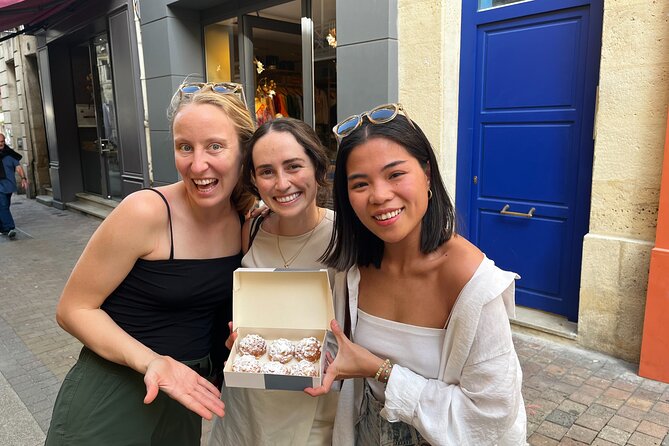
Right near the opera area, you’ll do gourmet chocolate tasting, including different varieties from one of the oldest chocolate institutions in Bordeaux. I like this placement. After bread, honey, and charcuterie, chocolate gives you a sweet finish that feels natural, not random.
Practical tip: if you’re tempted to snack right after, keep yourself slightly hungry for the wine-cellar finish. Chocolate is better when it sets up the next flavor.
The Chartrons wine cellar finish: where the tasting becomes a meal plan
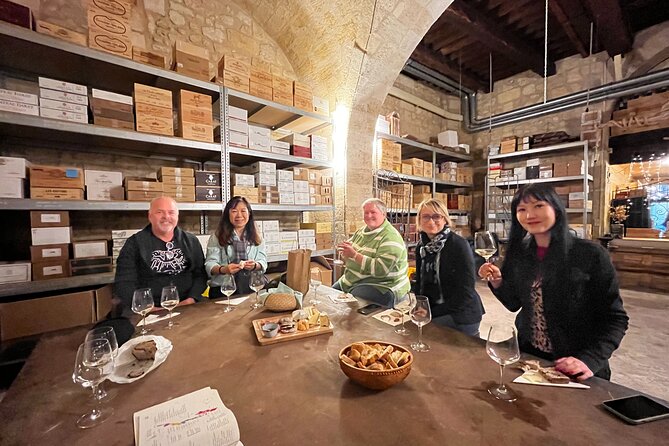
The tour ends in a cosy wine cellar at the beginning of Rue Notre Dame in the Chartrons district. Chartrons is the part of Bordeaux many people associate with wine culture, and ending here helps you transition from walking-through-food to actually savoring it.
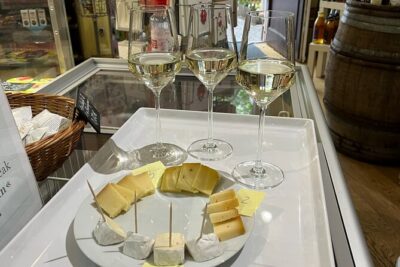
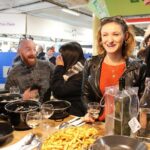
You’ll be served regional wines in that cellar, along with a lineup that includes freshly baked breads, local cheese and charcuterie, and the other tastings you’ve collected along the way. The value of finishing like this is that it gives you context for what you just sampled—sweetness, salt, fat, and acidity all make more sense when paired with wine.
This is also where the tour format becomes clear. You don’t just get random bites at storefront counters. You get a guided sequence that helps you build a flavor map of Bordeaux.
Also, this tour is designed for real conversation. In small groups, questions land better. Alexandra’s style is described as warm, engaged, and focused on connecting the food with the city. In practical terms, that means you’re not just receiving facts—you’re getting help to understand what you like and what to try next.
The 11-hectare garden stop: a calmer breath in the middle
There’s a pause built in for the 11-hectare garden often described as the lungs of Bordeaux. Think of it like a reset. After moving through streets, gates, squares, and shops, you get a chance to sit in a calmer space and take in more of the city at a slower tempo.
The garden is framed as a great picnic spot, which makes sense. If you’re trying to plan the rest of your day, this moment helps you think clearly. You can also use it to decide what to do next—whether you keep walking, grab lunch nearby, or just slow down and enjoy the open space.
Consideration: garden time can be a nice change, but if you’re hoping for constant eating all the way through, this part is more about atmosphere.
Price and value: what $123.09 buys you (and what it doesn’t)
At $123.09 per person, you’re paying for a guided experience that lasts about 3 hours 30 minutes and includes a meaningful food-and-wine component, not just a story walk. Based on what’s included, you should expect:
- Multiple tastings (cannelés, honey, chocolates, bread/pastries, cheese/charcuterie)
- Regional wines in a local wine cellar
- A route through central Bordeaux sights that also explain what you’re eating and why
The value is strongest if you’re new to Bordeaux or you don’t want to spend your time figuring out where to go for the best versions of local staples. A single good stop for cannelés or a quality wine cellar can cost more than the price of the tour, and doing it all in one organized sequence saves you decision fatigue.
What it doesn’t do: it’s not a full-day cooking class, and it’s not a deep-dive museum tour. If you’re looking for long indoor time and lots of seating, you may find the pacing a bit active.
Who should book this tour
This one fits best if you want a balanced first taste of Bordeaux—food, wine, and city landmarks—without needing French foodie expertise or map skills.
Book it if:
- You love tasting local favorites like cannelés, honey, cheese, and charcuterie
- You want the guidance of a host who makes the experience feel personal
- You’d rather walk a set route than try to build one on your own
- You’re traveling in a small group and like interactive tours
You might skip it if:
- Your schedule is too tight for a 3.5-hour walk
- You don’t want any “shopping-style” stops (like buying charcuterie)
- You prefer museums or long sit-down meals over short tasting moments
Should you book The Bordeaux Foodie Gourmet Food & Wine Tour?
I’d book it if you want the practical version of Bordeaux: a route where the history points you to the food, and the food tells you what the city is about. The combination of high-impact landmarks and a tasting lineup that goes from cannelés to honey to chocolate to wine makes it feel like you’re getting more than one experience.
If you’re going, plan around comfort. Bring comfortable shoes, and consider checking the day’s weather since this type of walking experience is described as requiring good weather. Also, if you have dietary needs, ask in advance—this tour’s small-group setup makes it easier for the guide to adjust.
FAQ
How long is the Bordeaux food and wine tour?
It runs for about 3 hours 30 minutes.
Where does the tour start and end?
It starts at Place Pey Berland, 33000 Bordeaux, France and ends at 3 Rue Notre Dame, 33000 Bordeaux, where the tour concludes in a cosy wine cellar in the Chartrons district.
What’s included in the tasting portion?
You’ll get freshly baked breads, regional wines in a local wine cellar, cannelés, gourmet chocolate tastings, honey tasting, local cheese and charcuterie, and famous local pastry.
What language is the tour offered in?
The tour is offered in English.
How big are the groups?
The tour has a maximum of 8 travelers.
Is there a mobile ticket?
Yes, the tour offers a mobile ticket.
Is it held indoors or outdoors?
It’s primarily a walking tour with multiple stops in public spaces and shops, so it depends on weather. The experience requires good weather.
When will I receive confirmation after booking?
Confirmation is received within 48 hours of booking, subject to availability.
Can I cancel for a full refund?
Free cancellation is available. You can cancel up to 24 hours in advance for a full refund.
What if the tour is canceled due to weather or too few travelers?
If it’s canceled due to poor weather, you’ll be offered a different date or a full refund. If the minimum number of travelers isn’t met, you’ll be offered a different date/experience or a full refund.