REVIEW · TAIPEI
Traditional Old School Taiwanese Food Tour
Book on Viator →Operated by Taipei Eats · Bookable on Viator
Old Taipei can taste like a lesson. This food tour strings together Dadaocheng street snacks and two temple moments into a tight 3.5-hour walk that’s built for real local flavors, not showy stops. You’ll start at Daqiaotou MRT, graze through old family-run places, then finish where people come for seafood at Ningxia Night Market. It’s the kind of plan that works when you want culture and calories without spending the whole day planning.
I especially like that you get drinks plus bottled water during the tastings. And I like the structure: a long, meaningful food stretch on Dihua Street, then a quick religious pause, then night market momentum to keep things fun at the end.
One possible drawback: this is a walking-focused loop in an older neighborhood, so if you hate moving around (or you get tired fast), you may want to pace yourself and wear proper shoes.
In This Review
- Key things to know before you go
- Starting at Daqiaotou MRT: old Taipei, less confusion
- The 3.5-hour plan: food first, then culture, then the night market
- Drinks included: a small detail that makes a big difference
- Dihua Street: where the tour really eats
- A quick temple stop: respectful, brief, and useful
- Taipei Xia Hai City God Temple: a simple question with meaning
- Ningxia Night Market finale: you get direction, not a dead end
- What the included meals actually feel like
- Group size and guide attention: why it matters for families
- Price and value: what $85 buys you here
- Who should book this food-and-temple combo
- A few practical tips so you enjoy every stop
- Should you book the Traditional Old School Taiwanese Food Tour?
- FAQ
- How long is the Traditional Old School Taiwanese Food Tour?
- How much does the tour cost?
- What’s included in the tour price?
- Are alcoholic drinks included?
- Where does the tour start and when?
- How many people are in the group?
- Can I get a full refund if I cancel?
Key things to know before you go
- Small group size (up to 8 people) means you can ask questions and get helped when you’re choosing foods.
- Drinks and bottled water are included, so you won’t spend the first hour hunting for something to drink.
- Two temple visits add a different side of Taiwanese life beyond the food counter.
- Dihua Street is the main event, tied to early-1900s Taipei’s culinary center.
- Ending at Ningxia Night Market lets you continue eating on your own after the tour wraps.
- Breakfast and lunch are listed as included, so plan for tastings to turn into a proper meal.
Starting at Daqiaotou MRT: old Taipei, less confusion
You meet at Daqiaotou MRT station (大橋頭捷運站), Minquan W Rd. The big win here is simplicity. You don’t have to arrange private pickup, and you get dropped right into the area the tour actually focuses on: Dadaocheng, one of Taipei’s older neighborhoods.
Dadaocheng matters because it sits at the crossroads of influences. The area has long culinary roots, shaped by foreign contact over time, including Dutch and Japanese cooking influences—the kind of detail that helps you understand why the food here doesn’t feel like generic “night market snacks.” It feels more like a living local archive.
The start time is 10:00 am, which is handy. You’re not fighting peak crowds from the very beginning, and you’re eating early enough to enjoy the walk without turning it into a stamina test.
You can also read our reviews of more food & drink experiences in Taipei

The 3.5-hour plan: food first, then culture, then the night market
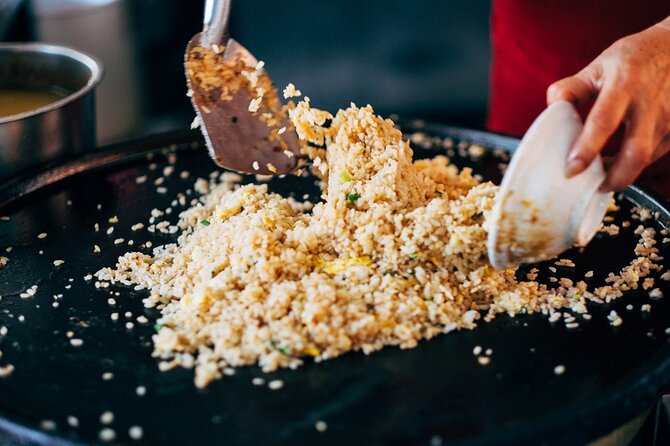
This tour runs about 3 hours 30 minutes. It’s built like a sequence: taste, learn, pray briefly, then go full snack mode at the end.
Here’s the flow you’ll follow:
1) A guided food journey led by your guide, stopping at small family-run shops
2) A short temple stop
3) Dihua Street for two hours of eating on one of Taipei’s most historic street corridors
4) Taipei Xia Hai City God Temple for a brief visit
5) A quick finish at Ningxia Night Market so your guide can point you toward what to try next
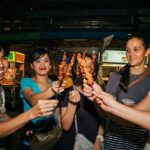
The walking time is the backbone, but the pacing is designed to keep you fed. With food tastings, breakfast, lunch, beverages, and bottled water all included, you’re not just tasting tiny bites—you’re covered for a full stretch of eating.
Drinks included: a small detail that makes a big difference
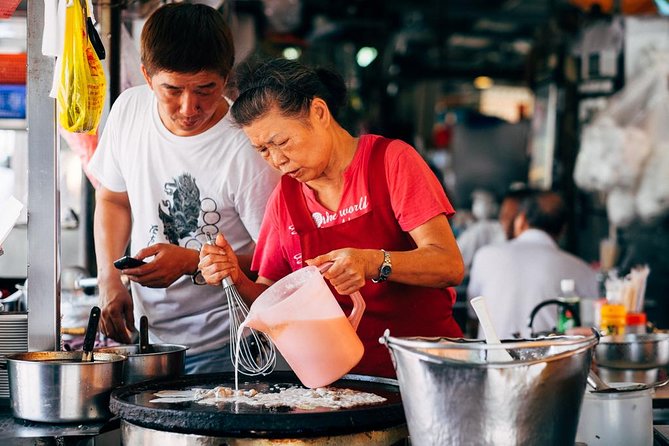
I love tours that handle the hydration problem for you. Here, beverages and bottled water are included. That means you can slow down, sip when you need to, and focus on what’s in front of you instead of scanning for a shop mid-walk.
Also, alcohol is not included. If you want it, it’s available to purchase, but the base experience stays focused on classic food and temple visits. That’s a good balance: you get the comfort of a plan that won’t depend on everyone spending extra money to enjoy themselves.
Dihua Street: where the tour really eats
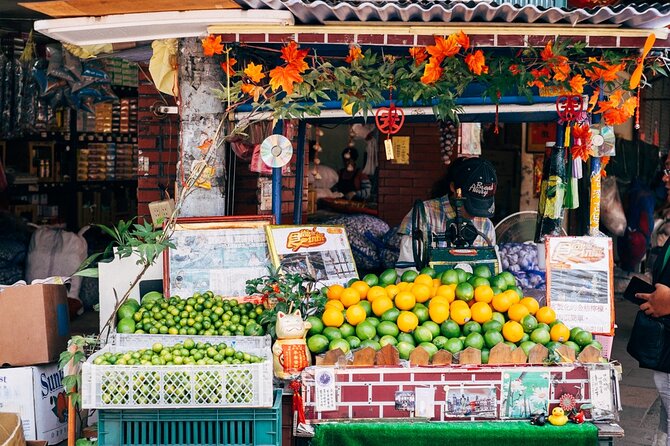
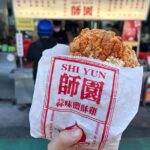
Your longest stop is Dihua Street. You spend about 2 hours here, and it’s not random strolling. Dihua Street is described as one of the most historical streets, once a cultural and food center in early-1900s Taipei.
What that means for you in real life: your tastings aren’t floating in the air. They’re connected to street identity—old shop fronts, long-running local stalls, and foods that feel linked to everyday life, not staged for tourists.
The tour also frames this area with history tied to early-to-mid 20th-century restaurant roots. Even if you’re not a history nerd, that context matters. Old neighborhoods usually have repeat customers, strict recipes, and the kind of consistency that makes food enjoyable even when you’re not sure what you ordered.
Practical note: two hours on one street can be a lot of stopping and starting. If you want to maximize what you learn, take a moment to ask your guide how each dish is meant to be eaten—some foods make sense only once you know the usual order, dipping style, or texture expectation.
A quick temple stop: respectful, brief, and useful
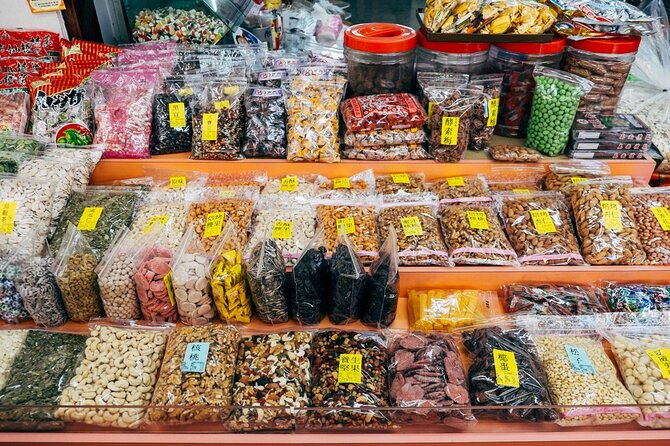
Before Dihua Street, there’s a short temple stop. Then later, you’ll visit Taipei Xia Hai City God Temple.
Even when temples are brief on a food tour, I like that this one doesn’t treat religion like a photo op. It’s a short visit, and the tour language is clear that the temple moments are part of understanding local culture, not a detour that drags.
If you’re curious about how daily life and food connect, temples can explain a lot about rhythm and community. In Taiwan, religious practice isn’t something you only see during big holidays—it shows up as part of normal neighborhoods. This stop helps you notice that.
A few more Taipei tours and experiences worth a look

Taipei Xia Hai City God Temple: a simple question with meaning
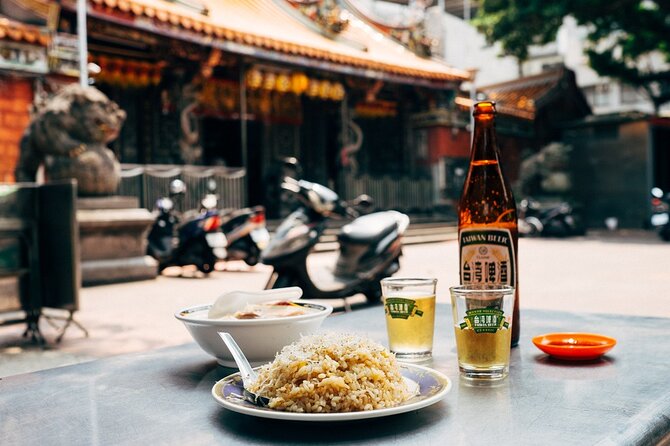
At Taipei Xia Hai City God Temple, the visit is brief (about 5 minutes). The experience includes a fun-but-grounded ritual idea: praying for a significant other or helping a friend pray.
That’s a small detail, but it helps you understand how people use these spaces. It’s not only about grand ceremonies—it’s about personal hopes, community support, and everyday intentions.
Consideration: temples involve calm respect. Keep your voice low and follow whatever cues your guide gives you. Also, if you’re sensitive to crowds, just know this is a quick stop designed to keep things smooth.
Ningxia Night Market finale: you get direction, not a dead end
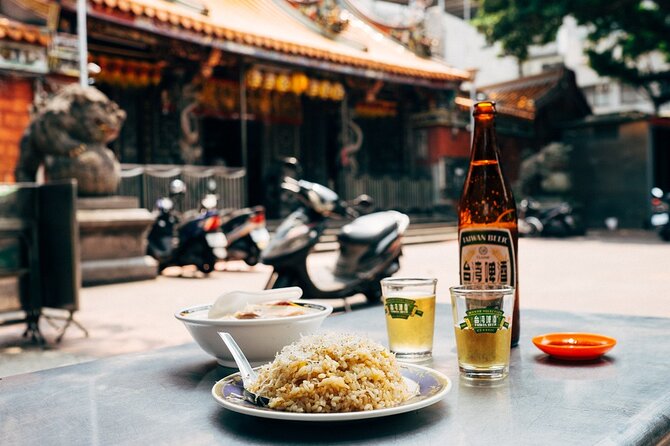
The tour ends at Ningxia Night Market, a well-known spot, especially for seafood. You’ll finish at the market location listed at No. 58, Ningxia Rd.
The time at the night market is short (around 5 minutes in the itinerary), but that’s not the point. The idea is that your guide helps you get started and points you in the right direction after the tour ends.
Here’s why this is smart value: many food tours dump you into a night market with zero guidance. You end up wandering, guessing, and missing the best choices because you’re hungry and overwhelmed. This tour at least gives you a head start so your next hour or two isn’t wasted.
What to do after the tour: keep eating, but do it with your guide’s setup in mind. If you see a line and the dish matches the direction you were pointed, you’ll have more confidence ordering.
What the included meals actually feel like
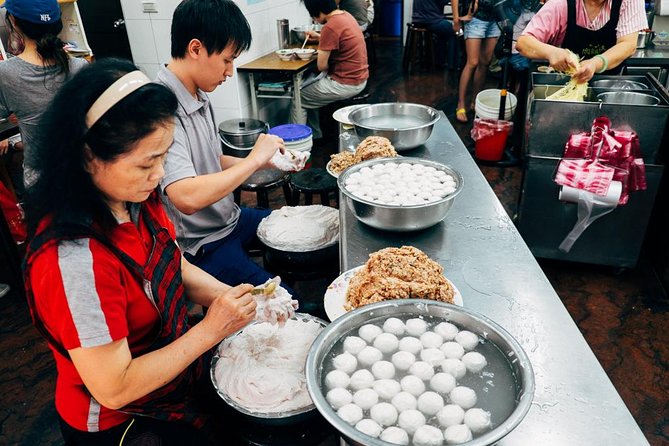
The tour lists these inclusions: food tasting, beverages, local guide, breakfast, and lunch. That combination is a strong hint that you’re not paying $85 just to nibble.
In practice, I’d expect your day to feel like:
- You start with real tastings (and likely a breakfast-style bite)
- You get a longer street-based food block on Dihua Street
- You continue eating through the experience until you reach the finish with the night market as an extra bonus
Because alcohol is not included, the money stays on food and guidance. That’s good if you want a meal-focused tour that keeps the experience easy to manage for a group.
Group size and guide attention: why it matters for families
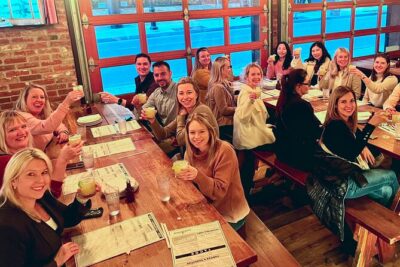
The experience caps at maximum 8 people. That small group size changes the vibe. You’re not squeezed in a rush. You can hear explanations and get help making choices when you’re unsure.
One review highlighted a guide named Jean, praised as very informative and attentive—especially for a group with young kids. The review specifically mentioned items on hand like wipes and tissues, and help with restroom needs. That kind of practical care is a big deal when you’re traveling with children or mixing ages.
So if your group includes kids, seniors, or anyone who gets uncomfortable quickly, this setup is a comfort advantage, not just a pricing detail.
Price and value: what $85 buys you here
At $85 per person, this is not a budget-only snack crawl. But it’s also not just paying for walking and instructions.
You’re paying for:
- A local guide who organizes tastings and keeps you moving
- Beverages and bottled water included
- Breakfast and lunch included, plus tasting stops
- Temple visits that add cultural context
- A plan that includes both a major historic food street and an end point at a major night market
When you compare it to DIY, the savings often come from time and coordination. You’re paying to remove guesswork: where to go, what to try, and how to keep it all connected in a 3.5-hour window.
If you enjoy food, history, and religious/cultural context as part of a single morning, $85 starts to look like good value.
Who should book this food-and-temple combo
This tour fits best if:
- You want a short, organized food experience instead of self-navigating
- You like old neighborhoods and street identity (Dadaocheng and Dihua Street)
- You’re interested in how religion shows up in daily local spaces
- You want a start that’s easy to reach via MRT, and an end that puts you near more eating options
It may be less ideal if:
- You don’t want any walking at all
- You hate food tastings and prefer full sit-down meals only
- You want lots of time at the night market itself (this one gives direction and then moves on)
A few practical tips so you enjoy every stop
- Wear comfortable walking shoes. You’ll be on your feet for the duration.
- Come hungry. The tour includes multiple eating moments, and the night market finish is there for continued snacking.
- Bring a phone for maps and timing, but trust that the guide will keep the rhythm.
- If you’re sensitive to religious spaces, keep your behavior calm and follow the guide’s cues during temple moments.
Should you book the Traditional Old School Taiwanese Food Tour?
I’d book it if you want a morning that mixes real food stops, short temple context, and historic Dihua Street energy, all in a small group. The biggest value points are straightforward: drinks and bottled water included, a longer Dihua Street food segment, and a guide who keeps you from wasting time at Ningxia Night Market.
Skip it only if you’re looking for a long, night-market-heavy afternoon or you don’t want any temple stops at all. Otherwise, this is a smart way to experience Dadaocheng with less stress and more flavor.
FAQ
How long is the Traditional Old School Taiwanese Food Tour?
It lasts about 3 hours 30 minutes (approx.).
How much does the tour cost?
The price is $85.00 per person.
What’s included in the tour price?
Included are food tasting, beverages, bottled water, a local guide, breakfast, and lunch.
Are alcoholic drinks included?
No. Alcoholic drinks are available to purchase, but they are not included.
Where does the tour start and when?
It starts at Daqiaotou MRT station in Datong District at 10:00 am.
How many people are in the group?
The tour has a maximum of 8 travelers (small group size).
Can I get a full refund if I cancel?
Yes. You can cancel up to 24 hours in advance for a full refund.