REVIEW · ATHENS
Acropolis Mythology & Food Tour
Book on Viator →Operated by Alternative Athens · Bookable on Viator
Athens feels bigger after you walk it with a plan. This Acropolis Mythology & Food Tour strings together the big icons (like the Acropolis) with day-to-day streets where you’ll actually eat, snack, and people-watch. I like the small group size because the guide can keep things moving without rushing you, and you get time at key photo spots. I also like that the route balances myth with food stops in neighborhoods most people speed through. One drawback: the archaeological entrance fees are not included, and the Acropolis is strict about what you carry.
You’ll start early at the Arch of Hadrian area and end in Monastiraki, which is a smart setup if you want to keep exploring after the tour. You’ll travel with a professional English-speaking guide for about 5 hours 30 minutes, with food tastings included and an “ancient Athens” map in your kit. Just note the Acropolis has rules (no strollers, backpacks, or big bags), so plan to pack light.
In This Review
- Key Things I’d Prioritize Before You Go
- Starting at the Arch of Hadrian: a smart meeting point
- Temple of Olympian Zeus: the massive myth before the Acropolis
- Acropolis time (about 2 hours): legends meet real stone
- Syntagma Square: where Athens shows its daily rhythm
- Plaka: narrow lanes, souvenirs, and the view line you want
- Monastiraki: Hadrian’s library area, street eats, and Ottoman traces
- Psiri: street art now, crafts long ago
- Varvakios Municipal Market: see what locals actually buy
- What the price covers, and where extra costs may hit
- Logistics that matter: meeting points, bags, and moving on after
- Should you book this Acropolis Mythology & Food Tour?
- FAQ
- What time does the tour start and how long is it?
- How many people are in the group?
- Is the tour in English?
- Are entrance tickets to archaeological sites included?
- Can you pre-purchase the Acropolis entrance ticket?
- Does the tour include food?
- Where do I meet and where does the tour end?
- Are there restrictions on bags or strollers?
- Is there an ID requirement for discounts?
Key Things I’d Prioritize Before You Go
- Small group (max 15): easier questions, less waiting, and a smoother pace around crowded sites
- Early 8:00 am start: you beat some of the heat and peak crowds on the way to the Acropolis
- Myth to street-level food: you’ll connect the goddess Athena stories to where people eat today
- Light-pack rules for the Acropolis: no strollers, backpacks, or big bags in that area
- A finish in Monastiraki: you end in a convenient hub for your next meal or a late museum visit
Starting at the Arch of Hadrian: a smart meeting point
The tour begins near the Arch of Hadrian on Leof. Vasilisis Amalias, a location that’s easy to find and well placed for morning walking. The start time is 8:00 am, and that matters more than you might think in Athens. Early starts help you get to the Acropolis while the light is kinder and the streets feel less chaotic.
You’ll use a mobile ticket, and you should plan to keep your phone charged. This is a “small group, big day” format, so show up a little early, get your bearings, and avoid sprinting with your morning coffee.
If you’re traveling light, you’re already winning. The Acropolis restrictions are real, and you don’t want to waste time later figuring out what you can carry. A day bag or something similar (not a backpack or stroller) is the safe bet based on the rules.
You can also read our reviews of more food & drink experiences in Athens



Temple of Olympian Zeus: the massive myth before the Acropolis
First up is the Temple of Olympian Zeus, also called Olympeion. You’ll view it from the outside, which keeps things moving and gives you a quick history lesson without adding more entrance logistics. It’s located between the Acropolis and the Ilissos river, and that positioning gives you a sense of how the ancient city was laid out.
This temple is famous for its sheer size and for being one of the great marble buildings of the ancient world. Even without going inside, you’ll likely get a clearer picture of how Zeus fit into Athens beyond the Acropolis stories.
Timing here is short (about 15 minutes), so think of it as an opening act. If you’re the type who likes to understand the “why” behind the stone, this stop sets you up for the bigger mythology moments later.
Acropolis time (about 2 hours): legends meet real stone

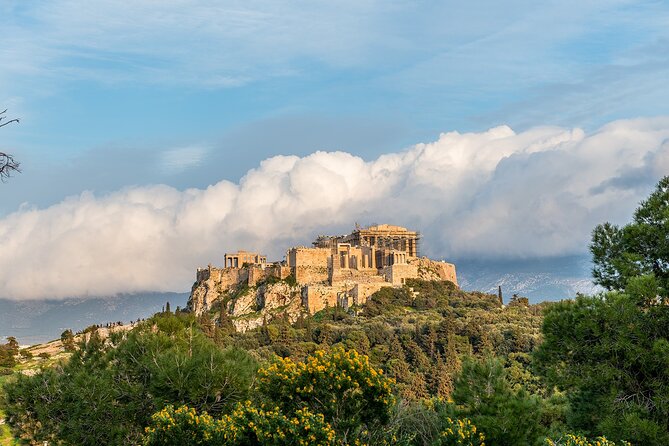
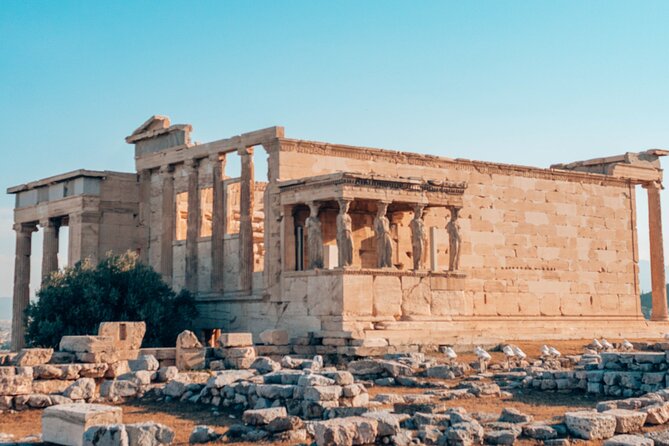
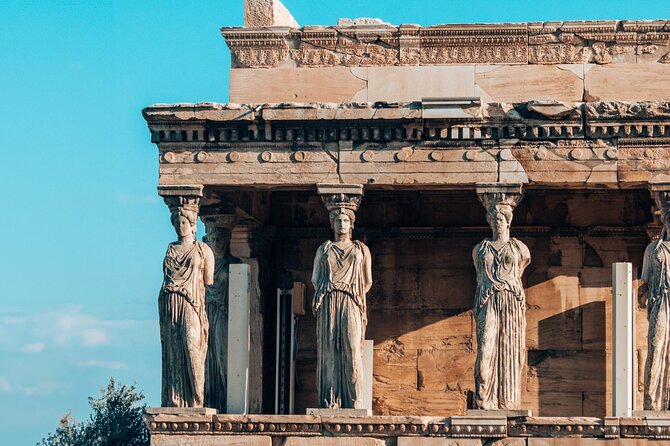
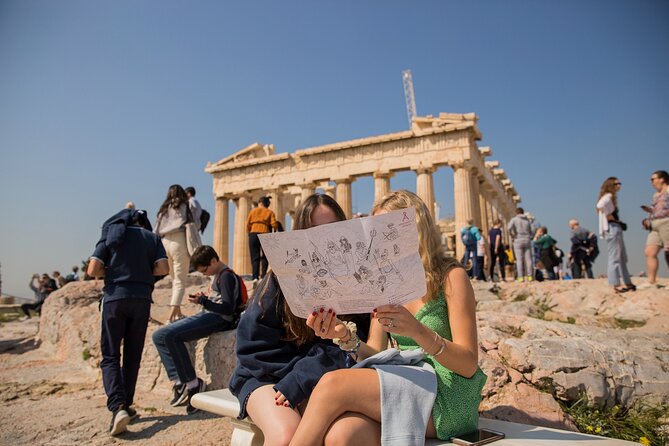
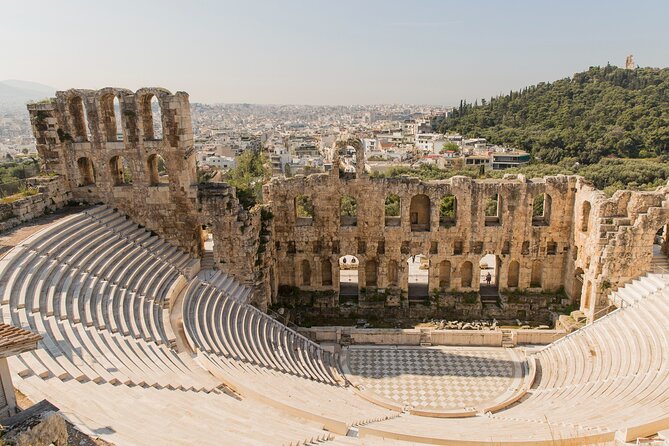
The Acropolis is the heart of the day, and you get around 2 hours there with your guide. This sanctuary was dedicated primarily to Athena, and it’s been dominating the city for centuries—literally for millennia. The guide walks you through the monuments you’ve probably seen in photos, including the Parthenon, the Temple of Athena Nike, the Erechteion, the Propylae, and the Theater of Dionysus.
Here’s the practical thing: this tour’s entry fees for archaeological sites are not included in the base price. You can expect a separate payment for the entrance ticket, and the tour says you can pre-purchase them for you if you tell the operator ahead of time. Plan for that cost so you don’t get stuck deciding on the spot.
Also, pack rules matter. At the Acropolis, strollers, backpacks, and big bags are not allowed. So if you’re used to carrying everything everywhere, you’ll need a change in strategy for this stop: small, light, and easy to manage.
If you want to get the most from the time, wear shoes you can walk in for a few hours of uneven stone, and don’t assume you can leave bags somewhere for free. Better to arrive already set up for the restrictions.
Syntagma Square: where Athens shows its daily rhythm
After the Acropolis, you head to Syntagma, the central square dominated by the Greek Parliament. It’s the former Royal Palace, and the architecture gives you a quick sense of how Athens layers eras on top of each other.
This stop is around 40 minutes, and it’s a “feel the city” segment as much as a sight. The square is known for its steady stream of people crossing major roads, so you’ll get energy, views from street level, and a break from ticket lines and steep climbs.
You’ll likely use this time to reset: check your photos, grab water if you need it, and prepare for the older lanes near Plaka and Monastiraki. If you prefer structured sightseeing only, you might find this portion more observational than instructional—but that’s part of the value here.
Plaka: narrow lanes, souvenirs, and the view line you want
Next is Plaka, one of Athens’ oldest areas and the cluster of narrow alleys just below the Acropolis’s stone sides. It’s famous for souvenirs and for small storefronts, and yes, it draws crowds—but it’s also one of the easiest places to enjoy a slow walk with views of the Acropolis above you.
You’ll get about 45 minutes here, with time to wander at your own pace. This is a good moment to take a breather and decide if you want a snack on your own, browse, or simply watch how people move through the streets.
A fair warning: Plaka can feel like a postcard zone. If you’re hunting for quiet streets only, you might not love the busiest lanes. But if your goal is to understand the area’s “lived-in tourist” character, this is exactly the kind of stop that helps you read the city instead of just seeing it.
A few more Athens tours and experiences worth a look






Monastiraki: Hadrian’s library area, street eats, and Ottoman traces
Monastiraki is where the tour leans harder into everyday Athens. You’ll spend about 40 minutes here, moving through an area tied to history and to street-level food culture.
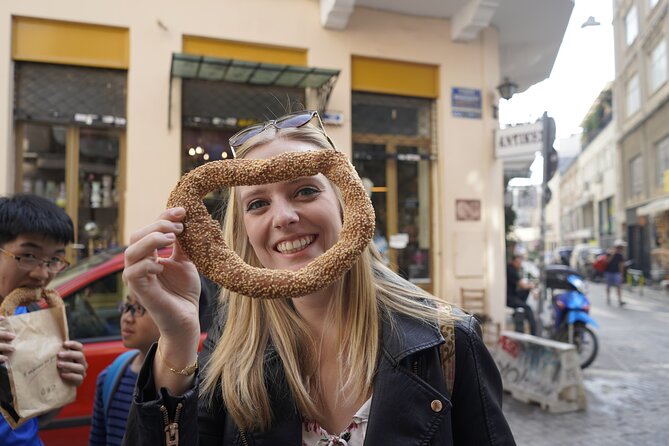
The stop includes a look near Hadrian’s library, plus street food. You’ll also hear about an underground river hidden in a metro station—one of those facts that turns a transit stop into a story, even if you never ride the train during the tour.
Monastiraki is also mentioned for an Ottoman mosque among the area’s surviving older layers. That blend matters: it’s not just “ancient Athens.” It’s Athens across time, with different cultures leaving physical marks in the same neighborhood.
You might be tempted to treat this as pure wandering, but the value comes from the guide connecting the food and the sites around it. Even if you don’t buy anything, you’ll learn what to notice: where people line up for snacks, where older architecture peeks out between shops, and how the neighborhood’s character changes street to street.
Psiri: street art now, crafts long ago
Then it’s on to Psiri, where the tour gives you about 30 minutes. Psiri has long been tied to local craftsmen working out of small shops, and now it’s become a go-to area for evening food and drink.
This stop also includes street art, which is a nice contrast to the ancient monuments earlier in the day. If you love visual details, you’ll probably end up looking longer than planned at murals and wall pieces.
The drawback for some people: the time is short. You won’t see everything, and if you fall into a long browsing mood you may feel a little rushed. Still, this is one of the best parts of the day for understanding how Athens “keeps moving” rather than turning into a theme park.
Varvakios Municipal Market: see what locals actually buy
For a food-focused finale, the tour ends at Varvakios Central Municipal Market. You get about 15 minutes there, which is brief—but markets work best when you arrive hungry and ready to pay attention.
This is Athens’ food market: locals come here for fresh produce, meats, and fish. It’s lively in a very practical way, not just for show. Even with a short stop, you’ll get a strong sense of the city’s food culture and how people shop day to day.
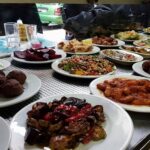
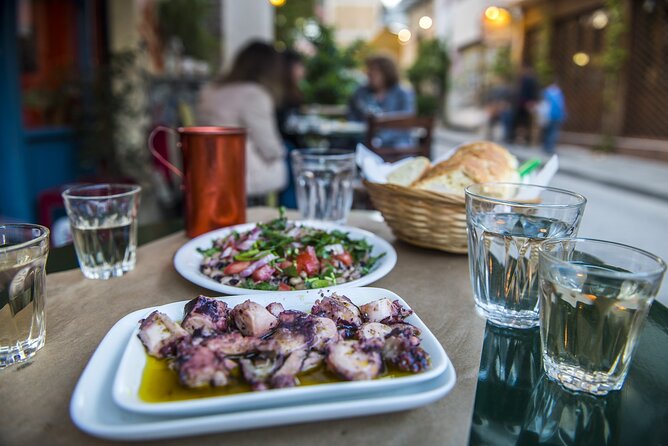
The tour includes food tastings as part of the experience, and this is where those tastings fit naturally. You’ll also end in a part of Athens that feels alive, which is great if you want to continue your evening meal right after.
If you’re the type who likes markets but hates crowd chaos, try to stay flexible here. Fifteen minutes can feel like a blink, but it’s also enough to get the flavor without getting overloaded.
What the price covers, and where extra costs may hit
The tour costs $138.55 per person, lasts about 5 hours 30 minutes, and is booked far in advance on average. That price includes a professional guide, a fun ancient Athens map, small-group time (max 15), and the food tastings that are built into the route.
What’s not included: entrance fees for archaeological sites. The stated estimate is €30.00 per person. The operator also says you can pre-purchase your entry tickets if you let them know, which is worth doing because it reduces stress when you’re standing at the start of the Acropolis day.
Value-wise, you’re paying for two things that are hard to replicate on your own: (1) a guided route that links myths to the places you walk through and (2) structured food stops that don’t require you to guess what’s worth eating.
If you already plan to pay for Acropolis entry anyway, this becomes a solid deal because the guide and tastings are added on top.
Logistics that matter: meeting points, bags, and moving on after
You’ll meet at the Arch of Hadrian area (Leof. Vasilisis Amalias 50) and end at Monastiraki Square (Apollonos 21). That finish point is handy because Monastiraki is packed with dining options and easy to keep exploring from.
The tour is offered in English, and near public transportation, which helps if you’re arriving from another part of Athens. The operator also says most travelers can participate, but you should keep the Acropolis bag rules in mind. Strollers, backpacks, and big bags are not allowed at the Acropolis during the tour, so pack to avoid the problem in the first place.
One extra detail worth knowing: if you’re under 25, the operator notes that an ID card or passport may be needed for possible discounts to certain entrance tickets. If that applies to you, bring it with you.
Should you book this Acropolis Mythology & Food Tour?
I think this is a great choice if you want Athens to feel like a real day—not just a checklist of sites. The mix of Acropolis monuments, neighborhood time in Plaka and Monastiraki, and market-based food tastings makes the day feel connected.
Book it if:
- you like guided stories tied to the actual streets you’re walking
- you want a small group (max 15) instead of a big crowd shuffle
- you’re happy paying an extra amount for archaeological entry to get the full experience
Skip or reconsider if:
- you need to bring a backpack or stroller for convenience (the Acropolis rules can be a deal-breaker)
- you’re hoping for a fully included Acropolis ticket price with no additional planning
If you do book, the best move is simple: plan light for the Acropolis, and decide early whether you want the operator to help with pre-purchasing entrance tickets.
FAQ
What time does the tour start and how long is it?
It starts at 8:00 am and runs for about 5 hours 30 minutes.
How many people are in the group?
The tour has a maximum of 15 travelers, in a small-group format.
Is the tour in English?
Yes. The tour is offered in English.
Are entrance tickets to archaeological sites included?
No. Entrance fees are not included, and the tour lists an estimated €30.00 per person for archaeological sites.
Can you pre-purchase the Acropolis entrance ticket?
Yes. You can request that the operator pre-purchase entry tickets, if you let them know in advance.
Does the tour include food?
Food and drinks you buy on your own are not included, but the tour does include food tastings at the described stops.
Where do I meet and where does the tour end?
You meet at the Arch of Hadrian area (Leof. Vasilisis Amalias 50) and end at Monastiraki Square (Apollonos 21).
Are there restrictions on bags or strollers?
Yes. At the Acropolis, strollers, backpacks, and big bags are not allowed and should not be taken on the tour.
Is there an ID requirement for discounts?
The operator notes that ID card or passport are required for people under 25 for possible discounts related to paid archaeological site entrance.