Bangkok can feel like a maze.
This tour turns that maze into a plan, with a guided walk through Talad Noi and Bangkok’s Chinatown paired with Thai and Chinese food tastings along the way. You also get a couple of real landmarks that explain why this area looks the way it does: a European-style church and a Hokkien shrine where people go for blessings.
I especially like the small-group pace. I also love that the food list is specific, not vague, so you know you will try classics like turnip cake and chwee kueh, plus duck noodles soup and Phad Thai-style noodles served by a local stall name you will hear on the tour.
One thing to consider: Bangkok closures and crowds can change the exact streets you walk. On big days (or if a temple spot is closed), you may end up with more food time and fewer photo stops, which is still fun, just a different vibe.
In This Review
- Key Points to Know Before You Go
- Why Talad Noi and Chinatown Works So Well (especially at 4 pm)
- Meeting at River City Bangkok and Finding Your Guide Fast
- Talad Noi Lanes: The Old Neighborhood Feel Before Chinatown Gets Loud
- Holy Rosary Church: A Portuguese Gothic Revival Stop for Context
- Chow Sue Kong Shrine: Blessings for Well-Being and Protection
- Sol Heng Tai Mansion and Hong Sieng Kong: Old Houses, Local Art, River Air
- Street Food Samples You’ll Actually Notice (and What They Taste Like)
- Chinatown Crossing: Old Traditions Meet Modern-Day Influence
- Wat Mangkon Kamalawat: The Finish Point and the Last Look at the Area
- How the Small-Group Size Changes Everything (and How Far You’ll Walk)
- Price and Value: What $42.48 Buys You in Real Terms
- When This Tour Is the Right Fit (and When It Might Not Be)
- FAQ
- FAQ
- What time does the tour start?
- Where do I meet the guide?
- How long is the tour?
- What food is included on the tour?
- Can the tour accommodate a vegetarian diet?
- How much walking is involved?
- Should You Book This Bangkok Chinatown, Talad Noi & Street Food Tour?
Key Points to Know Before You Go
- Start from River City Bangkok (Si Phraya area): easy riverside access and a meeting spot that keeps the tour from feeling random.
- Talad Noi lanes first, Chinatown second: you get both the quieter old neighborhood feel and the big-city energy.
- Holy Rosary Church + Chow Sue Kong Shrine: you are not just eating; you’re also reading the neighborhood’s story in place.
- Street-food samples are included: turnip cake, chwee kueh, duck noodles soup, and more are part of the deal.
- Max group size of 12: the guide can steer you through crowds and keep everyone together.
- 2 km walking total: manageable distance, but you still need shoes that can handle uneven sidewalks and standing time.
Why Talad Noi and Chinatown Works So Well (especially at 4 pm)
Starting in the late afternoon is smart in Bangkok. You catch the neighborhoods as people move through after work, and the streets feel alive without the midday heat taking over your whole day.
This route also gives you a clean contrast: Talad Noi tends to be more old-school, narrow-lane, Chinese-community focused, while Chinatown is the louder, denser side of the same cultural story. The guide helps you make sense of what you’re seeing instead of wandering in circles with a growling stomach.
And yes, you will eat. This is built as a street-food tasting walk, not a sit-down meal where you finish and immediately forget everything you ate.
You can also read our reviews of more food & drink experiences in Bangkok
Meeting at River City Bangkok and Finding Your Guide Fast
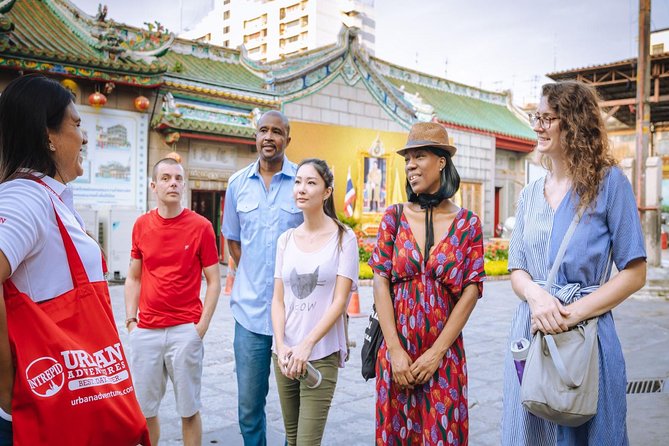
You meet at River City Bangkok at Si Phraya Pier, with the check-in spot at River City Gate 1, in front of Starbucks on the 1st floor. The point is to anchor you at a recognizable location, not somewhere hidden in a maze of side streets.
From there, the tour moves by foot through Talad Noi’s lanes. Expect turns, alleys, storefront corridors, and the kind of street layout where a local guide is worth their weight in snacks.
A couple of practical notes that matter: the tour is short on time (about 2 hours 30 minutes), so you will feel the momentum. It is also mobile-ticket based, so you should have your phone charged and ready.
Talad Noi Lanes: The Old Neighborhood Feel Before Chinatown Gets Loud
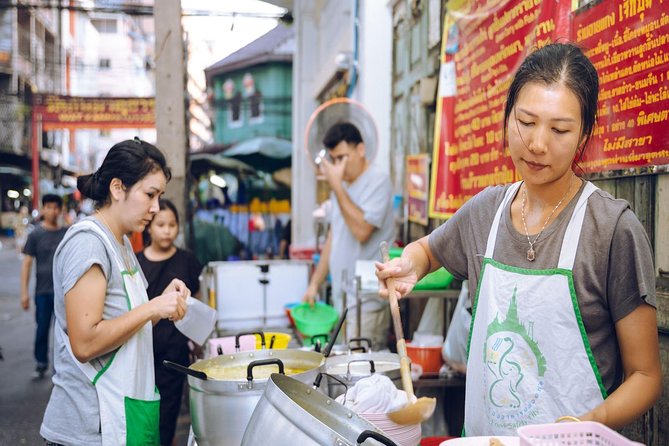
Talad Noi is the warm-up act that makes Chinatown land better. You walk into a neighborhood that has been home to Chinese communities for more than 300 years, and you can see how that long presence shapes shops, signage, and street rhythm.
This is also where you get the “ordinary Bangkok” texture: not only tourist-facing streets, but the kind locals use for daily life. It is the best way to get your bearings fast—by walking through the fabric of the neighborhood instead of only spotting highlights from a distance.
The guide’s job here is simple: slow you down when it counts, speed you up when the street gets tricky, and keep the group together. With a max of 12 people, you usually get more hands-on guidance than the big-bus style tours.
Holy Rosary Church: A Portuguese Gothic Revival Stop for Context
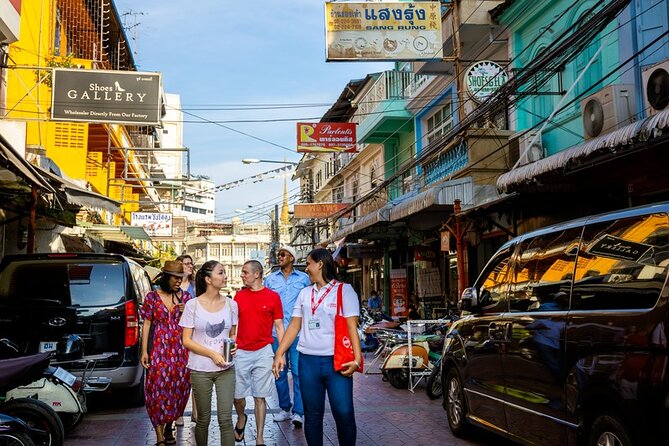
Then comes a sharp change in architecture. Holy Rosary Church is a European-style Roman Catholic church built in Gothic Revival style by Portuguese settlers, founded in 1787.
This stop is more than a quick photo break. It helps you understand that Bangkok’s old Chinese neighborhoods were shaped by multiple waves of outsiders and influences—not one single story.
Also, this is a welcome reset from the street heat and noise. Even if you are not a church person, it is still a useful landmark because it creates a mental map: you now know you’re moving through a place where different communities have been living close together for a long time.
Chow Sue Kong Shrine: Blessings for Well-Being and Protection
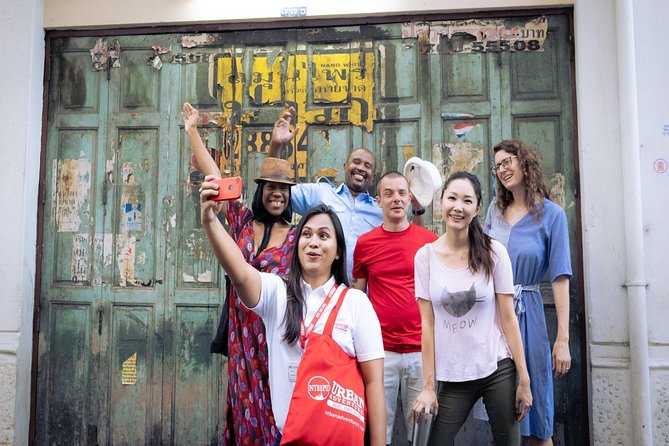
Next, you visit Chow Sue Kong Shrine, a Hokkien shrine that is more than 200 years old. It’s a quieter moment in the middle of active streets, and people come here for blessings related to well-being, protection, and guidance.
This stop is valuable because it shows how the Chinese community practices faith in everyday life. You’re not studying religion from afar—you’re seeing how a shrine functions as a peace-making space inside a busy district.
You also get a sense of the tone: devotion, calm attention, and a respectful crowd flow. The guide helps you understand what you are seeing so you don’t feel like you’re just watching rituals without context.
A few more Bangkok tours and experiences worth a look

Sol Heng Tai Mansion and Hong Sieng Kong: Old Houses, Local Art, River Air
After the shrine, the walk continues past Sol Heng Tai Mansion, one of the last remaining traditional Chinese houses in Bangkok. This is the kind of stop that makes you understand why Talad Noi is not just about food—it’s also about physical heritage.
Then you shift again to Hong Sieng Kong, where you might see a gallery of a local artist. You also stop at a cafe by the Chao Phraya River, housed in a building dating to the reign of King Rama II in the Rattanakosin era.
That river-side pause is more than a breather. It gives you a visual break from the maze of shops and stalls, and it helps you feel the scale of Bangkok’s old core. You end up with a better sense of direction, even if you never want to admit you like getting oriented.
Street Food Samples You’ll Actually Notice (and What They Taste Like)
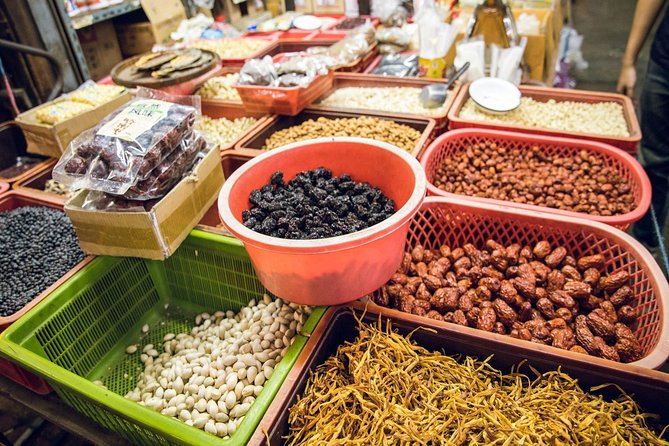
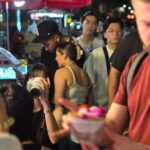
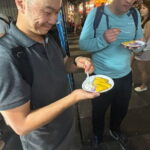
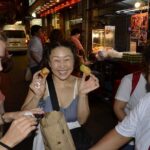
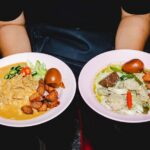
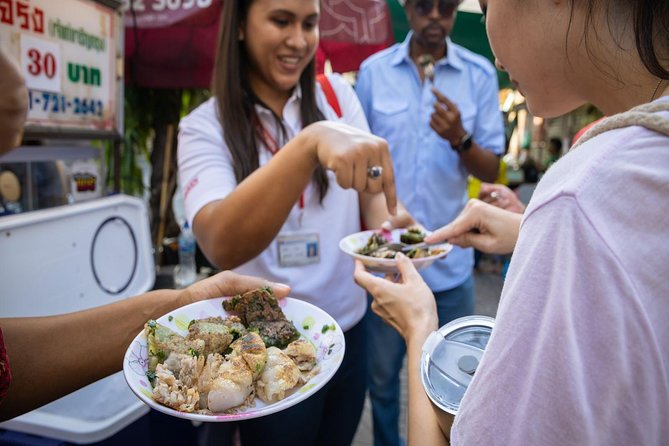
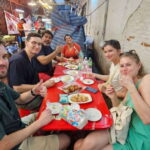
This is the heart of the tour: Thai and Chinese street food samples included along the route. The tastings are planned so you can try several dishes without having to figure out ordering on the fly.
You should expect classics like:
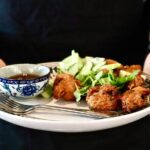
- Turnip cake (a Chinese dim sum dish)
- Chwee kueh (steamed rice cake served with preserved radish)
- Chao Tha (duck noodles soup)
- Phad Thai Uncle Pom (a named local noodle stop)
If you like variety, this works well. You are not trapped with one heavy dish for the whole tour—you get a sequence of small portions that lets you compare flavors: savory dim sum style items, chewy rice cake textures, and noodle soups with a more comforting, aromatic profile.
Your guide also matters here. Some guides, like Nana or Pam, are known for steering people toward what they can eat and handling pacing so you don’t feel rushed between stalls. With crowds, Gof is one example of a guide who kept the group moving and helped people stay together, including during hectic periods like Chinese New Year.
One more practical thing: you can request vegetarian options. If you plan to do that, provide your preference at least 24-hours before the tour.
Chinatown Crossing: Old Traditions Meet Modern-Day Influence
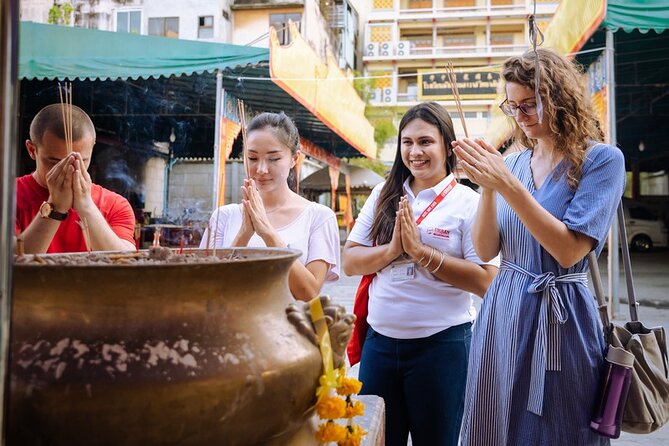
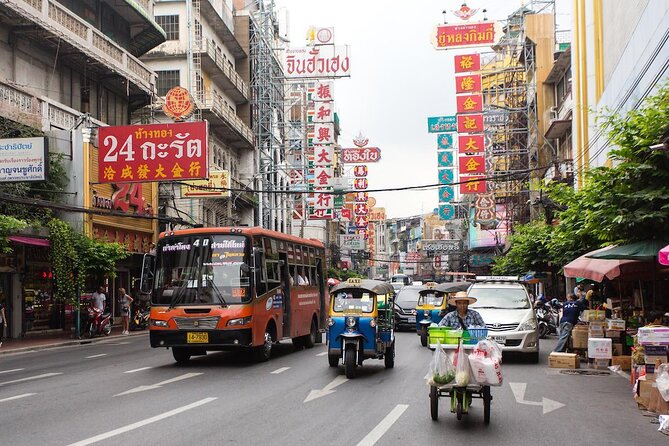
After Talad Noi, you cross into Chinatown, described as the largest Chinatown in the world. This is where the neighborhood grows louder and more packed, and where you see modern influences stitched into historic streets.
This part can feel overwhelming if you try to walk it alone. The tour makes it workable by giving you a route and a rhythm—what to look at, where to stand, when to move, and how to navigate the densest blocks without losing your group.
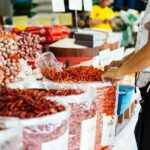
Chinatown is also where you start noticing the details that take time to spot: shop signs, product displays, and the mix of food, goods, and everyday errands. You’re not only eating. You’re also learning how the district sells, cooks, and lives.
And yes, in busy periods you may hit crowd flow changes. On times like Chinese New Year or other city-wide schedule shifts, you might spend more time on food and less time on certain side streets, but the tour stays focused on the tasting goal.
Wat Mangkon Kamalawat: The Finish Point and the Last Look at the Area
The tour ends around Wat Mangkon Kamalawat. The timing here works well: you finish in a central area where it’s easier to continue your day, head for dinner, or connect onward using nearby transit.
If your route includes extra time around nearby market energy, you’ll understand why people get excited about the flower-market buzz in this part of town. Even when the exact side stops vary, you usually leave with a strong sense that the end of the walk is where the district feels most alive.
This is also a good moment to ask your guide for last-minute ideas. Part of the value is that you don’t just get a route—you get suggestions for what to do next in Chinatown or elsewhere in Bangkok.
How the Small-Group Size Changes Everything (and How Far You’ll Walk)
This is capped at 12 travelers, which usually means your guide can manage pace without losing people. You also get time to ask questions, not just watch quietly while someone else orders.
The walk covers about 2 km (1.2 miles). That’s not far on paper, but it does include stop-and-go standing time for tastings, plus the fact that sidewalks in these neighborhoods are not always smooth.
If you have mobility limits, plan carefully. Some folks found the walking amount a lot for longer periods, especially when rain shows up or when crowds slow movement. I’d call it moderate, not effortless. Bring shoes you trust, and plan on being on your feet.
The guide experience can also be the difference between a good tour and a great one. Names that show up with memorable customer notes include Dong, Joe, Nop, and Pam—all described as energetic, helpful with English, and quick to handle weather or navigation problems.
Price and Value: What $42.48 Buys You in Real Terms
At $42.48 per person, this tour costs about the same as a decent paid activity plus a couple of meals in Bangkok. The real value is that the price bundles multiple things:
- guided walking through two neighborhoods
- visits to Holy Rosary Church and Chow Sue Kong Shrine
- street-food tastings included
- tips for what to see and eat after
You’re also not paying extra for every stop. In Bangkok, food can be cheap, but having someone handle ordering and pacing saves time and makes the tasting more intentional.
Booking tends to be done in advance (around 29 days on average). That’s a sign it’s popular for a reason: short duration, easy concept, and a focused set of tastings and landmarks.
When This Tour Is the Right Fit (and When It Might Not Be)
This tour is ideal if you want:
- a guided first introduction to Talad Noi + Chinatown
- a manageable walking plan that still feels like you went somewhere meaningful
- a food sampler approach with specific dishes included
- help navigating crowds and busy streets
It may be less ideal if:
- you want a slow, shopping-heavy wander where you can browse every stall for 20 minutes at a time
- you need lots of long indoor time or expect quiet streets all evening
- you are very sensitive to walking and standing, since you will be on foot most of the tour
Some departures can shift when streets close for reasons outside the guide’s control, like city celebrations. On those days, the experience can tilt more toward eating and less toward sightseeing. I’d treat that as a normal Bangkok variable rather than a failure of the tour.
FAQ
FAQ
What time does the tour start?
The start time is 4:00 pm.
Where do I meet the guide?
You meet at River City Bangkok (Si Phraya area), specifically at River City Gate 1 in front of Starbucks on the 1st floor.
How long is the tour?
It runs about 2 hours 30 minutes (approx.).
What food is included on the tour?
Food samples included include turnip cake, chwee kueh, Chao Tha (duck noodles soup), and Phad Thai Uncle Pom, along with other Thai and Chinese street-food samples.
Can the tour accommodate a vegetarian diet?
Yes. Vegetarian options can be catered for if you provide your dietary requirement at least 24 hours prior to your travel date.
How much walking is involved?
The tour covers about 2 km (1.2 miles) of walking.
Should You Book This Bangkok Chinatown, Talad Noi & Street Food Tour?
If you want an efficient, guided way to understand Bangkok’s Chinese neighborhood culture while eating your way through it, I’d book this. The combo of Holy Rosary Church, Chow Sue Kong Shrine, and multiple included street-food tastings makes it more than a casual stroll.
I’d especially recommend it for first-timers who feel overwhelmed by Chinatown on their own. Even if crowds or closures change a few streets, the structure stays food-focused and guided, with enough landmarks to make the whole walk feel purposeful.
![[Hi-end] Private Hanoi Street Food Tour With Real Foodie - Lunch at 11:30 vs dinner at 18:00: timing that actually matters](https://b2.foodtourer.com/wp-content/uploads/hi-end-private-hanoi-street-food-tour-with-real-foodie-400x267.jpg)