REVIEW · BANGKOK
Flavors of Bangkok: Small-Group Chinatown Evening Food Tour
Book on Viator →Operated by Taste of Thailand · Bookable on Viator
Chinatown is a different city at dinnertime. This small-group walk in Bangkok’s Chinatown lets you taste Thai-Chinese classics while your guide threads in the neighborhood history. I love the cap of 10 people because you get real attention, not just a line moving through alleys. On recent nights, guides such as Katy, Bella, Ohm, Jung, Jah, Joker, and Thee have led groups, and that kind of experience matters when you’re eating your way through a crowded maze.
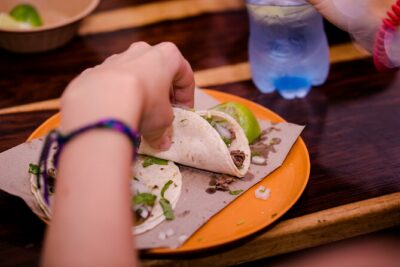
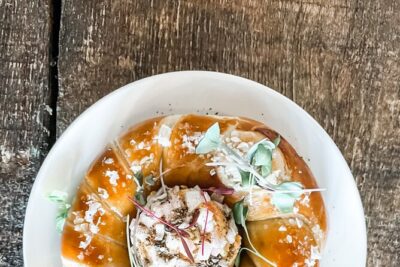
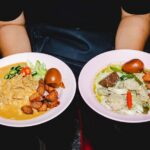
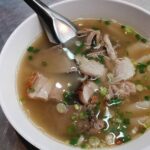
My favorite part is the tasting format: frequent stops where you try both savory and sweet. You might sample things like dim sum, dumplings, peppered pork noodles, coconut drinks, and more, plus memorable dishes that show up in this area such as pork pepper noodle soup and fried oysters omelettes. I also like how the guide explains what you’re eating and why it fits Thai-Chinese Chinatown life.
One consideration before you book: the tour states it cannot accommodate gluten-free, halal, vegan, or vegetarian diets. Also, this is a walking tour with no strollers allowed, so comfortable shoes are not optional.
In This Review
- Key points I’d circle before you go
- Chinatown After Dark: Why This 5:30 pm Start Works
- Small Group, Real Guide, Less Guessing
- Wat Mangkon to the Big Chinatown Gate: Your First Taste Hits Fast
- What makes this early segment valuable
- Potential downside
- Yaowarat Road: The Street Where Thai-Chinese Food Gets Personal
- Why walking Yaowarat is different than eating in a single restaurant
- The Tasting Rhythm: How the Tour Avoids Food Overload (Usually)
- How your guide helps with the menu
- Price and Value: Is $104.28 a Good Deal?
- Food, Dietary Limits, and How to Plan Without Stress
- What I suggest doing
- What You’ll See Besides Food
- Who This Tour Suits Best (and Who Might Skip)
- Quick Practical Tips Before You Go
- Should You Book Flavors of Bangkok: Chinatown Evening Food Tour?
- FAQ
- How long is the Chinatown evening food tour?
- What does the tour include?
- Where do I meet, and what time does it start?
- Is hotel pickup and drop-off included?
- How many people are in the group?
- Can I get gluten-free, halal, vegan, or vegetarian options?
- FAQ
- Is there a minimum age for this tour?
- Are strollers allowed?
- What’s the cancellation rule?
Key points I’d circle before you go
- Up to 10 people means you can ask questions and slow down when you find a stall you love.
- Thai-Chinese history while you eat helps the food make sense, not just taste good.
- Meeting at Wat Mangkon (start 5:30 pm) puts you right at the Chinatown action as it powers up for the evening.
- Food and beverages included turns the price into a “you eat a meal’s worth” kind of deal.
- Dietary limits are strict (gluten-free/halal/vegan/vegetarian not accommodated), so plan accordingly.
- Expect lots of walking through alleys, markets, and small shops.
Chinatown After Dark: Why This 5:30 pm Start Works
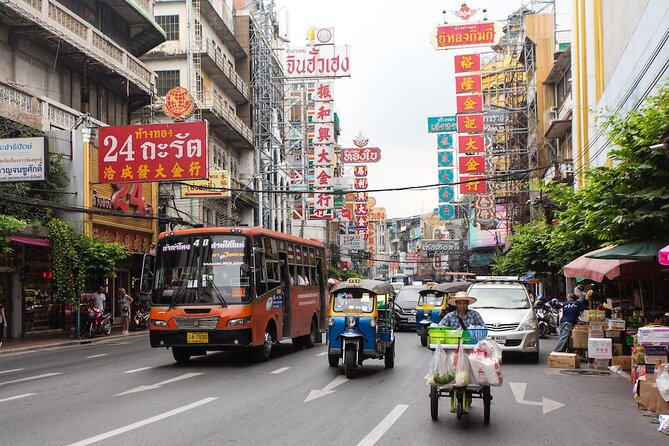
Bangkok’s Chinatown is one of those places where daylight is busy, but night is the real show. You start at 5:30 pm around the Wat Mangkon area, and that timing matters. Shops are open, kitchens are firing up, and the street food energy is at its best.
This tour also starts right where you want to be: you’re meeting at Wat Mangkon and then heading into Chinatown’s streets. The neighborhood has been a hub for the Thai-Chinese community for more than two centuries, so you’re not just tasting food. You’re tasting history, told in practical, everyday terms as you walk.
If you’ve ever tried to “just figure it out” in Yaowarat on your own, you know the problem. The choices are endless, but the context is missing. This tour gives you both: you get a route through the densest areas and guidance on what to eat at each stop.
You can also read our reviews of more food & drink experiences in Bangkok
Small Group, Real Guide, Less Guessing
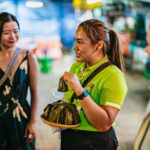
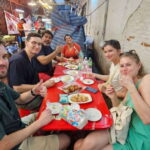
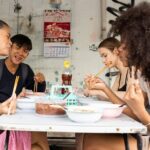
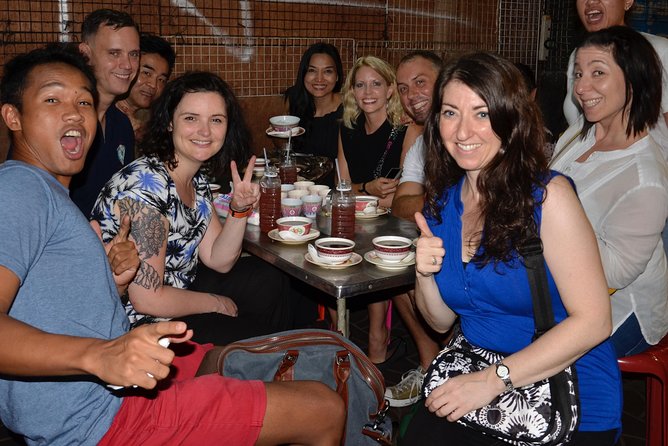
The most noticeable difference here is the group size: maximum 10 travelers. In a place like Chinatown, smaller is better. You can hear your guide, ask what something is, and adjust on the fly if the vibe or spice level isn’t your thing.
You also get tastings across multiple types of places. This isn’t a single restaurant meal. It’s a mix of food stalls, restaurants, markets, and small shops, which is exactly how local eating works. When you only pick one spot, you miss half the story.
Another plus: the tour is led by a professional guide who clearly enjoys food. The guides named in past groups (Katy, Bella, Ohm, Jung, Jah, Joker, Thee) all point to the same thing: they’re not reciting Wikipedia. They’re guiding you from stop to stop with food that actually fits the neighborhood.
Wat Mangkon to the Big Chinatown Gate: Your First Taste Hits Fast
At the start, you’ll begin by walking through the Chinese community and sampling 2–3 Thai-Chinese foods right away. That fast first bite is smart. It gets you into the rhythm of the area before you’re ten streets deep.
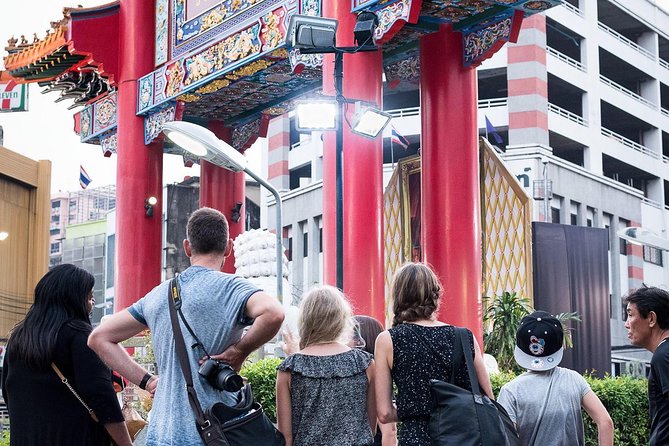
You’ll also pass major visual landmarks as you move through the Chinatown streets, including the red huge Chinese Architecture Gate on the Mittaphap Thai-China roads. Even if you only have a short time in Bangkok, it helps to see that you’re not wandering in a random food district. This area has identity—architecture, street layout, and food culture tied together.
What makes this early segment valuable
- You get oriented quickly. Your guide helps you understand what you’re seeing while you’re still fresh.
- You start tasting while the neighborhood is at peak evening energy.
- You build confidence for later stops, so you’re not just following along.
Potential downside
Because this is a walking food tour, you’re stacking sensations early—smells, crowds, heat, and noise. If you’re sensitive to crowds or strong aromas, give yourself a moment to settle in after the first few minutes.
A few more Bangkok tours and experiences worth a look

Yaowarat Road: The Street Where Thai-Chinese Food Gets Personal
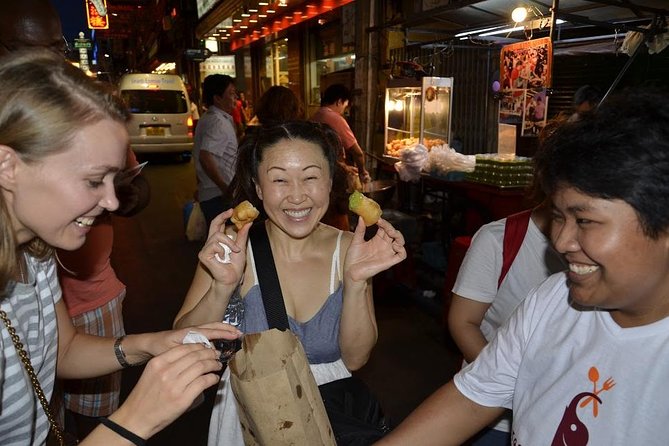
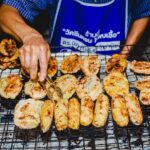
One of the main legs is along Yaowarat Road. This section is where the tour leans into classic Chinatown flavors, with your guide taking you to several Thai-Chinese food stops. The goal is variety: both savory and sweet, and often dishes that don’t show up on a typical tourist food crawl.
You can expect tastings that line up with what this neighborhood does well, such as:
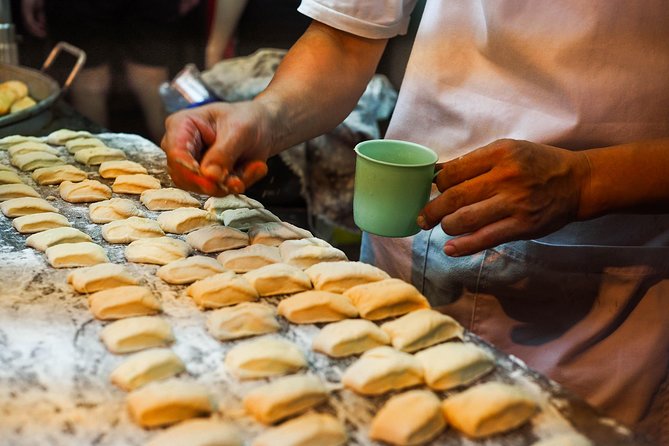
- Dim sum and dumplings
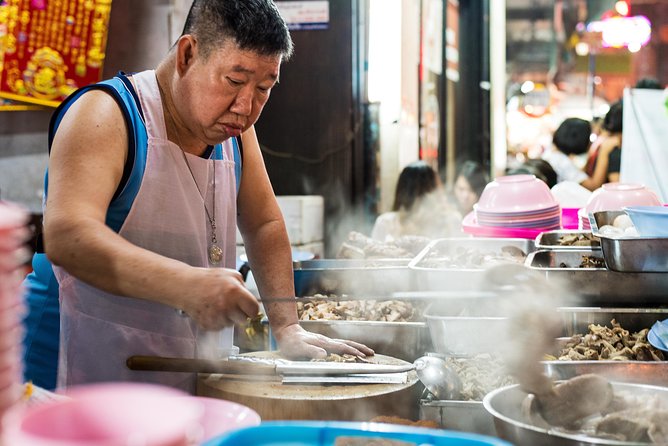
- Peppered pork noodles (and similar noodle dishes)
- Coconut drinks
- More desserts and small bites over the evening
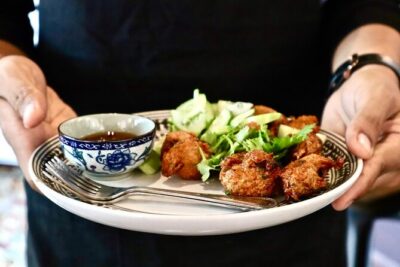
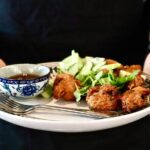
From guide-led experience in past groups, dishes like pork neck and chili salad and pepper soup show up as favorites. Fried items also get attention in Chinatown, including fried oysters omelette. The sweet side matters here too—snacks and desserts appear as you move along.
Why walking Yaowarat is different than eating in a single restaurant
Thai-Chinese Chinatown food is meant to be sampled, not ordered all at once. Street stalls and small eateries let you taste textures and styles that you’d miss if you sat down for one big meal.
And because you’re walking, your guide can adjust based on what you like and what’s available that night. The tour also notes that venues and menu items may be substituted due to seasonal or unexpected changes, so the guide is working the plan in real time.
The Tasting Rhythm: How the Tour Avoids Food Overload (Usually)
The tour runs about 4 hours and ends back around the Chinatown area at a central point with easy access to public transportation. In practice, that means you’ll eat over time, not in one heavy chunk.
Most people leave stuffed. Past guests have called out that you get the equivalent of a satisfying meal by the end, and that there are enough stops to keep you busy from savory to sweet. One pro-tip I’d give you: pace yourself early. If you eat every sample the same way, you’ll run out of room fast. Drink water between tastings, and save your favorites for when you’re sure you still have an appetite.
How your guide helps with the menu
Your guide will frequently tell you what you’re eating and where the dish fits in Thai-Chinese food culture. That context helps you decide. If you tell the guide what you do and don’t want, they can steer you through options that still fit the flow.
One small practical note: you’ll want to go in hungry, but not starving. If you arrive starving, the first couple of stops can feel like shockingly intense flavors and spice.
Price and Value: Is $104.28 a Good Deal?
At $104.28 per person, this is not a “cheap street snacks” tour. But it often works out as good value because your cost is bundled into what makes Chinatown hard to do alone:
- Professional guide to find the right places
- Food tasting across multiple venues
- Beverages included
- A route that saves you time in an area where getting lost is easy
If you went solo, you’d still spend money on multiple dishes and drinks. The difference is you’d be doing it without guidance on what’s worth trying, which can lead to awkward missteps—like ordering something you don’t enjoy because you can’t tell what it is.
This tour is also small-group, which typically costs more than large-bus-style food tours. Here, that smaller group size is part of the value, because it affects pacing and how easily you can ask questions at each stop.
My practical take: If you like street food and you want to understand the Thai-Chinese side of Bangkok, this price can feel fair. If you only want one or two snacks and you already know what to hunt down on your own, the value drops.
Food, Dietary Limits, and How to Plan Without Stress
Here’s the big reality check. The tour states that at this time it cannot accommodate gluten-free, halal, vegan, or vegetarian diets. That’s the clearest information you have about limitations, and you should treat it seriously.
Some guides may be able to work with certain preferences, and you might find options like tofu offered in some cases. But the official stance is still that these diets can’t be accommodated. So don’t assume you’ll be able to eat the full menu.
What I suggest doing
- Indicate dietary requirements at the time of booking, not after you meet your guide.
- Have a Plan B mindset. If your diet can’t be fully met, you may still enjoy the experience through other foods, but your menu may be shorter.
- Ask about substitutions in a direct, simple way when you’re meeting. You don’t need to over-explain.
Also remember: strollers are not allowed, and there’s comfortable walking shoes recommended. If walking 4 hours through crowded alleys isn’t your thing, you’ll have less fun than you could.
What You’ll See Besides Food
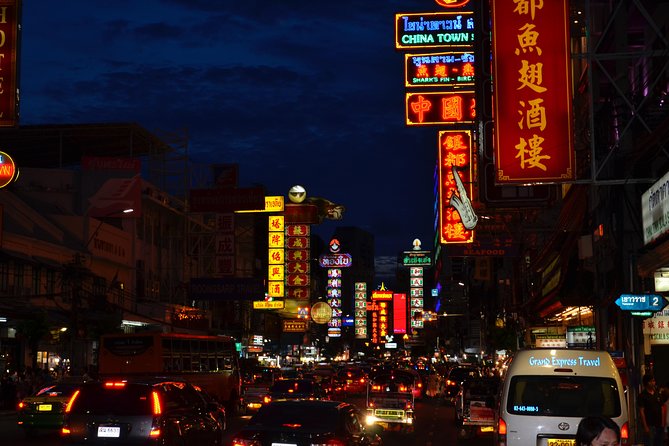
This tour isn’t only about eating. Chinatown at night has its own visual rhythm: dense streets, storefronts with handwritten-looking menus, and that strong Thai-Chinese identity.
You’ll also learn bits of history as you walk. The area has been a hub for the Thai-Chinese community for centuries, and the guide weaves that into the food you’re tasting. It helps you spot the logic behind why certain dishes show up together, and why the neighborhood feels the way it does.
Even if you don’t care about history, the storytelling helps you remember what you ate and where it came from. It turns random samples into a clearer picture of Chinatown life.
Who This Tour Suits Best (and Who Might Skip)
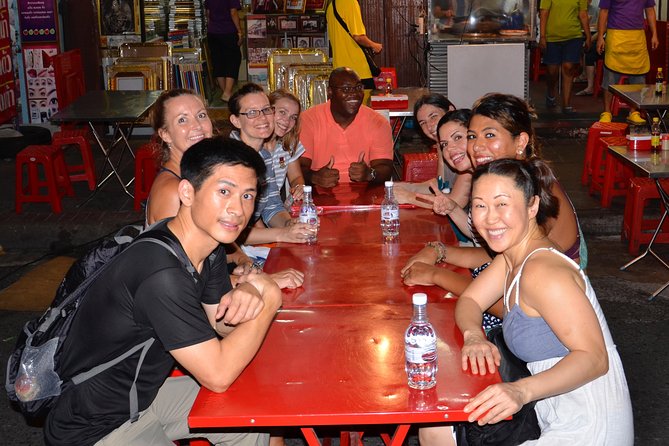
This tour is a great fit if you:
- Want a guided route through Chinatown instead of wandering and guessing.
- Like Thai-Chinese flavors and want a mix of savory plus sweet.
- Prefer smaller groups where the guide can actually interact with you.
- Are comfortable walking and eating over a full evening.
Consider skipping if you:
- Need gluten-free, halal, vegan, or vegetarian options (the tour says it can’t accommodate).
- Want a mostly seated experience. This is a walking tour through streets and small venues.
- Can’t do crowds. Chinatown gets busy quickly in the evening.
One more practical point: the tour ends in an area with public transportation options, and your guide can help you with directions to your next stop. That’s useful if you’re stacking Bangkok plans and want your night to keep moving.
Quick Practical Tips Before You Go
Here are a few things that make the whole night easier:
- Bring water and pace. The food adds up fast.
- Wear comfortable shoes you can walk in for hours.
- Plan for spice and strong aromas; Chinatown is not subtle.
- If there’s something you refuse to eat, tell your guide early and simply.
- If it rains, expect that your route and stop timing could shift. Chinatown evenings can be weather-dependent.
Should You Book Flavors of Bangkok: Chinatown Evening Food Tour?
I’d book it if you want the classic Bangkok Chinatown experience, but with less risk and more payoff. The main reasons are the small-group size, the mix of food stalls plus restaurants plus small shops, and the fact that your guide is giving context while you taste.
I would not book it if your diet needs gluten-free, halal, vegan, or vegetarian accommodations. The tour’s stated limitation is clear, and you deserve to spend your time eating, not hunting for options that aren’t guaranteed.
If you’re a street-food fan with a solid appetite and you want to understand Thai-Chinese Chinatown through actual dishes, this is a strong choice.
FAQ
How long is the Chinatown evening food tour?
The tour lasts about 4 hours.
What does the tour include?
It includes a professional guide, food tastings, and beverages.
Where do I meet, and what time does it start?
You meet at Wat Mangkon (start time 5:30 pm). The end point is also listed as Wat Mangkon.
Is hotel pickup and drop-off included?
No. Hotel pickup and drop-off are not included.
How many people are in the group?
The tour has a maximum of 10 travelers.
Can I get gluten-free, halal, vegan, or vegetarian options?
The tour information states that gluten-free, halal, vegan, and vegetarian diets cannot be accommodated at this time.
FAQ
Is there a minimum age for this tour?
The minimum age is 6 years.
Are strollers allowed?
No, strollers are not allowed on this tour.
What’s the cancellation rule?
You can cancel up to 24 hours in advance for a full refund. If you cancel less than 24 hours before the start time, you won’t receive a refund.