This walk hits a smart sweet spot: history in the street and Romanian food you can taste. I love the way Dan and Patricia tie the story of modern Romania to what you’re standing in front of, then slow down for real local bites. I also like that the group stays small (max 6), so you’re not lost in the crowd. One possible drawback: a couple of stops are short, and inside access at the Romanian Athenaeum depends on what’s allowed that day.
If you want a first evening in Bucharest that gives you your bearings fast, this is a strong pick. You start at 5:00 pm in the Old Center area, move through landmark buildings, and finish near Manuc’s Inn. The pacing is mostly steady, but it is still a walk—so if you get cold easily, bring layers.
In This Review
- Key Things I’d Put On Your Radar
- Old Town at 5 pm: How the timing helps
- Roman Athenaeum: A fast look inside one of Bucharest’s showpieces
- Memorial of Rebirth: Short stop, strong story beats
- Stavropoleos Monastery: The inside visit that feels different
- Manuc’s Inn: Where history meets a real eating break
- Capsa Pastry and the CEC bank: sweet finish plus a quick style check
- Food and history together: Why this pairing is worth your time
- Price and value: Is $108 really fair?
- Pacing, comfort, and how to get the most from it
- Who this Bucharest historical food tour suits best
- Should you book this Old Center food-and-history tour?
- FAQ
- What is the duration of the Bucharest Historical Food Tour in the Old Center?
- How much does the tour cost?
- What time does the tour start, and where do I meet?
- Where does the tour end?
- What language is the tour offered in, and what kind of ticket do I get?
- What does the tour include in terms of admissions?
Key Things I’d Put On Your Radar
- Dan and Patricia’s history-meets-food pairing: one guide covers the past, the other drives the dining side.
- Romanian Athenaeum stop with a quick inside visit if entrance is open that day (ticket included).
- Stavropoleos Monastery visit inside, including time to see the monastery area where ten nuns live.
- Manuc’s Inn (Hanul lui Manuc): you get the feel of Bucharest’s old restaurant tradition around its interior garden.
- Capsa Pastry candy tasting at one of Bucharest’s classic confectionery addresses.
- Max 6 travelers: easier questions, less waiting around, and a more personal rhythm.
Old Town at 5 pm: How the timing helps
This tour runs for about 2 hours 30 minutes and starts right when Bucharest’s center looks good for walking—5:00 pm. That matters because you’re spending your best daylight-ish time getting photos and reading the architecture, then you shift into the food portion without the whole evening feeling rushed.
The meeting point is Strada Benjamin Franklin, Buchurești, and you end at Piaţa Sfântul Anton 66, near Manuc’s Inn. The route is described as near public transportation, which is handy if you want a stress-free arrival plan.
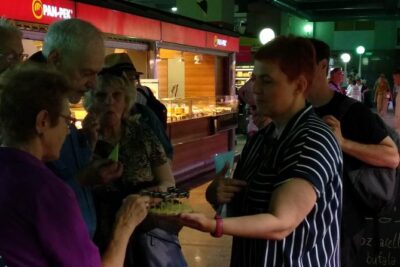
The vibe is small-group and conversational. The guides, especially Dan and Patricia, seem to treat the evening like a guided night out: you learn, you taste, and you can keep asking follow-up questions. In one case, a map mix-up happened for a guest; the team resolved it quickly through WhatsApp, which tells me they’re paying attention to the small stuff that can break your start.
You can also read our reviews of more food & drink experiences in Bucharest
Roman Athenaeum: A fast look inside one of Bucharest’s showpieces

Your first stop is the Romanian Athenaeum, built in 1888. It’s one of those Bucharest buildings that makes you stop mid-walk—even if you only see the exterior, it sets the tone for the city’s mix of ambition and style.
What I like:
- You’re given a 15-minute stop with an admission ticket included.
- The guide can help you read the building quickly instead of just pointing and moving on.
What to consider:
- The plan includes a visit inside if entrance is allowed that day. So don’t assume you’ll definitely go in. If the doors are closed, you still get a meaningful orientation outside, but your time inside won’t be guaranteed.
This is a good opener because it pairs perfectly with what Dan tends to do on these walks: connect the architecture to the larger story of where Romania was heading. If you’re curious how Bucharest looks so different block to block, starting here helps your brain lock onto the clues.
Memorial of Rebirth: Short stop, strong story beats
Next you walk to the Memorial of Rebirth, where you’ll get about 15 minutes of explanations. The focus is on several Revolution-related touchpoints: the Royal Palace, the Balcony where the Revolution started, and the Statue of King Carol.
This is the kind of stop that works best when you let the guide do the connecting. It would be easy to treat it like a quick photo moment, but the point here is the meaning behind what you’re looking at. You’re learning how political change translates into specific places you can stand at.
Possible drawback: because the stop is time-limited, the explanations are more “clear and focused” than “slow and textbook.” If you like to linger, you may want to come back later on your own for a longer look.
Stavropoleos Monastery: The inside visit that feels different
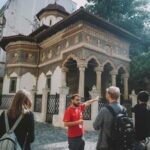
The Church of the Stavaropoleos Monastery stop is where the tour’s tone shifts. You get 10 to 15 minutes and—unlike some exterior-only photo stops—this one is designed for a real interior look. Admission is free.
What makes it special here is the detail that it’s not just an old building. There are ten nuns who live there, and you can see parts of the monastery interior during your visit. That kind of information changes how you view the space. You’re not just sightseeing; you’re walking into an active religious environment.
I’d also call out the pacing: it’s short enough that it doesn’t drag, but long enough that you can actually take in the interior without feeling rushed.
One consideration: monastery spaces can mean quieter behavior and less “tour group chaos” inside. That’s a good thing. It also means you should be ready to move gently and listen.
Manuc’s Inn: Where history meets a real eating break
The route then heads to Manuc’s Inn (Hanul lui Manuc). This is one of Bucharest’s oldest restaurant traditions, and the stop is framed around its interior garden. It’s described as a place that almost all tourists visit in some form, which tells you two things: it’s central to Bucharest’s culinary identity, and it’s also a place that’s likely to be recognizable on your later walks.
On a practical level, Manuc’s Inn is a smart location for the tour’s food component to fit. Your overall duration includes travel and the food stop where you eat, and the Manuc’s Inn area is perfectly positioned for that.
Here’s what you can generally expect for the food side based on how the tour has been experienced:
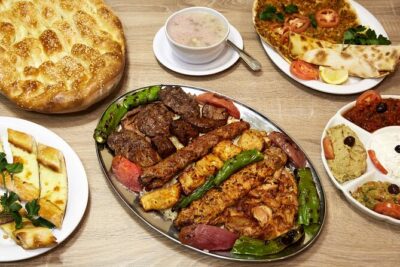
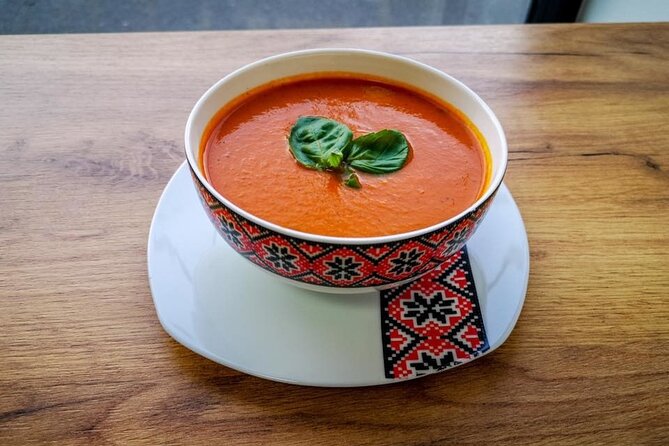
- A mix of sweet and savory bites, including donut-like pancakes with savory and sweet fillings.
- A more substantial local plate appears during the food portion—one guest described sausages with chips as part of the meal.
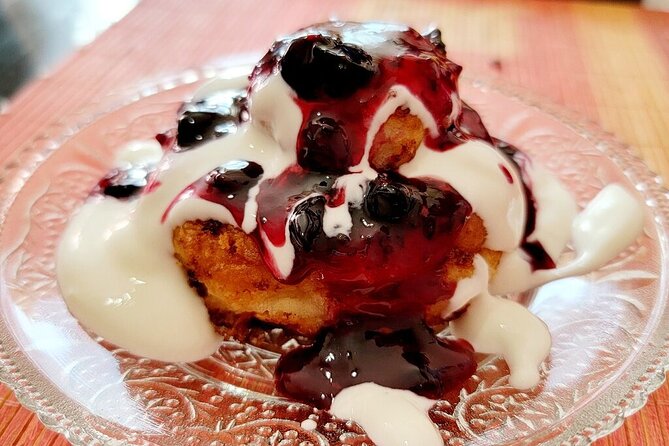
- Dessert shows up too, with another donut-style treat plus cream and plum-type compote.
One really useful note for dietary needs: if you don’t eat meat, you might find options such as chicken livers or chicken soup were offered in at least one case. That doesn’t mean every option is guaranteed for every diet, but it does suggest the guides can adapt within Romanian menu reality.
The main drawback for some people is also the main strength: you can leave feeling stuffed. One review even said they were struggling by the end. If you show up starving, it’ll be great. If you snack earlier, you may want to save room.
A few more Bucharest tours and experiences worth a look

Capsa Pastry and the CEC bank: sweet finish plus a quick style check
After Manuc’s Inn, you get a 5-minute stop at the headquarters of CEC, described as the oldest bank in Romania with a French style and built in the 19th century. Think of this as a brief architecture punctuation mark—enough to notice the style, not enough to turn your evening into a bank museum detour.
Then comes Capsa Pastry, where you’ll do candy tasting. This is guided like a palate break, not like a rushed grab-and-go. Capsa is described as Bucharest’s oldest and most elegant confectionery, so the stop gives you a small taste of old-school elegance—sugar, nostalgia, and the kind of place that has history even if you never read a plaque.
These final moments are a nice way to end because you finish with something fun and easy to remember. If your brain is already full of Revolution-era details, dessert helps it all land.
Food and history together: Why this pairing is worth your time
A lot of tours claim they mix food and culture. This one actually sounds organized around how your attention works.
- The history stops are brief but meaningful: Athenaeum for architecture, Memorial of Rebirth for political turning points, Stavropoleos for living heritage.
- The food stops act like “brain breaks.” You get sweet and savory bites at different points, so you don’t feel like you’re being marched from one monument to the next.
One of the strongest themes from real experiences with this tour is that the guides explain things in a way that makes modern Romania feel connected to what you see. Dan tends to handle the historical layer, while Patricia focuses on dining and local flavor choices. That split matters because it prevents the tour from turning into one long lecture. You’re learning, then tasting, then learning again.
Also, the small group size (max 6) helps. It’s easier to ask questions. It’s easier to follow along if you miss a word. And it’s easier for the guides to keep the pace humane.
Price and value: Is $108 really fair?
At $108.02 per person, this isn’t a bargain basement walking tour. But it’s not priced like a “tiny snack + quick photo” experience either.
Here’s what supports the value from the information you have:
- Duration is about 2 hours 30 minutes, with travel time included.
- Tickets are included for the Romanian Athenaeum stop, while other stops like Memorial of Rebirth and Stavropoleos Monastery are free.
- You get a sequence of food moments: candy tasting at Capsa, plus a larger food portion during the tour that can include savory items like sausage and sides, as well as dessert.
Where price can feel like a mismatch: if you expect a long sit-down dinner with lots of quantity. One person felt the food portion didn’t justify the cost on a cold night. That’s a fair reaction if you’re comparing against a full restaurant meal.
My practical take: this works best when you view it as a combined package—architecture + Revolution landmarks + monastery interior + multiple Romanian bites—with the price attached to that whole bundle, not just the carbs.
Pacing, comfort, and how to get the most from it
Most travelers can participate, and the tour is near public transportation, but you’re still walking in the Old Center for an evening block. I’d plan for cold weather if you’re going in shoulder season, because one guest described it as chilly and the food pacing still needs your focus.
How to get more out of it:
- Wear layers and shoes you can stand in comfortably for the whole loop.
- Bring a phone for photos, but keep your eyes up first. The best stories happen when you’re right in front of the building or statue.
- If you have dietary limits, be ready to describe what you avoid clearly. One review mentions meat-free guests were offered chicken livers or chicken soup, which suggests they do try to adapt.
Because you end at Manuc’s Inn, you’re also well-positioned to continue your evening nearby—coffee, a second sweet, or just a slow walk back through the streets you now recognize.
Who this Bucharest historical food tour suits best
This tour is especially good if you:
- Want a first evening in Bucharest that gives you a sensible storyline.
- Like the idea of history explained through places, not just through maps.
- Enjoy Romanian classics and sweets, and don’t mind leaving with a full stomach.
It’s also a good fit for couples or small groups since max size is 6 travelers. If you’re a solo traveler who likes conversation, it can feel friendly without being noisy.
If you hate short stops and prefer long museum time, you might find the schedule tight. But if you like a guided route that helps you understand what you’re seeing, it’s a strong match.
Should you book this Old Center food-and-history tour?
Yes—if you want a memorable first look at Bucharest that blends Romanian architecture, Revolution-era context, a working monastery interior, and multiple local tastes. The fact that it runs with a small group, in English, and includes Romanian Athenaeum admission makes it a practical value when you add up the stops.
Think twice if you’re chasing only food quantity or you’re extremely price-sensitive. This is a guided experience where the meal portion is part of the story, not the entire story.
If you can go on a day when the Athenaeum interior visit is allowed, even better. And if you’re excited by the idea of learning why Bucharest looks the way it does—while tasting what Bucharest tastes like—this one is easy to recommend.
FAQ
What is the duration of the Bucharest Historical Food Tour in the Old Center?
The tour lasts about 2 hours 30 minutes, and the total duration includes travel time between stops and the food stop where you will eat.
How much does the tour cost?
The price is $108.02 per person.
What time does the tour start, and where do I meet?
The start time is 5:00 pm. You meet at Strada Benjamin Franklin, București, Romania.
Where does the tour end?
The tour ends at Piaţa Sfântul Anton 66, București 030167, Romania, near Manuc’s Inn.
What language is the tour offered in, and what kind of ticket do I get?
The tour is offered in English, and you receive a mobile ticket.
What does the tour include in terms of admissions?
Admission is included for the Romanian Athenaeum stop (subject to entrance being allowed that day). Other mentioned stops—Memorial of Rebirth, Stavropoleos Monastery, and Manuc’s Inn—are described as free admission stops.