REVIEW · BUCHAREST
Traditions in Bucharest: Village Museum and Wine Tasting Tour
Book on Viator →Operated by Unveil Romania · Bookable on Viator
Romanian village life comes to Bucharest. In about 5 hours, you’ll see reconstructed homes from across Romania at the Dimitrie Gusti National Village Museum, then finish with a relaxed Romanian wine tasting that pairs nicely with cheese and charcuterie. I love that it’s led by a private licensed guide (Mihai, Mike, Emma have led this tour), so you’re not just reading plaques, and I also love the balance of culture plus food. One possible drawback: the day ends after the wine bar, so you’ll want to plan an easy way back or stick around a bit.
The museum is the heavy hitter: about 2 hours on foot in an open-air setting. If you want a slow, full-day museum experience, this tour is more of an efficient sampler, not a deep marathon.
In This Review
- Key Things That Make This Tour Worth Your Time
- How the Morning Sets You Up for Real Romania
- Dimitrie Gusti National Village Museum: More Than Old Houses
- The Craft Stop on Calea Victoriei: Local Tradition You Can Browse
- Old Town Timing: How the Wine Bar Stop Works in the Real World
- Price and Value: What You’re Actually Paying For
- Guides, English, and the Small Touches That Matter
- Who Should Book This Tour (and Who Might Skip It)
- Quick Tips Before You Go
- Should You Book Traditions in Bucharest: Village Museum and Wine Tasting?
Key Things That Make This Tour Worth Your Time
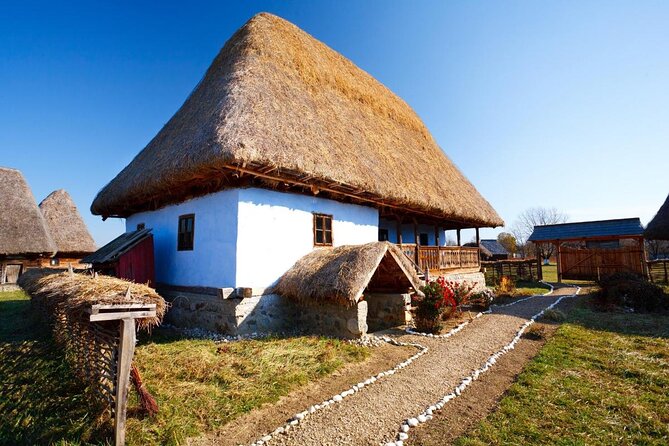
- National Village Museum buildings from multiple Romanian regions (Danube Delta, Moldavia/Wallachia, Transylvania) in one visit
- A private licensed guide who explains what you’re seeing, not just where it is
- Handmade craft stop on Calea Victoriei, with items like ie blouses, Horezu pottery, and glass-painted icons
- Dealu Mare wine focus plus Romanian grape varieties like Feteasca Neagra and Negru de Dragasani
- 3 glasses of wine with a cheese and charcuterie plate, so you’re tasting with something to eat
- Free hotel pickup and drop-off in an air-conditioned vehicle, which matters in Bucharest traffic
How the Morning Sets You Up for Real Romania
This tour works because it starts with the big idea: where Romania’s daily life came from. The National Village Museum is an open-air reconstruction of the traditional Romanian village, with buildings that reach back to the 17th century. So instead of learning Romania only through big city landmarks, you start with how people built homes, farmed, worshipped, and lived.
And then, halfway through the day, the tour shifts from architecture to objects you can hold in your hands. The craft stop gives you a sense of the visual “grammar” of Romanian tradition—pattern, color, woodwork, ceramics, and folk-style design—before you move into wine, where taste becomes the next language.
Finally, the wine bar stop isn’t just a pour-and-go. It’s designed around a regional story—especially Dealu Mare, Romania’s most famous wine region—so the history you heard at the museum doesn’t vanish when the corks pop.
You can also read our reviews of more food & drink experiences in Bucharest
Dimitrie Gusti National Village Museum: More Than Old Houses
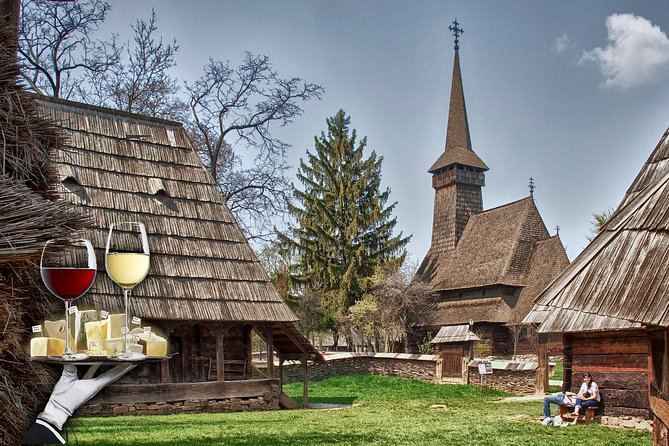
Your first stop is the Dimitrie Gusti National Village Museum, and it’s the part most people remember. You’ll spend about 2 hours here with a private guide, moving through village buildings that show different Romanian regions side-by-side. This is not one style of architecture. It’s a comparison lesson in wood, roofs, and community.
What I like about this stop is the variety. You can look for the reef-roofed houses tied to the Danube Delta. You can spot the simple and elegant forms associated with Moldavia and Wallachia. And if you’re drawn to details, the wooden carved facades of Transylvanian houses are the kind of things you’ll want to photograph even after your camera app begs you to stop.
The museum also includes more than houses. You may see elements like thatched barns, log cabins, watermills, windmills, wooden churches, oil presses, and even old-style road crucifixes. It’s a place where you can connect architecture to work—where people made food, processed oil, and used wind or water to power daily life.
Practical note: it’s open-air, so wear shoes you’re comfortable walking in. Reviews note a gentle-walker-friendly approach, and the tour can be adjusted to help your group see what matters without rushing you too hard. Still, you should expect some walking (the tour lists less than 1 mile total), and you’ll be outdoors for the museum portion.
The best value here: you’re not just seeing buildings. Your guide turns the museum into a map of how regional history shaped real homes.
The Craft Stop on Calea Victoriei: Local Tradition You Can Browse
After the museum, you shift to a local art and craft shop for about 30 minutes. The point isn’t to shop for an hour. It’s to witness tradition in production mode—handmade items, regional motifs, and folk craft types that many people never see up close in Romania.
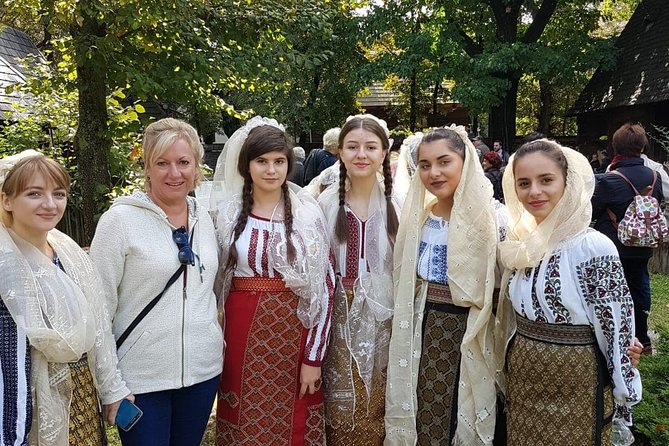
This stop includes items such as ie blouses (traditional Romanian embroidered clothing), glass painted icons, Easter-painted eggs from Moldavia, Horezu pottery from Wallachia, and wooden masks and trinkets linked to Transylvania. There are also smaller souvenirs that mix tradition with modern pop culture, including Dracula themed items and Romanian sweets like knot cookies and chocolate nuts.
The practical advantage: you can treat this as a low-pressure window to choose a gift or a memento. If you’re a careful spender, you can browse without feeling forced into buying, because it’s only a short stop.
The possible downside is also simple: you only get a brief taste. If crafts are your top priority, you may wish you had more time here. But as a “tradition reset” between the museum and wine, it’s a smart pacing move.
Old Town Timing: How the Wine Bar Stop Works in the Real World
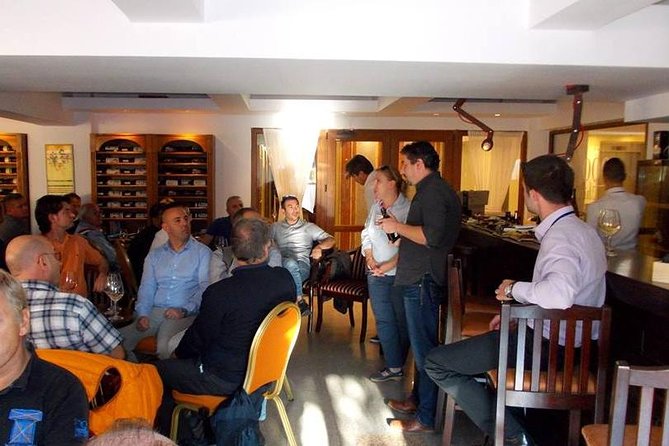
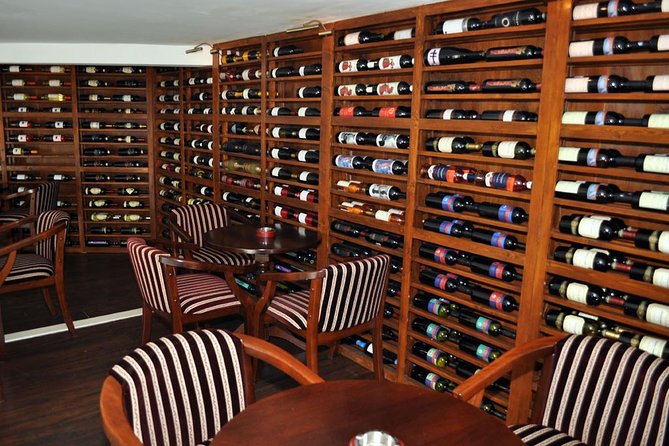
The final and longest part of your day is the wine bar stop, about 2 hours. The tour frames it with a food-and-wine idea: to understand a region, you try its flavors. And Romania’s winemaking tradition stretches back about 2,000 years, so the tastings aren’t presented as trendy novelty. They’re positioned as the continuation of a long craft.
At the wine bar, you’ll learn about the terroir of Dealu Mare, and you’ll hear about local wine history and varieties. The tour specifically highlights grapes like Feteasca Neagra and Negru de Dragasani.
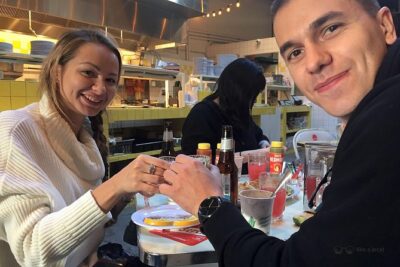
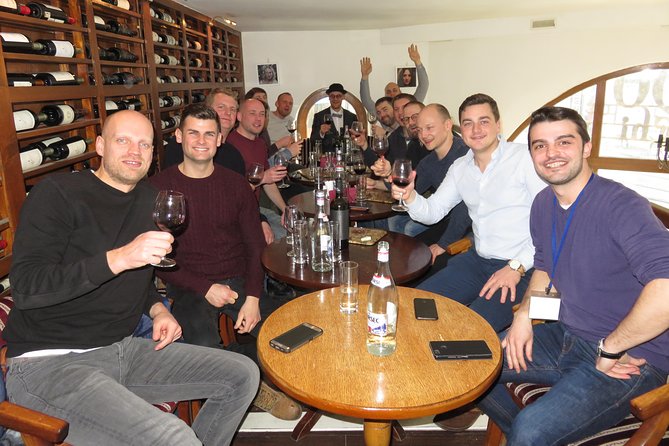
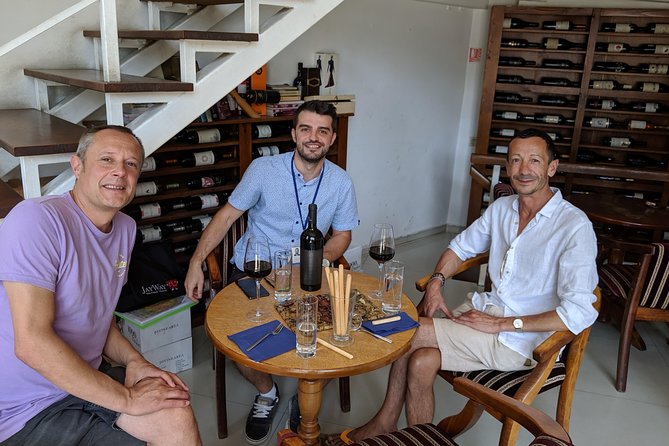
Then you’ll taste the wines: 3 glasses per person, plus a plate of traditional cheese & charcuterie. That food pairing matters. It turns wine tasting into an actual meal-style experience instead of standing around with tiny pours.
A useful reality check: alcohol is part of the deal, and the minimum drinking age is 18. If you’re traveling with a non-drinker, this tour may still be enjoyable for the museum and crafts, but the tasting portion would be a factor to consider. Also, keep an eye on your own pace. Bucharest’s city center can be lively, and the tour ends after the wine bar—so don’t plan anything complicated right after.
The tour ends near the Romanian Athenaeum area, on historic Victory Avenue, in walking distance of Old Town (about 15 minutes). If you want more time in the area, you can ask your guide for directions back to your accommodation or toward Old Town.
Price and Value: What You’re Actually Paying For
At about $148.19 per person for around 5 hours, this isn’t the cheapest thing you can book in Bucharest. But it also isn’t just a quick transfer with a casual stop.
Here’s what you’re paying for that feels real:
- Private licensed guide time (museum + context + wine explanation)
- Admission to the Village Museum
- Free hotel pickup and drop-off in an air-conditioned private vehicle
- Wine tasting with 3 glasses plus a cheese and charcuterie plate
- The itinerary is structured around three distinct “tradition signals”: architecture, craft, and wine
If you were to do these things separately, you’d likely pay for guide time, museum entry, and transportation anyway. The value is strongest if you like context—if you want someone to translate what you’re seeing, and to connect the museum to what happens later at the wine bar.
That said, if your ideal day is mostly wandering without organized structure, you may find the schedule a bit tight. Think of this as a curated overview with time to ask questions, not a free-form full-day exploration.
Guides, English, and the Small Touches That Matter
This tour is offered in English, and the private guide is the engine of the experience. The reviews attached to this tour name guides like Mihai Vataselu, Mike, and Emma, and they repeat a theme: guides explain more than facts. They use story and practical details to make buildings and tastes feel connected.
One review highlights something I’d pay attention to if you’re booking: even with a wrong address on an accommodation website, the guide handled it by checking your location and confirming pickup timing. That’s not glamour, but it’s the kind of competence you’ll appreciate when Bucharest traffic and street numbering can be unpredictable.
And in another review, the guide was flexible enough to help gentle walkers see as much as possible without pushing everyone too fast. That kind of attitude matters more than it sounds, especially at an open-air museum.
Who Should Book This Tour (and Who Might Skip It)
This is a great fit if you want:
- A history-and-culture day that doesn’t require you to plan every detail
- A museum experience that includes explanation, not just photos
- An easy way to sample Romanian wine without standing in a shop trying to decode labels
You might skip it if:
- You prefer a long, self-paced museum day over a structured 5-hour sampler
- You don’t want wine involved at all
- You want to end the day somewhere specific rather than near the city center by the Athenaeum area
Quick Tips Before You Go
- Wear comfortable shoes for the Village Museum. It’s outdoors.
- Bring a jacket if the weather feels cool—open-air spaces change temperature fast.
- If you’re traveling with someone who drinks less, eat slowly during the tasting so the cheese and charcuterie can do its job.
- Have your hotel details ready for pickup, especially if your booking confirmation might not match how GPS or your accommodation lists addresses.
Should You Book Traditions in Bucharest: Village Museum and Wine Tasting?
I’d book it if you want an efficient, well-structured taste of Romania that goes beyond surface sightseeing. The best part is the pairing: regional architecture at the Dimitrie Gusti National Village Museum, a short stop for handmade craft traditions, and then a wine bar that connects flavors to place, especially Dealu Mare.
If you’re the type who likes to ask questions—about why homes look the way they do, what a specific grape means, or how craft traditions show up in daily life—this tour rewards you. If your goal is maximum free time and minimal structure, look for a more open-ended option. But for most people doing Bucharest for the first time, this is a solid, high-value day with real personality.