REVIEW · CHIANG MAI
Chiang Mai: Walking Food Tour
Book on GetYourGuide →Operated by Secret Food Tours · Bookable on GetYourGuide
Three hours, and your taste buds will work overtime. This Chiang Mai Old Town walking food tour starts by the Three Kings Monument and strings together breakfast-style bites, sit-down comfort food, and a final temple stop with one surprise dish saved for the end.
I especially love how the tour focuses on Northern Thai flavors instead of only the usual tourist hits. And I really like that the guide work matters here too, with guides such as Varisa and Warat getting singled out for being friendly, helpful, and ready to adjust when the group is small.
One thing to keep in mind: this is a walking tour built around food stops, so you’ll want to be comfortable moving for about 3 hours and handling some serious chili heat if you order things spicy.
In This Review
- Key highlights at a glance
- Starting at Three Kings Monument: easy meet-up, easy momentum
- Banana leaf sticky rice and a temple stop that changes the vibe
- Chicken satay and peanut sauce: the benchmark you’ll compare later
- Northern Thai confidence: larb kua and sai ua
- Khao soi and pak boong: comfort food with structure
- Khanom krok and Thai sweets: coconut-rice pancakes with a second wind
- Butterfly pea ice cream, rice balls in coconut cream, and a secret dish
- Ending at Wat Lok Moli: walk it off in a charming temple setting
- What $53 really buys you: value in the number and variety of bites
- Who should book this tour (and who should skip it)
- Price and logistics in plain terms: make it easy on yourself
- Should you book the Chiang Mai walking food tour?
- FAQ
- Where do I meet the guide for the Chiang Mai food tour?
- How long is the walking food tour in Chiang Mai?
- What’s the price per person?
- Is there an English-speaking guide?
- What food and drinks are included?
- Is hotel pickup and drop-off included?
- Can the tour accommodate wheelchair users?
- What should I do if I have dietary requirements?
Key highlights at a glance
- Three Kings Monument meet-up with an orange umbrella so you don’t waste time hunting
- Banana leaf sticky rice breakfast as your opening move
- Northern Thai standouts like larb kua and sai ua, not just the basics
- Khao soi + pak boong pairing, plus Thai tea to balance the spice
- Sweet finish with butterfly pea ice cream, rice balls in coconut cream, and khanom krok
- A secret dish revealed only during the tour, which is half the fun
Starting at Three Kings Monument: easy meet-up, easy momentum
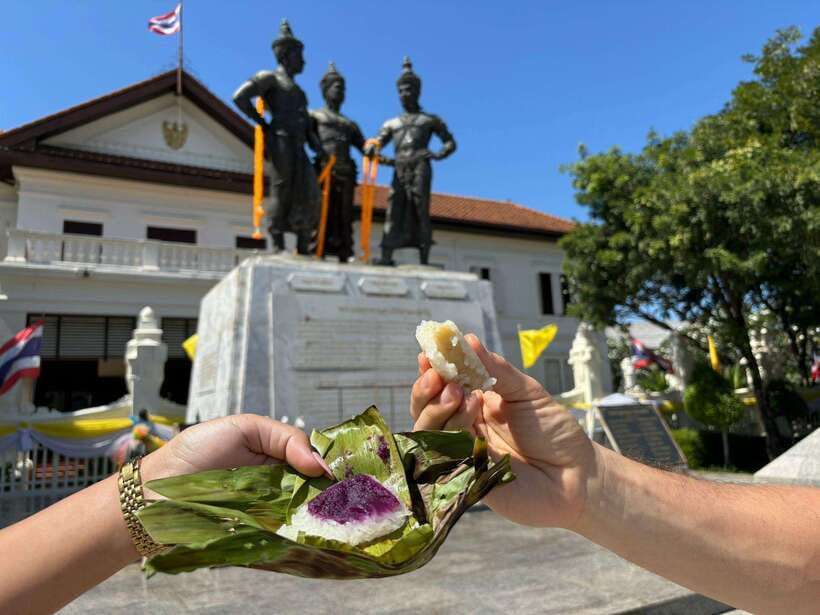
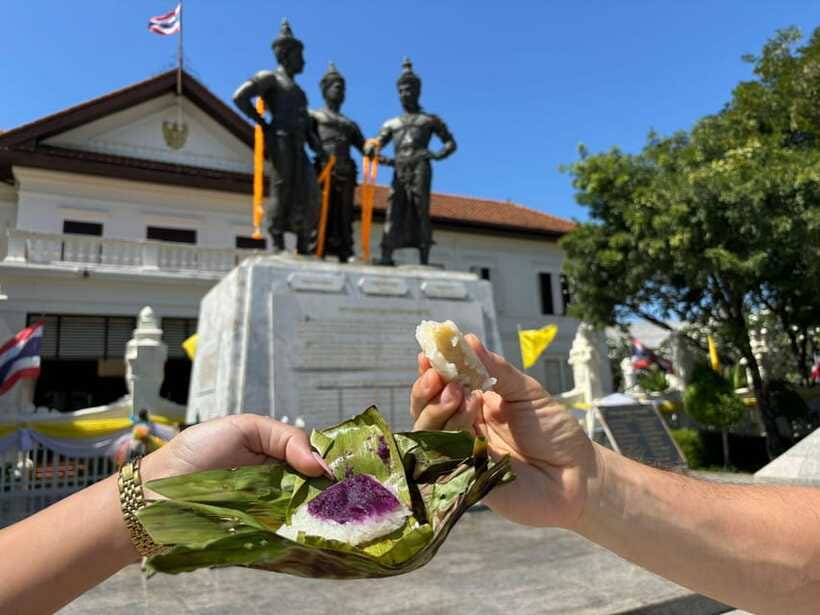
You’ll meet your guide right in front of the Three Kings Monument. The simple trick: look for the orange umbrella.
This matters more than it sounds. Chiang Mai’s Old Town has a lot going on, and a clear meet point keeps the tour from turning into the classic travel scramble. Once you’re with the guide, the pace feels organized: you walk, you eat, you learn just enough to make the next bite make sense.
Plan for about 3 hours total. It’s listed as a walking tour, and the schedule is built around multiple food stops, so wear comfortable shoes. If you’re sensitive to spices, it’s smart to say so early, because several dishes here are meant to be spicy by default.
You can also read our reviews of more tours and experiences in Chiang Mai.
Banana leaf sticky rice and a temple stop that changes the vibe
Before you start stacking the plates, the tour begins with a quick look around the Old Town area and then heads toward a temple stop described as a hidden-in-plain-sight kind of place. It’s a nice shift from street food energy into a quieter setting, which helps you focus on what comes next.
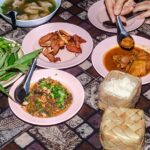
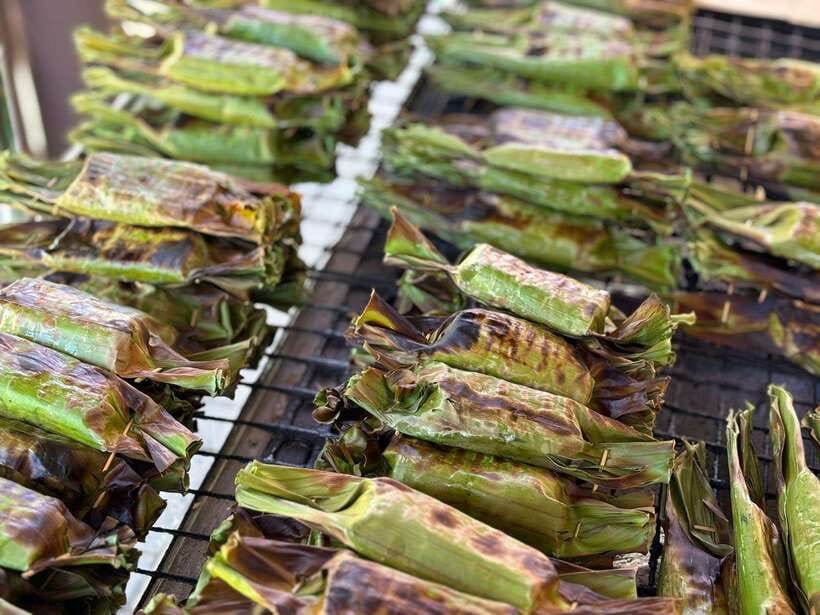
Then comes the classic Thai breakfast move: sticky rice expertly grilled in a fragrant banana leaf. The banana leaf flavor adds that extra layer you don’t get with plain steamed sticky rice. It’s the kind of opening bite that tells you the tour won’t just be “taste and run.” You’re getting small context on how Thai street food is actually built: smoke, aroma, and texture.
If you’ve never had grilled banana leaf sticky rice, try to eat it while it’s warm. The chew is part of the experience. If you’re already a sticky rice fan, you’ll still notice the banana-leaf aroma does most of the work.
Chicken satay and peanut sauce: the benchmark you’ll compare later
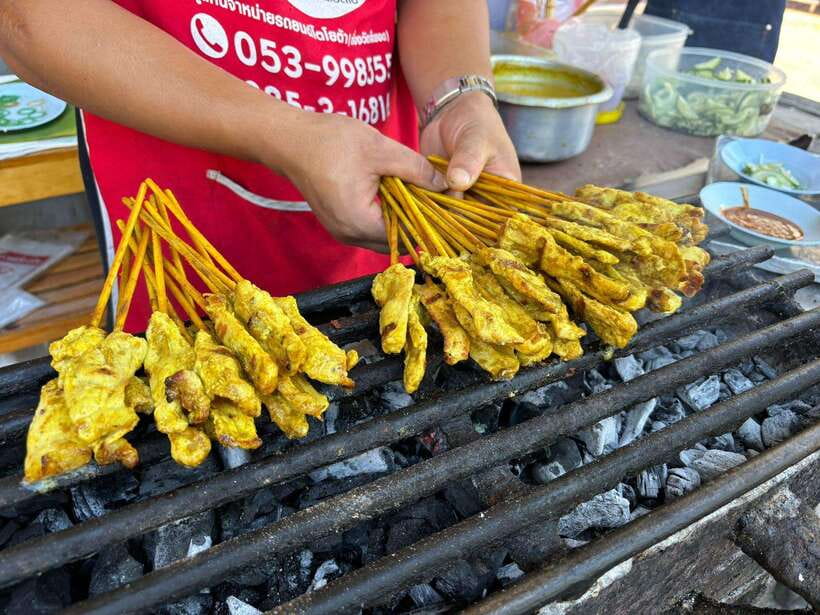
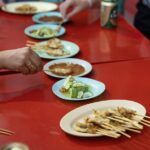
After the breakfast-style start, you’ll hit a classic: chicken satay skewers with iconic creamy peanut sauce.
Satay is popular across Thailand, so this stop works like a built-in flavor test. You’ll be able to compare what you’re tasting here with Bangkok-style satay later in your trip. More importantly, the peanut sauce isn’t just sweet and thick; it’s meant to be savory and creamy, with a roasted nut taste that clings to the meat.
Practical tip: take a slow bite, then let the sauce and char finish in your mouth. Satay isn’t a rush snack. It’s more enjoyable when you notice the contrast between smoky meat and the cool richness of the sauce.
Northern Thai confidence: larb kua and sai ua
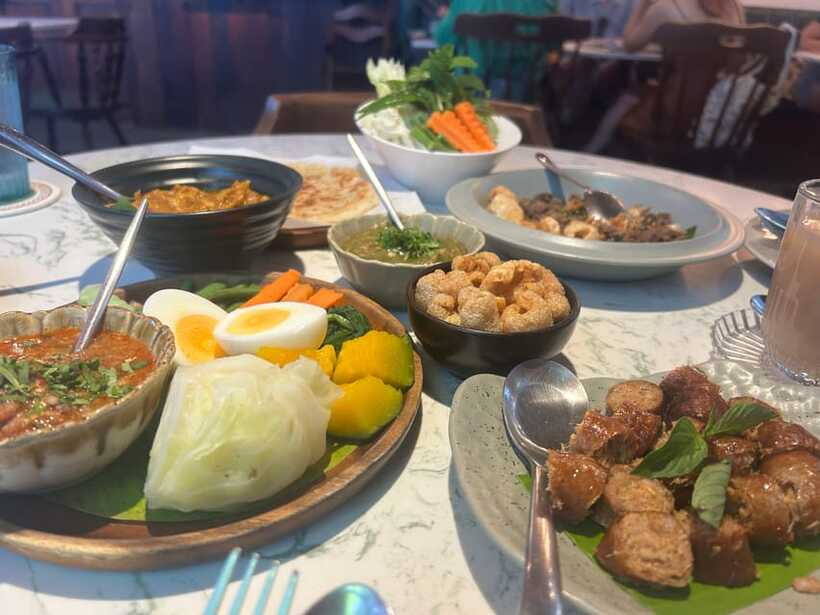
Now you start getting into the Northern Thai flavors that make Chiang Mai taste different from other parts of Thailand.
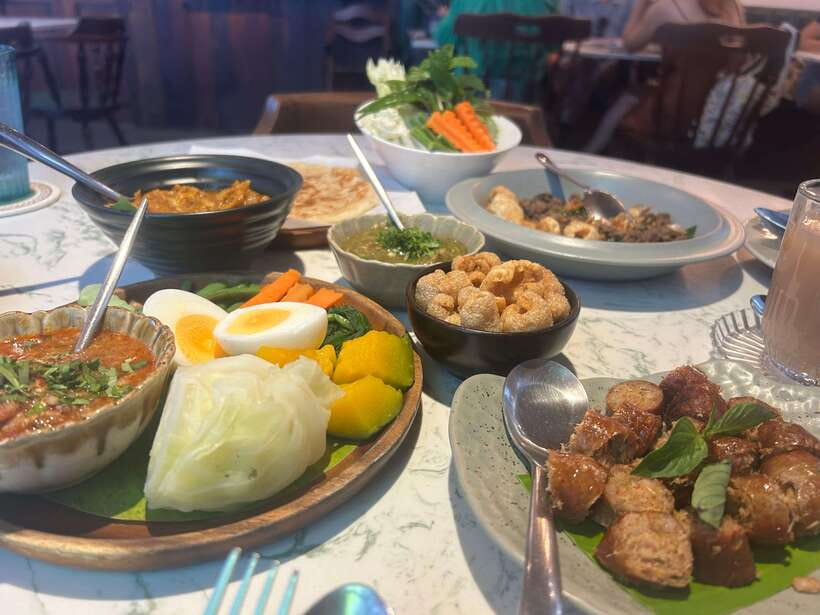
You’ll try lars kua, described as a spicy minced meat salad with roasted rice powder. That roasted rice powder is a key detail. It changes the texture and makes the dish feel toasted and layered, not just “spicy minced meat.” The salad style also keeps the flavors from getting heavy.
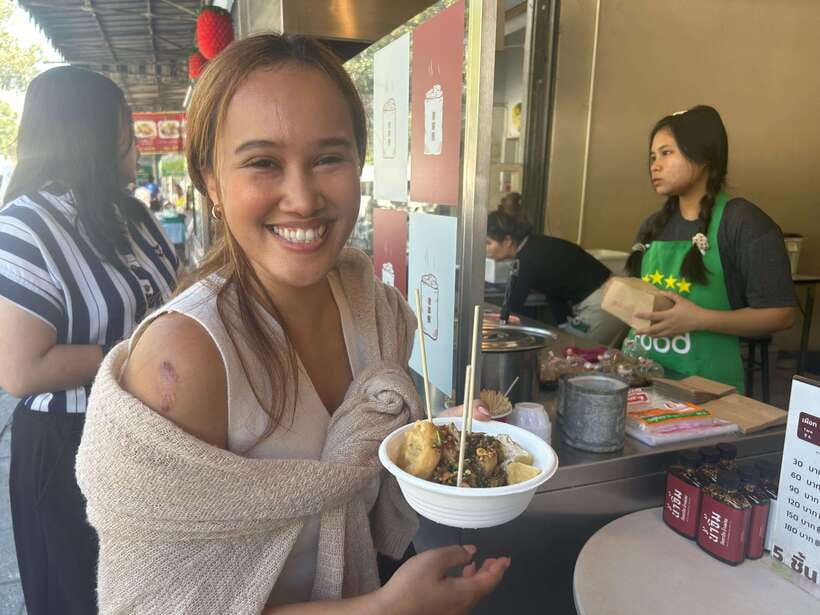
Next up is sai ua, the Northern Thai sausage. Sai ua is one of those dishes that can sound familiar but tastes distinct in real life. It brings a savory, spiced profile that sits nicely between street-food comfort and something more region-specific.
If you want to enjoy this section, the trick is to treat it like a flavor sequence rather than individual snacks. Start with one bite, then go back for another with a different balance of chili and meat. If you’re watching spice, tell your guide early so they can steer you through the heat level.
Khao soi and pak boong: comfort food with structure
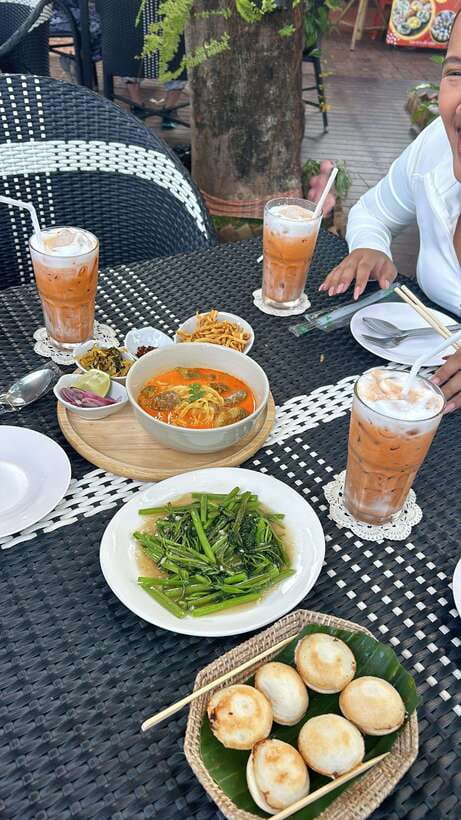
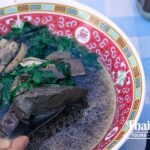
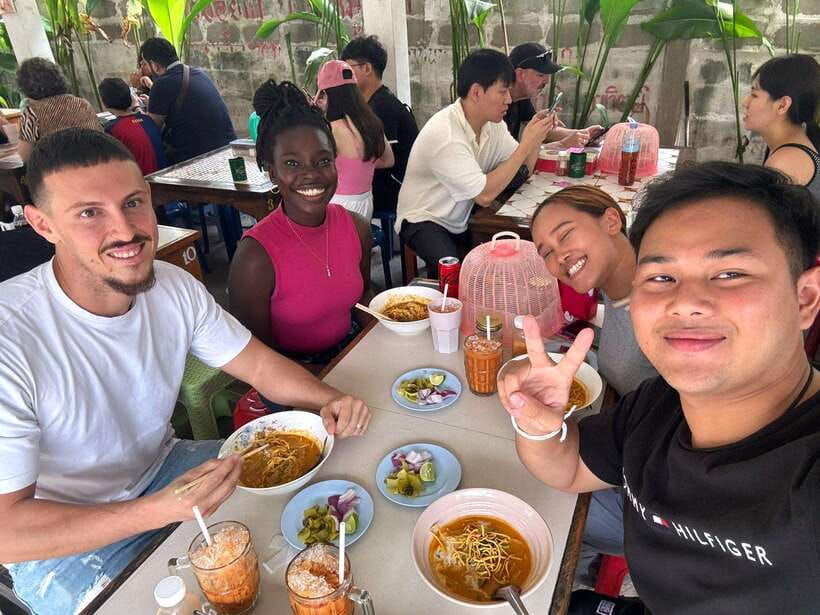
This is the stop most people remember: khao soi, Chiang Mai’s signature dish—silky coconut curry noodles.
Khao soi is easy to overdo if you approach it like regular noodle soup. But on this tour, it’s served in an intentional way: the flavors are built to balance coconut richness with curry spice, then softened by the noodle texture. It’s the kind of dish that feels comforting, but it still has real bite.
You also get stir-fried pak boong (morning glory) alongside it. That green vegetable stop is important. It adds freshness and a different texture so your palate doesn’t get trapped in coconut and curry only. Pair that with a chilled Thai tea, and you’ve got a built-in cooling rhythm.
If you’re tempted to order extra chili, do it slowly. Khao soi can feel mild at first and then show more heat as you keep eating. Thai tea helps, but it’s not magic.
You can also read our reviews of more food & drink experiences in Chiang Mai
Khanom krok and Thai sweets: coconut-rice pancakes with a second wind
The tour doesn’t just focus on savory. You’ll also try khanom krok, described as sweet and savory coconut-rice mini pancakes.
These little cakes are usually crisp on the outside with a soft, custardy interior vibe. They’re also a smart mid-tour sweet because they don’t feel like a full dessert reset. Instead, they bridge the shift from spicy savory dishes to cooler, creamier finales.
If you get to this point and feel like you’ve already eaten “a lot,” khanom krok is the kind of bite that won’t make you regret the rest. It’s small, flavorful, and gives you a new texture to chew on.
Butterfly pea ice cream, rice balls in coconut cream, and a secret dish
Sweet time arrives with butterfly pea flower ice cream, paired with rice balls in coconut cream—and yes, that includes the dessert often called bua loi. The color alone is worth a stop, but the real point is how the sweetness and coconut texture cool down everything you’ve been tasting.
You’ll also get an additional drink in the mix: chilled lemongrass infusion, which helps cut through the richness. That pairing makes the desserts feel lighter. Think of it as palate management, not just a beverage.
And then there’s the headline: the secret dish, revealed only on the tour. This is where the tour earns its name. Part of the fun is not knowing what’s coming next.
One practical note: if you’re the type who expects the secret dish to be completely unknown to anyone who knows Thai food, you may find it’s more “special to this tour experience” than truly unknown. Still, it’s a good way to keep the tour feeling playful rather than predictable.
Ending at Wat Lok Moli: walk it off in a charming temple setting
You’ll wrap up your food journey at Wat Lok Moli, described as one of Chiang Mai’s most charming temples.
This ending is a good design choice. After eating your way through multiple flavors, you need a landing zone. Temple courtyards and calm surroundings let you digest, slow down, and take in the area without feeling like you’re rushing to the next table.
It’s also a helpful marker for your next plans. You finish near Old Town sightseeing, so you’re not stuck crossing the city after a full stomach.
What $53 really buys you: value in the number and variety of bites
At $53 per person for about 3 hours, this tour works best when you think about value in terms of variety and meal replacement, not just “how many dishes.”
You’re getting:
- A breakfast-style banana leaf sticky rice
- Chicken satay with peanut sauce
- Northern Thai savory hits: lars kua and sai ua
- A major comfort-food centerpiece: khao soi
- Greens: stir-fried pak boong
- A drink balance: Thai iced tea and lemongrass infusion
- Dessert progression: khanom krok, plus butterfly pea ice cream with bua loi in coconut cream
- Water with the whole run
- And a secret dish built into the flow
That’s a lot for one walking block. If you planned to eat around Old Town on your own, you’d likely spend similar money just piecing together a couple of meals, and you wouldn’t get the built-in comparisons between Northern Thai classics that the guide helps you understand.
Also, the tour includes a live English-speaking guide. In Chiang Mai, that language support is more than convenience—it helps you ask questions about spice, textures, and why a dish is made the way it is.
Who should book this tour (and who should skip it)
This is a strong fit if you:
- Want a Northern Thai-focused food walk instead of generic street snacks
- Prefer learning by eating, with a guide walking you between places
- Enjoy contrast: smoky sticky rice, curry noodles, savory sausage, and then chilled desserts
- Like a structured experience where you don’t have to decide what to eat next
It’s less ideal if you:
- Don’t walk well for about 3 hours
- Hate spicy food with no room for adjustments
- Are only interested in a single famous dish and not the full regional sequence
If you’re traveling with a mobility need, it’s listed as wheelchair accessible. Still, it’s a walking tour, so you’ll want to check what that means for your chair and pace when you book.
Price and logistics in plain terms: make it easy on yourself
No hotel pickup is included, so you’ll start at the monument meeting point by the orange umbrella. That’s actually a plus if you’re already moving around Old Town, since you don’t lose time waiting.
The tour is English with a live guide, and you’ll want to bring a light appetite tolerance. You’re eating multiple items, so save room. Also, if you have dietary requirements beyond what the tour already covers, you’ll need to contact the provider before booking so they can guide you correctly.
Should you book the Chiang Mai walking food tour?
If you want a well-paced Old Town experience that turns Northern Thai food into an easy, fun sequence, I think you should book it. For $53 and about 3 hours, you’re not just buying snacks—you’re getting a full meal flow with drinks, multiple textures, and a secret dish that keeps the tour from feeling like a checklist.
Book it especially if you’ll enjoy a guide-led route and you like tasting dishes you might not order on your own, like sai ua and lars kua. If you’re spice-sensitive, say so early and you’ll be set up to have a good time instead of a suffering contest.
FAQ
Where do I meet the guide for the Chiang Mai food tour?
You meet your guide right in front of the Three Kings Monument, and you should look for an orange umbrella.
How long is the walking food tour in Chiang Mai?
The tour duration is 3 hours.
What’s the price per person?
The price is $53 per person.
Is there an English-speaking guide?
Yes, the tour includes a live tour guide in English.
What food and drinks are included?
Included items are banana leaf sticky rice, chicken satay with peanut sauce, larb kua, sai ua, stir-fried pak boong, khao soi, khanom krok, butterfly pea ice cream with rice balls in coconut cream, plus chilled lemongrass infusion, Thai iced tea, and water.
Is hotel pickup and drop-off included?
No, hotel pickup and drop-off are not included.
Can the tour accommodate wheelchair users?
The tour is listed as wheelchair accessible.
What should I do if I have dietary requirements?
If you have specific dietary requirements, you should contact the provider before booking so they can advise on what can be accommodated.