REVIEW · ROME
Rome Food Tour in the Historic Centre with 8+ Food Tastings
Book on Viator →Operated by Secret Food Tours · Bookable on Viator
Food in Rome tastes better when it’s explained. This 3-hour Rome Food Tour ties historic sights to 8+ tastings across the center. You’ll start at Piazza Navona and work your way toward Largo di Torre Argentina, with stops that make the city’s food culture feel real, not just random restaurant picks.
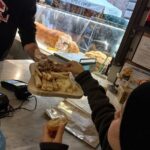
What I like most is the mix of classic Roman comfort food plus proper “street-to-table” bites. Expect homemade pizza, supplì, cold cuts and cheeses, two Roman pastas, cannoli, artisanal gelato, and one extra secret dish that keeps things fun when you think you already know what you’re getting.
The one drawback to keep in mind: you’re walking. It’s a compact route with many tastings in about three hours, so wear comfy shoes and plan to eat slowly—otherwise you’ll reach the end already stuffed.
In This Review
- Key highlights before you go
- Piazza Navona to the French Embassy Palace: where Rome’s food scene clicks
- What 8+ tastings really means (and why variety is the point)
- Pizza, supplì, and pastas: the heart of Roman comfort food
- The ancient walkway and fountains stop: why monuments belong on a food tour
- The Jewish ghetto in Rione Sant’Angelo: history you can taste
- Campo de’ Fiori and the Campus Martius zone: eating near Roman leftovers
- Drinks, pace, and why the route feels easy to manage
- Who this Rome Food Tour suits best
- Should you book this Rome food walk?
- FAQ
- What’s included in the 8+ food tastings?
- How long is the Rome Food Tour?
- Where does the tour start and where does it end?
- Is the tour offered in English, and how big is the group?
- Is there alcohol on the tour?
- Can I bring a pet?
Key highlights before you go
- Piazza Navona start: you’re in the right place at the right time for Roman atmosphere and first bites
- 8+ tastings, not just snacks: pizza, supplì, pasta, cannoli, and gelato all show up
- Ancient city stops tied to food culture: from the Roman ghetto area to preserved monuments
- Small group size: capped at 12 people, so the pace stays friendly
- Guides who connect food to place: names you may hear include Massimiliano and Rocio, with lots of on-the-walk explanations
Piazza Navona to the French Embassy Palace: where Rome’s food scene clicks
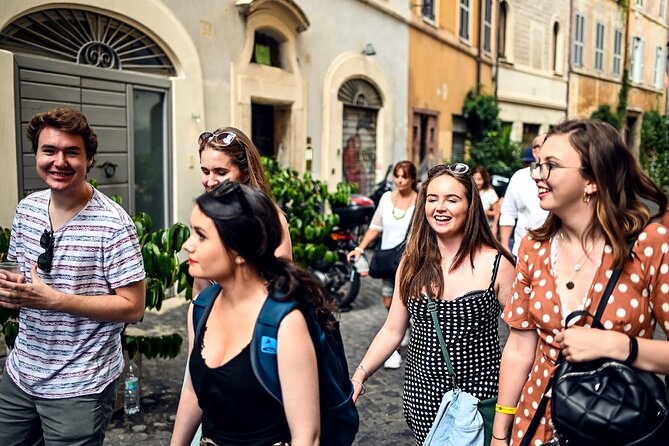
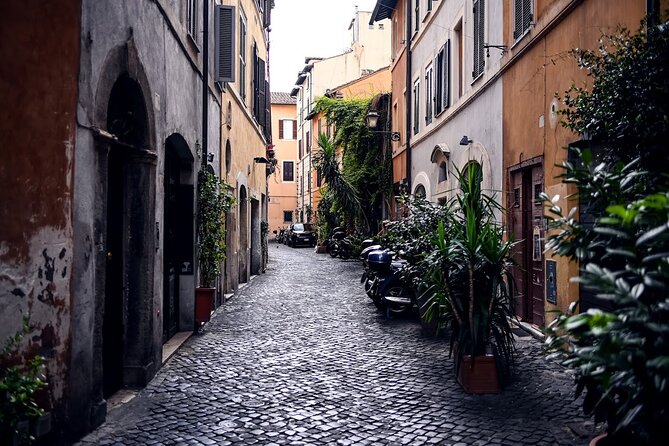
This tour begins at Sant’Agnese in Agone, Piazza Navona, 14, right where Rome goes into “look at me” mode. Piazza Navona sits on the footprint of an ancient stadium, and you can feel that layered timeline every time you pause between courses.
From here, the tour works because the food choices match the setting. You’re not just grabbing dinner-style portions; you’re sampling Roman staples in the kind of neighborhood where locals have been doing the same dance for ages. Gelato and espresso-style breaks fit naturally into this square’s café culture, so you’ll get those “I get it now” moments fast.
One of the route highlights is the stop at a major Renaissance palace that’s now used as the French embassy in Italy. Even if you don’t tour the interior, standing near a building like this helps you understand why Rome’s food culture is never only about food. It’s about who lived where, who traded, who hosted, and how everyday meals became part of the city’s social rhythm.
You can also read our reviews of more food & drink experiences in Rome


What 8+ tastings really means (and why variety is the point)
The headline is 8+ food tastings, and the menu is built for range. You’ll see the Roman classics across sweet, savory, and snack categories, which matters because Rome isn’t one single “type” of food. It’s a set of traditions that show up differently depending on neighborhood, meal timing, and even the mood of the day.
Here’s what’s included, in plain terms:
- Two different types of homemade pizza
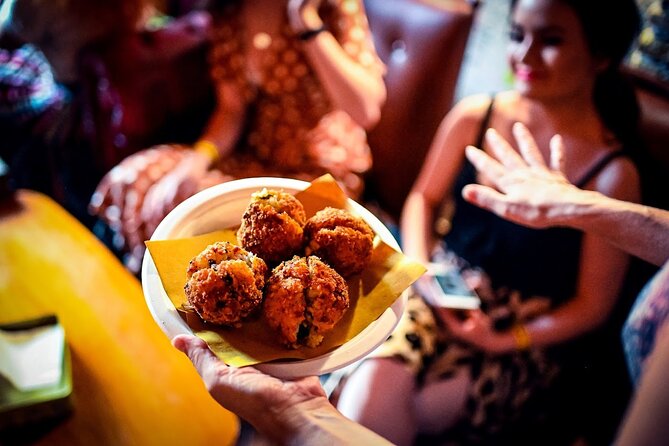
- Supplì (that classic rice-and-thing bite you’ll smell before you see)
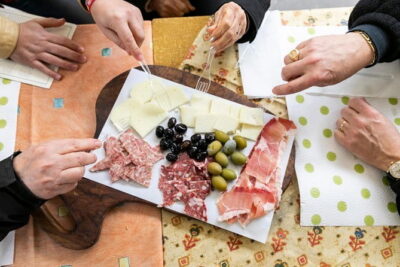
- Italian cold cuts and cheeses
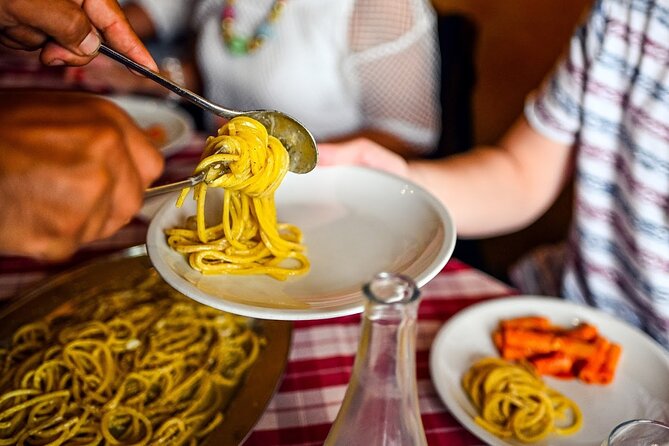
- Two Roman pasta dishes
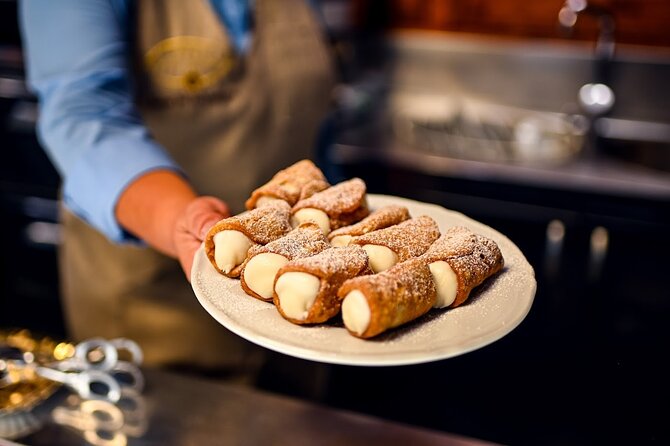
- Cannoli
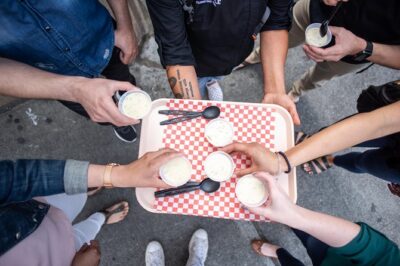
- Artisanal gelato
- One additional secret dish
This variety is the value. If you try to do Rome’s food “solo,” it’s easy to overcommit to pizza places or miss the snack foods that explain the culture. This tour does the hard part for you: it sequences the tasting types so you don’t just repeat the same bite eight times.
The secret dish is a nice touch too. It means you don’t walk in with a full mental menu already planned, and it keeps the last third from feeling like “just another stop.”
Pizza, supplì, and pastas: the heart of Roman comfort food
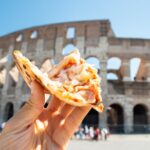
You’ll start with pizza, and not just one style. The tour includes two different types of homemade pizza, which gives you a quick education in what “Roman pizza” can mean without getting overly technical. Pizza in Rome isn’t only about the topping; it’s about the texture, the crust style, and how it fits into a casual eating rhythm.
Then you hit supplì, a street-food favorite that often surprises first-timers. It’s the kind of bite that feels like a snack until you realize it’s built to be satisfying. The fact that it’s included here is a good sign: this tour isn’t trying to be fancy; it’s trying to be accurate.
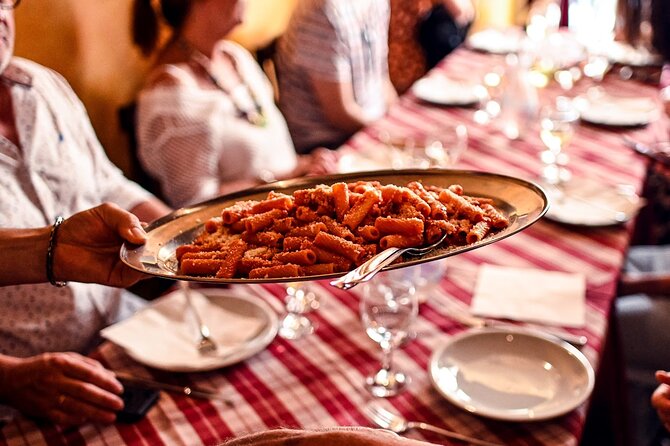
On the pasta side, the tour includes two Roman pasta dishes. This is where you start tasting the city’s preferences: sauces that feel grounded, shapes and portions that make sense in a real meal, and flavors that don’t need theatrics to work. If you’re the type who wants Rome to be practical, pasta is where the city shows you its everyday logic.
And if you’re thinking dessert will be the one big payoff, remember: you’re also getting cannoli and artisanal gelato. That means you get both crunch-and-cream and cold, sweet closure before the walk ends.
The ancient walkway and fountains stop: why monuments belong on a food tour
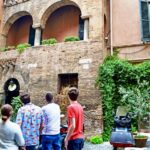
Between tastings, you’ll get short stretches of walking that connect food to geography. One stop includes the remains of an ancient walkway originally built in the 2nd century B.C. to link two Roman temples. It’s the sort of detail you normally miss if you’re only taking photos.
Then you get one of the most eye-catching fountain moments: a 17th-century fountain honoring the four rivers, with a Roman obelisk topped by a dove. That combination of obelisk + sculpture isn’t just visual candy. It helps you grasp how Romans treated public art: it was part of civic identity, not an afterthought.
Why does that matter for food? Because Roman cuisine is tied to public life. People ate in neighborhoods that were defined by landmarks and movement. Food isn’t floating in a vacuum; it travels along routes people used every day. This tour keeps reminding you of that as you move.
The Jewish ghetto in Rione Sant’Angelo: history you can taste
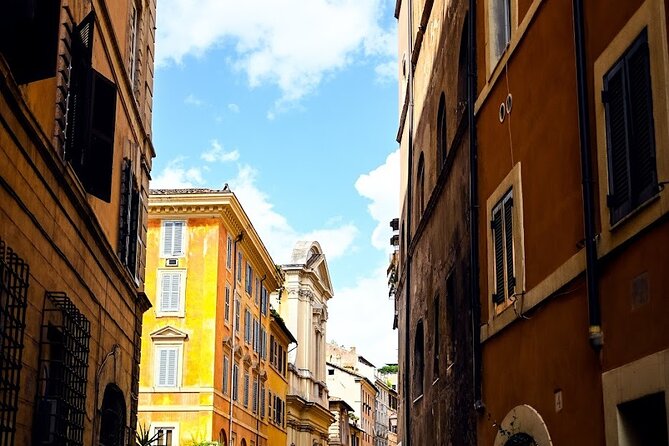
One of the most meaningful stops is in the Jewish ghetto established in 1555 in the area of Rione Sant’Angelo. This is a neighborhood with layers—cultural, historical, and yes, culinary. You can’t fully separate the food from the story of the community that shaped it.
What I appreciate about including the ghetto area is that it makes the tour feel less like a checklist. Instead of only saying “try this because it’s local,” the guide can place your bites into a wider context: how neighborhoods form, how traditions hold on, and how food becomes one of the simplest ways to keep identity alive.
In practical terms, the pacing here usually works because you’re already in “food mode.” You’ve eaten some savory bites, you know what the group rhythm feels like, and then the history stop gives you that mental reset before the next tastings.
A few more Rome tours and experiences worth a look



Campo de’ Fiori and the Campus Martius zone: eating near Roman leftovers

Next, you’ll pass through Campo de’ Fiori, a rectangular square south of Piazza Navona. The name literally means “field of flowers,” and standing here gives you a sense of how Rome shifts from grand monuments to everyday market energy.
From there, the tour moves toward a square that sits inside the ancient Campus Martius. This area includes four Roman Republican temples and the remains of Pompey’s Theatre. You’re not reading these facts from a plaque in isolation—you’re in the space where the city built its public life.
That’s the real payoff: you’re eating while the ground is still doing the talking. It’s a different way to experience Rome than only visiting sites by ticket time windows. Here, the “site seeing” is spread across tastings, so the day feels less rigid and more like real walking around.
Drinks, pace, and why the route feels easy to manage
This tour runs about 3 hours and caps at 12 travelers, which keeps the walk from turning into a slow bottleneck. You’ll also be using a mobile ticket, and the meeting spot at Piazza Navona is simple to find once you’re standing in the square.
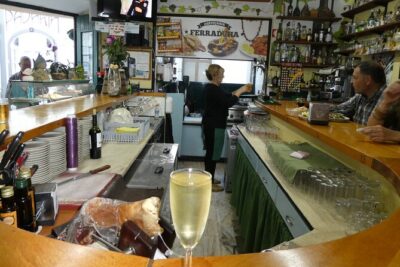
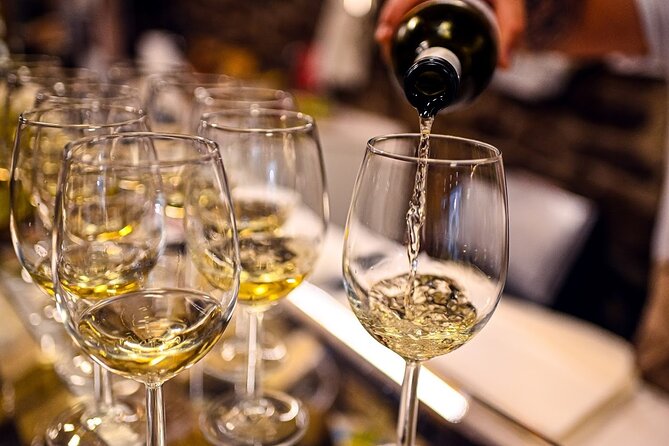
As for drinks, the data says the minimum drinking age is 18. You may find coffee-style breaks and, depending on the stop and menu, wine shows up as part of the experience. The best way to handle this is simple: take sips when offered, and save your appetite for the next course.
The walking itself is the main “plan ahead” item. One review noted it’s a lot of walking but still manageable, and that matches how a route like this usually feels: lots of small transitions, frequent tasting stops, and standing around briefly each time you get something new.
Who this Rome Food Tour suits best
This is a strong choice if:
- You want a structured Rome food intro without spending time figuring out where to go each meal
- You like food tours that connect bites to neighborhood context, not just restaurant names
- You’re the type who enjoys walking as long as it stays fun and purposeful
It may not be ideal if:
- You need a low-walking day. Even with a friendly group pace, you’re moving for about three hours.
- You have a tight schedule where you can’t wander between historic squares and monuments.
It’s also worth noting that the tour is offered in English, and confirmation is received within 48 hours of booking (as long as there’s availability).
Should you book this Rome food walk?
Yes, with one clear condition: go hungry, wear comfy shoes, and expect to eat your way through the center. At $118.51 per person for a 3-hour walk with 8+ tastings and multiple major food categories included, the value comes from two things—variety and convenience. You’re not piecing together pizza, supplì, pasta, dessert, and gelato on your own, and the route keeps you oriented around real neighborhoods and famous sites.
If you’re a first-time Rome visitor, this tour is a smart “foundation day.” If you’ve been in Rome a few days already, it’s still useful because it hits the street-food layer (supplì), the dessert pair (cannoli + gelato), and the historic setting that helps you understand why Roman food feels the way it does.
Book it if you want a day that’s part edible tasting menu and part city orientation. Skip it only if walking that much in a short window would derail your trip.
FAQ
What’s included in the 8+ food tastings?
You’ll get two different types of homemade pizza, supplì, Italian cold cuts and cheeses, two Roman pastas, cannoli, artisanal gelato, and one secret dish.
How long is the Rome Food Tour?
The tour runs for about 3 hours.
Where does the tour start and where does it end?
It starts at Sant’Agnese in Agone, Piazza Navona, 14, 00186 Roma RM, Italy, and ends at Largo di Torre Argentina, 00186 Roma RM, Italy.
Is the tour offered in English, and how big is the group?
The tour is offered in English, and it has a maximum of 12 travelers.
Is there alcohol on the tour?
The minimum drinking age is 18 years. The tour includes tastings and may involve drinks, but alcohol is subject to the 18+ rule.
Can I bring a pet?
No. The tour can’t accommodate pets.