REVIEW · ROME
Rome Street Food Tour with Local Guide
Book on Viator →Operated by Raphael Tours & Events · Bookable on Viator
Street food in Rome, with history on the walk. This Rome street food tour is built as a smart loop: you start in Campo de’ Fiori, then snack your way past the Jewish Ghetto and major Roman sites. Along the route, you’ll try classics like suppli, pizza, seasonal fruit, and finish with gelato plus local wine and beer.
I especially like how the tour pairs each bite with context at street level. Guides such as Ramona and Matteo are often praised for linking what you’re eating to what’s around you, instead of lecturing from a distance. I also like the variety: you’re not stuck on one type of food, and you get multiple tastings that feel like a real sampling meal.
One drawback to plan for: it’s mostly a standing-and-walking experience, and it’s not suitable if you have limited walking capacity. Also, if you need vegan, gluten-free, or dairy-free food, options are restricted, so you’ll want to flag dietary needs right when you book.
In This Review
- Key things I’d watch for
- A Rome street food tour that feels like a morning-or-evening plan
- Where it starts: Campo de’ Fiori tastings and market atmosphere
- Pasetto del Biscione and the walkable “hidden corner” vibe
- The Jewish Ghetto area: ruins, synagogue, and real Roman layers
- Pizza and suppli: why these two together make sense
- Il Portico di Ottavia and ancient ruins you can actually picture
- Largo Argentina: Julius Caesar’s assassination site and the gelato finale
- What’s included (and what’s not), plus the real value math
- Timing: lunch vs dinner and what the market does to your plan
- Dietary needs and allergies: what you can and can’t count on
- Who this tour suits best
- Should you book the Rome street food tour?
- FAQ
- How long is the Rome street food tour?
- Where do I meet the guide?
- Where does the tour end?
- What’s the price per person?
- Is the tour offered in English?
- What food and drinks are included?
- Can vegetarians join?
- Does the tour run in the rain?
- Are the tastings the same every time?
- What’s the cancellation policy?
Key things I’d watch for
- Campo de’ Fiori meet-up under Giordano Bruno sets the tone with the market’s energy right away
- Small group (max 15) keeps the walk friendly and the tastings manageable
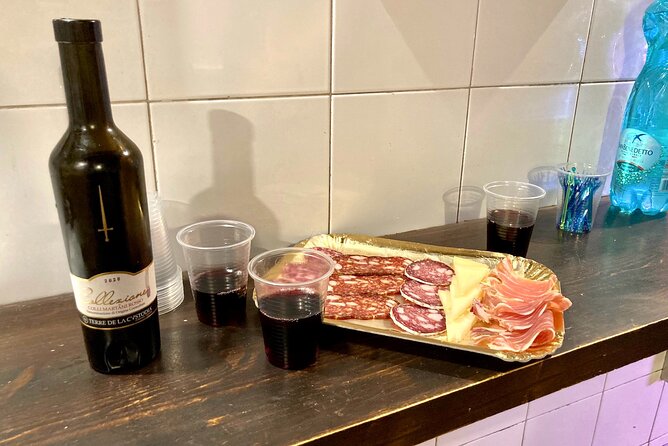
- Roman-food classics in a logical order: cheese and cured meats → pizza and suppli → gelato
- Ancient sites you can actually see while eating: Jewish Ghetto, Theatre of Pompey area, Largo Argentina
- Seasonal menu swaps mean the exact dishes can change, but the style stays authentic
A Rome street food tour that feels like a morning-or-evening plan
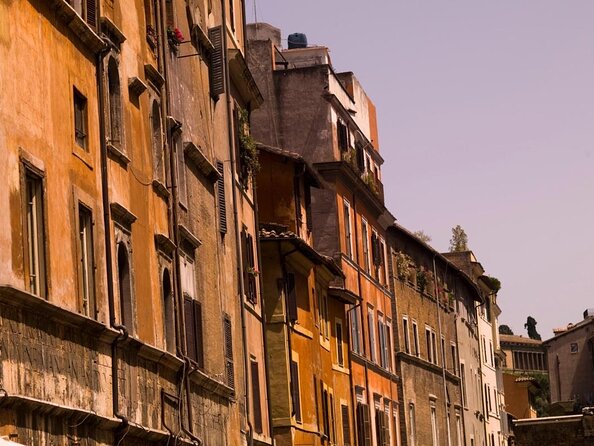
Rome has plenty of food tours. This one works because it’s not just eating in random spots. The route is structured like a quick neighborhood tour, with tastings timed to keep you moving and thinking about what you’re seeing.
You’ll be out for about 2 hours 30 minutes, and you’ll get a mobile ticket. The tour runs in English, and it’s designed for a maximum group size of 15, which matters in Rome where stalls, sidewalks, and alleys can get tight fast. It also works as a first or second day activity because it helps you learn what to look for when you’re hungry later.
You can also read our reviews of more food & drink experiences in Rome


Where it starts: Campo de’ Fiori tastings and market atmosphere
The tour kicks off at Piazza Campo de’ Fiori, meeting near the statue of Giordano Bruno in the middle of the square. This is a great starting point because Campo de’ Fiori is one of those places where you can feel the city’s food culture instantly: stalls, chatter, produce, and vendors doing what they do every day.
From there, you’ll visit stalls in and around the market for the earliest tastings. The key detail here is timing: the old-school market tastings are available in the mornings, which is perfect if you take the tour at lunch-time or earlier in the day. If you’re doing it later (dinner time), you’ll still eat, but don’t expect the same market rhythm.
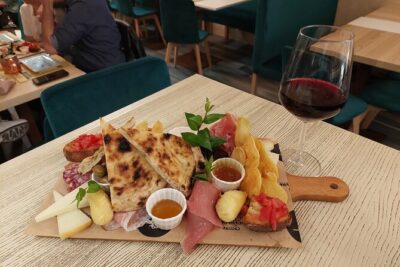
What makes this start worth it: you get to try a mix that isn’t just bread-and-sauce. Expect things like cheese and cured meats, along with wine and other simple bites to get your appetite calibrated. It’s also a good moment to ask your guide what to watch for in the rest of the meal—because Rome’s street food has patterns, and once you notice them, ordering later gets way easier.
Pasetto del Biscione and the walkable “hidden corner” vibe
After the market, you head toward the area around Passetto del Biscione. The tour describes this as a more hidden, historical quarter, and I like this kind of stop because it slows the story down.
This is where the walking part becomes more than movement. You’re not just traveling between food locations—you’re learning how neighborhoods connect, how streets curve around landmarks, and why certain corners become regular hangouts for locals. It also helps that the tastings stay light between sights, so you don’t feel stuffed before the heavier Roman hits like pizza and fried rice.
Practical note: this is an outdoor walking tour, so wear shoes you’re comfortable standing in. The tour runs rain or shine, which means you’ll be taking in streets and food stalls even when the weather is trying to ruin everyone’s day.
The Jewish Ghetto area: ruins, synagogue, and real Roman layers
Next up is the Jewish Ghetto area, where the tour connects food with history you can still point to. You’ll pass by the synagogue area and also see remains tied to the Theatre of Pompey and ancient Roman structures.
This section matters because food tours can get shallow if they skip the lived-in history. Here, the guide’s job is to connect meals to the neighborhoods that shaped them, and the route helps you understand that Rome isn’t a museum. It’s a city of communities that changed over time, right in the same streets you’re walking.
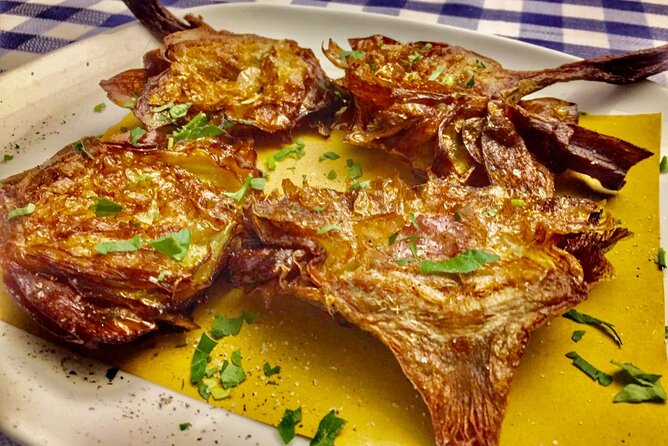
What you’ll eat in this stretch: you’ll taste one of the most famous Roman-Jewish specialties. The exact items can shift by season, but you can expect flavors that feel different from the standard tourist list. That variety is a big part of why the tour works even if you think you already know Rome.
Pizza and suppli: why these two together make sense
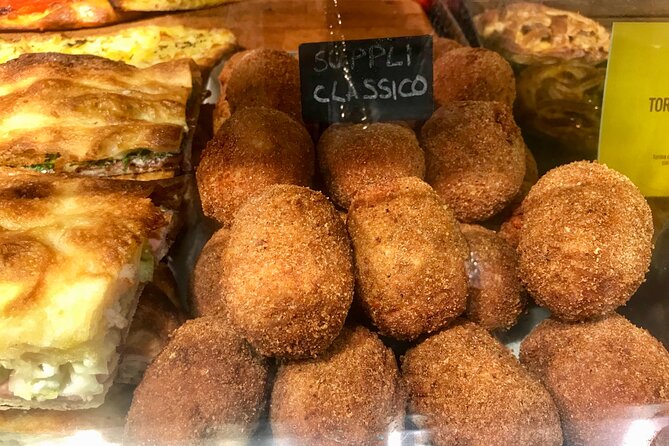
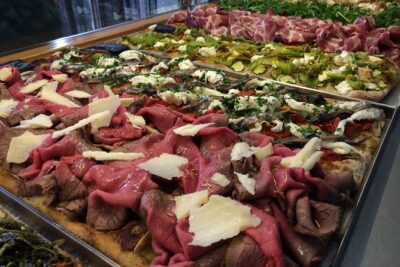
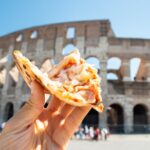
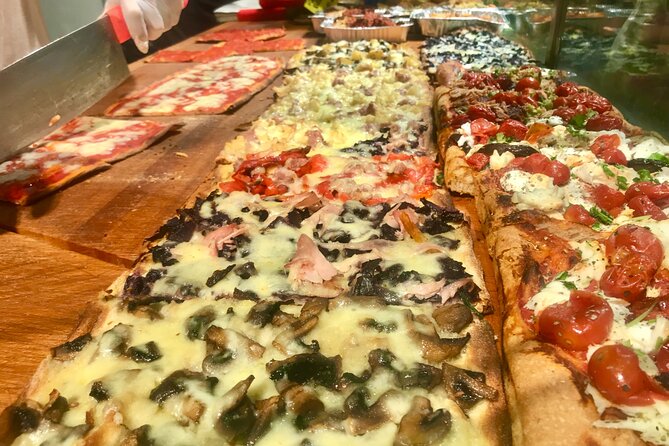
When most people think of Roman street food, pizza comes first. But in this tour’s flow, pizza isn’t the only star. You’ll also try suppli, described as a fried rice ball with tomato and mozzarella in the center.
Putting pizza and suppli side by side is smart. They’re both street foods, but they hit differently. Pizza gives you the comfort, while suppli gives you the crisp exterior and gooey center that makes you understand why Romans treat it like a snack with personality.
Taste tip: suppli is best when it’s hot and fresh. If you’re the type who wants to take photos mid-bite, try to do the photo first, then eat fast. This isn’t about rushing you; it’s just how fried food behaves once it sits.
A few more Rome tours and experiences worth a look


Il Portico di Ottavia and ancient ruins you can actually picture
You’ll then move toward Il Portico di Ottavia, where you see ruins dating back to around the 1st century BC. This isn’t a “stand and read a plaque” kind of stop. It’s timed as part of the walk, so you’re looking at structure and spacing while your appetite is still manageable.
I like including a ruins stop like this because it gives the tour balance. You’re not only eating; you’re also building a mental map of where power and public life used to happen. It also keeps the story from turning into a straight food list.
Consideration: if you prefer quiet museum pacing, you might find this section a bit lively. You’ll still get a guided explanation, but you’ll be outside with other pedestrians in an active city.
Largo Argentina: Julius Caesar’s assassination site and the gelato finale
The tour’s last major sight is the area known as Largo Argentina, tied to the assassination of Julius Caesar. You’ll visit this space, and it’s one of those places where the Roman story has weight even if you aren’t a history nerd.
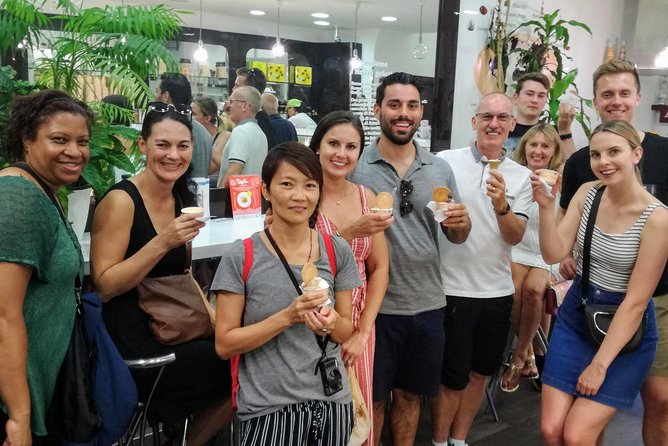
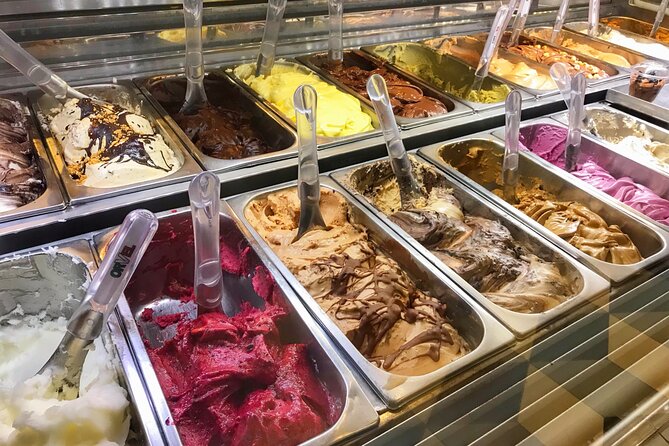
Right after, you’ll end with artisanal gelato at a family-run gelateria, where the owner explains how gelato is made. This is a great way to end because you finish on a sensory note instead of just walking off to the next attraction.
The gelato stop is also practical: it gives you something refreshing after fried and salty bites, and it’s a natural “slow down” moment. Since gelato is included as part of the tasting plan, it helps you avoid the classic Rome problem of realizing too late that dessert costs add up.
What’s included (and what’s not), plus the real value math
For $54.42 per person, you’re getting several tastings, a local expert guide, and wine and beer. Extra drinks are not included, so if you’re planning to order cocktails or keep adding pours beyond what’s part of the tasting program, you’ll want to budget extra.
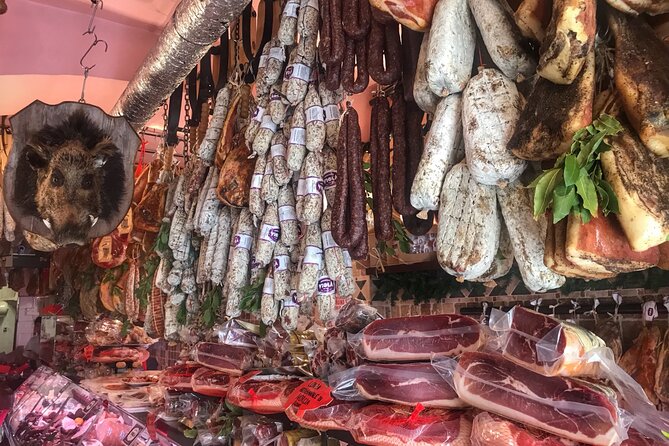
In practical terms, this price makes sense because Rome street food can be cheap only on paper. If you start buying multiple items solo, you’ll often end up paying for smaller portions that don’t feel like a coherent meal. Here, the tour bundles bites so you sample a range—cheese and cured meats, pizza, suppli, a Roman-Jewish specialty, seasonal fruit, and gelato—with drinks worked in.
Best value angle: you’re not just eating, you’re learning how to choose. After this, you’ll know what to seek out when you’re near markets, bakeries, and old-school counters.
Timing: lunch vs dinner and what the market does to your plan
The tour works at lunch or dinner time. That’s helpful if you’re trying to fit Rome sightseeing around your energy levels.
One detail matters: in the evenings, the local market is closed, which can change the feel of the earliest stops. If you want maximum market energy and the morning-style stall tastings, go earlier in the day. If your trip schedule forces an evening, don’t skip it—just adjust expectations about market atmosphere.
Dietary needs and allergies: what you can and can’t count on
This is where you need to be clear when booking.
- Vegetarians are accommodated, but it’s only if you advise in advance.
- Vegan options are not accommodated.
- The tour does not accommodate gluten or dairy-free diets.
- If you have a nut allergy, assume there’s a risk of cross contamination.
I think that’s fair and honest. Street food is often shared-space, shared-equipment, and built around ingredients that are hard to swap in the middle of a walking route. If you fall outside the stated options, the tour may still be informative for the walking and history, but you should manage your expectations about actual substitutions.
Who this tour suits best
This tour is a good fit if you want:
- A walk-and-eat plan that also shows you real sites like Largo Argentina
- A chance to try multiple Roman flavors without over-ordering on your own
- A small group experience where the guide can keep moving and explaining
It’s not a great fit if you:
- Have limited standing or walking capacity (seats aren’t guaranteed)
- Need vegan or gluten/dairy-free meals
- Have nut allergies and cannot risk cross contact
Should you book the Rome street food tour?
Book it if you want a single, efficient way to taste Rome while also building a map of where the city’s stories happen. The combination of Campo de’ Fiori, the Jewish Ghetto area, major ruins, and the gelato finale makes this more than a snack run.
Skip it (or at least think hard) if your diet is vegan or gluten/dairy-free, or if you’re worried about extended standing and walking. Also, if you’re expecting a sit-down restaurant meal, this is not that.
If you can eat typical Roman ingredients and you’ll enjoy a guided walk with tastings, this is one of the more practical “first Rome day” choices.
FAQ
How long is the Rome street food tour?
It lasts about 2 hours 30 minutes.
Where do I meet the guide?
You meet at Piazza Campo de’ Fiori (P.za Campo de’ Fiori, 00186 Roma RM, Italy), near the statue of Giordano Bruno.
Where does the tour end?
It ends at Piazza di S. Eustachio, 00186 Roma RM, Italy.
What’s the price per person?
The price is $54.42 per person.
Is the tour offered in English?
Yes, it’s offered in English.
What food and drinks are included?
You get several street food tastings plus wine and beer. Extra drinks are not included.
Can vegetarians join?
Yes, it can accommodate vegetarians, but you must advise in advance. It does not accommodate vegans.
Does the tour run in the rain?
Yes, it takes place rain or shine.
Are the tastings the same every time?
Not always. Tastings are subject to change according to the season.
What’s the cancellation policy?
You can cancel up to 24 hours in advance for a full refund. If you cancel less than 24 hours before the start time, you won’t receive a refund.