REVIEW · TANGIER
Tangier Food Tour
Book on Viator →Operated by Moroccan Food Tour · Bookable on Viator
Tangier tastes better with a local guide. In 3–4 hours, you’ll hit six tasting stops and learn how Tangier’s food traditions connect to the Tangier Casbah and the city’s key landmarks. It’s part walk, part snack run, part history lesson—but you taste the evidence.
I love that the stops lean toward what you’d actually seek out on your own: markets, classic street foods, and simple but serious tea moments. I also like the pacing and the guidance from people like Muhammad and Abdel, who make stories feel personal and practical instead of lecture-y.
One possible drawback: you’ll spend time walking through narrow lanes in the medina area, so if you’re not great on your feet or you hate compact, crowded streets, this may feel like more effort than you expected.
In This Review
- Key things I’d plan for on this tour
- Getting your bearings at Grand Socco and the Main Market
- The Casbah walk: mint tea, narrow streets, and a terrace meal with a view
- What you actually taste (and why it’s worth learning the stories)
- Price that adds up: $80.14 for a half-day built around food stops
- Group size, walking pace, and what to wear
- Dietary needs: when the guide matters more than the menu
- How to fit this into your Tangier day
- Should you book the Tangier Food Tour?
- FAQ
- Where does the tour start?
- What time does it begin?
- How long is the Tangier Food Tour?
- How many tasting stops are included?
- What’s included in the price?
- Are alcoholic drinks included?
- What should I do if I have a food allergy?
- How big is the group?
- Is hotel pickup or drop-off included?
- Can I get a full refund if I cancel?
- How do I receive the ticket?
Key things I’d plan for on this tour
- Six tasting stops that move you across Tangier’s food “zones,” not just one neighborhood
- Grand Socco + market time where you start understanding the ingredients behind the dishes
- Casbah tea with bread, butter, and honey, plus a calm pause to listen and reset
- Terrace meal with a view, followed by dessert at Elhafa café
- Small group up to 12 people, which helps the guide keep the tour moving and questions flowing
Getting your bearings at Grand Socco and the Main Market
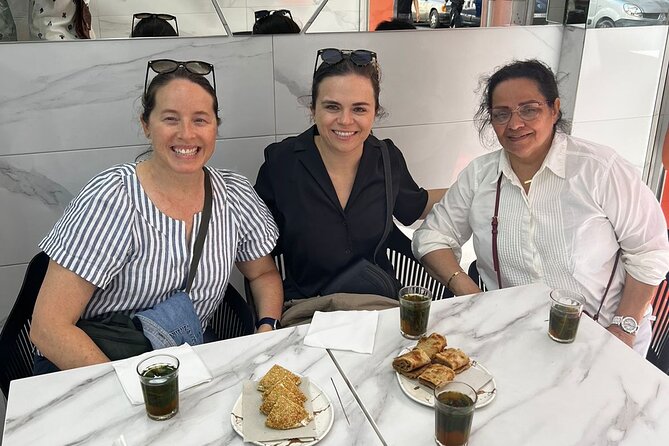
Start at Sour Meêgazine, right in Tangier’s center of gravity. The tour begins at 11:00 am, and you’ll meet your guide and get a quick sense of what to expect before you head out. It helps that the meeting spot is close to public transport, so you’re not stuck planning an elaborate arrival.
Your first taste stop is Grand Socco, a classic place to orient yourself in Tangier. This is where you can sample a mix of local specialties while your guide explains what’s in each bite and why it matters. I like tours that don’t just hand you food and move on. Here, the guide gives you the ingredients and the story, so you’re not eating blind.
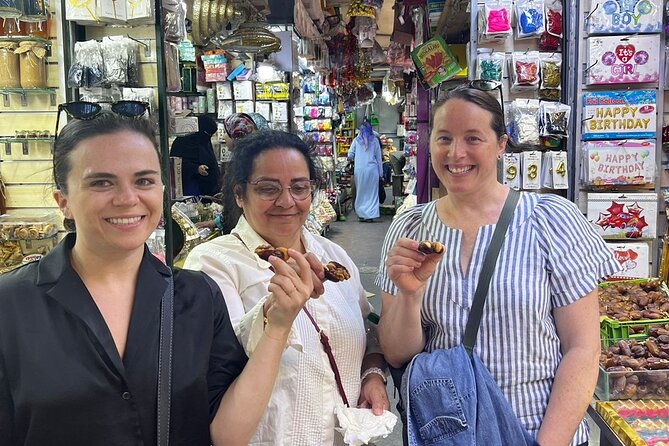
Then you head to the Main Market, which is one of the best ways to learn Tangier through your senses. Expect tastings alongside a tour of the market itself. This matters because a lot of Moroccan food makes sense only when you see the sourcing: what people buy fresh, what they grab for breakfast, what shows up in stews, and what gets used for sweets. If you’ve got a sweet tooth, you’ll probably like the market stop more than you think.
If you’re the kind of traveler who likes to return to places after you understand them, this section does that job. You’ll leave knowing what to look for if you’re shopping later on.
You can also read our reviews of more food & drink experiences in Tangier
The Casbah walk: mint tea, narrow streets, and a terrace meal with a view
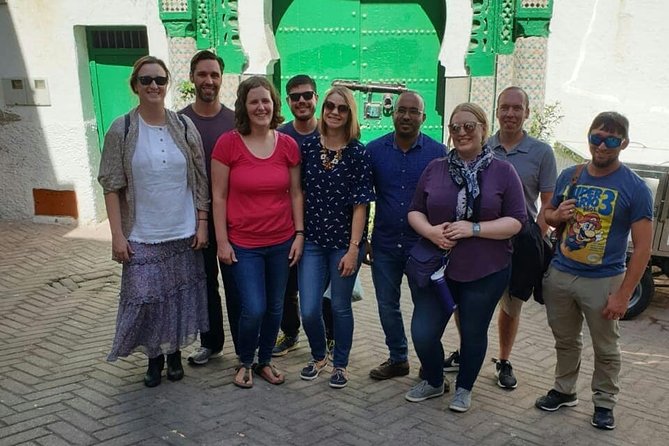
After your early market and tasting stops, the tour shifts into the heart of old Tangier. You’ll head into the Tangier Casbah area with your guide, moving through narrow streets and older lanes where the city feels closer to everyday life. The walk is part fun, part practical orientation: you get the lay of the land without needing to decode medina streets on your own.
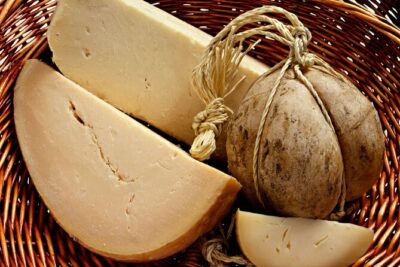
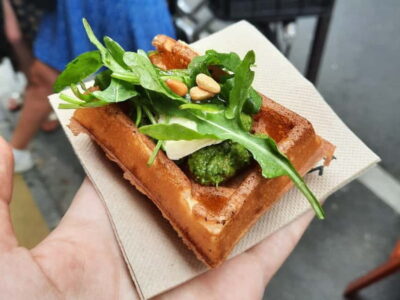
In this segment, you’ll start tasting things that are simple but central to Moroccan food culture—cheese, fresh fruits, and Moroccan pastries. This is a good moment to slow down. Not because the tour stalls, but because the flavors are varied. You’ll start noticing which tastes show up again later: the balance of sweet and savory, the way pastries carry spices, and the way dairy and fruit can feel like a reset.
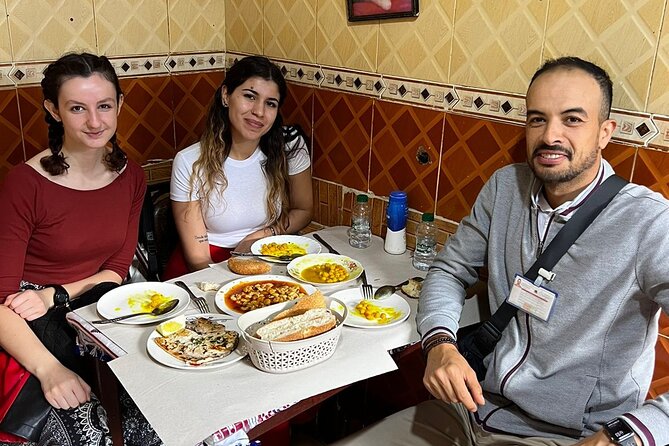
Then comes one of the tour’s most memorable transitions: you reach Alkasbah for a cup of Moroccan mint tea with freshly baked bread, plus butter and honey. The point isn’t just the drink. It’s the pause. You’re encouraged to take your time, enjoy the moment, and even chill for a bit while you hear the calming sound of water.
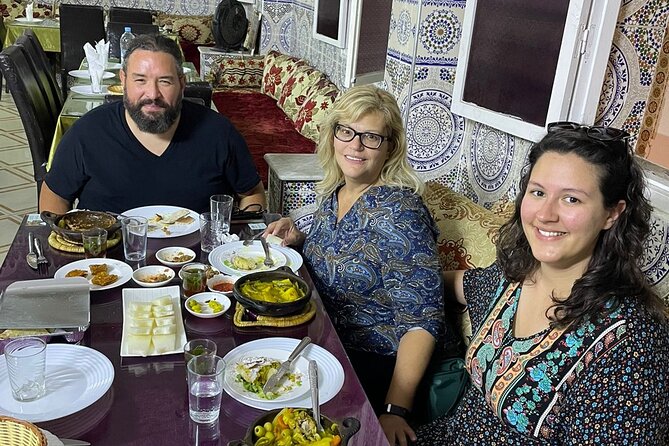
After that calmer stop, the tour continues with a short walk to a restaurant for a meal on a terrace. The plan includes a multi-course experience—a three-course meal with a view—so you get a break from the street-level hustle and a chance to sit and digest. You’ll finish this section with dessert at Elhafa café.
That combo—tea ritual, then terrace sitting, then dessert—works well if you’re doing Tangier for the first time. You don’t just eat. You get a mini day-in-the-life arc: street bites, medina wandering, and then a proper sit-down.
What you actually taste (and why it’s worth learning the stories)
The tour is built around classics. And I mean that in the best way: you’re not chasing obscure experiments. You’re tasting local specialties in places that make sense for them—market food at the market, pastries and fruit when you’re moving through old lanes, and meal service where you can actually linger.
Here’s the value in the “why this food” approach. Moroccan cooking often uses the same few building blocks across lots of dishes: staples like bread, honey, dairy, seasonal fruit, and spice blends that show up in both savory and sweet foods. When your guide ties those ingredients to Tangier’s food tradition, you start to understand what to look for later on your own.
The guides also seem to focus on turning the tour into something you can carry home. One thing I like is that guides such as Muhammad are described as growing up in the city and sharing stories in a way that makes you feel like you’re hanging out with a local friend, not being processed by a script. And Abdel is noted for helping with dietary constraints and explaining how what you’re eating connects to culture and history. That matters because Tangier isn’t a theme park. It’s a real city with real habits.
Also, the tour includes bottled water and coffee and/or tea, so you’re not guessing whether you’ll have hydration and a warm drink when the walking ramps up.
Price that adds up: $80.14 for a half-day built around food stops
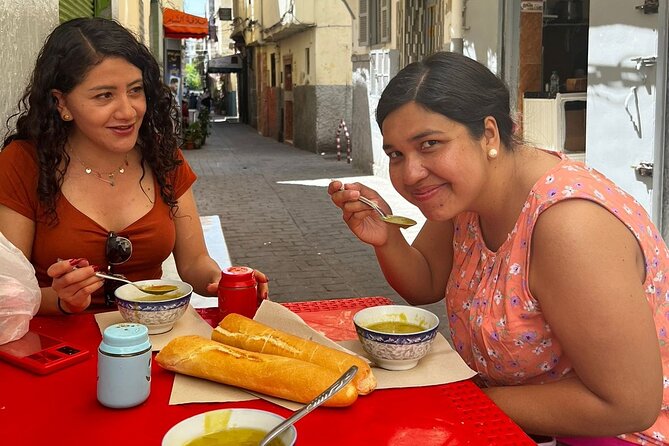
At $80.14 per person, this tour is not a bargain snack crawl. But it’s also not a price tag that feels disconnected from what you get.
You’re paying for:
- a local guide
- snacks across six tasting stops
- bottled water
- coffee and/or tea
- and a provided lunch or dinner component (with the Casbah portion including a three-course meal and dessert at Elhafa café)
- plus all taxes, fees, and handling charges
That’s a lot of “little costs” bundled together. In places like Tangier, the price you pay for market access and guided tasting is usually the difference between random bites and a structured, meaningful day.
What’s not included is also worth noting. Alcoholic drinks are not part of the package, and there’s no hotel pickup/drop-off. Translation: you’re responsible for getting to Sour Meêgazine and then being back at the meeting point when the tour ends.
One extra practical detail: the tour’s been commonly booked about 52 days in advance on average. I wouldn’t wait until the last minute if your timing is tight, especially if you’re traveling in high season or on a weekend.
Group size, walking pace, and what to wear
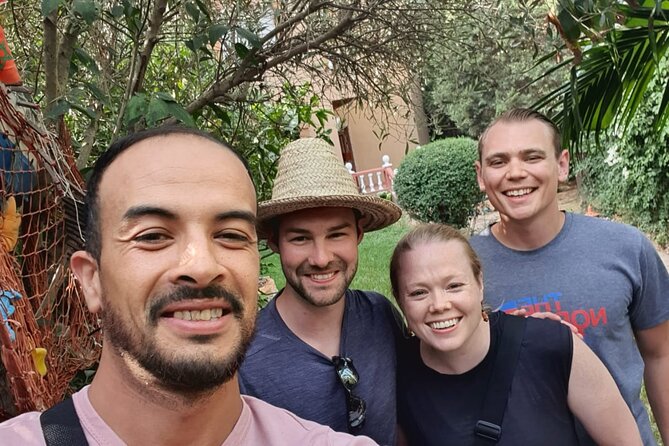
This is a maximum 12 travelers kind of tour. That’s a sweet spot. Large enough to feel social, small enough for the guide to check in and keep everyone moving. It’s also easier for you to ask questions when you’re not shouting over a crowd.
Still, it’s a walking experience. You’ll cover enough ground to see the city from a few angles, and you’ll spend time in places where streets narrow fast. The Casbah lanes are part of the point. They’re also the reason you should dress for your feet, not your photos.
Practical advice:
- Wear comfortable shoes with grip.
- Bring water even though bottled water is included.
- If you get hot easily, plan to cool down during the mint tea stop.
If you’re traveling with limited mobility, you might find parts of the old medina area less comfortable. The tour says most travelers can participate, but that’s not the same as being “no stairs, no uneven ground” friendly.
Dietary needs: when the guide matters more than the menu
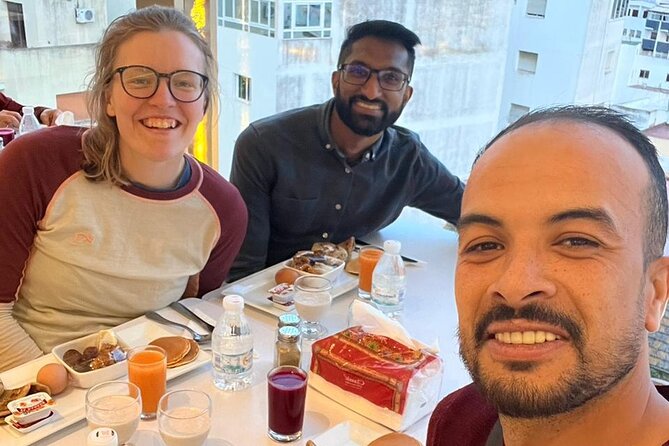
This is a food tour, so you’ll want to take the dietary instruction seriously. The good news is that you’re told to mention your food allergies to your tour guide. That’s key because Moroccan meals can include dairy, nuts, honey, and spice mixes that aren’t always obvious from a quick look.
In at least one example shared by a past guest, Abdel handled multiple dietary constraints and adjusted along the way. He’s also described as making sure you understand how each item fits into Moroccan food and local culture. That combination—real flexibility plus real explanations—helps you feel safer and smarter as you eat.
If you have allergies, don’t just say the ingredient. Explain how severe it is and what you need to avoid. Then ask your guide what you can safely eat at each stop.
How to fit this into your Tangier day
This tour is a half-day style experience, starting at 11:00 am and running about 3 to 4 hours. That makes it perfect for your first day, when you want orientation and your appetite already has something to work with.
After the tour, you’re set up in a good way to keep exploring:
- You’ll know where the city’s food energy lives (Grand Socco, market areas, and the Casbah).
- You’ll have tasted a baseline set of classics, so you can order with confidence later.
- And you’ll have had a sit-down terrace meal and dessert, so you won’t feel like you’re constantly chasing the next snack.
Because the tour ends back at the meeting point, you don’t have to rebuild your route from scratch. You can head to a museum, a café, or a relaxed afternoon at your own pace.
Should you book the Tangier Food Tour?
Book it if you want Tangier to make sense fast through food, markets, and a Casbah walk. This is especially worth it for a first visit because you get landmark context plus classic tastings in a structured way. I also think it’s a strong choice if you like guides who explain what you’re eating and why.
Skip it or rethink it if you hate walking and narrow-street wandering, or if you’re looking for a strictly sedentary, short food sampler. Also, if you only want drinks and not food, this may not fit your priorities since the tour is built around tastings and meals—not an alcohol-focused outing.
FAQ
Where does the tour start?
The tour starts at Sour Meêgazine, Tanger, Morocco.
What time does it begin?
The start time is 11:00 am.
How long is the Tangier Food Tour?
It runs about 3 to 4 hours.
How many tasting stops are included?
You’ll visit six different tasting stops.
What’s included in the price?
Included are bottled water, snacks, coffee and/or tea, a local guide, and taxes/fees. The experience also includes a 2-course lunch or dinner as part of the tour.
Are alcoholic drinks included?
No, alcoholic drinks are not included.
What should I do if I have a food allergy?
You should mention your food allergies to your tour guide.
How big is the group?
The group has a maximum of 12 travelers.
Is hotel pickup or drop-off included?
No, hotel pickup and drop-off are not included.
Can I get a full refund if I cancel?
Yes. You can cancel up to 24 hours in advance of the experience for a full refund.
How do I receive the ticket?
You’ll have a mobile ticket for the experience.