REVIEW · GINZA
Tokyo: Best Ginza Food Tour at 3 Local Eateries
Book on Viator →Operated by Traveling Tokyo · Bookable on Viator
Ginza at night is a lot more fun with a plan. I like that this tour keeps things small-group and I also love the mix of local izakayas across Ginza, Yurakucho, and Shimbashi. The one catch: it’s a 6:00 pm evening walk, so if you’re not into moving around after dark, you may find it a bit fast.
You get three food stops in about 3 hours, plus a guide who handles the pacing and the introductions so you’re not hunting down menus on your own. In the past, I’ve seen guides like Doren, Yota, Ryo, and Yuta get praise for English fluency and culture talk, which matters when you want more than just food photos. The tour ends in Shimbashi, which is a nice bonus because it’s a great place to keep the night going.
In This Review
- Key points before you go
- Why This Tour Works for a First Tokyo Evening
- Small-Group Pace: Better Food Stops, Less Anxiety
- Timing and Route: From Ginza to Shimbashi
- Stop 1 in Ginza: Traditional Counter Dining in a Luxury Bubble
- Stop 2 in Yurakucho: Cozy Izakayas and Comfort Food Energy
- Stop 3 in Shimbashi: Office-Worker Nightlife With Real Momentum
- What You’ll Eat: Sushi, Udon, Karaage, Yakiniku and Friends
- Drinks Included: Simple, but Watch the Age Rule
- Price and Value: Is $150 a Good Deal?
- How the Guide Makes It Feel Local (Not Touristy)
- Logistics That Matter: Meeting Point, Walking, and Weather
- Who This Tour Suits Best
- Should You Book This Ginza Food Tour?
- FAQ
- What’s the duration of the Tokyo Ginza food tour?
- How much does the tour cost?
- Where does the tour start and where does it end?
- What time does the tour begin?
- How many stops are included, and what kind of food can I expect?
- Are drinks included?
- Is this a small group tour?
- Do I need hotel pickup?
- Is there anything I should budget for besides the tour price?
- What happens if the weather is bad?
Key points before you go
- Three neighborhoods, one evening: Ginza, Yurakucho, and Shimbashi, all close enough to stitch together in one night
- Max 10 people: you’ll get the kind of attention that helps you actually enjoy each stop
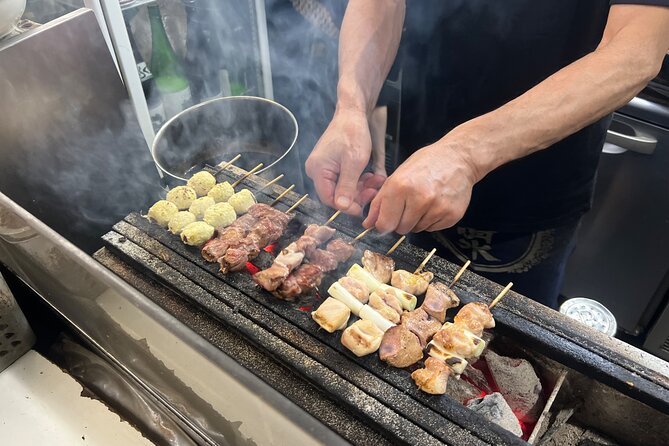
- All-you-can-eat style: expect a menu flow across sushi, udon, karaage, yakiniku, yakitori, tempura, and more
- Complimentary drinks: included for eligible travelers, with extra purchases optional
- Guide-led alley navigation: you avoid the lost-in-the-dark feeling in Japan’s nightlife pockets
- Mobile ticket: simple day-of check-in approach
Why This Tour Works for a First Tokyo Evening
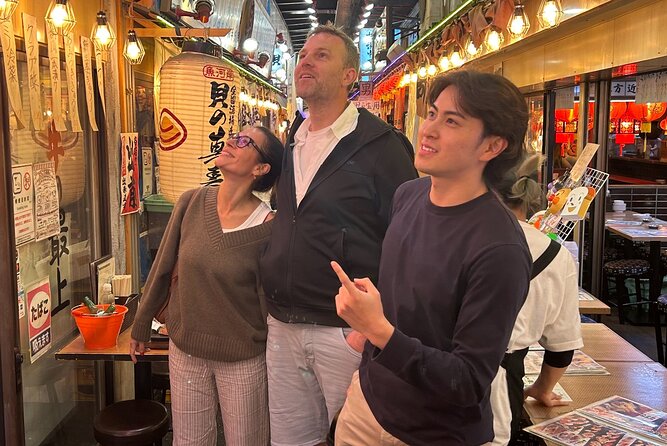
Tokyo can be overwhelming after dark, especially in areas that look polished one minute and maze-like the next. This tour is built for that exact moment. You’re guided to three local spots for an evening out without the awkward part where you stand in front of a restaurant wondering if you’re in the right place.
What I find smart is the structure: three stops over about 3 hours, and you’re not expected to do the heavy lifting. Your guide keeps the flow moving, helps you order, and gives context so the food makes sense. That’s not “extra talking.” It’s the difference between eating random dishes and understanding why those dishes show up together in an izakaya night.
Also, the neighborhoods are a good match for an evening sampler. Ginza offers that clean, high-end edge. Yurakucho feels more old-school and snackable. Shimbashi brings in the office-worker nightlife energy. Doing them in one tour saves you time and gives you a better feel for which style you like best.
You can also read our reviews of more food & drink experiences in Ginza
Small-Group Pace: Better Food Stops, Less Anxiety
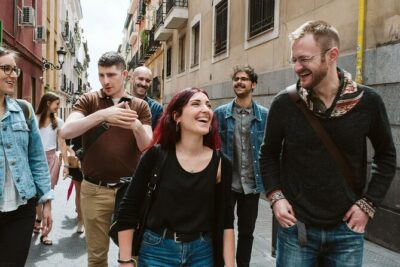
This is a maximum 10 travelers situation, which instantly changes how your night feels. At crowded group tours, you rush. Here, you can slow down enough to enjoy each bite and actually talk to the guide if you want answers.
That “intimate” setup shows up in how people describe the experience: friendly guides, questions answered, and enough attention that you don’t feel like you’re part of a moving wall. When someone like Doren is mentioned for being friendly and full of Japan knowledge, it tends to mean you get practical info, not a lecture. And when guides such as Yota or Yuta are praised for keeping people engaged, it helps if you’re jet lagged or traveling with kids.
One more plus: this tour is designed to keep you from getting lost. That sounds basic, but at night it matters. Tokyo streets can be confusing when you’re hungry. A guide means you spend less time orienting and more time eating.
Timing and Route: From Ginza to Shimbashi
This tour starts at 6:00 pm. It runs about 3 hours, with the meeting point in Ginza and the finish point in Shimbashi. There’s no hotel pickup, so you’ll meet the group near public transportation and then walk between neighborhoods.
I like this timing because it lands right when dinner turns into nightlife. You get to eat early enough that you’re not stuck in late-night lines, but late enough that the izakaya vibe is fully switched on.
The ending in Shimbashi is a practical detail. You’re dropped in a district known for nightlife, so you’re not stuck going back to your hotel immediately. Even if you don’t continue, it helps you feel like the tour is part of a broader evening plan.
Stop 1 in Ginza: Traditional Counter Dining in a Luxury Bubble
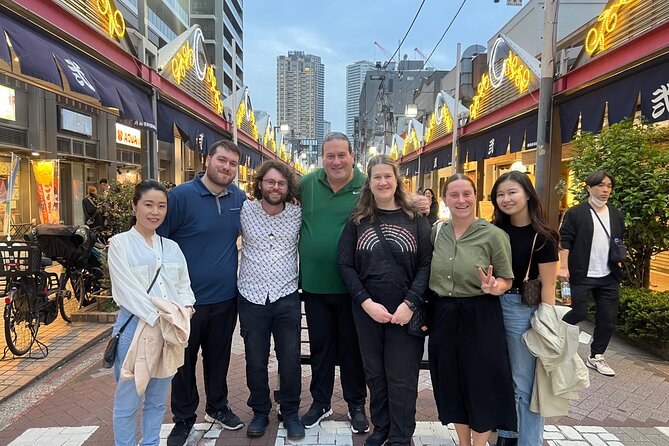
Ginza is often known for upscale shopping, but it also has older dining traditions tucked behind the modern storefronts. Your first stop is in Ginza, where you’ll sit down for a restaurant experience and start the night with classic Japanese flavors.
Why this opening works: it sets a baseline. You get a taste of what “high-quality local” feels like in a neighborhood that can seem intimidating to visitors. Instead of guessing what to order, the guide routes you to a spot where the menu fits an izakaya-style evening out.
A key drawback to consider: Ginza can feel more formal than other nightlife areas. If you’re expecting a chaotic street party, this part may feel calmer. But the trade-off is the meal quality and the sense that you’re getting something you wouldn’t find by accident.
Stop 2 in Yurakucho: Cozy Izakayas and Comfort Food Energy
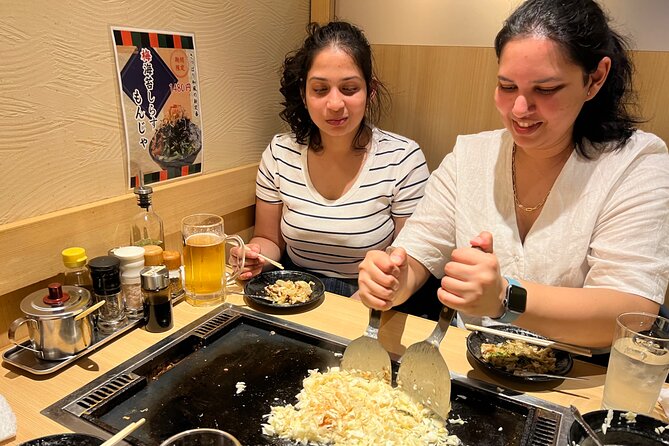
Yurakucho is described as a hidden gem beside Ginza, packed with cozy alleys and izakaya-style dining. This is the stop where the night shifts from “polished city” to “let’s hang out and eat.”
Expect a broader range of comfort foods here, and the vibe usually matches that. One of the most useful things you’ll get from a guide in Yurakucho is knowing how to read the neighborhood. People praise guides for taking them through the area’s less obvious passages, including moments under/near the tracks and into the alley network. That’s exactly the kind of detail that makes the place click.
Food-wise, you might see dishes like udon, karaage, okonomiyaki, tempura, or other rotating izakaya favorites depending on the night’s menu. The point isn’t one “signature dish.” It’s variety: you’re learning how different textures and flavors show up in a single evening out.
Stop 3 in Shimbashi: Office-Worker Nightlife With Real Momentum
Shimbashi is known as an office-worker hub, and that shows in the way the nightlife moves. This is where you’ll feel Tokyo’s habit of after-work dining: quick, filling, and social.
This stop matters because it’s a different side of Tokyo than Ginza. If you only eat in Ginza, you might leave thinking Tokyo nightlife is all polished counters and expensive menus. Shimbashi helps correct that idea with a more lived-in energy.
Also, your tour ends here, which makes sense. If Shimbashi is your “type,” you can keep going afterward. If it’s not, you still leave with a solid picture of what the district does differently.
What You’ll Eat: Sushi, Udon, Karaage, Yakiniku and Friends
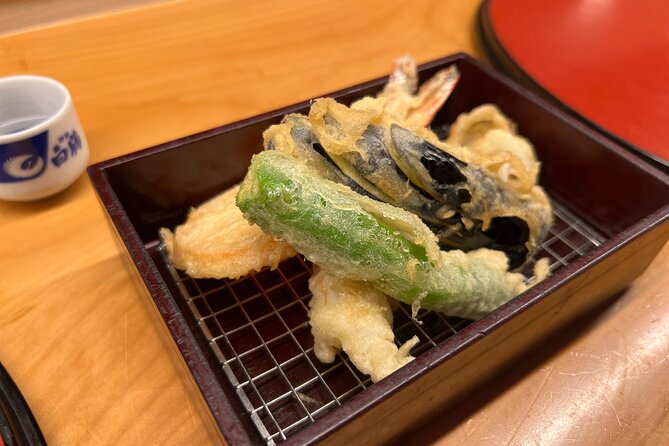
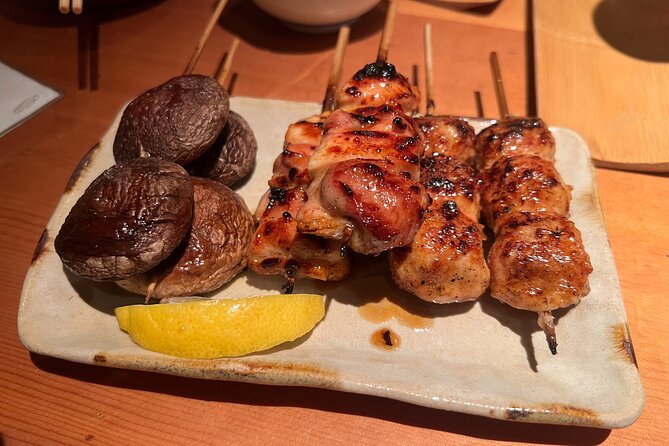
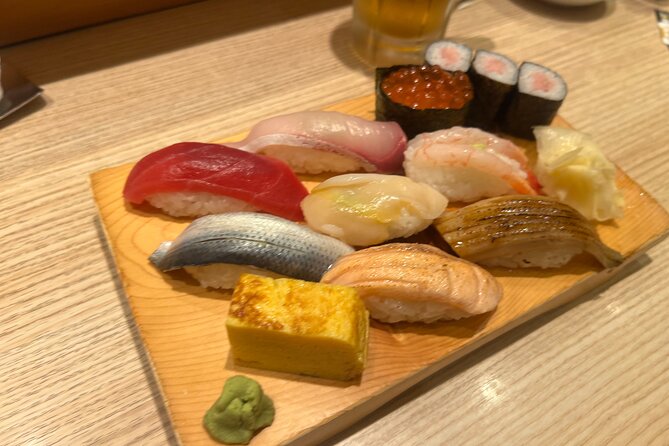
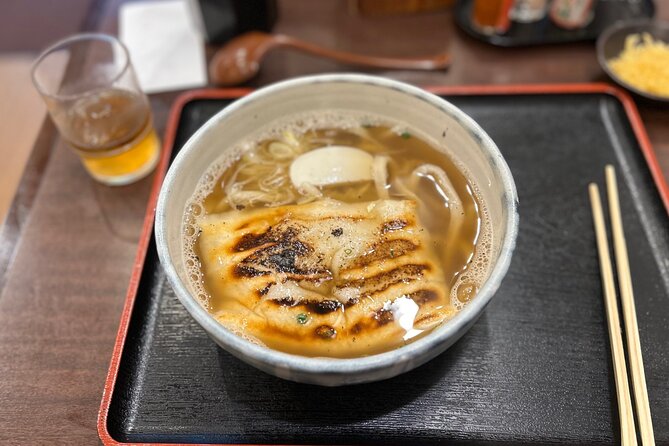
The food on this tour is designed as a sequence, not one meal. You’ll visit three food stops and eat a variety of traditional dishes. Depending on the night, you may get sushi, yakitori, tempura, udon, karaage, yakiniku, and other izakaya classics.
Here’s the part I think is most valuable: you’re not just consuming food. You’re learning how a Japanese evening is built. In many places, you start lighter or simpler, then go heavier or more grilled and fried as the night goes on. Your guide helps match the dishes to the moment so you don’t end up stuffed in a weird order.
If you come hungry, you’ll be happy. People consistently describe leaving full. If you’re the type who eats one thing and calls it a day, you might feel pressure to keep up. That said, the pacing is guided—so you can slow down when you need to.
Drinks Included: Simple, but Watch the Age Rule
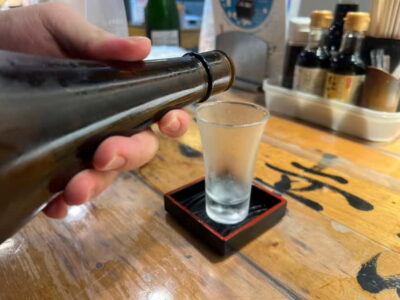
Complimentary drinks are included, and that’s a nice perk for a set-price tour. Just note the age rule: alcohol beverages are only served to travelers age 20 or older.
If you’re under 20, you can still enjoy the food and the included drinks portion that applies to you, but the alcohol part won’t. If you’re a mixed group with teens, plan accordingly and don’t assume everyone will be drinking the same thing.
Also, if you’re the kind of traveler who likes to sample one or two drinks and stop, that’s totally fine. You’re not required to turn this into a drinking competition. For most people, this tour is about tasting the food culture first.
Price and Value: Is $150 a Good Deal?
At $150 per person for about 3 hours with three stops, a professional local guide, complimentary drinks, and an all-you-can-eat style meal flow, the value is solid—especially if it’s your first night in Tokyo.
The reason I consider it good value: you’re paying for three things that cost real money if you do them yourself:
- access to high-quality local spots you might not find
- a guide who handles ordering and pacing
- the time savings of not zigzagging between neighborhoods while hungry
Could you spend less by picking one random restaurant and eating off a basic menu? Sure. But that’s not the same experience. This tour is a structured “night out” that reduces the risk of wasting time in tourist traps or choosing places that don’t match your tastes.
So the best way to justify the price is simple: do it when you want convenience, variety, and local confidence. If you love planning and hate guided pacing, you might prefer building your own list.
How the Guide Makes It Feel Local (Not Touristy)
In Japan, small guidance details can change everything. A good guide helps you:
- understand what you’re eating and why it fits an izakaya routine
- order confidently without getting stuck on menus
- feel comfortable in neighborhoods that look busy but can be intimidating at first
People praise guides such as Doren for cultural insight, and guides like Ryo or Yota for staying engaging. That matters because the tour isn’t only about feeding you. It’s also about giving you the context to appreciate the food and the neighborhoods.
If you ask questions, you’ll likely get practical answers about food choices and what to do next in Tokyo. Use that after the tour, and you’ll get extra value out of the money you spent.
Logistics That Matter: Meeting Point, Walking, and Weather
You’ll meet in Ginza at Novo 5-chōme-2-1 Ginza, Chuo City, Tokyo. The tour ends in Shimbashi. There’s no hotel pickup, so get yourself to the meeting area by public transportation.
Most importantly: the experience is weather-dependent. If conditions aren’t good, you’ll be offered a different date or a full refund. So don’t lock yourself into a tightly scheduled evening on days with major rain forecasts unless you’re okay with a change in plans.
Walking between three neighborhoods is part of the deal. If you’re okay with city walking, you’ll be fine. If you have mobility limits, you’ll want to think twice since the data only says that most travelers can participate (it doesn’t promise step-free access).
Who This Tour Suits Best
This is a great match if:
- you want a guided start to Tokyo nightlife without the stress of finding places
- you’re hungry for variety across sushi, udon, karaage, yakiniku, tempura, and more
- you’d rather spend money on a structured night than time on research
It’s also a strong option for people traveling as a couple or small group because the tour stays intimate. Reviews also note that some guides kept kids engaged, which suggests it can work for families who can handle a 3-hour walking + eating evening.
If you hate guided tours or you prefer totally independent dining, you may find it less freeing. But for most first-timers, it’s a shortcut to a more confident Tokyo dinner.
Should You Book This Ginza Food Tour?
Book it if you want an evening that feels like Tokyo, not like a checklist. The $150 price is easier to swallow when you remember you’re buying three guided meals, complimentary drinks, and less stress wandering around at night.
Skip it if you already have your own plan for izakayas and you strongly prefer to pick every restaurant yourself. Also skip it if you don’t want an alcohol-inclusive vibe and you’re expecting long, sit-and-stay sightseeing instead of walking between neighborhoods.
If you’re on the fence, here’s my practical advice: treat this as your first-night “orientation meal.” After you do this, you’ll know which areas you want to return to—and you’ll get better at ordering and choosing on your own.
FAQ
What’s the duration of the Tokyo Ginza food tour?
The tour lasts about 3 hours.
How much does the tour cost?
The price is $150.00 per person.
Where does the tour start and where does it end?
It starts at Ginza (near Novo 5-chōme-2-1 Ginza, Chuo City) and finishes in Shimbashi.
What time does the tour begin?
The start time is 6:00 pm.
How many stops are included, and what kind of food can I expect?
There are three food stops at local izakayas/bars. You can expect dishes like sushi, udon, karaage, yakiniku, yakitori, tempura, and more.
Are drinks included?
Yes. Complimentary drinks are included, and alcohol is only served to travelers who are 20 or older.
Is this a small group tour?
Yes. The maximum group size is 10 travelers.
Do I need hotel pickup?
No. Hotel pickup and drop-off are not included.
Is there anything I should budget for besides the tour price?
Additional drinks or extra food are not included.
What happens if the weather is bad?
The experience requires good weather. If it’s canceled due to poor weather, you’ll be offered a different date or a full refund.