REVIEW · AMSTERDAM
Amsterdam : Guided Cultural Food Tour
Book on Viator →Operated by Amsterdamliebe · Bookable on Viator
Amsterdam on foot makes the city click. This 2.5-hour cultural food tour links big-name sights with the smaller stories behind how Amsterdam grew, from medieval roots to Golden Age trade. You’ll move through the center with an intimate group, plus a guide who keeps the pacing human and the explanations clear.
What I like most is the way the guide makes history feel practical. You’re not stuck reading plaques; you get context at spots like the National Monument and the Royal Palace, and the tour stays easy to follow in English. I also like that snacks are included while you’re walking, so it feels like more than a sightseeing stroll.
One drawback to consider: a few famous stops along the route need extra tickets if you want to go inside, like the Anne Frank House and a couple of major churches/courtyards. If you’re hoping to do everything full-stop and in one go, you’ll likely need a separate plan for those.
In This Review
- Key highlights you’ll notice right away
- Why this Dam Square-to-Jordaan route makes Amsterdam easier
- National Monument: where Amsterdam remembers
- Dam Square and the Royal Palace: power, growth, and WWII memory
- Oude Kerk: oldest Amsterdam church and a big turning point
- Beurs van Berlage: trade that made Amsterdam’s rise happen
- Magna Plaza and Multatuli statue: architecture plus a hard truth
- The Jordaan and Negen Straatjes: neighborhood charm with a practical payoff
- Quick looks at Anne Frank House, Westerkerk, and Begijnhof
- How the 2 hours 30 minutes actually feels in your day
- What you gain from the guide’s style (and why snacks matter)
- Price and value: is $102.41 worth it?
- Who should book (and who might not)
- Should you book Amsterdamliebe’s Cultural Food Tour?
- FAQ
- How long is the Amsterdam Guided Cultural Food Tour?
- What does the tour cost?
- How many people are in the group?
- What language is the tour offered in?
- Do I get a mobile ticket?
- Where does the tour start?
- Where does the tour end?
- Are snacks included?
- Are admission tickets included for every stop?
- What’s the cancellation policy if plans change?
Key highlights you’ll notice right away
- Max 15 people means more questions and less waiting around at each stop
- English guide that’s easy to understand, with answers that actually help you see the places
- A Dam Square to Jordaan route that covers old power, trade, and neighborhood life
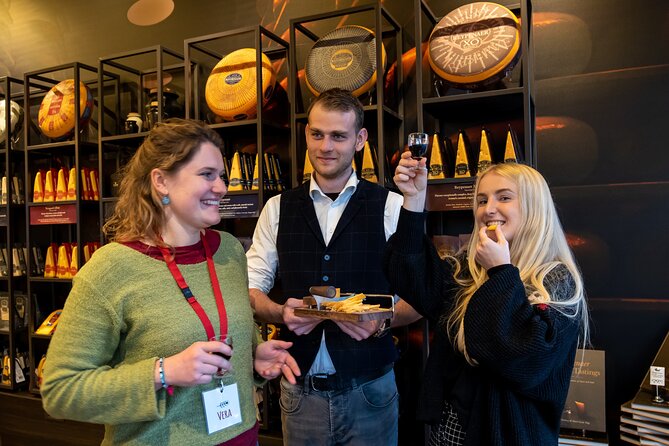
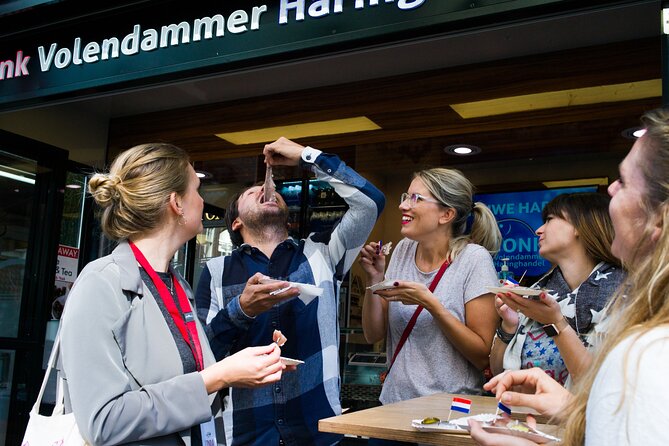
- Snacks included so the food theme isn’t just branding
- Golden Age landmarks like Beurs van Berlage and architecture worth slowing down for
- A calm, local finish at Spui instead of another endless circle of the same streets
Why this Dam Square-to-Jordaan route makes Amsterdam easier
Amsterdam can feel like a puzzle with the pieces scattered everywhere. This tour keeps you moving through one clear storyline: the city’s power starts at the center, grows through trade, then shows up in the neighborhoods people actually lived in. By the time you reach the Jordaan and the 9 Little Streets (Negen Straatjes), you’re not just looking at pretty buildings—you understand why they exist and what they were for.
The pacing also helps. The stops are short and frequent, so you get a steady rhythm: brief history, a quick sight check, then move on. That’s ideal if you only have a day or two and you want your bearings fast.
And because the group is capped at 15, you’re not swallowed by crowd noise. You can ask questions, and your guide can adjust on the spot when something is interesting (or confusing).
You can also read our reviews of more food & drink experiences in Amsterdam


National Monument: where Amsterdam remembers
You start on the steps of the National Monument at Dam. This is one of those places where the location matters as much as the story. You’re right in the historic core, and the guide ties the site back to Amsterdam’s earliest shape—starting with how the city formed in the 13th century.
Even if you’ve seen photos of the monument before, seeing it in context on the ground lands differently. It sets a serious tone for the walk, and it also helps you understand why Dam Square isn’t just a landmark stop. It’s a “center” in the literal and emotional sense.
One practical note: the tour starts right at the monument area, so this is a good time to get your footing. You’ll be walking for the next couple hours, and Amsterdam’s center can be busy fast.
Dam Square and the Royal Palace: power, growth, and WWII memory

From the monument, you head deeper into the story of Dam Square. Here you learn how Amsterdam grew from a small fishing village into a major city. The key is that the explanation connects the physical space—who had the power, where the city gathered, and what changed over time.
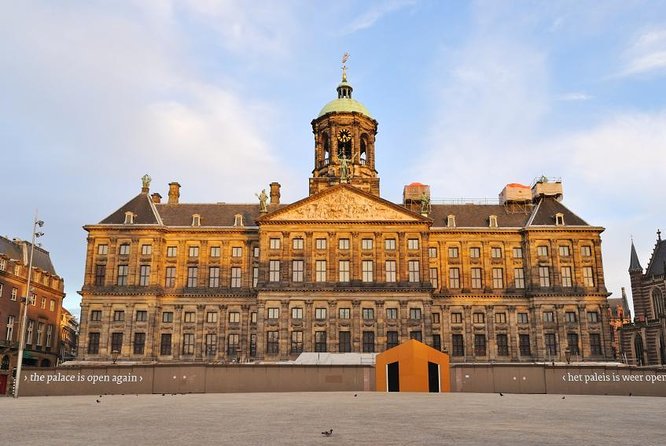
Then you walk past the royal scene: the Royal Palace Amsterdam. The guide focuses on the monarchy’s role, not just the pageantry. That’s useful, because it answers the question you’ll have later when you see royal imagery around town: why it’s still part of public life today.
And you’ll also pause with World War II memory in mind, including empathy for victims as you move along the route near these central memorial spaces. It keeps the tour grounded and stops the history from feeling like entertainment.
Oude Kerk: oldest Amsterdam church and a big turning point
Next comes Oude Kerk, the oldest church of Amsterdam. This stop is short but meaningful. You learn how the city’s religious life helped shape the early urban fabric, and the guide ties it to later social developments—including how the area around the red light district took shape starting in the 14th century.
This is one of those moments where you’ll probably notice you’ve been walking through layers of time. The church itself is an anchor, but the explanation makes it more than an old building. You start seeing how Amsterdam’s reputation and its geography grew together.
If you’re sensitive to the topic, it may help to know the tour doesn’t avoid it. It’s handled as historical context, not shock value, but it is part of the route.
Beurs van Berlage: trade that made Amsterdam’s rise happen

A major shift happens at Beurs van Berlage. You go from city roots to the engine room behind Amsterdam’s rise: trade. The guide explains how Amsterdam became the richest city during the Golden Age, and the setting here is perfect. This isn’t a generic “lots of money existed” story. You’re seeing a building designed around commerce.
What makes this stop valuable is that it gives you a lens for the rest of the walk. Once you understand how trade wealth built institutions, you start to notice patterns: architecture that looks designed to project stability, neighborhoods shaped by prosperity, and the way the city planned for movement and exchange.
It’s also a strong moment for photos, but don’t just snap and move. Take a few breaths and look at the scale. It helps you feel why the guide calls this era so important.
A few more Amsterdam tours and experiences worth a look






Magna Plaza and Multatuli statue: architecture plus a hard truth

Then you hit two stops that play well together: Magna Plaza and the Statue of Multatuli.
Magna Plaza is a former post office, and the guide uses that fact to show how Amsterdam repurposed key buildings as the city changed. It’s a reminder that the urban “look” isn’t only about old structures—it’s also about the choices people make with space over time. You’ll probably spot how the architecture carries authority even after its function changes.
After that, the Multatuli statue adds a sharper edge. You learn about the dark side of colonialism that helped generate Dutch wealth, along with criticism that followed. This isn’t a tourist-friendly, simple story. But it’s exactly the kind of context that makes you understand why Amsterdam’s culture can hold pride and discomfort at the same time.
If you like history that doesn’t pull punches, this is one of the tour’s strongest moments.
The Jordaan and Negen Straatjes: neighborhood charm with a practical payoff

Now you shift from national and commercial stories into everyday Amsterdam: the Jordaan. This area gets attention for its looks, but the guide also gives you the “why” behind it, including how the neighborhood’s cute houses were established. You start understanding the Jordaan as more than a postcard district—it’s tied to how the city evolved for people who weren’t living in the palace-shadow.
Then comes 9 Little Streets (Negen Straatjes), Amsterdam’s compact shopping lanes. This is where the food theme gets practical. The guide shares tips for bars, restaurants, and shopping in and around the area, so you can turn this stroll into a plan for later.
Here’s how to get the most out of this segment: keep walking with a purpose. Don’t stop for every window display. Instead, think about what you want tonight or tomorrow, because these lanes are most useful when you leave with a short list.
Quick looks at Anne Frank House, Westerkerk, and Begijnhof

The tour finishes with a cluster of famous names and quieter, tucked-in spaces.
You’ll take a brief look at Anne Frank House as you pass by. The key detail here is that this tour offers a short glimpse on the route, but entry is not included. If you want to actually go inside, you’ll need to plan that separately.
Next, you see Westerkerk, one of the biggest and most beautiful churches in Amsterdam. Again, this is a “see it from the route” moment, not an included visit inside.
Then you reach Begijnhof, a stunning courtyard that’s known for its hidden church. This stop is designed as a pause—quiet compared with the shopping lanes nearby. Like the others in this final stretch, admission is not included, so you’ll rely on what you can view as part of the walk.
If you’re the type who loves architecture and atmosphere, this ending works well. It gives you variety: memorial intensity earlier, trade and power mid-tour, and calm courtyards at the end.
How the 2 hours 30 minutes actually feels in your day
This is a walking tour that runs about 2 hours 30 minutes. Most stops are short, so you’ll rarely feel like you’re stuck in one place for long. That’s good for energy and good for making the rest of your day easier to plan.
Because the group is capped at 15, you’ll also avoid the “herd effect.” You can keep up without constantly squeezing into the person in front of you. Still, Amsterdam can be crowded around the Dam and the central lanes, so give yourself a little patience.
The tour also depends on good weather. If rain is likely, plan on bringing a light layer and a small umbrella. Wet stone plus lots of walking is not the combo you want.
What you gain from the guide’s style (and why snacks matter)
The tour’s biggest strength is how the guide ties scenes together into one story. You’ll get explanations that help you interpret what you’re seeing—like why Dam Square is such a meaningful center, why Beurs van Berlage represents a turning point, and why the Multatuli stop isn’t just a random statue but part of a bigger national conversation.
The English is clear, and the pace leaves room for questions. That matters because Amsterdam is full of “pretty but confusing” places. If you can ask, you can get clarity fast.
And yes, the tour includes snacks. Even without a detailed menu listed, that small detail changes the feel of the walk. You don’t have to hunt down food mid-tour, and it helps keep energy steady until you reach the Jordaan lanes for your next meal plan.
Price and value: is $102.41 worth it?
At $102.41 per person, this isn’t the cheapest way to see Amsterdam’s center. The value comes from a few bundled pieces:
- A guide-led route through major landmarks, with context you can’t easily reconstruct from a map
- Small group size (15 max), which makes the experience feel personal rather than crowded
- Snacks included, plus a small 1.50€ tourist tax included in the overall cost
- Many key stops are free to access during the walk, so you’re not paying entrance fees just to see the exterior and learn the story
One cost consideration: some stops near the end—like the Anne Frank House, Westerkerk, and Begijnhof—do not include admission. If you want to go inside, you’ll pay those tickets separately. So think of this tour as your orientation plus your story-building foundation, not as one combined ticket to everything.
If you want a guided overview that helps you choose what to do next, this price can make sense.
Who should book (and who might not)
You should book this if you want an organized, narrative walk through Amsterdam’s most important center-to-neighborhood zones. It’s especially good for history buffs who also want a day planned around food culture and local recommendations.
It also works well if you like short stops and constant movement rather than long museum time. The route is set up for people who want to see a lot without losing the thread.
You might skip (or at least pair it with other plans) if your main goal is entering every major attraction. Since some admissions aren’t included, you’ll still need separate bookings if those are your must-dos.
Should you book Amsterdamliebe’s Cultural Food Tour?
I’d book this if you’re trying to understand Amsterdam quickly and accurately. You get a tight walk that covers power, trade, architecture, and neighborhood life, with enough context to make your later explorations easier. The small group and the guide’s ability to answer questions are real advantages, not fluff, and the included snacks keep you comfortable during the moving parts of the day.
Just go in with the right expectations: this is a guided route with some landmark “glimpses,” plus a few places where you’ll need separate tickets if you want to go inside. If that matches your travel style, this tour is a strong use of time.
FAQ
How long is the Amsterdam Guided Cultural Food Tour?
It runs for about 2 hours 30 minutes.
What does the tour cost?
The price is $102.41 per person, and the 1.50€ tourist tax is included.
How many people are in the group?
The tour has a maximum of 15 travelers.
What language is the tour offered in?
The tour is offered in English.
Do I get a mobile ticket?
Yes, the tour includes a mobile ticket.
Where does the tour start?
It starts at National Monument Dam, 1012 JS Amsterdam, Netherlands.
Where does the tour end?
It ends on Spui Square near Art Amsterdam Spui, Spui 20HS, 1012 XA Amsterdam. If you want to return to Dam Square, you can follow your guide back.
Are snacks included?
Yes, snacks are included.
Are admission tickets included for every stop?
Admission tickets are not included for Anne Frank House, Westerkerk, and Begijnhof. Other stops on the route are listed as free.
What’s the cancellation policy if plans change?
You can cancel for a full refund if you cancel at least 24 hours before the experience starts. If you cancel less than 24 hours before, the amount paid is not refunded.