REVIEW · TOKYO
Tokyo West-Side Cycling & Food Tour
Book on Viator →Operated by DIG Tokyo Tours · Bookable on Viator
Tokyo on two wheels beats the usual route. This Tokyo West-Side Cycling & Food Tour takes you into lesser-seen neighborhoods on salvaged mamachari bikes, with street food stops and an included local-style lunch—away from the big-ticket crowds.
I like the small-group size (max 8). You get more time with your guide and less standing around waiting for people to remember which way is forward. I also like the way the tour mixes motion and food: you’ll pedal twisty back streets, glide along the Zenpukuji River, then refuel with a tailored set of snacks and a real neighborhood meal.
One possible drawback: you need to be comfortable cycling in urban traffic-like conditions, including narrow, sometimes crowded streets and uneven surfaces, for about 12–15 km (7.5–9.5 mi).
In This Review
- Key highlights at a glance
- Tokyo West-Side on Mamachari: what the bike setup changes
- Nakano, Koenji, and Asagaya backstreets: why this feels local fast
- Snacks and lunch in everyday Tokyo: what you actually eat
- Pacing and distance: 3.5–4 hours that won’t feel like a workout video
- Safety and weather reality: what you should plan for before you meet
- The guide’s job: making side streets make sense
- Value check on $99.49: what you’re really getting
- Who this Tokyo West-Side cycling and food tour is best for
- When you should skip it (or pick a gentler day)
- Should you book this Tokyo West-Side cycling and food tour?
- FAQ
- Where does the tour start, and where does it end?
- How long is the Tokyo West-Side Cycling & Food Tour?
- How far will I ride on the bikes?
- Do I need to know how to ride a bicycle?
- What food is included?
- Can the tour accommodate dietary restrictions or allergies?
- What if it rains?
- What size/height do I need to ride comfortably?
Key highlights at a glance
- Small group (max 8): easier conversation and a more personal pace.
- Mamachari bikes + front baskets: Japanese-sized bikes with baskets for a standard backpack; helmets available on request.
- West Tokyo neighborhoods: Nakano, Koenji, and Asagaya, chosen for local everyday life.
- Zenpukuji River bike time: a scenic break from backstreet riding.
- Street snacks + local-style lunch: included, with the chance to try dishes you might avoid ordering alone.
- A real guide, not a slideshow: guides share how people work, eat, and move through the city.
Tokyo West-Side on Mamachari: what the bike setup changes
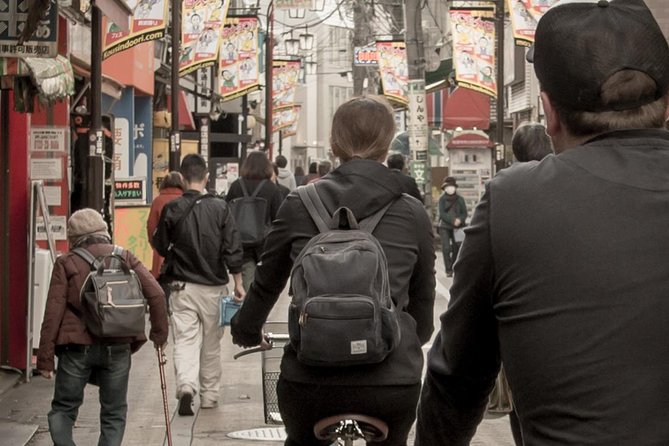
This tour is built around a classic Tokyo ride: the mamachari. You’ll hop on a salvaged mamachari bicycle, the kind locals use constantly for errands. One bonus here is practical design. These bikes are Japanese-sized and come with front baskets that can hold a standard backpack. So you can keep your day bag accessible while riding, instead of worrying about where to stuff everything.
You’ll also have helmets available for participants on request. That matters because your route uses narrow streets and uneven surfaces, so you want to feel secure before you start pedaling.
The bikes are described as sometimes creaky, sometimes squeaky, but always immaculately maintained. That tells me what to expect: you’re riding a real working bicycle, not a museum prop, and the operator is focused on keeping the equipment reliable.
Finally, this is an all-season, all-weather neighborhood ride. If it rains, you’re given basic ponchos and the tour generally keeps going. Tokyo weather can be moody, but you won’t be left stranded in the wrong layer of clothing.
You can also read our reviews of more food & drink experiences in Tokyo
Nakano, Koenji, and Asagaya backstreets: why this feels local fast
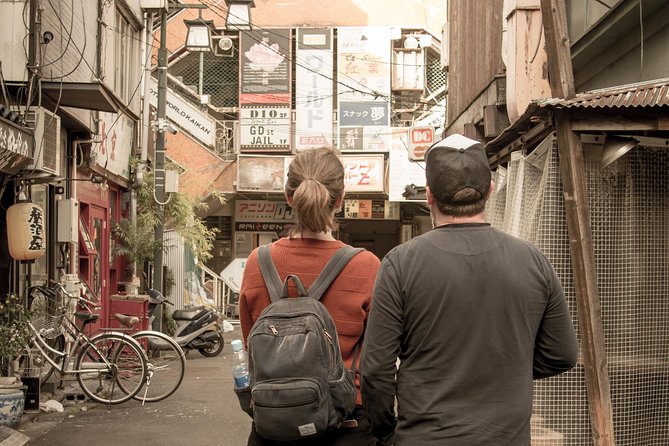
Most first-time Tokyo tours do a highlight reel. This one chooses the side streets. West Tokyo’s Nakano, Koenji, and Asagaya areas are the kind of neighborhoods where daily life is the main attraction: shops with regulars, apartment blocks, small eateries, and streets that don’t feel designed for cameras.
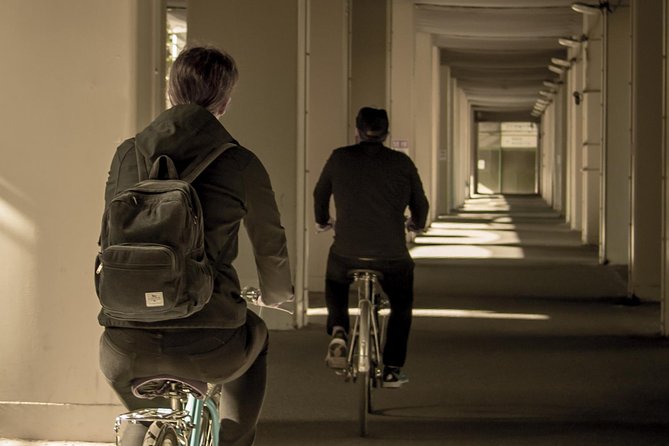
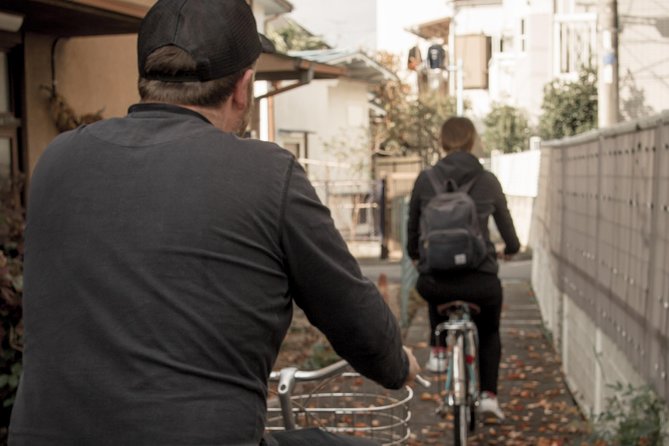
Your riding style matches the area. Expect twisting back streets and urban lanes, not wide boulevards. Reviews back up that the route often feels fairly flat overall, but flat doesn’t mean easy. You’re still maneuvering through turns, bikes parked close together, and junctions where pedestrians and bikes coexist.
Then you get a change of scenery with riverside riding along the Zenpukuji River. It’s a nice reset. After backstreets, having water and open sightlines makes the ride feel less stop-and-start and more like a real bike outing.
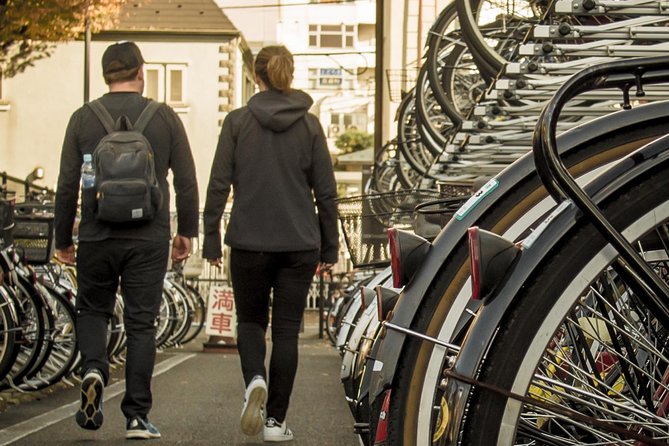
You’ll also learn how people use the city’s bicycle culture. One detail that comes up is Tokyo’s bicycle parking systems. During the tour, you may do a kind of practical bike-parking moment, which is exactly what you need if you want to understand how Tokyo bike life really works.
Snacks and lunch in everyday Tokyo: what you actually eat
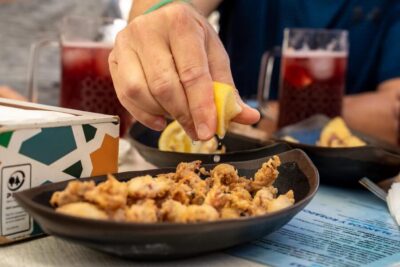
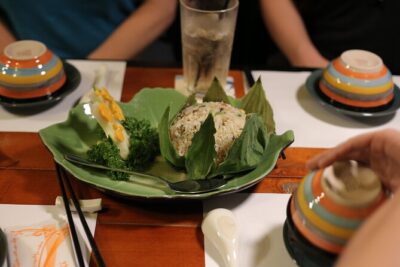
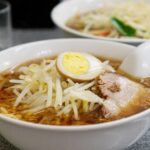
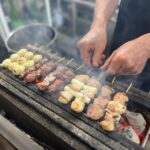
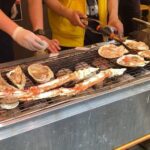
The food plan here is straightforward: street food snacks plus a local-style lunch. There aren’t “fine dining” detours or big formal restaurant sequences. This is about tasting what’s easy to find and what locals actually eat when they’re out and about.
You’ll stop for a tailored selection of popular local snacks. That’s a smart approach in Tokyo because it reduces the guesswork. A lot of the fun is trying things you wouldn’t order on your own, especially when you don’t want to spend half your trip pointing at photos.
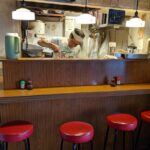
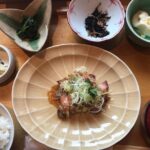
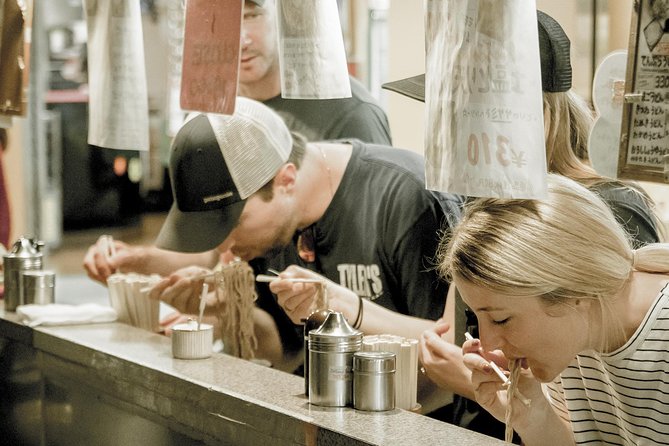
Lunch is another hands-on moment. The tour description sets the scene: you may experience counter seating and share space with hungry salarymen. That’s a very real Tokyo vibe—communal, efficient, and loud in that normal way. It’s also part of the learning. You’re not just eating; you’re watching how a busy neighborhood absorbs people.
A key ingredient note: Japanese cuisine often uses dashi as a base ingredient. Also, meals may include meat and seafood. That doesn’t mean you’re stuck with one option forever, but it does mean you should plan that strict dietary needs and allergies can be difficult to accommodate because this tour uses typical local eateries.
If you’re a cautious eater, this can still work—you’ll just want to be upfront about what you can and can’t have when the operator confirms details.
Pacing and distance: 3.5–4 hours that won’t feel like a workout video
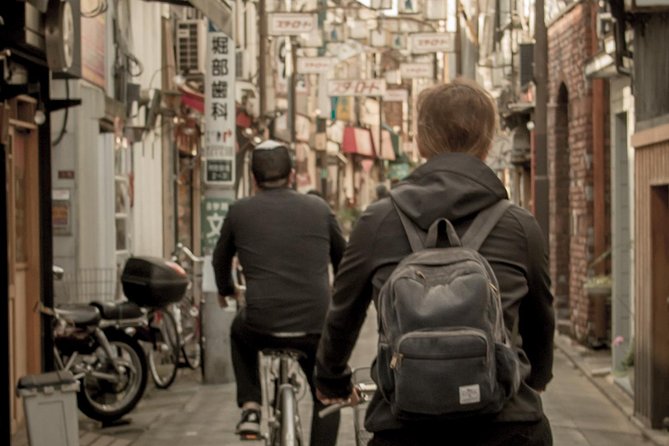
The tour is listed at about 3 hours 30 minutes, but expect a rough reality check: finishing time usually lands between 3.5 and 4 hours depending on group speed, eating speed, and environmental factors.
Riding distance is about 12–15 km (7.5–9.5 mi). That’s not marathon territory. It’s enough time to feel like you saw the neighborhood, not just the block outside the station.
The route also includes cycling plus walking breaks. That’s important. In Tokyo, you can’t always ride right up to the door of every place you want to eat or see. Walk segments also give you moments to regroup, ask questions, and reset your legs after turns and stops.
Reviews repeatedly point out that the pacing includes drinks and lunch breaks. That lines up with what an actual street-food ride needs: short, frequent pauses so you can stay in the fun zone instead of the gas-out zone.
One more thing: this tour is designed with socializing and local discovery in mind. That can mean the group stays together and talks more than you might on a strict sightseeing circuit. If you’re the type who likes meeting people while still focusing on the route, this style fits well.
Safety and weather reality: what you should plan for before you meet
The safety expectations are clear. You’re expected to be competent riding a bicycle in an urban environment through narrow and potentially crowded streets and on uneven surfaces. The tour isn’t for “I haven’t ridden since childhood” riders.
Liability insurance for the cycling portion is included for the experience. That’s good to know. But you’re also expected to have comprehensive travel insurance for unforeseen incidents. In plain terms: insurance covers part of the ride, and you should still protect yourself the way you would for any active travel day.
Weather is handled with ponchos. If conditions are bad enough that the tour can’t run, the operator offers a different date or a full refund. Since this is an outdoor ride, don’t plan it as your only “must-do” on a day when you expect hard storms.
Height matters too. You should be over 140 cm (4’7) to comfortably ride. Helmets can be provided on request, and the bikes are set up for Japanese sizing, so fit is part of the experience quality.
A few more Tokyo tours and experiences worth a look



The guide’s job: making side streets make sense
This tour lives or dies by the guide’s ability to translate daily life into something you can feel in real time. Here, that’s a big strength.
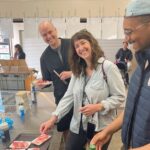
In many bookings, the guide is Andy. Guests describe him as friendly, enthusiastic, and happy to answer questions. They also highlight that he shares history and Japanese culture in a way that explains what you’re seeing—housing, schooling, religion, and how people use the city day to day.
One practical coaching theme shows up in feedback: people felt confident riding because the guide made the route feel manageable. If you worry about cycling in a foreign city, that kind of reassurance matters.
There’s also a pattern of thoughtful follow-up. Some guests report receiving extra details after the tour, tied to the food they tried and additional ideas based on interests. That kind of “you left with a mini itinerary” effect is useful because it helps you keep exploring beyond the last snack.
Value check on $99.49: what you’re really getting
At $99.49 per person for roughly 3.5 hours, this tour can feel expensive or reasonable depending on what you compare it to.
Here’s the value math that actually matters:
- You get a small-group, guided ride through neighborhoods most tourists skip.
- You get included street food snacks and an included local-style lunch. In Tokyo, meals add up fast if you’re buying them one by one.
- You don’t have to rent a bike or figure out where to park or how to navigate side streets safely. The bikes are part of the price.
- You also get helmet support (on request) and built-in planning for a structured route.
So if your Tokyo plan is heavy on trains and convenience stores, this tour can be a cost-effective change of pace. If your plan already includes several paid food experiences and a guided neighborhood walk, you might feel less of a “deal” and more of a “duplicate the value” situation. But if you want one guided day that combines movement + food + local context, the price is easier to justify.
One more detail: it’s commonly booked around 57 days in advance. That suggests it’s a popular slot, likely because the small group and the west-side focus create a more memorable experience than the standard hop-on hop-off approach.
Who this Tokyo West-Side cycling and food tour is best for
This works best if you want Tokyo without the biggest tourist magnets. If you’re the kind of traveler who likes local neighborhoods, you’ll appreciate the focus on Nakano, Koenji, and Asagaya—areas where everyday culture is the point.
You should also like trying food in small bites, especially street snacks. The included tasting stops are set up so you can sample without having to plan every order.
It’s a strong fit for:
- People who can ride a bike in city conditions.
- First-timers who want a quick orientation to how regular Tokyo life works.
- Couples, friends, and small groups who want conversation time rather than a silent photo march.
- Families where the child meets the 140 cm height requirement and can ride confidently.
If you want only major sights, this won’t satisfy you. This tour is not built around big landmarks.
When you should skip it (or pick a gentler day)
Skip or switch plans if any of these are true:
- You’re not confident riding a bike through narrow, potentially crowded streets and uneven ground.
- You have strict dietary needs or allergies and can’t be flexible with typical local eateries. The tour notes it can be difficult to cater to personal tastes, dietary requirements, and allergies.
- You’re expecting a polished, landmark-heavy itinerary or a “dress up and fine dine” day. The tour is intentionally no-fuss and neighborhood-focused.
Also, if you’re traveling with someone who gets stressed by traffic-like conditions, choose carefully. Even with a great guide, you’ll still be in the real flow of West Tokyo streets.
Should you book this Tokyo West-Side cycling and food tour?
If you want a fun, active introduction to West Tokyo, this is an easy yes. The combination of mamachari bike riding, neighborhood stories, street snacks, and an included lunch makes it feel like more than just transportation with a few bites.
Book it if:
- You can handle 12–15 km on a city bike.
- You like eating where locals eat.
- You want to see Koenji, Nakano, and Asagaya beyond the tourist map.
Consider a different plan if:
- Urban cycling makes you nervous.
- Your diet needs are so specific you’d rather not rely on local menu variability.
If the weather cooperates, you’ll come away with more than photos. You’ll understand how the west side actually moves, eats, and lives.
FAQ
Where does the tour start, and where does it end?
The tour starts at Kōenji Station (4-chōme-48-2 Kōenjiminami, Suginami City, Tokyo 166-0003, Japan). It ends back at the meeting point.
How long is the Tokyo West-Side Cycling & Food Tour?
The duration is about 3 hours 30 minutes. A typical finish time is roughly 3.5 to 4 hours depending on group speed, eating speed, and conditions.
How far will I ride on the bikes?
You should expect to ride about 12 to 15 km (7.5 to 9.5 mi).
Do I need to know how to ride a bicycle?
Yes. You are expected to be competent riding a bicycle in an urban environment, including narrow and potentially crowded streets and uneven surfaces.
What food is included?
The tour includes street food snacks and a local-style lunch. Because the stops are typical local eateries, meals may include meat and seafood, and dashi is a common base ingredient.
Can the tour accommodate dietary restrictions or allergies?
The tour notes that it can be difficult to cater to personal tastes, dietary requirements, and food allergies because it visits typical local eateries. If you have dietary needs, plan to communicate them clearly at booking.
What if it rains?
Basic ponchos are provided, and the cycling tour generally proceeds as planned. If it’s canceled due to poor weather, you’ll be offered a different date or a full refund.
What size/height do I need to ride comfortably?
You should be over 140 cm (4’7) in height to comfortably ride the bikes. Helmets can be provided for participants on request.