REVIEW · ATHENS
Athens Private Walking Food Tour With Secret Food Tours
Book on Viator →Operated by Secret Food Tours · Bookable on Viator
Athens tastes like history on foot. This private 3-hour walk turns you loose in the center of the city with a food-and-culture story shaped by Ottoman and Roman influences. You’ll eat your way through traditions that have roots stretching back more than four thousand years.
I especially like the all-food-included format, which makes it easy to focus on tasting instead of hunting down menus. I also like the guide attention in practice: Ilias and Thalia have been praised for handling different family needs and pacing, so the tour feels built around your group.
One thing to consider is that the route and menu can shift with weather and what’s available, so you should come with flexibility rather than expecting the exact same stops every day.
In This Review
- Key highlights to watch for
- Why Athens’ Ottoman-and-Roman food story works on a walking tour
- Starting at Monastiraki Flea Market: getting your bearings fast
- Avissinias Vintage Square shopping streets and the first menu moments
- Markets for seafood, tzatziki, and olive oil tasting
- Hadrian’s Roman library ruins and the streets around the Acropolis
- What’s on the included menu: pastries, seafood, olives, and dessert
- Guides Ilias and Thalia: what local storytelling adds
- Price and pacing: is $397.59 per person worth it?
- Should you book this Athens private walking food tour?
- FAQ
- FAQ
- How long is the Athens private walking food tour?
- Is this tour private?
- What food is included in the price?
- What isn’t included?
- Where do you meet, and where does the tour end?
- When do I receive confirmation after booking?
- What happens if the weather is poor or the tour can’t run as planned?
Key highlights to watch for

- Private, group-tailored pacing so you’re not stuck with a one-speed crowd
- All food included, from savory bites to dessert
- Four-stop structure that mixes shopping streets, markets, Roman ruins, and the Acropolis-side neighborhood
- Ottoman and Roman influence explained through what you actually eat
- Local guide names show up often in feedback, especially Ilias and Thalia
- Good-weather dependent, with refund or alternate date if it’s canceled for poor conditions
Why Athens’ Ottoman-and-Roman food story works on a walking tour
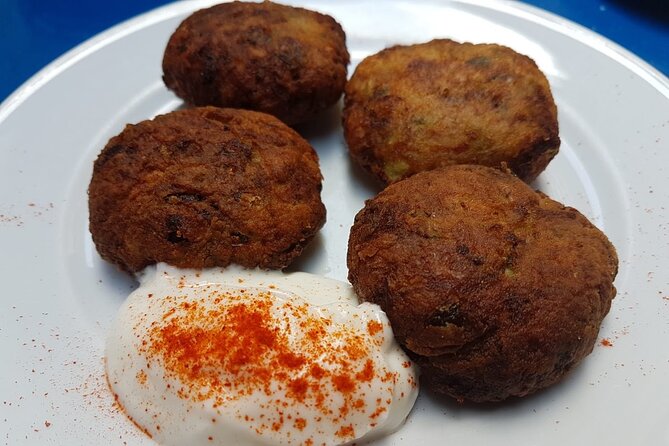
Athens doesn’t just look ancient. It also eats ancient. Greek food was shaped by layers of empires and trading routes, and on this tour you’re not getting that story from a slideshow. You’re getting it by tasting dishes that grew into everyday life over centuries.
This is the kind of experience that makes the city feel practical. You’re moving on foot, stopping in a set of neighborhoods where food is part of the street scene. Then your guide ties each bite to a bigger idea: how tastes travel, how ingredients show up again and again, and why staples like olive oil, bread, and legumes belong in the same conversation as seafood and pastry.
One smart bonus here is the private format. “Private” isn’t just a marketing word when the tour is built around where you’re comfortable walking, how your group wants to eat, and how long you pause. In feedback, Ilias specifically stood out for being patient with larger families and different walking speeds, and Thalia was praised for keeping the vibe warm and positive even on a rainy day. That matters because Athens can be busy and uneven on your feet, and you want a guide who adjusts.
You can also read our reviews of more walking tours in Athens



Starting at Monastiraki Flea Market: getting your bearings fast
Your day anchors at Monastiraki Flea Market area, and that’s a good choice. It’s lively without requiring you to jump straight into museum lines or long rides. Starting here helps you orient quickly, then you can spend the walking time learning the city rather than studying it from a map.
From the meeting point, the tour heads into the principal shopping district. This is the part of central Athens where you can feel the mix: clothing boutiques, souvenir shops, and specialized stores all shoulder up to one another. And yes, there’s shopping energy in the air, but you’re not there to browse for hours. You’re there to use the streets as your frame, then stop for bites as the neighborhood shifts.
Food tours work best when you’re paying attention to rhythm: a market stop changes your senses, a pastry stop changes your expectations, and a historical stop changes your tempo. Monastiraki gives you that first “wake up your appetite” moment, and then you layer it with the calmer, more local scenes that come next.
If you’re thinking about value, this start matters too. Transportation isn’t included, so having a walkable start in a transit-friendly area can save you time and hassle. And because this is private, you’re less likely to feel rushed in the first 30 minutes while everyone else catches up.
Avissinias Vintage Square shopping streets and the first menu moments
The first named stop is in the shopping district, with Avissinias Vintage Square as a reference point for antique and precious-item finds. Even if you don’t buy anything, this stop is useful because it shows you Athens as a living city, not only a postcard of marble.
Here’s how I’d use this phase of the tour: treat it as your warm-up. You’re not just seeing shops. You’re picking up what Greek street food culture feels like before you hit the markets.
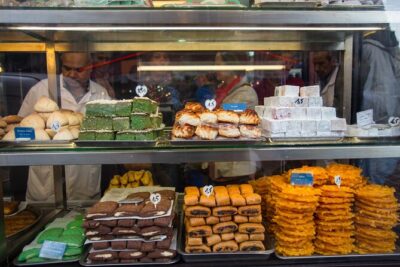
This is also where the tour’s menu logic starts to make sense. It’s not random. You’ll begin with familiar bread-based bites like koulouri, a sesame bread you’ll see sold all over Athens. Then you move into pastry territory with tiropita, the classic cheese pastry that’s easy to eat while walking and ideal for people who want savory first.
What I like about this order is that it matches how the city works. You get a handheld, casual start, then your next stops get more ingredient-heavy: seafood, legumes, olive oil, and pastry-dessert layers. By the time you reach the Roman-era stop later, you’re already halfway through the idea that Athens food is organized around staples you’ll keep spotting again.
Potential drawback? If you’re the type who wants a sit-down meal right away, you might feel the early stops are more “street snack” than “proper lunch.” The good news is that lunch is included, and the rest of the tour still builds toward fuller bites.
Markets for seafood, tzatziki, and olive oil tasting
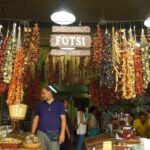
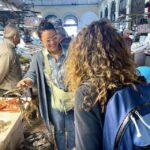
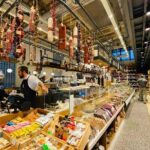
The next stop takes you to a local market scene where you’ll find locally sourced seafood, meats, fruits, and vegetables. This is where the tour does its best job making food feel real. You see ingredients before you taste them, which changes how you understand what you’re eating.
This is also where you’ll likely slow down without even noticing. Market stops encourage you to look closely: what looks fresh, what’s cut differently, what people buy repeatedly. And then you translate that into flavors.
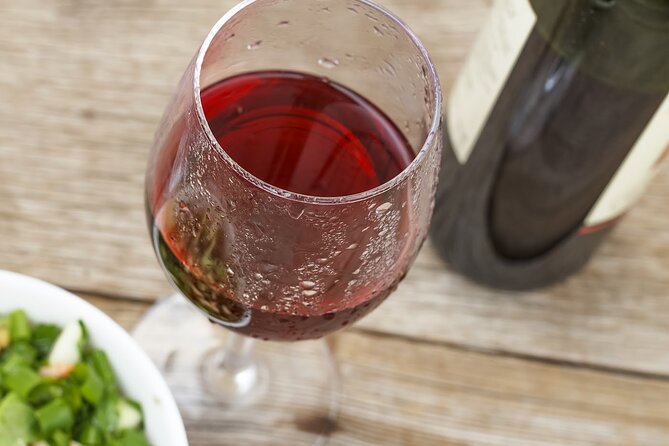
In the included lineup, a few items match perfectly with this stage. You’ll have fresh seafood, plus tzatziki, the yogurt-cucumber-garlic dip that acts like a cooling counterweight to stronger savory bites. You’ll also work your way through olives and olive oil tasting, which is one of the most practical ways to learn about Greece without overthinking it. Olive oil isn’t a side detail here. It’s a core ingredient, and tasting it helps you notice differences instead of assuming it all tastes the same.
You’ll also get fava beans purée, which is a reminder that Greek food isn’t only about meat and seafood. It’s also legumes, olive oil, and simple comfort flavors that hold up on their own. And if you’ve only had fava as a menu item back home, this is the chance to experience it in the context of the city that treats it as normal everyday food.
One practical tip: because this portion is market-based, expect smells and textures to hit fast. If you have strong food aversions, you’ll want to tell your guide early so they can help you navigate the included items. The private nature helps here.
Hadrian’s Roman library ruins and the streets around the Acropolis
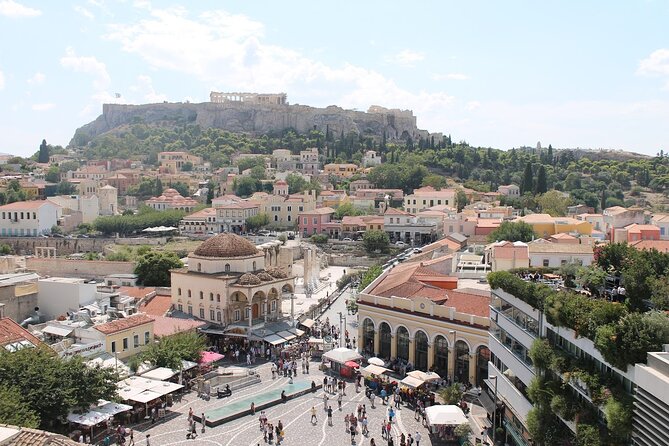
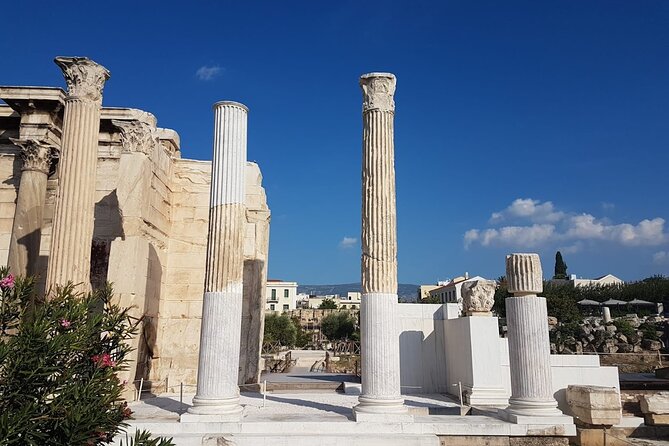
At some point the tour steps away from the food-focused intensity and shifts into place. You’ll visit Roman ruins of a library and cultural complex constructed in 132 CE by Emperor Hadrian. It’s not just a photo stop. It’s a moment that helps you connect food to the longer arc of how Athens reinvented itself again and again.
Then the route moves into the old historical neighborhood of Athens, clustered around the northern and eastern slopes of the Acropolis. The streets here are described as labyrinthine, with neoclassical architecture adding another layer to the feel. This is a good time to notice how Athens neighborhoods work: small streets, turning corners, and sudden changes in what you see around you.
Why is this helpful in a food tour? Because Athens food culture isn’t isolated from the city’s structure. It grew where people walked, shopped, and gathered. The Roman ruin ties you to the idea of public life and culture. The Acropolis-side streets tie you to daily life, where people still move through tight lanes and hang out in neighborhood pockets.
Also, you’ll feel the benefit of pacing here. A three-hour private walking tour can easily get tiring if every stop is high-speed. But in feedback, Ilias was noted for being patient, including with different walking speeds, and Thalia was praised for keeping things enjoyable even when weather wasn’t perfect. That’s the kind of guide behavior that makes historical stops feel informative instead of exhausting.
You can also read our reviews of more food & drink experiences in Athens





What’s on the included menu: pastries, seafood, olives, and dessert
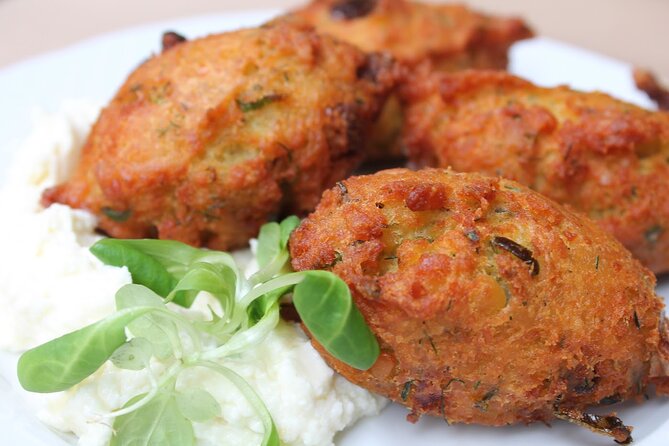
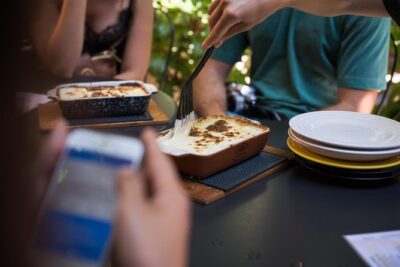
Let’s talk about the food, because that’s the point. Everything listed below is included: lunch, koulouri (athenian breads), tiropita, fresh seafood, tzatziki, fava beans purée, saganaki cesaria, olives and olive oil tasting, bread galaktoboureko (sweet dessert), and the tour’s Secret Dish.
Here’s how I’d interpret that selection if you want the most value from it.
- Bread + pastry start (koulouri and tiropita): easy to eat on the move, great for getting your appetite ready. This is also where you’ll likely notice what “street food” means locally: handheld, savory, and built for quick sharing.
- Core Greek flavors (tzatziki and fava): these give you recognizable anchors. If you want to understand Greece beyond tourist menus, it helps to have at least one dish in the middle of the meal that’s rooted in everyday kitchens.
- Seafood (fresh seafood plus saganaki cesaria): you’re getting a shift from creamy and legume-based flavors to something with more heat or contrast. Saganaki-style dishes generally carry a satisfying “warm plate” feel, even if you’re not sitting down for a long time.
- Olives and olive oil tasting: this is educational in a hands-on way. You’re not being told facts about ingredients. You’re tasting them, and that changes how you shop later.
- Dessert (bread galaktoboureko): you end on sweetness with galaktoboureko, which is the milk-and-custard style dessert many people associate with Greek pastry culture. The “bread” wording in the tour list suggests this version may have a particular preparation, but either way, it’s a proper finish.
And then there’s the Secret Dish. That’s the fun part, but also a reason this tour can feel different from what you’d order on your own. It adds one item that isn’t as predictable, so you leave with at least one flavor you can’t easily replicate without trying again.
If you’re picky, tell your guide at the start about what you avoid. You’ll have the best chance of having the tour match your tastes because the format is private and organized around your group.
Guides Ilias and Thalia: what local storytelling adds

In this tour, the guide isn’t just a walking companion. The story is part of how the food makes sense.
Ilias is mentioned in feedback as warm, patient, and able to handle different family walking speeds without leaving anyone behind. That’s more than personality praise. It’s a practical quality for a walking tour in Athens where sidewalks and crowds can vary by street.
Thalia shows up again and again for being welcoming, funny, and strongly tied to Greek food traditions and history. One detail that stands out is her ability to point out places that can feel invisible from the outside, which is exactly what you want when your goal is to taste local rather than only dining where you’ve already seen menus lined up.
So what should you expect from the guiding style? You should expect explanations connected to your plate. The tour positions itself around how cuisine reflects Ottoman and Roman influence, and the ruins plus neighborhood streets are built to support that point. You’ll hear why certain ingredients matter and how the city’s long timeline shows up in food you can actually eat.
Price and pacing: is $397.59 per person worth it?
At $397.59 per person for about three hours, this is not a budget “snack and stroll.” It’s a paid, structured experience with a clear promise: you get a private walking plan and all food is included.
Here’s where the value math becomes real. You’re covering the cost of multiple dishes and tastings (not just one meal), plus lunch, plus dessert, plus that Secret Dish. Add in olives and olive oil tasting, and the tour stops become more than scenery. They’re part of how you access different flavors.
Transportation is not included, so you’ll want to plan to get to the start area and back. The tour ends back at the meeting point, so you’re not stuck figuring out where you land at the end of your evening.
Duration also matters. Around three hours is long enough to feel like you did something substantial, short enough to stay flexible on a busy Athens schedule. And private pacing means you’re not spending half the tour waiting while a group catches up or arguing about what to eat next.
Who gets the most out of it?
- Food-first people who want a guided introduction to Greek dishes beyond the obvious tourist picks
- Small groups that can benefit from adjusted walking pace
- Visitors who like combining eating with cultural context, especially Roman-era Athens and the Acropolis-side neighborhoods
- Anyone who wants a local feel without committing to long museum days
Should you book this Athens private walking food tour?
If you want Athens food plus neighborhood context, this is a strong match. The included menu is broad enough to cover savory, fresh, and sweet, and the route mixes markets, shopping streets, Roman ruins, and Acropolis-adjacent streets so you don’t end up with a one-note “eat here, eat there” day.
I’d book it if you care about:
- All food included so you can budget confidently
- Private pacing that can work for different group needs
- A guided story that connects dishes to Athens’ Ottoman and Roman influence
I’d think twice if you dislike walking or you need a guaranteed exact itinerary and menu, no matter what. The tour notes that stops and menu can change depending on availability and weather. Still, if you’re flexible and want a guided Athens food education, that’s usually a good trade.
FAQ
FAQ
How long is the Athens private walking food tour?
The tour runs for about 3 hours.
Is this tour private?
Yes. It’s a private tour, and only your group participates.
What food is included in the price?
Lunch is included, along with koulouri, tiropita, fresh seafood, tzatziki, fava beans purée, saganaki cesaria, olives and olive oil tasting, bread galaktoboureko (sweet dessert), and a Secret Dish.
What isn’t included?
Transportation and gratuity are not included.
Where do you meet, and where does the tour end?
The start is at Monastiraki Flea Market (Ifestou, Athina 105 55, Greece). The tour ends back at the meeting point.
When do I receive confirmation after booking?
Confirmation is received within 48 hours of booking, subject to availability.
What happens if the weather is poor or the tour can’t run as planned?
The experience requires good weather. If it’s canceled due to poor weather, you’ll be offered a different date or a full refund. It can also be canceled if a minimum number of travelers isn’t met, with an alternate date/experience or a full refund.