REVIEW · BARCELONA
Barcelona Food Tour: Tapas, Drinks and Delights with a Local
Book on Viator →Operated by Do Eat Better Experience · Bookable on Viator
Barcelona’s streets make you hungry fast. This tapas-and-drinks tour threads through the Gothic Quarter with at least 4 food stops and a local guide explaining how everything fits into Catalan life. I especially like the focus on real bar culture—vermuteo, pinchos, and the salty-sweet dessert rhythm—and I appreciate that the tour is built for variety, not just one type of bite. One thing to consider: it’s a walking tour with a set tasting flow, so if you’re picky about specific items, tell your guide up front and be ready for seasonal menu swaps.
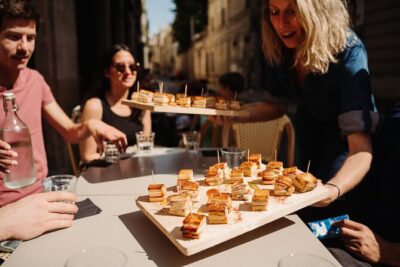
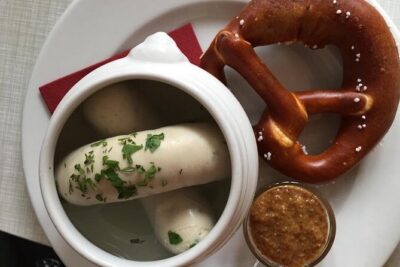
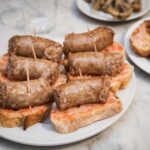
The food plan is heavy on Spanish and Catalan classics—croquetas, fried anchovies, tortilla, sausage montaditos, pan con tomate, pimientos del padron, plus crema catalana and ice cream. The drinks are part of the show too, including vermut and cava, with non-alcohol options available. My only caution: alcohol is included in a fixed amount for over-18s, and those with severe or life-threatening allergies can’t join for safety reasons.
In This Review
- Key highlights worth your time
- How this Barcelona tapas tour really works (3 hours 30 minutes)
- Barrio Gòtic start: vermuteo, tapas, and the vibe behind the bites
- Carrer de la Mercè: a long-running tapas bar and classic pairings
- Carrer del Regomir: pan con tomate, pimientos del padron, and cava
- Plaça de Sant Josep Oriol: pintxos, a small square, and weekend art
- Plaça de Sant Jaume: crema catalana and local-ingredient ice cream
- Price check: is $65.33 a good value for this many stops?
- Who this tour fits best (and who should tweak expectations)
- Small-group logistics in the Gothic Quarter (where meeting points can be tricky)
- Should you book this Barcelona tapas walk?
- FAQ
- Where does the tour start and end?
- How long is the Barcelona tapas tour?
- Is the tour offered in English?
- What food and drink are included in the price?
- Do I need to be 18 to drink alcohol?
- Are vegetarian options available?
- Can people with food allergies join?
- What happens if the weather is bad?
- What is the cancellation and refund policy?
Key highlights worth your time
- Small group (max 12) means less waiting and more back-and-forth with the guide
- English-speaking local guide with a mix of food talk and Gothic Quarter context
- Vermut + wine + cava are built into the tastings, not added later
- Multiple classic stops across Barrio Gòtic, from old tapas bars to bakeries for crema catalana
- Seasonal changes are normal, so expect some dishes to vary by availability
How this Barcelona tapas tour really works (3 hours 30 minutes)

This is a 3 hours 30 minutes walking tour in Barcelona’s Ciutat Vella area, designed around the Gothic Quarter’s tight lanes and old-school food stops. You’ll start at Plaça de l’Àngel and finish around Carrer de Jaume I (the exact end spot can shift a bit depending on partner availability).
The promise is simple: you’ll get enough tastings to feel like you ate a full meal by the end. That matters in Barcelona because you can easily waste time hopping around tourist menus that all blur together. Here, the pacing is set, the order makes sense, and you don’t have to guess what to try first.
Group size is capped at 12, and the guide’s job is to keep the flow moving while still giving you context. That personal feel shows up in the kinds of feedback you’ll often see—guides like Andrea, Ophélie, Miguel, Thomas, and Daiam get praised for mixing food choices with practical history about the streets you’re walking.
You can also read our reviews of more food & drink experiences in Barcelona
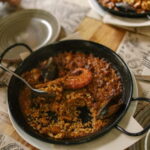
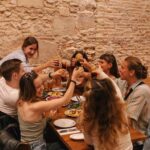
Barrio Gòtic start: vermuteo, tapas, and the vibe behind the bites
Your tour begins in Barri Gòtic, where the streets themselves feel like the appetizer. You’ll pass iconic sights while your guide ties the food to the neighborhood—why certain dishes are staples, and what “local rhythm” looks like in real bars.
The first tasting leans into vermuteo, the Catalan ritual of sipping vermut and then stacking tapas. You’ll typically get Spanish and Catalan must-haves here, plus a very early version of dessert culture—one sweet course that dates back in the region’s tradition. The exact menu can shift by season and partner availability, so don’t plan your expectations around a single guaranteed dish at stop one.
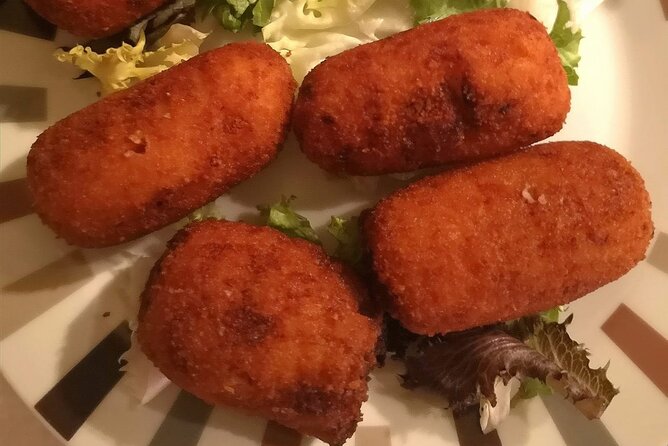
What I like about this approach is that it teaches you how to taste. For example, when you’re offered something like croquetas, you learn what makes a croquette “Barcelona good”: crisp exterior, creamy interior, and a béchamel base that carries cured ham flavor. It’s not just comfort food—it’s a street-level lesson in technique.
Potential drawback to keep in mind: since this part is tied to seasonal availability, the menu you see may differ slightly from the sample lineup. If there’s one item you absolutely won’t eat, flag it before the tour starts.
Carrer de la Mercè: a long-running tapas bar and classic pairings
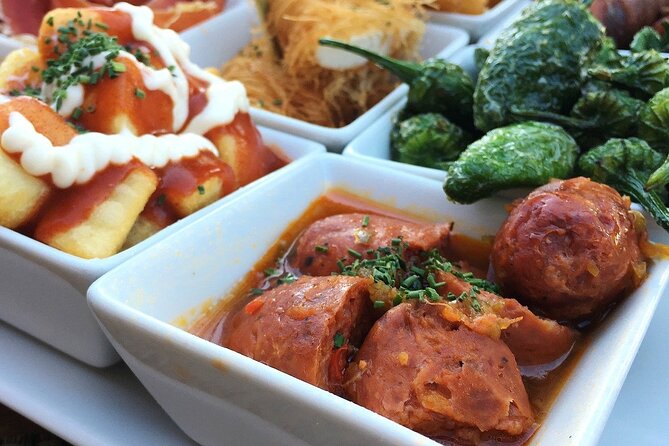
Next up is Carrer de la Mercè, a street near the Sant Josep Oriol / Santa Maria del Pi area zone (the tour uses nearby landmarks to orient you). You’ll get a look at the atmosphere of the Gothic Quarter here, and then you’ll hit one of the oldest still-running tapas bars in Barcelona.
This stop is about classic tapas that make sense with a local wine pour. You can expect tastings like fried anchovies, tomato salad, and a pincho de botifarra. You’ll also see the logic of pan con tomate—bread spread with tomato juice—because it shows up again later in the tour in different forms.
Here’s the practical benefit: by stop two, you start to recognize patterns. You learn how Barcelona builds balance: salty (anchovies), fresh and acidic (tomato salad), and comforting bread-based bites to soak up the drink. If you later decide where to eat on your own, you’ll have a mental checklist.
Also, the pacing is designed for short stays at each venue. That means you can try several bars without feeling stuck in one place for too long.
Carrer del Regomir: pan con tomate, pimientos del padron, and cava
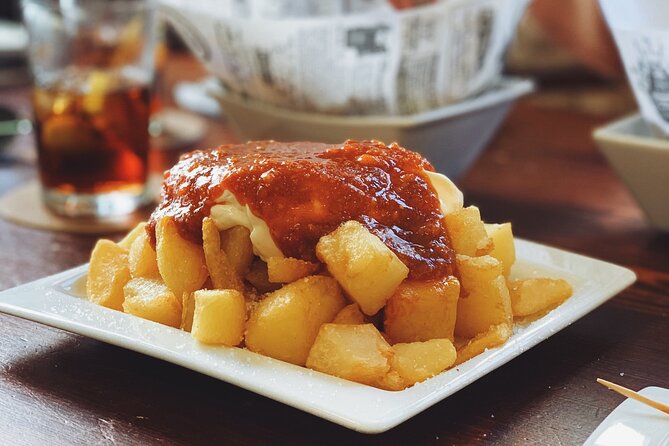
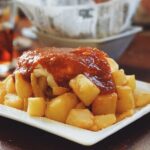
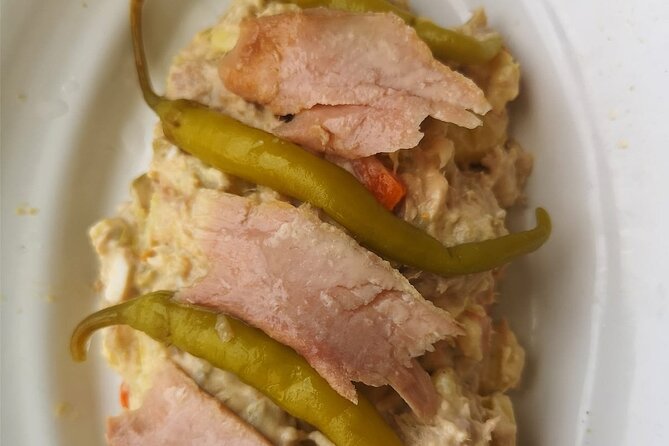
On Carrer del Regomir, the tour continues with a wider spread of Barcelona staples: pan con tomate, pimientos del padron, and tortilla. The drinks here include cava, often treated like Spanish champagne, which helps the meal feel celebratory without going overboard.
This is a great stop if you want a quick education in Spanish snacking variety. Pan con tomate is simple, but it’s also a test of quality—fresh tomatoes, good bread, and balanced seasoning. Pimientos del padron can be mild or spicy depending on the pepper, so it’s a playful way to learn how locals eat them: olive oil, plenty of salt, then bite and react.
Then there’s Spanish potato tortilla, the flexible favorite that works as a starter, a side, or a full snack if you’re touring all day. If you’re wondering what to order in Barcelona when you see tortilla on a menu, this stop answers that question fast.
One more thoughtful note: at this point you’ll likely feel full, but the tour keeps the experience moving. That’s good design in a city where you can easily over-order by mistake.
Plaça de Sant Josep Oriol: pintxos, a small square, and weekend art
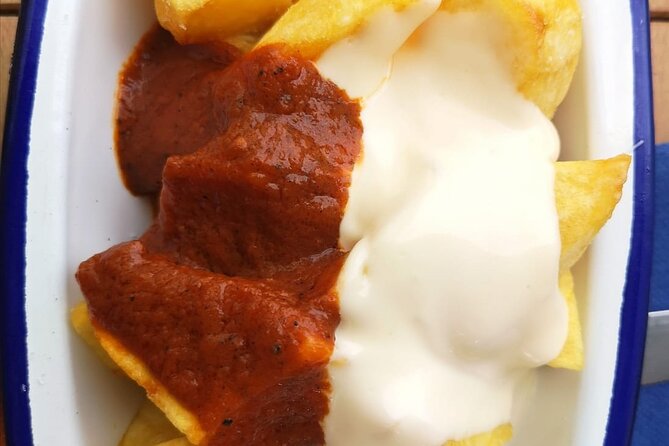
The tour takes you to Plaça de Sant Josep Oriol, a smaller square tucked behind the more famous Santa Maria del Pi basilica. It’s not the big postcard stop, but that’s the point—you see the Gothic Quarter’s quieter corners that are easier to enjoy when you’re not trying to photograph your way through crowds.
If your timing lines up with the weekend, you might catch an artists’ market, and the vibe includes people painting en plein air (outside at easel). You’ll then head to a tapas bar nearby for what the tour highlights as some of the best pintxos in town.
This stop can be memorable because pintxos are a different eating style than classic tapas. It’s more “small plate with personality,” often served in a way that invites you to compare flavors across places. If you tend to order just one thing at restaurants, this stop can help you learn the difference between “a good bite” and “a good Barcelona bite.”
Small consideration: because the square and market depend on timing, your experience here may vary. Still, even without the market, the contrast from the busy lanes is worth it.
A few more Barcelona tours and experiences worth a look



Plaça de Sant Jaume: crema catalana and local-ingredient ice cream
You finish at Plaça de Sant Jaume, the administrative heart of Barcelona, with major buildings visible from the square. This part of the walk is a natural reset: you go from narrow-food lanes to an open plaza where you can finally breathe and take in the architecture.
The tour’s sweet moment comes from an old bakery shop tradition. You’ll taste crema catalana, the famed Catalan cream dessert, described as the official regional dessert by the Catalan cooking institute. Since this portion is lunch-only, timing matters if you’re booked earlier vs later.
Then there’s more dessert payoff: in the evening, the tour includes handmade ice cream with local ingredients such as turrón. That mix makes the ending feel very “Catalonia,” not just a generic dessert stop.
If desserts are your thing, this finish is why you book. Crema catalana is a classic reason to come to Barcelona, but the way the tour stacks dessert styles—custard cream first, then ice cream flavors—keeps it from feeling repetitive.
Price check: is $65.33 a good value for this many stops?
At $65.33 per person for about 3.5 hours, this sits in the midrange for Barcelona food tours. What makes it feel fair is what you get attached to the price:
- At least 4 food stops around the Gothic Quarter, plus food that amounts to a full meal by tour end
- Alcoholic beverages in a fixed amount for people over 18 (with non-alcohol options available)
- Water included
- English-speaking local guide and a small group size capped at 12
In practice, the value comes from how much decision fatigue it removes. Barcelona has tons of bars, but figuring out which ones are worth your time takes energy. When someone else builds the tastings—and keeps you fed—you pay to save guesswork.
One more plus: the drink structure is part of the pacing. Cava and vermut aren’t an afterthought; they’re paired with the food stops so you taste more than just food. If you like tapas but also want to understand the drinking culture, this tour pays for itself in clarity.
Who this tour fits best (and who should tweak expectations)
This is a strong match if you want:
- A walking tour that mixes food with neighborhood context
- A plan that helps you eat like a local without building your own route
- Variety across Catalan and Spanish classics, including vermuto, wine pairings, and desserts
It can be less ideal if:
- You have severe or life-threatening food allergies, because safety rules prevent participation
- You have strong aversions to fish (the sample menu includes fried anchovies)
- You want long sit-down meals instead of short bar stops
Good news: vegetarian options are available, and you can (and should) inform the operator of dietary restrictions before booking. The tour also allows service animals, and you’ll want a moderate physical fitness level since it’s walking in old streets.
Small-group logistics in the Gothic Quarter (where meeting points can be tricky)
The route is dense and walk-heavy, which is exactly why it works. But Ciutat Vella streets can be confusing at first glance. Your best move is simple: arrive a few minutes early at the start point, Plaça de l’Àngel, and double-check you’re with the correct group before the tour begins.
Most guides keep things smooth, and a lot of feedback praises how engaging the experience feels when there are only a few people. Still, one or two negative experiences have pointed to issues like late guides or a shorter-than-expected run. You can’t control every variable, but you can protect your enjoyment by planning to be flexible and not rushing to another appointment right after.
Should you book this Barcelona tapas walk?
I’d book it if you’re visiting Barcelona for the first time (or first few days) and you want a fast way to learn how local eating works: vermut, tapas order logic, paired drinks, and Catalan desserts.
I wouldn’t book it as your only food plan if you hate walking or you need a very specific menu with zero surprises. But if you’re open to small-bite variety and want someone to guide you through Barri Gòtic without wasting time guessing, this is a solid choice.
One more reason to consider booking sooner: this tour is often reserved about 54 days in advance on average. If your dates are fixed, don’t wait until the last week.
FAQ
Where does the tour start and end?
It starts at Plaça de l’Àngel, Ciutat Vella, Barcelona, and ends around Carrer de Jaume I, Ciutat Vella. The exact end point can change slightly based on partner availability.
How long is the Barcelona tapas tour?
The duration is about 3 hours 30 minutes.
Is the tour offered in English?
Yes. The tour includes an English-speaking local guide, and the guide may also speak Spanish.
What food and drink are included in the price?
You get meals at least 4 food stops around the Gothic Quarter, plus food that equals a full meal by the end. The tour also includes water and an alcoholic drinks selection in a fixed amount (for those over 18), with non-alcoholic options available.
Do I need to be 18 to drink alcohol?
Yes. The minimum drinking age is 18. Non-alcoholic options are available for those who prefer not to drink.
Are vegetarian options available?
Yes, vegetarian options are available. You should tell the operator about dietary restrictions before booking.
Can people with food allergies join?
The tour says people with severe or life-threatening food allergies cannot participate for safety reasons.
What happens if the weather is bad?
The tour requires good weather. If it’s canceled due to poor weather, you’ll be offered a different date or a full refund.
What is the cancellation and refund policy?
You can cancel for a full refund if you cancel at least 24 hours before the experience starts. If you cancel less than 24 hours before, the amount paid is not refunded. Changes within 24 hours aren’t accepted.