REVIEW · AMSTERDAM
Eating Amsterdam: Albert Cuyp Market & The Pijp Food Tour
Book on Viator →Operated by Eating Europe Food Tours Amsterdam · Bookable on Viator
De Pijp turns food into an easy plan. This small-group Eating Amsterdam tour threads you through Albert Cuyp Market without getting lost in the maze of stalls and lines.
What I like most: the route is tight, so you taste a lot of classic Dutch food in a short time, and you’re not doing the heavy lifting of planning.
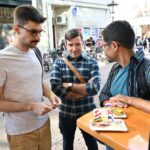
My second favorite part is how hands-on it all feels. You’ll sample at historic spots like Simon Meijssen and then roll right into a stroopwafel workshop where you make and eat your own warm treat. Guides such as Gerard and Danielle come through with neighborhood stories that make the food feel connected to place, not just snacks.
One consideration: the food focus is very meat-and-dairy (saucijzenbroodje, Gouda, Dutch-style ham, broodje gezond), and the operator notes that people with severe or life-threatening allergies can’t join. If you’re vegetarian or gluten-free, you’ll want to email your needs ahead of time and see what’s possible.
In This Review
- Key things to know before you go
- De Pijp and Albert Cuyp Market: Food-first Amsterdam without the chaos
- What you pay (and why it feels fair) at $114.89 for 2.5 hours
- Your tour pacing: a structured route with enough time to taste
- Stop 1: Simon Meijssen and the saucijzenbroodje you’ll want to re-create
- Stop 2: Johan Kaas in the Albert Cuyp Market for smooth, nutty Gouda
- Stop 3: Alain Bernard Butchery and Dutch-style ham
- Lunchcafé Bozz: broodje gezond, made from market selections
- Stroopwafel Workshop: make it warm and eat it right away
- Samuel Sarphati in De Pijp: why this neighborhood has a doctor’s name
- Where the tour starts and ends (and how to not waste time)
- Dietary needs and allergies: the one place you must plan ahead
- Who this tour suits best (and who might skip it)
- Guides matter: the human part of the tastings
- Should you book Eating Amsterdam: Albert Cuyp Market & The Pijp Food Tour?
- FAQ
- How long is the Eating Amsterdam Albert Cuyp Market & The Pijp Food Tour?
- What’s included in the tour food-wise?
- What’s the group size limit?
- Is the tour conducted in English?
- Where do I meet and where does the tour end?
- Is mobile ticketing used?
- Can I bring a service animal?
- Can I get a full refund if I cancel?
- Are dietary needs and allergies accepted?
Key things to know before you go
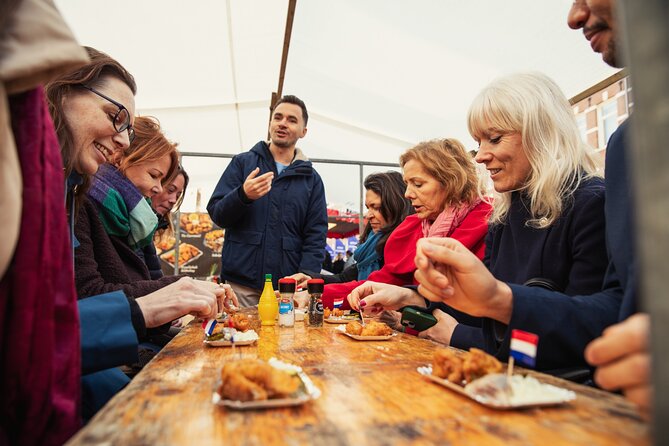
- Albert Cuyp Market, 250+ stalls: You get a guided route through one of Amsterdam’s most famous open-air food markets.
- Max 12 people: The group size stays small, which helps the pace and the time at each stop.
- Included tastings and lunch: You’ll try saucijzenbroodje, Gouda, Dutch-style ham, and a broodje gezond lunch.
- Hands-on stroopwafel: Not just tasting—making your own with caramel filling right at the iron.
- English-speaking local guide: You’ll get clear guidance and local context in English.
De Pijp and Albert Cuyp Market: Food-first Amsterdam without the chaos
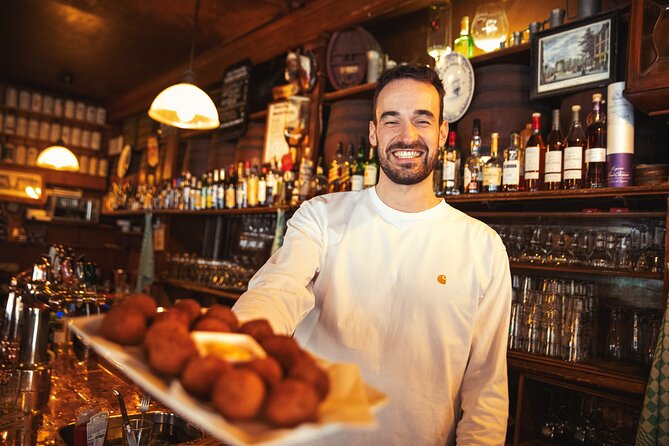
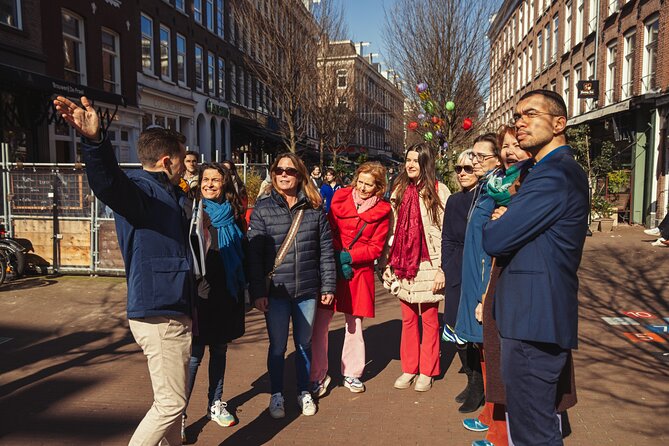
If Amsterdam food markets intimidate you, this tour is a smart fix. De Pijp is a real neighborhood with real locals popping in for lunch, snacks, and errands, not just a tourist photo backdrop. And Albert Cuyp Market is the shortcut: open-air, busy, and packed with everything from fresh produce to Dutch classics and multicultural street food.
The big win is that you’re not trying to make decisions while hungry. A guide keeps you moving and picks stops that represent everyday Amsterdam eating. You’ll also get the feeling of how De Pijp works—what people buy, how quickly they snack, and what becomes “normal” after a few tastings.
You can also read our reviews of more food & drink experiences in Amsterdam

What you pay (and why it feels fair) at $114.89 for 2.5 hours
At about $114.89 per person for roughly 2 hours 30 minutes, you’re paying for three things: guidance, multiple tastings, and a hands-on workshop. This isn’t just a walk with a few bites—your tour includes a guided visit of the market plus specific food items across several stops.
Also, extra drinks aren’t included, so you’re mainly budgeting for what’s on the tour menu. That matters because markets can tempt you into spending more once you’re already there. Here, you’re fed on purpose.
The group size cap (maximum 12 travelers) also affects value. Smaller groups usually mean less waiting and more time at each spot, and the tour is designed around short, efficient stops rather than slow meandering.
Your tour pacing: a structured route with enough time to taste
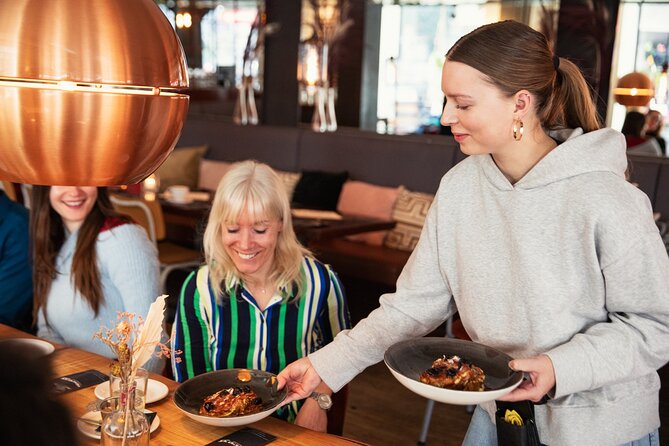
This tour keeps a practical pace: quick stops for tastings, then small pockets of seated time. You’re looking at about 10–30 minutes per location depending on what’s happening—some are for sampling, one includes a lunch sit-down, and the stroopwafel part is hands-on.
The reviews highlight that the pacing hits the sweet spot: you spend enough time to enjoy each place, but you don’t drag through the day. That’s important when you only have a limited window in Amsterdam. Two and a half hours can be a lot—or not enough—depending on how the tour is run. This one is designed so it doesn’t feel rushed.
Stop 1: Simon Meijssen and the saucijzenbroodje you’ll want to re-create
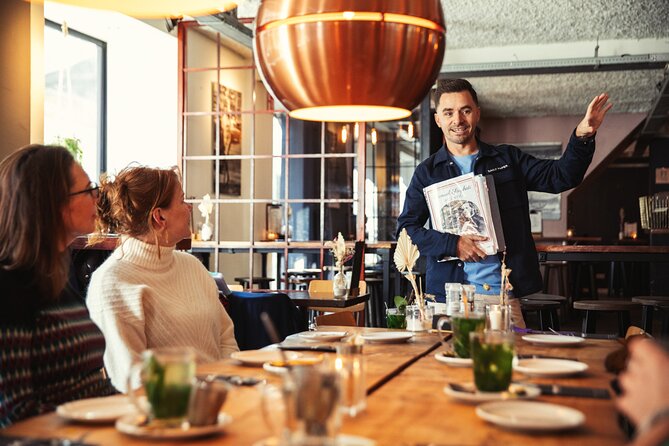
Your first food stop is a three-generation family bakery: Simon Meijssen. It’s one of the few Dutch bakeries in the Netherlands to hold a Royal Warrant, which already signals a long-time reputation—not a flash-in-the-pan tourist spot.
You’ll taste a classic Dutch pastry: the saucijzenbroodje. Expect flaky, savory pastry with a sausage filling—one of those foods that locals treat like breakfast or a snack when they want something filling without making a whole meal out of it. The tour also sets you up to understand why it’s so common: it’s practical food, shaped by everyday routines.
Drawback to note: this stop is mainly about one iconic item. If you’re the type who wants variety at every stop, you might feel like the tour front-loads with a single standout before moving into more tasting choices.
Stop 2: Johan Kaas in the Albert Cuyp Market for smooth, nutty Gouda
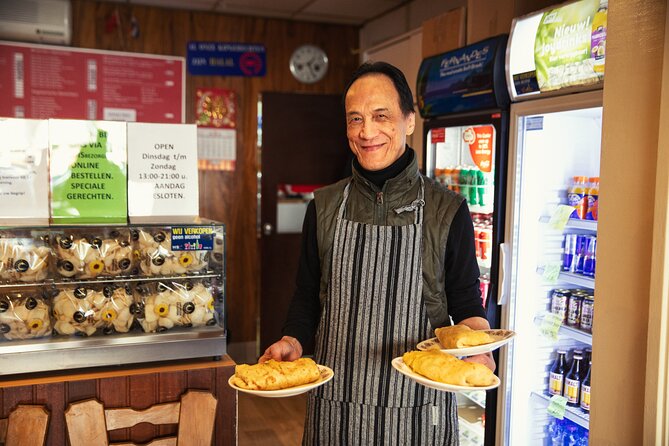
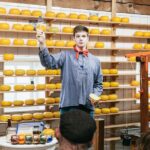
Next you head to Johan Kaas in the Albert Cuyp Market to sample traditional Dutch Gouda cheese. Gouda is one of those cheeses you’ve probably heard of before, but this stop gives it context: what it tastes like up close, why it’s part of breakfast and lunch culture, and how it connects to Dutch pride in cheese-making.
You’re not just swallowing bites. The guide explains what to notice—smooth, creamy texture and a slightly nutty flavor. That kind of simple sensory guidance helps you taste more accurately, especially if you don’t usually eat cheese on purpose.
Timing is also tight here (about 30 minutes). You’ll get enough time to enjoy the tasting without the tour stalling while everyone finishes their last bite.
A few more Amsterdam tours and experiences worth a look

Stop 3: Alain Bernard Butchery and Dutch-style ham
Then it’s on to Alain Bernard Butchery for a sample of traditional Dutch-style ham. The tour frames it as tender, lightly cured flavor—meat with character, not just a generic deli slice.
This stop is only about 10 minutes, so treat it like a quick palate check: take a bite, notice texture and flavor, and keep going. If you’re looking for a longer meat lesson, you might wish it were longer—but the tour uses the time strategically to pack in more stops within the 2.5-hour window.
Because ham is included, this stop is a reminder that the itinerary is meat-forward. If you’re sensitive to that, plan accordingly before you book.
Lunchcafé Bozz: broodje gezond, made from market selections
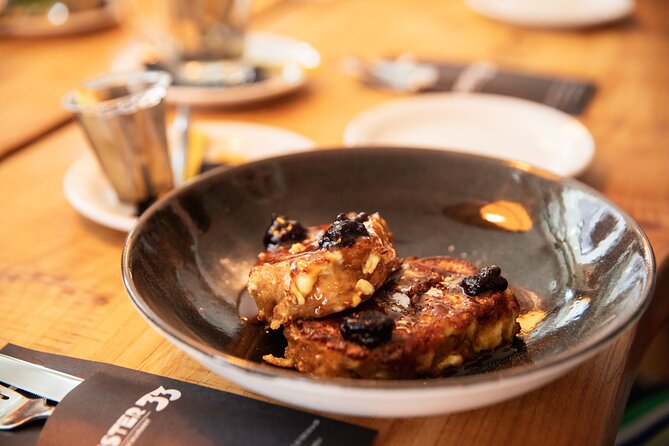
One of the nicest parts of the tour is the seated break at Lunchcafé Bozz. You’ll enjoy a classic broodje gezond, a Dutch sandwich built around crisp vegetables—lettuce, tomato, and cucumber—with a light spread.
The best practical detail: the ham and cheese you selected at the market are used in your lunch. That turns the earlier tastings into something more than samples. It also helps you connect flavor to food form—how the cheese works in a sandwich, and how the ham behaves when it’s balanced with fresh crunch.
This stop is about 30 minutes. That’s long enough to feel like lunch and not just a quick rest stop. Also, since drinks aren’t included, you can keep your budget under control by choosing what you want rather than being surprised at the end.
Stroopwafel Workshop: make it warm and eat it right away
Then comes the fun part: the stropwafel workshop. You’ll learn the history and the technique behind thin waffles filled with warm caramel. And yes, you get to make your own, then enjoy it straight off the iron—warm, caramel-sweet, and exactly the kind of snack that turns into a souvenir because it tastes so good while it’s still hot.
This is a great stop for anyone who likes a hands-on activity. It also gives you a sensory payoff at the end, when your energy might be fading after walking and tasting.
Time is short (about 15 minutes), so it’s not a big craft session. Think “memorable taste-making,” not “skill class that runs for hours.”
Samuel Sarphati in De Pijp: why this neighborhood has a doctor’s name
The tour doesn’t end at food. It includes a stop connected to Samuel Sarphati, the physician from 1813 who transformed Amsterdam’s public health—improving hygiene, creating affordable bread factories, and installing water pipelines. He also helped advance education and industry, with lasting city-planning impact.
Why this matters on a food tour: it ties Amsterdam eating habits to the systems behind them. Bread access, public health improvements, and city infrastructure shape what people can eat day to day. That’s a more useful kind of “history” than dates in a museum.
You’ll finish with a sense of the neighborhood’s identity. De Pijp isn’t just a name on a map; it’s tied to stories about how Amsterdam became more food-possible.
Where the tour starts and ends (and how to not waste time)
The meeting point is Ferdinand Bolstraat 76H, 1072 LM Amsterdam and the tour ends at Albert Cuypstraat 194, 1073 BL Amsterdam. Both are in the De Pijp area, which is convenient if you plan to keep exploring afterward.
A practical tip: arrive a few minutes early so you can locate the group without stress. The guide is there waiting, and once everyone checks in, the tour moves.
The tour is also listed as near public transportation, so you can plug it into a wider day of tram and walking. No hotel pickup means you’ll manage your own schedule—but that’s normal for a focused neighborhood food experience.
Dietary needs and allergies: the one place you must plan ahead
This tour says you can email dietary requirements such as vegetarian and gluten-free diets. That’s helpful, but it also means the tour operator needs to confirm what can work for your specific needs.
If you have severe or life-threatening allergies, you can’t participate for safety. That’s not a small note. It’s a hard limit, so be honest when you book.
Also remember the baseline menu includes items like saucijzenbroodjes, Gouda cheese, Dutch-style ham, and a broodje gezond. Even if you’re “flexible,” you’ll want to check what substitutions are possible rather than hoping.
Who this tour suits best (and who might skip it)
I think this tour fits best if:
- you’re a first-timer in Amsterdam and want an easy, guided taste route
- you like classic Dutch foods and don’t mind eating meat-and-dairy
- you want small-group attention rather than a big-bus experience
It might not be ideal if:
- you have severe allergies that can’t be accommodated
- you strictly avoid meat and dairy and don’t want to rely on pre-arranged substitutions
- you already know De Pijp well and want a totally self-directed market experience (this tour is guided by design)
The small cap (max 12) makes it comfortable for people who like asking questions. That’s especially helpful when you care about why something is made a certain way.
Guides matter: the human part of the tastings
Names that come up in the tour feedback include Gerard, Danielle, and Bernardo. What’s consistent is the way guides link food to place—De Pijp neighborhood stories, simple explanations of ingredients, and a pace that keeps the day fun instead of exhausting.
If you enjoy a guide who chats and explains without turning it into a lecture, this style is a good match. You’ll also get personal recommendations after the tour, based on what you plan to do next in Amsterdam.
Should you book Eating Amsterdam: Albert Cuyp Market & The Pijp Food Tour?
Book it if you want a fast, practical way to understand Dutch food and Amsterdam neighborhood eating—especially De Pijp. The included spread (saucijzenbroodjes, Gouda tasting, Dutch-style ham, broodje gezond lunch, and a stroopwafel workshop) gives you a lot for the time you spend, and the small group keeps it from feeling like chaos.
Skip or at least ask questions first if your dietary needs are complex or you’re dealing with severe allergies. And if you already plan to eat almost everything at your own pace in the market, you might prefer a self-guided wander.
If your goal is to taste your way through the neighborhood with a plan—and leave with a few real food memories—this one is an excellent bet.
FAQ
How long is the Eating Amsterdam Albert Cuyp Market & The Pijp Food Tour?
It lasts about 2 hours 30 minutes.
What’s included in the tour food-wise?
You’ll get saucijzenbroodjes (Dutch sausage roll), Gouda cheese tasting, Dutch-style ham, a broodje gezond (Dutch sandwich) for lunch, and a stroopwafel, plus a guided visit of the Albert Cuyp Market.
What’s the group size limit?
The tour has a maximum of 12 travelers.
Is the tour conducted in English?
Yes, it includes a local English-speaking guide.
Where do I meet and where does the tour end?
The meeting point is Ferdinand Bolstraat 76H, 1072 LM Amsterdam. The tour ends at Albert Cuypstraat 194, 1073 BL Amsterdam.
Is mobile ticketing used?
Yes, the tour uses a mobile ticket.
Can I bring a service animal?
Yes, service animals are allowed.
Can I get a full refund if I cancel?
Free cancellation is available up to 24 hours in advance for a full refund.
Are dietary needs and allergies accepted?
You can email dietary requirements (like vegetarian or gluten-free). People with severe or life-threatening allergies can’t participate for safety.