REVIEW · AMSTERDAM
Private Amsterdam Red Light District and Food Tour (TOP RATED)
Book on Viator →Operated by Trigger Tours · Bookable on Viator
You can learn a lot in two hours. This private tour mixes Amsterdam Red Light District context with three Dutch specialties and guide-led stories that make the area make sense fast. I like that it is private, so your guide can actually answer your questions, not just talk at a crowd.
The main drawback to plan for: this is a tasting tour, not a full meal. If you show up starving and expecting a big lunch, you may leave a bit hungry, even though the food stops tend to be well chosen. That said, guides like Robin, Aarre, Andrea, Catherine, and Adam are often praised for keeping the tone respectful and the facts clear.
If you are short on time and want the Red Light District explained in real-world terms, this is a good way to do it—while also getting a quick hit of classic Dutch snacks you can build on later.
In This Review
- Key Highlights You Should Know
- Why This Red Light District + Food Combo Works
- Meeting at Amsterdam Centraal and Getting Oriented Fast
- Walking the Red Light District With Context (Not Just Sights)
- Oude Kerk Stop: Where the Dutch Tastings Happen
- Dam Square Finale: A Clean Way to Keep Exploring
- The Little Landmarks You’ll Remember (Even If You Came for Food)
- How the Guide Changes the Experience (and Who You Might Get)
- Price and Value: What $123.36 Buys for Two Hours
- When You Should Skip (or Adjust Expectations)
- How to Prepare for a Smooth, Respectful Walk
- Should You Book This Private Red Light District and Food Tour?
- FAQ
- How long is the private Amsterdam Red Light District and food tour?
- What is the price per person?
- What is included in the tour?
- Does the tour include hotel pickup and drop-off?
- Where do you meet the guide?
- What stops are part of the route?
- Is the tour private or shared?
- What time options are available?
- Can you cancel for a full refund?
Key Highlights You Should Know
- Private group walking tour so your guide can tailor pace and answers to your questions
- Red Light District facts with legal and cultural context, not just gossip
- Iconic nearby landmarks like the Old Church, Chinatown area, and the narrowest street
- Oude Kerk food stops featuring three Dutch specialties (more like tastings than a feast)
- Small, strange, and very Amsterdam side sights like the condom shop since 1987 and Pub The Ape
- Ends near Dam Square, making it easy to keep exploring right after
Why This Red Light District + Food Combo Works
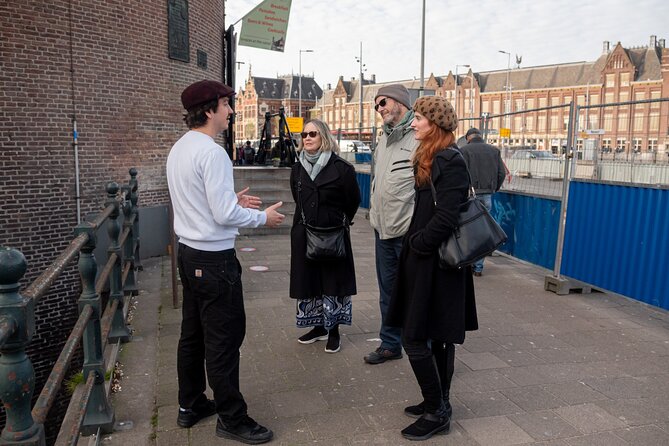
Amsterdam can feel layered. One minute you are looking at grand canal views, the next you are standing in a neighborhood that many people avoid talking about. This tour is built for the moment you actually want clarity: what you are seeing, why it exists, and how Dutch rules shape it.
I like the structure because it is not just a walk through shock-value sights. You get a guide who can explain the intricacies of Dutch law and the district’s place in Dutch culture, then you switch gears to food. That rhythm matters. The food breaks keep things grounded, so the stories land without turning the whole experience into uncomfortable theater.
Also, because this is private, you can ask practical questions and get direct answers. In the guide reports, names like Robin, Aarre, Andrea, Catherine, and Adam come up again and again for their warm, respectful approach and their ability to balance facts with light conversation.
You can also read our reviews of more food & drink experiences in Amsterdam

Meeting at Amsterdam Centraal and Getting Oriented Fast
You start at a meeting point close to Amsterdam’s central area: ParkBee Parking near the NH Collection Amsterdam Barbizon Palace on Prins Hendrikkade 59. The advantage is simple: you are positioned in the city where you can walk into the Red Light District area without wasting time.
At the start, the guide typically sets the tone and gives quick orientation for what you are about to see. This is where you benefit from going with a guide rather than wandering. You get a framework for the visit—where to look, what not to stare at, and what questions are worth asking if you want more than surface-level impressions.
A small detail that feels useful: the tour runs with a pick-your-time option between 13:00 and 21:00, so you can choose a slot that matches your energy level and your day’s schedule.
Walking the Red Light District With Context (Not Just Sights)
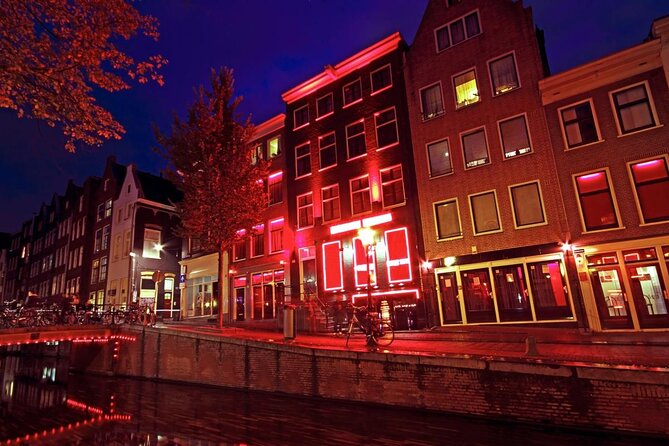
This is the heart of the experience. You walk into the Red Light District and pass several of the landmarks that define the area’s look and layout. The goal is not to make you feel like you are intruding. The goal is to help you understand how the district functions inside Dutch society.
Here are some of the sights you will likely recognize as you go:
- The Old Church area, which anchors the district in older Amsterdam layers
- China Town nearby, showing how the neighborhood’s identity is more than one thing
- The narrowest street of Amsterdam, a reminder that this city grew the old way, block by block
What makes this segment valuable is the way the guide explains the district. You are not just seeing storefronts and signage—you are hearing how the legal side works and how public space, rules, and culture intersect here. One review theme that keeps showing up is that guides give respectful history and context, including how prostitution became a legal profession in the way it operates today.
Practical etiquette matters too. If you are going with someone who gets uneasy, a good guide helps set boundaries early. You will still be in a real neighborhood, and you should expect a mix of street activity. Plan to keep your tone respectful, keep your photos sensible (and limited), and let the guide do the talking.
Oude Kerk Stop: Where the Dutch Tastings Happen
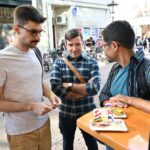
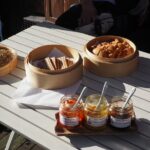
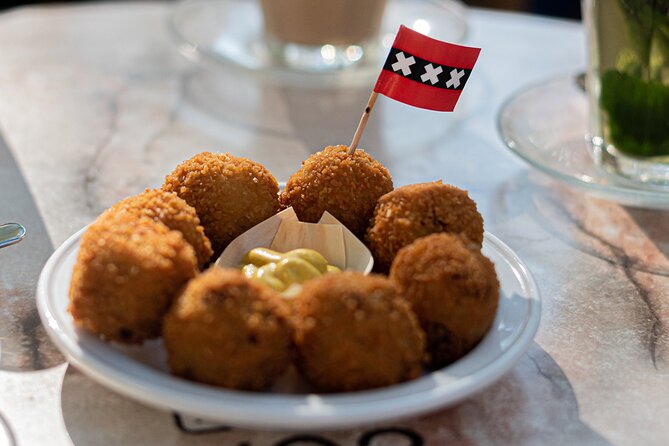
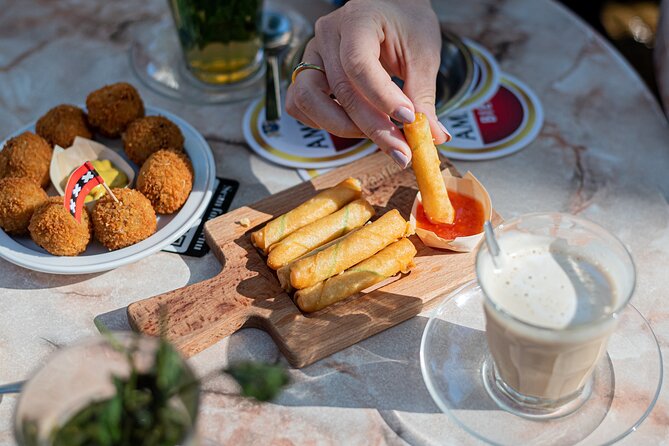
After the main walking, the tour shifts toward food at Oude Kerk, a historic setting that adds a “here’s where we pause” feeling to the experience. This is where you get the three Dutch specialties, which are meant to be tastings you can compare and contrast, not a full meal.
One reason this works well for first-timers is that Dutch food is often simple but specific. Tastings let you try classic flavors without committing to a full plate when you do not yet know what you like. The tour is also a helpful launchpad for your next meal because you learn what to seek out later.
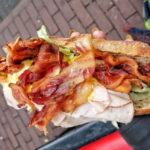
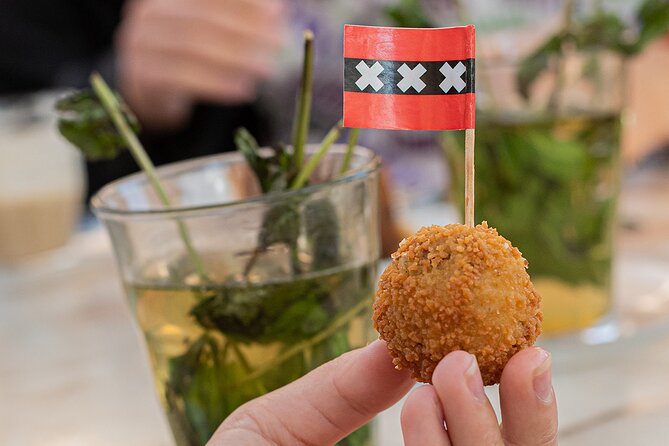
From guide-led food stories you may hear during tours, the tastings can include classics like:
- croquettes (often seen in Dutch snack culture, including versions sold at automated stands)
- stroopwaffels, the chewy-caramel waffle candy many people associate with Amsterdam
- cheese snacks like puffer cheese
- fries with mayonnaise, a Dutch comfort-food classic
One caution: the tour is commonly described as a light tasting. Even when the food is called delicious, the portion reality can be “shared bites” depending on group size. If your group includes seven people or more, you may find the tastings feel more like samples than a meal.
Still, for the right traveler, this stop is a win. You get flavors fast, you learn what is worth ordering again, and you leave with a shortlist for where to eat next.
Dam Square Finale: A Clean Way to Keep Exploring
The tour ends at Dam Square. That matters because you finish where you can easily connect to the rest of your day. After two hours, you likely want to keep moving: museums, canal walks, shopping streets, or simply finding your own late lunch or early dinner.
Finishing at Dam Square also gives you a practical reset moment. You can ask your guide for food tips before you go, and then act on them right away. In the strongest guide accounts, you get restaurant suggestions that go beyond the obvious tourist traps—places that match what you just tasted.
If you plan your schedule well, this tour becomes a smart “start your trip” move. You get the district context, you get Dutch snacks, then you use what you learned to eat better for the rest of your visit.
A few more Amsterdam tours and experiences worth a look


The Little Landmarks You’ll Remember (Even If You Came for Food)
Some tours stay generic: big streets, broad facts, then off you go. This one picks up small, specific details that make Amsterdam feel real.
A few standout examples you may encounter as you walk:
- A condom shop that has been in place since 1987, including the idea of getting size-customized condoms
- The smallest house of Amsterdam, built around the 1700s and first used as storage for the VOC trading company
- Pub The Ape (Int Aepjen), built around 1540, one of the remaining wooden buildings, especially notable after the city’s older rules and the move toward brick facades after the big fire in 1452
These details do more than add trivia. They show how Amsterdam documents its history in plain sight. You see a city that does not hide awkward topics and that keeps old buildings and odd stories in the same neighborhoods as modern life.
If you love that kind of walking—where the city’s quirks come with an explanation—this tour is a good match.
How the Guide Changes the Experience (and Who You Might Get)
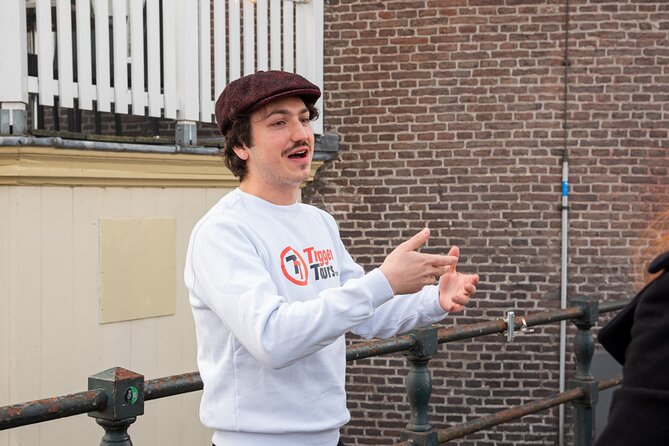
For me, the guide is where this tour either clicks or feels flat. The reviews you provided strongly point to that: guides are praised for being engaging, respectful, and skilled at balancing education with casual conversation.
You might see guide names like Robin, Aarre, Andrea, Catherine, Kevin, Merly, and Adam in your booking path, depending on availability. The common thread is that people describe guides who:
- explain how the district operates in legal and cultural terms
- keep the mood respectful while still being interesting
- share food recommendations and off-the-beaten-path snack ideas
- answer questions, including broader Amsterdam history
Even when people say the food portion is light, the guide quality often keeps the tour worthwhile because you learn what you came to learn: how this neighborhood works and why it looks the way it does.
Price and Value: What $123.36 Buys for Two Hours
At about $123.36 per person for roughly two hours, the value comes from three things working together:
- Private format: you are not getting rushed in a crowd
- Two themes: Red Light District context plus Dutch tastings
- Guide-led navigation: instead of wandering, you follow a route with built-in explanations
If you compare it to doing the food stops on your own, the guide saves time and adds meaning. If you compare it to doing a history tour without food, you get a practical bonus. If you care most about food, you should understand the portion reality up front. This is not positioned as a big lunch.
In other words, the price feels more justified when you want both context and a few bites, and when you appreciate a guided walk in a sensitive neighborhood.
When You Should Skip (or Adjust Expectations)
This tour can be a great fit, but it is not for everyone. Here is when I would adjust expectations:
- If you want a full meal, plan to eat before and/or after. Many participants describe it as more of a light tasting than lunch.
- If you are traveling with young children, use caution. One review noted it may not be ideal for younger kids, though it could work better for older children and adults.
- If you expect a perfectly loud, highly amplified guide system, do not assume it. One negative review mentioned audio wasn’t set up in a way that worked for the group. The private format still helps, but conditions and group setup can affect how well you hear a guide on busy streets.
If you go in knowing it is a respectful walk with small tastings, you will probably get what you want.
How to Prepare for a Smooth, Respectful Walk
A few simple prep steps make this easier on you:
- Wear comfortable shoes. You are walking a neighborhood and making multiple stops.
- Bring a questions list. If you have curiosity about Dutch law, culture, or Amsterdam history, write down the top three things you want answered.
- Eat a light snack beforehand if you dislike leaving hungry. The tasting amount is generally described as limited.
- Keep expectations aligned: tastings are about variety and context, not filling up.
One more practical note: service animals are allowed, and the tour is offered in English. Since most travelers can participate, it is usually approachable, but you should still consider your walking comfort level.
Should You Book This Private Red Light District and Food Tour?
Yes, if you want a time-efficient, guided way to understand the Red Light District while also sampling Dutch snacks. The tour’s strongest promise is not the food volume—it is the combination of respectful context and well-chosen stops, guided by people like Robin, Aarre, Andrea, Catherine, Kevin, Merly, and Adam who are repeatedly praised for making the experience clear and engaging.
Skip it or plan your meals carefully if you need a real lunch out of the ticket price. Go anyway if your goal is to see, learn, and then eat well afterward.
If you do book, I’d treat it as your smart “first contact” with this part of Amsterdam: you will leave with better street sense, food ideas you can use the rest of the trip, and a clearer understanding of what you just walked through.
FAQ
How long is the private Amsterdam Red Light District and food tour?
It runs about 2 hours.
What is the price per person?
The price is listed as $123.36 per person.
What is included in the tour?
You get a local guide, a private walking tour, and three Dutch specialties.
Does the tour include hotel pickup and drop-off?
No. Hotel pickup and drop-off are not included.
Where do you meet the guide?
The start location is ParkBee Parking NH Collection Amsterdam Barbizon Palace, Prins Hendrikkade 59, 1012 AD Amsterdam, Netherlands.
What stops are part of the route?
The tour includes stops such as Amsterdam Centraal, the Red Light District area, Oude Kerk, and it ends at Dam Square.
Is the tour private or shared?
It is private, so only your group participates.
What time options are available?
You can pick a departure time between 13:00 and 21:00.
Can you cancel for a full refund?
Yes. You can cancel up to 24 hours in advance for a full refund.