REVIEW · MARRAKESH
Marrakech Night Street Food Tour / Taste The Real Marrakech
Book on GetYourGuide →Operated by Flavors of Marrakesh · Bookable on GetYourGuide
A street food coma is waiting for you. This Marrakech night street food tour turns the Medina into your tasting menu, with local stops like msemen, harira, and slow-cooked tanjia guided by people such as Nour and Omar. I love the sheer amount of food (come hungry) and the fact that you walk through real neighborhoods, not just the obvious sights. The main drawback: it’s a lot of walking for one evening, and the 4-hour plan can stretch depending on the pace and the night.
You meet your guide in front of Café de France, then you head out with a small group of up to 10. I like that everything is included—food, coffee or tea, and bottled water—so you can focus on eating and asking questions. Just plan your day around it, because skipping lunch and even breakfast makes the whole experience feel way more fun.
In This Review
- Key things I’d bank on
- First step: Café de France and the come-hungry mindset
- Walking the Medina after dark, plus Kasbah time
- The food flow: pancakes first, then soup, then the slow stuff
- Msemen and Harcha: your first real taste of Moroccan street comfort
- Harira soup: the vegetarian-friendly reset with real spice
- Chebakiya and sweet pastry stops that actually feel like dessert
- Tangia and slow-cooked stews: where patience becomes flavor
- Fried sardines with eggplant: crunchy, savory, and a real palate shift
- Chfnj with tea and the Berber omelette stop
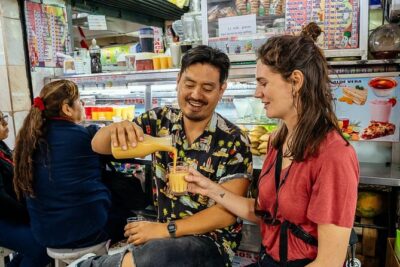
- Raïb frozen yogurt and Assir fruit juice for the cool-down
- Moroccan sweets and drinks: the ending that still feels worth it
- How long is 4 hours, really?
- Small group value at $56: what you’re paying for
- Who should book this Marrakech street food night tour
- Should you book this tour?
- FAQ
- Where do I meet the guide?
- How long is the Marrakesh night street food tour?
- What language is the tour guide in?
- How big is the group?
- What’s included in the price?
- Is transportation included?
- What foods will I taste?
- Can the guide accommodate allergies?
- Is the tour wheelchair accessible?
Key things I’d bank on
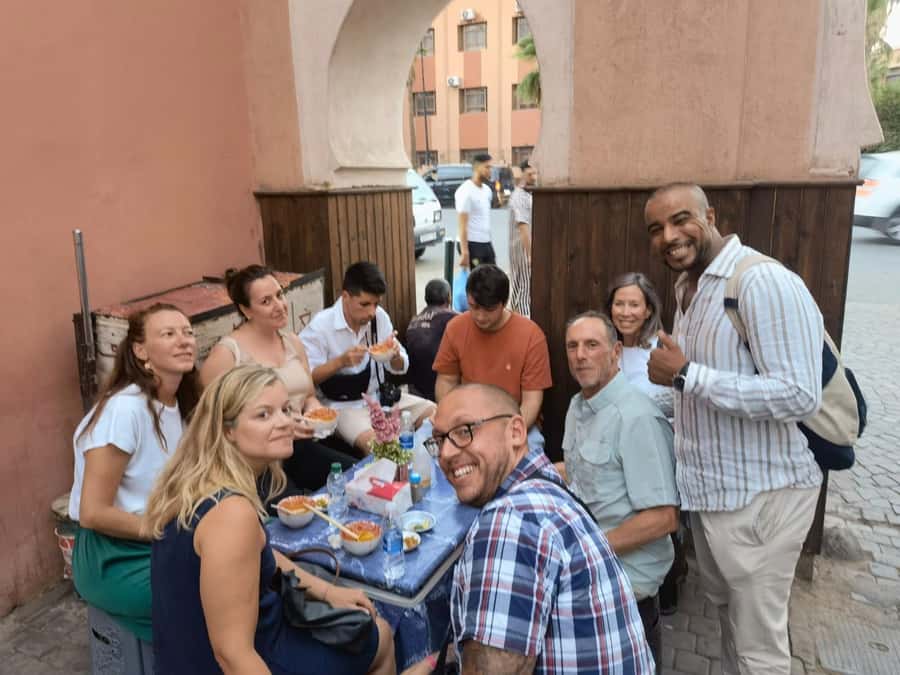
- Small group (up to 10) means you actually talk with your guide, not shout over a crowd.
- Food-heavy route: multiple sweet and savory stops are part of the design, not a bonus.
- Night Medina energy: you see the city after dark when locals are out and moving.
- Tanjia + tea moments: a slow dish plus classic drinks give the tour its slow-burn rhythm.
- Allergy support: tell your guide ahead of time and they’ll offer alternatives when they can.
First step: Café de France and the come-hungry mindset
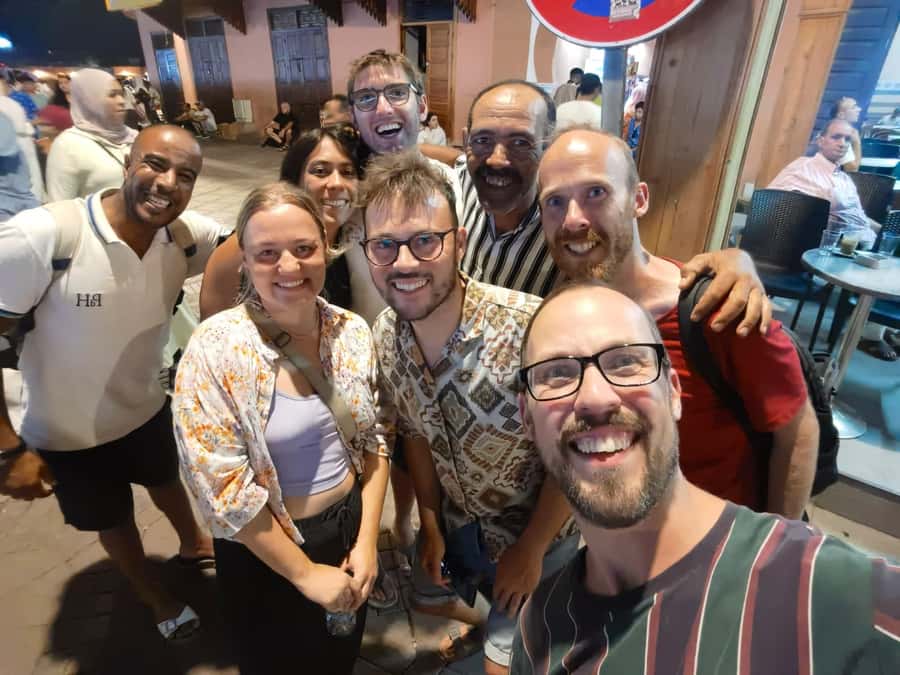
The tour starts right in the city center, meeting your guide in front of Café de France. From there, you head into Marrakesh at night the way you’d do it if you were staying nearby: on foot first, then moving through different areas as the route needs it.
My advice is simple: don’t eat beforehand. People repeatedly stress that you’ll get fed a serious amount of food, and I agree with the logic. A street food tour works best when your appetite is wide open.
If your schedule allows, treat this as your first-night activity. You’ll get oriented fast, and you’ll learn what locals order and how meals fit into the rhythm of the Medina.
You can also read our reviews of more food & drink experiences in Marrakesh
Walking the Medina after dark, plus Kasbah time
What makes a night food tour work in Marrakesh is the atmosphere. Streets feel different after evening. You notice small details—how people gather outside shops, how stalls set up, and how food is treated like part of daily life.
This tour takes you through non-touristy areas where locals live, eat, and meet. I also like that it’s not just one neighborhood. You can end up covering more ground, including parts of the Medina and Kasbah areas, so your evening doesn’t feel stuck in one corner of town.
Expect a mix of walking and short vehicle moves depending on the plan. Also, the streets in the Medina can be uneven and packed with foot traffic, so comfortable shoes matter more than fashion.
The food flow: pancakes first, then soup, then the slow stuff
Street food tours are usually either snack-heavy or meal-heavy. This one is both. You get repeated chances to taste, and the timing keeps you from feeling like you’re eating the same thing over and over.
Early on, you’ll hit the pancake zone. Then you move into classic Moroccan soups and pastries. After that, the tour shifts into heartier territory with stews and hot savory plates that make you feel like you’re being fed by the city itself.
The big theme is variety. You’ll taste different textures—crispy, soft, chewy—and different flavor directions—sweet pastries, savory stews, and spiced soups.
Msemen and Harcha: your first real taste of Moroccan street comfort
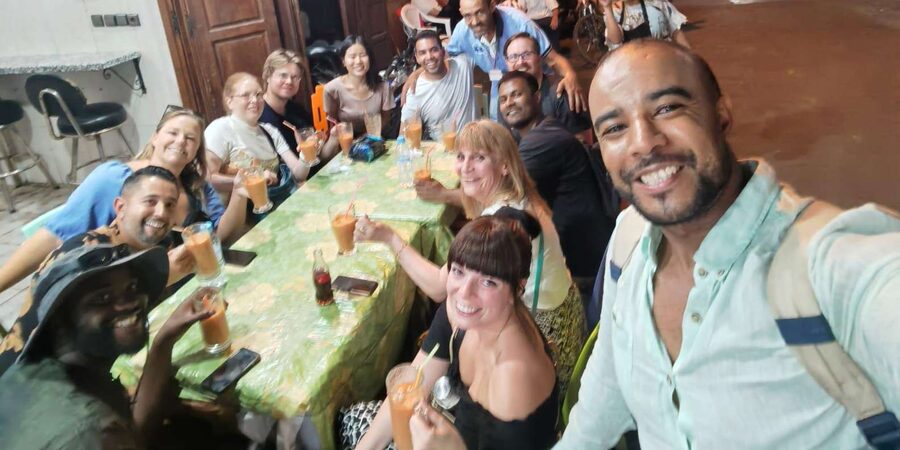
One of the first things on the menu is msemen & harcha. These are the kind of Moroccan pancakes that make you understand why bread and breakfast-type foods are so beloved here.
Msemen is layered and pan-fried, with a texture that can be both crisp at the edges and soft inside. Harcha tends to be more semolina-forward—think thicker, hearty, and comforting. This early stop sets the tone: you’re not sampling tiny bites. You’re getting portions.
It’s also a good moment to learn what to look for. Your guide can point out how people eat them, what to pair them with, and why they’re common in everyday life.
Harira soup: the vegetarian-friendly reset with real spice
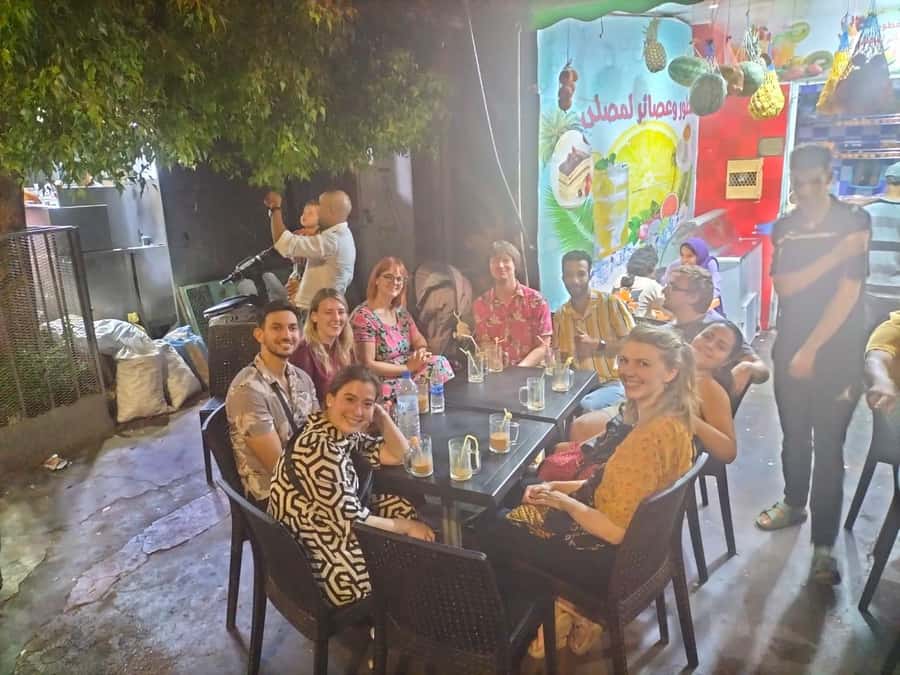
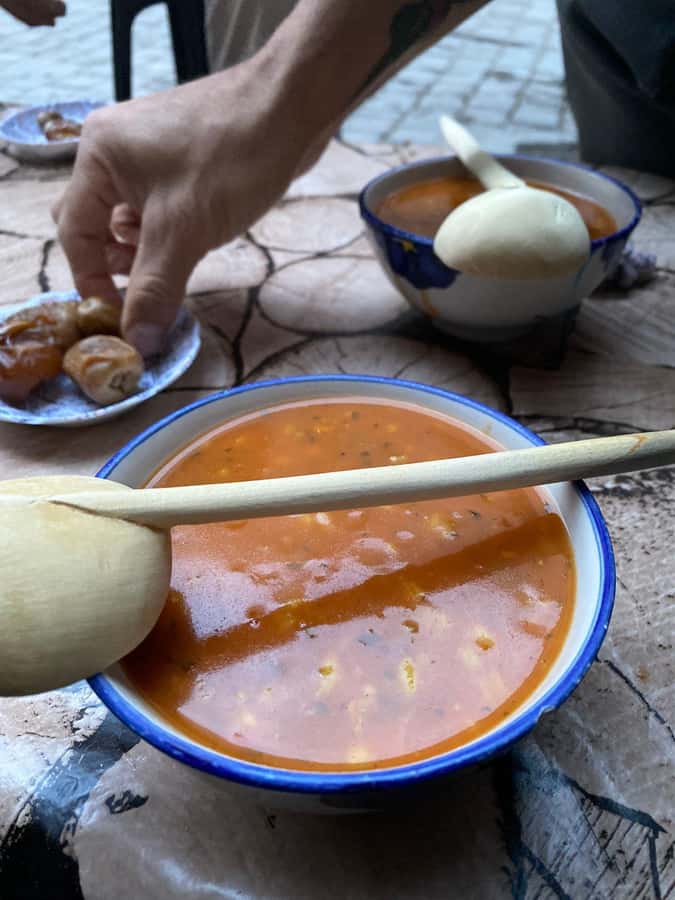
Next comes harira, a famous soup you’ll hear about across Morocco. On this tour, it’s a key stop because it adds warmth and depth after the first wave of pancakes.
Harira is often associated with big mealtimes and comforting bowls—spiced, filling, and best served hot. Even if you’re not a soup person, this is one of those “worth making room” dishes.
What I like: it helps balance the sweetness you’ll taste later. It’s savory, it steadies your palate, and it makes the heavier items feel more digestible.
A few more Marrakesh tours and experiences worth a look
Chebakiya and sweet pastry stops that actually feel like dessert
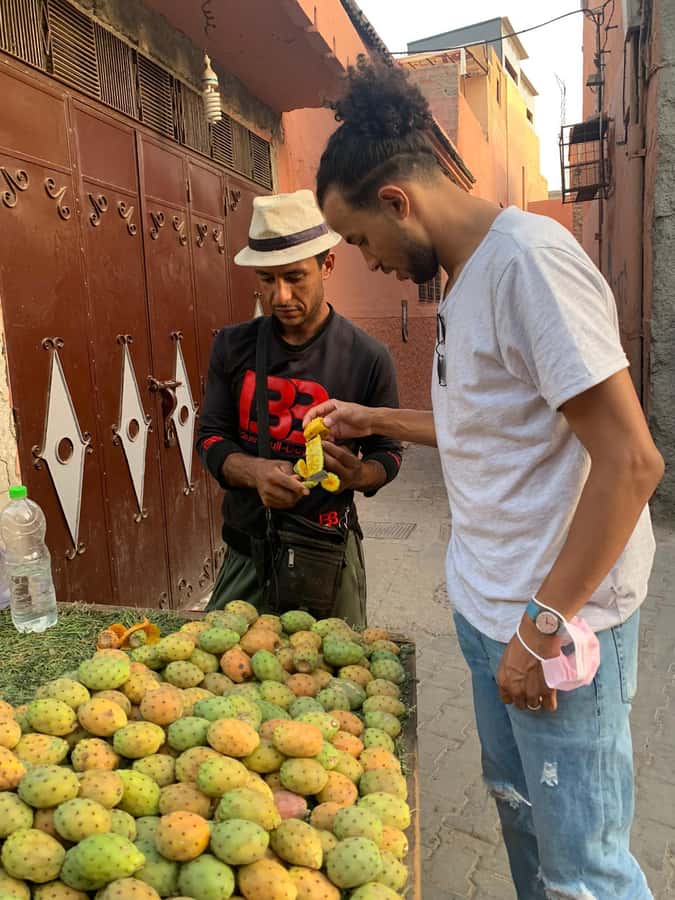
Sweet in Morocco isn’t an afterthought. You’ll try chebakiya, plus other sweets and treats along the way.
Chebakiya is a sticky, honey-soaked pastry with a floral feel from spices (often sesame and aromatic blends). It’s rich, so your guide’s pacing matters. You’ll likely get it in a rhythm that prevents you from hitting sugar overload too fast.
This is also where the tour earns its “street food” label. Pastry shops and stalls in the Medina are part of the city’s nightly social life. It’s not just a tourist snack.
Tangia and slow-cooked stews: where patience becomes flavor
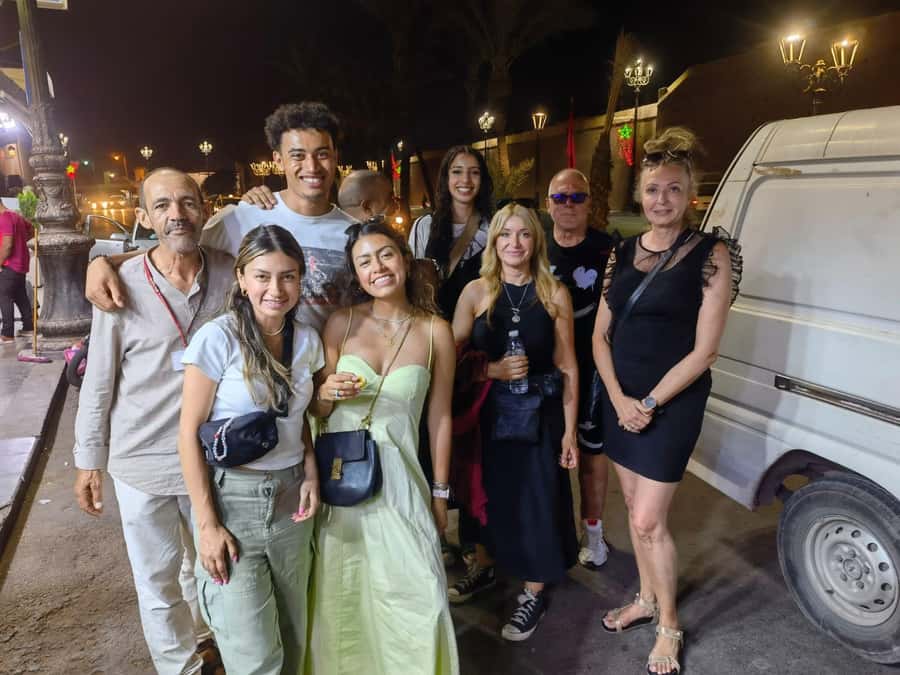
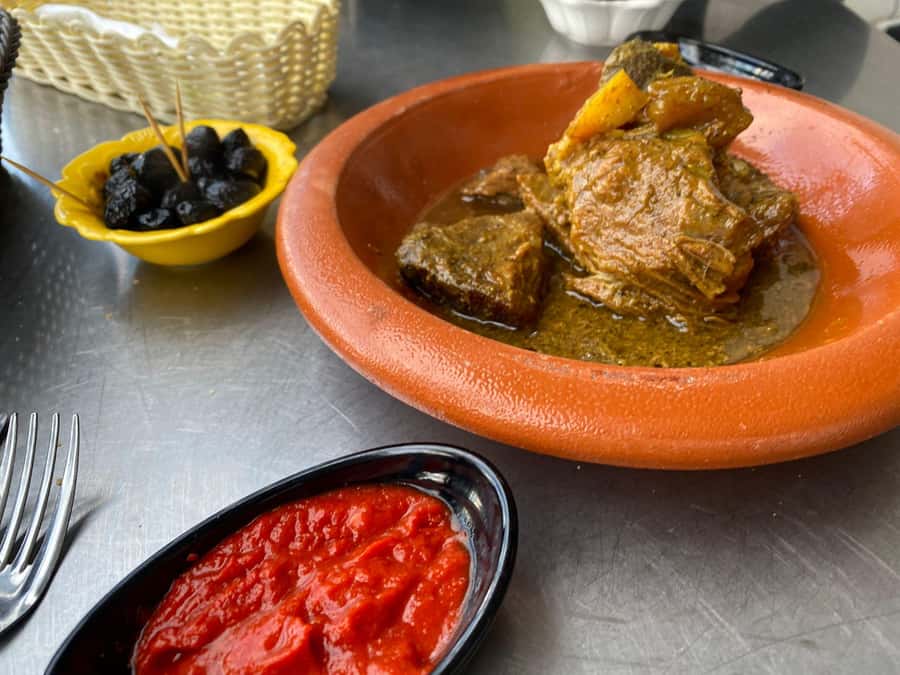
If you care about slow food, pay attention to tanjia. This is slow-cooked traditional meat stew, typically associated with special preparation methods and the idea that time does the heavy lifting.
In the reviews, tangia shows up as a standout highlight. Some guides are even described as cooking it in traditional style—slow and behind the scenes—so you’re tasting something that feels intentional, not mass-prepared.
After that, you’ll also taste Moroccan stews that lean hearty and warming. This part of the tour is where you shift from “snacking” into “dinner mode,” and it’s why come-hungry isn’t just marketing. It’s survival strategy.
Fried sardines with eggplant: crunchy, savory, and a real palate shift
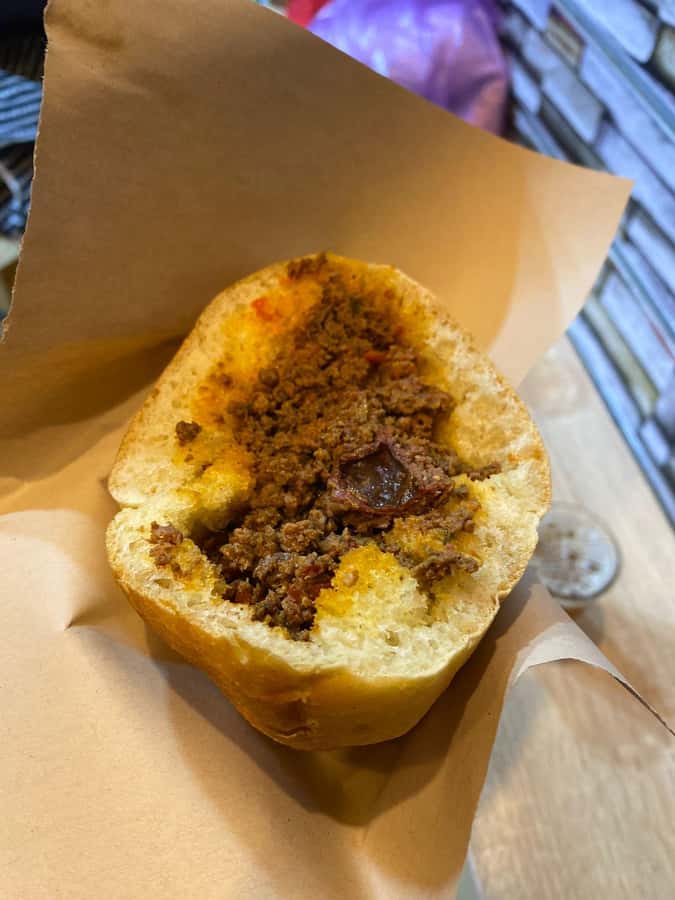
Later, you’ll get to sardine with eggplant—fried sardines served with vegetables. This stop is a palate shift because it brings you from slow, saucy flavors into crisp, fried texture.
The combination works because it balances richness. The vegetables add body and grounding, while the fried fish gives the salty, savory bite that Moroccan street food does so well.
If you don’t usually try seafood on trips, this is still worth it. Your guide can explain what’s in it and how people eat it on ordinary nights, not just for tourists.
Chfnj with tea and the Berber omelette stop
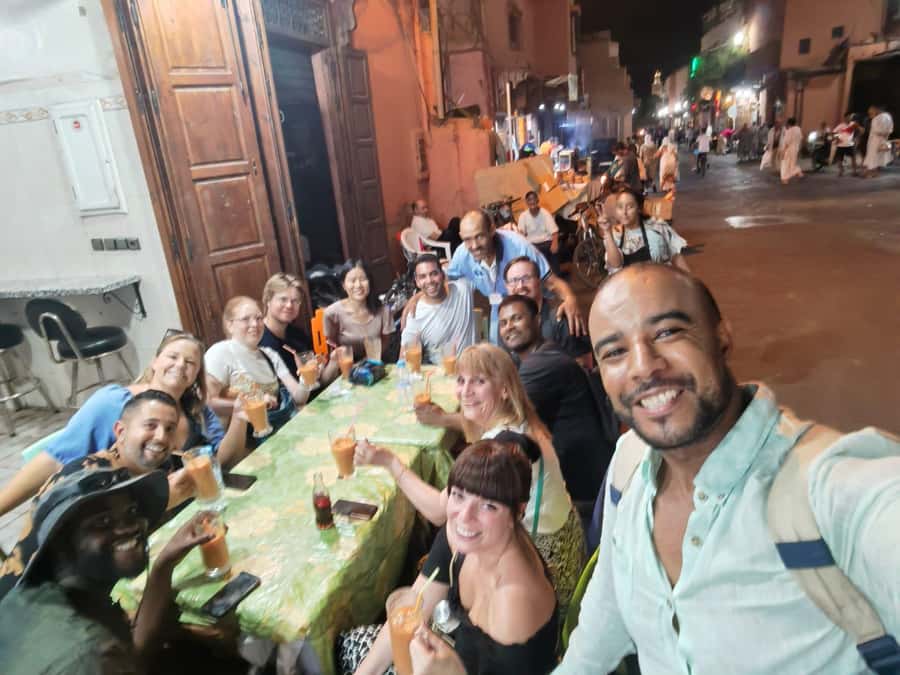
Two more “this is why you need a local” tastings are chfnj and Lbid o Maticha.
- Chfnj are Jewish donuts, and they come with tea. It’s a sweet-savory cultural flavor moment, and pairing them with tea makes it feel like a real local break in the evening.
- Lbid o Maticha is a Berber omelette with eggs and tomatoes. It’s not fancy plating—it’s honest comfort food, and it gives you a savory reset before you shift toward dessert again.
I like that these stops reflect Morocco’s layers: Berber food traditions, Jewish culinary influence, and everyday tea culture all show up in one night.
Raïb frozen yogurt and Assir fruit juice for the cool-down
After all that heat—spices, fried items, and stews—your evening needs a cool-down. You’ll taste Raïb (frozen yogurt) and Assir (fresh fruit juice).
This is more than dessert. Frozen yogurt helps clear the palate after savory bites. Assir adds brightness, fruitiness, and a refreshing finish that keeps you from feeling worn out.
These stops also make the tour feel balanced. You’re not trapped in one flavor lane. Sweet, savory, and refreshing all appear on purpose.
Moroccan sweets and drinks: the ending that still feels worth it
The tour includes “sweats and more,” which is exactly what it sounds like: finishing with extra sweet options beyond the main pastry highlight. You’ll also get coffee and/or tea earlier, plus bottled water for hydration.
I’ve learned that the best food tours manage pacing through drinks. Here, the tea breaks and water keep you from getting overwhelmed by how much food you’re tasting.
Just be ready for the possibility you won’t finish everything. Several people mention struggling at the end in a friendly, surprised way. That’s usually a sign the portions are real.
How long is 4 hours, really?
The stated duration is 4 hours, and that’s a good guideline for planning dinner afterward. That said, expect the night to run a little long sometimes, depending on the pace and the mood of the group.
One practical note: rain can change movement speed. In a wet Medina, you move slower, and stops can take a bit longer. If you’re traveling in colder months, bring a light jacket and a small umbrella or poncho.
Also, you’re on your feet. It’s not a sit-and-sip evening, even though the vibe feels relaxed. Comfortable shoes aren’t optional.
Small group value at $56: what you’re paying for
At $56 per person, the value is all about what’s included. You’re not just buying access to a few bites. You’re getting a local guide, food at multiple stops, coffee or tea, and bottled water.
What makes it feel like a deal is the combination of:
- lots of tastings (sweet and savory)
- a route that avoids only-the-postcard spots
- explanation from your guide as you eat
Guides also seem to go beyond the script—helping people feel comfortable, answering questions about dishes, and in some cases making sure everyone gets home safely at the end.
If you’re the type who hates paying extra for every small thing, this tour is built for you.
Who should book this Marrakech street food night tour
This tour fits best if you:
- want an easy first-night intro to Moroccan food
- like walking and don’t mind crowding on Medina streets
- enjoy learning why dishes work, not just eating them
- want a guided way to find places you’d skip on your own
It’s also a smart choice if you’re traveling solo or as a couple. The small group size makes it social without feeling like a bus tour.
If you’re very sensitive to heavy fried food or you know you can’t handle lots of spice, tell your guide about your limits before you go. They do provide alternatives for allergies, and you’ll get more comfort from clear communication.
Should you book this tour?
Yes—if you can commit to eating enough to make it worth it. This is a “come hungry” night, and the best experience comes from showing up with an empty stomach and a willingness to try dishes you may not recognize.
If you hate walking, have a weak stomach for fried foods, or want a lighter snack-style evening, you might feel too full by the end. But if your goal is to taste a wide slice of Marrakech night life, this one delivers a lot for the price and gives you plenty of real local food moments to carry home.
FAQ
Where do I meet the guide?
Meet your guide in front of Café de France.
How long is the Marrakesh night street food tour?
The tour lasts about 4 hours.
What language is the tour guide in?
The live guide is English.
How big is the group?
The group is small, limited to 10 participants.
What’s included in the price?
Food and drinks are included, along with coffee and/or tea, bottled water, and a local bilingual guide.
Is transportation included?
Transportation is not included. You’ll need to get yourself to the meeting point.
What foods will I taste?
The tour includes tastings such as msemen and harcha, harira, chebakiya, tanjia, Moroccan stews, sardine with eggplant, chfnj with tea, Lbid o Maticha (Berber omelette), Raïb frozen yogurt, Assir fruit juice, and other sweets.
Can the guide accommodate allergies?
Let them know about any allergies. The guide will provide alternatives when possible.
Is the tour wheelchair accessible?
Yes, it is listed as wheelchair accessible.