REVIEW · ROME
Rome: Jewish Quarter and Campo de’ Fiori Street Food Tour
Book on GetYourGuide →Operated by Orange Umbrella Srl · Bookable on GetYourGuide
Rome has a lot of food tours. This one mixes street bites with real neighborhood context. You’ll start at Campo de’ Fiori, snack your way through market flavors, and then shift into the Jewish Ghetto area with stops that explain how food, culture, and daily life shaped each dish. I like the mix of tastings and guided storytelling, especially learning what you’re actually eating. I also like that you sample classic Roman hits like supplì and pizza al taglio, not just fancy starters. One drawback to keep in mind: the tour includes shopping temptations at the market, and you’ll want to be careful about what you buy after tasting, since prices can feel high for what you get.
The walking is broken up with short transfers on foot, so it feels manageable even if you’re taking your time and stopping for photos. In the hands of guides like Martina or Ramona (both highlighted by past guests), the vibe tends to be friendly and practical, with clear English and plenty of local tips. Just note the dietary limits: it’s not suitable for vegans and it isn’t for people with gluten intolerance.
In This Review
- Key Things You’ll Notice on This Rome Food Walk
- Campo de’ Fiori Start: Street Food, Market Energy, and the Right First Bites
- Wine and Another Round of Tastings: Why the Second Campo Stop Works
- The “Hidden” Stop: Small Sightseeing Breaks That Keep the Walk From Dragging
- Theatre of Pompey Stop: A Roman Landmark Paired With Snacks
- Via dei Chiavari: A Quick Beer Break That Feels Like a Real Stop, Not a Token Sip
- Portico d’Ottavia and the Roman Ghetto: Eating While the Streets Explain Themselves
- The Jewish Ghetto Food Stop: The Tastings That Give This Tour Its Name
- Theatre of Marcellus and Largo di Torre Argentina: End With Dessert Where the City Watches Itself
- Price and Value: Is $46 Reasonable for 2.5 Hours of Tastings?
- Who This Tour Fits Best (and Who Might Want to Skip It)
- Practical Tips Before You Go (So the Market Doesn’t Beat You)
- Should You Book This Rome Jewish Quarter and Campo de’ Fiori Street Food Tour?
- FAQ
- How long is the Rome Jewish Quarter and Campo de’ Fiori Street Food Tour?
- Where do I meet the guide?
- What food and drinks are included in the tour price?
- Can vegetarians join this tour?
- Is this tour suitable for vegans or people with gluten intolerance?
- Is the Campo de’ Fiori market visit always available?
Key Things You’ll Notice on This Rome Food Walk
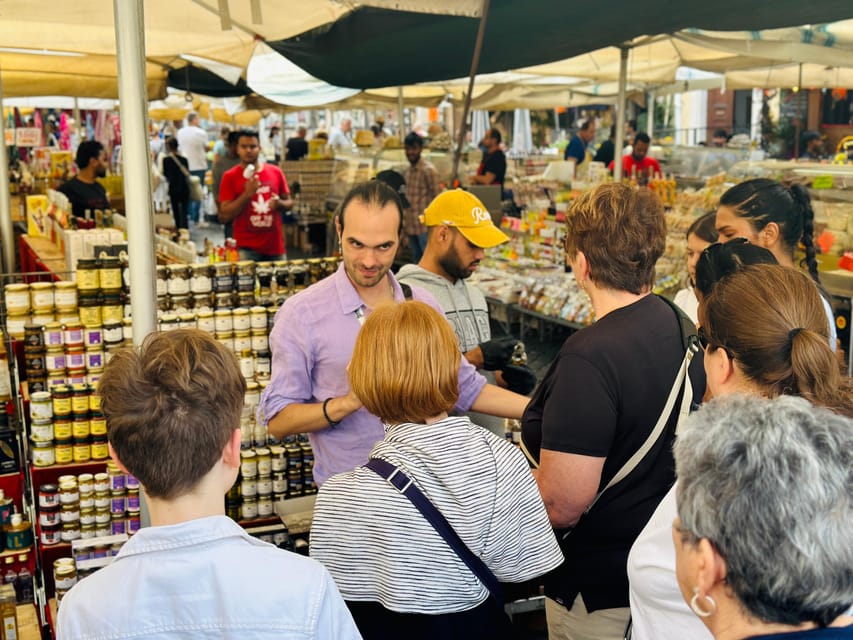
- Campo de’ Fiori tastings on both sides of the tour: street food first, then wine later, so flavors build instead of repeating
- 5 different street food tastings plus beer and wine samples to make the price feel more like a meal than snacks
- Jewish Ghetto sights included while you eat, including Portico d’Ottavia and a pass by the Great Synagogue from outside
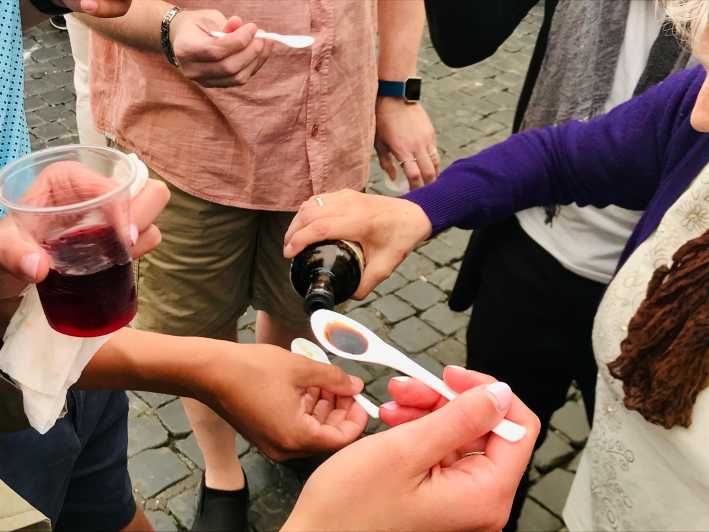
- Classic Roman street food like supplì and pizza al taglio paired with ingredients such as truffles, olive oil, and balsamic vinegar
- A dessert stop at Largo di Torre Argentina, a great end point for people-watching and one last sweet bite
- A market timing note: the Campo de’ Fiori market is closed in the afternoons, which can affect what you see depending on your start time
Campo de’ Fiori Start: Street Food, Market Energy, and the Right First Bites
Most Rome food tours start with something simple. This one starts with the place where Romans actually bump into each other and buy lunch. Meet at Campo dei Fiori in the middle of the square under the statue of Giordano Bruno. From there, you’ll spend about half an hour on your first cluster of tasting stops, anchored by the street food culture that made this neighborhood famous.
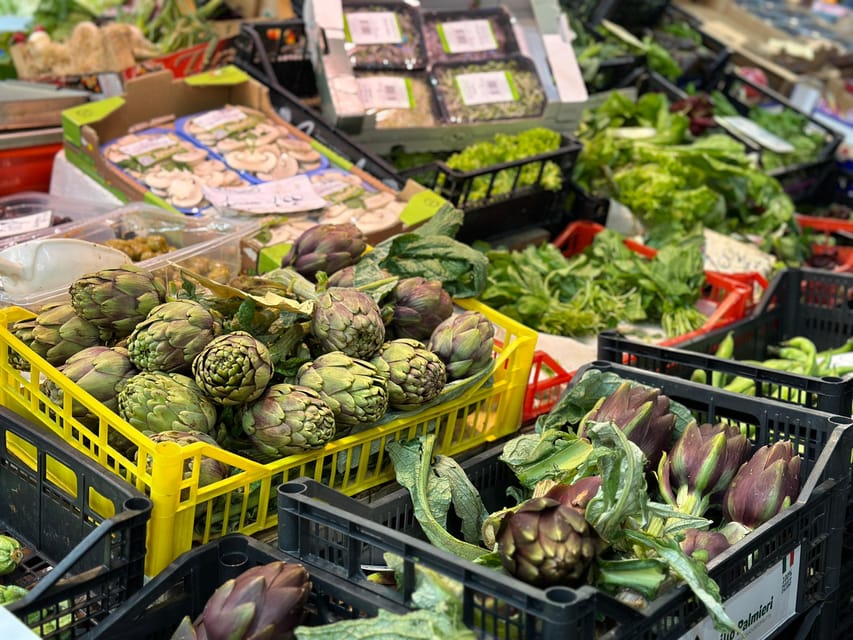
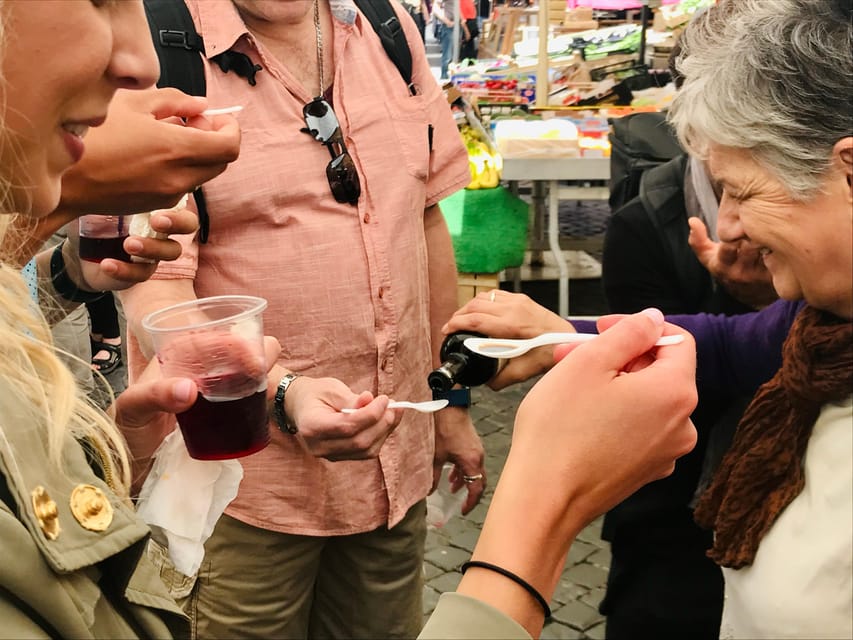
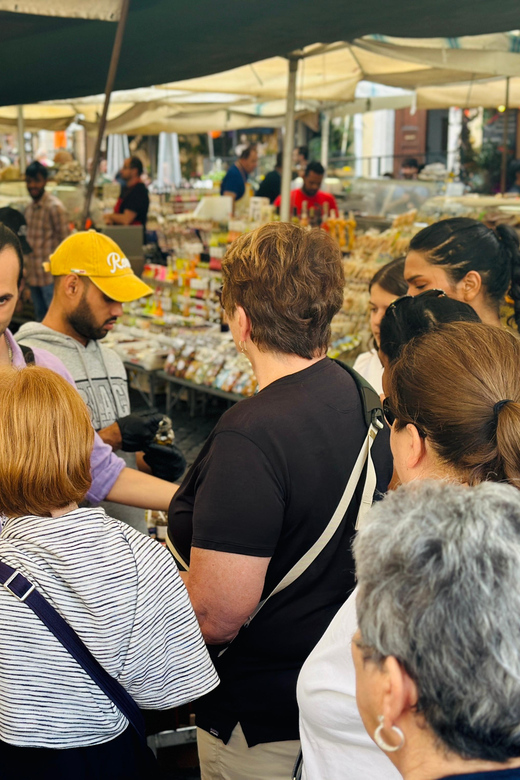
What I like about starting here is that the smells and textures help you understand the rest of the walk. You’re not just being handed food. You’re watching how it’s sold, how quickly people order, and what looks normal to locals. The tastings are built around traditional Roman flavors, including ingredients like truffles, olive oil, and balsamic vinegar. That matters because Roman food is often about quality ingredients used in simple ways, not complicated plating.
If your start time lands when the market is closed, your experience may shift slightly. The tour description specifically warns that the market is closed in the afternoons, so what you’re seeing at Campo de’ Fiori could be more about street-level food than a full market crawl. Either way, you’ll get the guided context so the food feels connected to the neighborhood, not random.
You can also read our reviews of more food & drink experiences in Rome
Wine and Another Round of Tastings: Why the Second Campo Stop Works
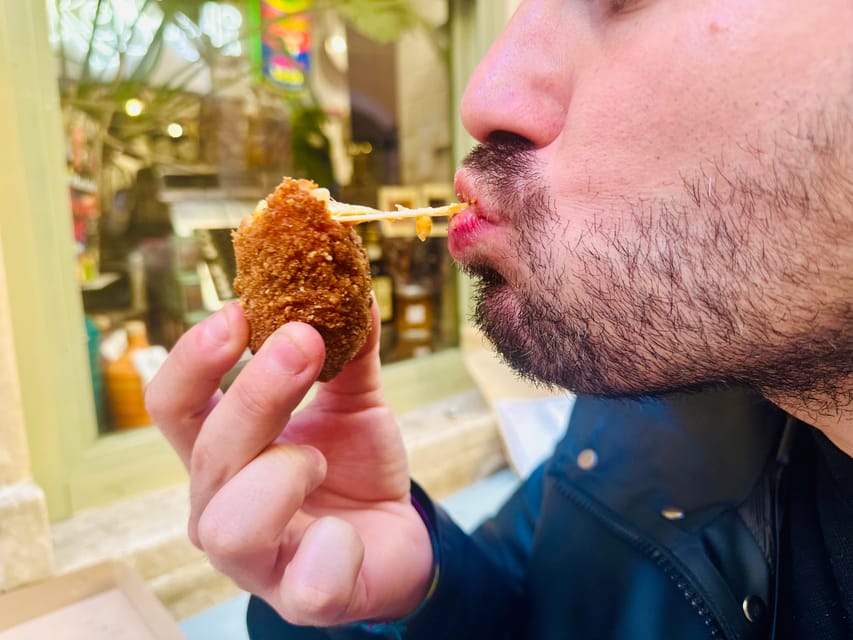
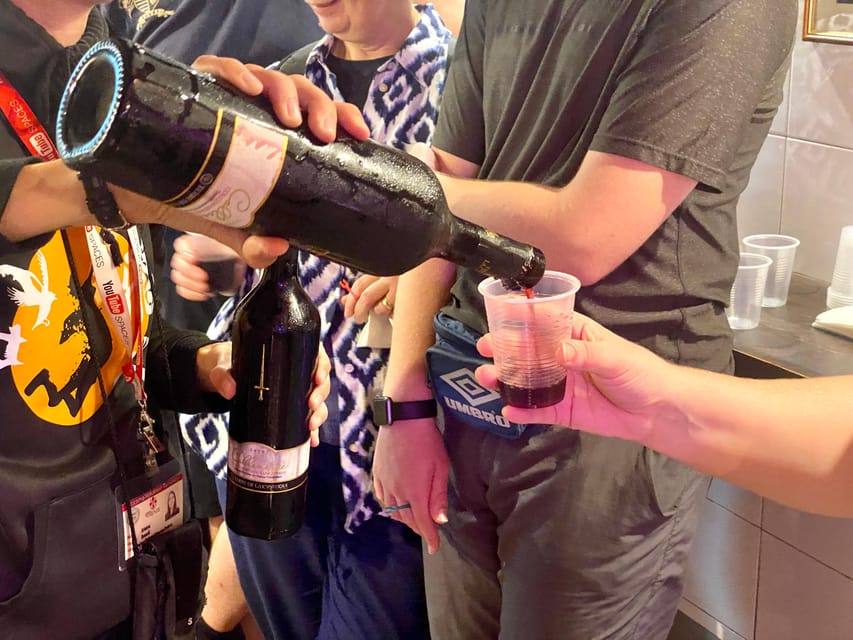
After a short walk, the tour circles back to Campo de’ Fiori for another tasting block, this time with wine included. This second stop is smart. If you start with only savory bites, you can end up full but still tasting the same flavor notes. Adding wine changes the palate and makes the tour feel like a real progression.
You’ll spend about 30 minutes here, and the guide’s job is to help you read the food like a local. For example, you’ll likely hear how Roman street food is built around quickness and satisfaction: food you can eat standing up, flavors that hold up in a busy square, and portions designed for the rhythm of the city. It’s also where pizza al taglio makes sense. Roman pizza by the slice is a practical invention, and wine helps you notice differences between dough, toppings, and what’s actually being highlighted.
This is a good point in the tour to slow down and taste deliberately. The group pace is designed for walking, so if you like food details, ask questions while you’re still close to the vendors.
The “Hidden” Stop: Small Sightseeing Breaks That Keep the Walk From Dragging
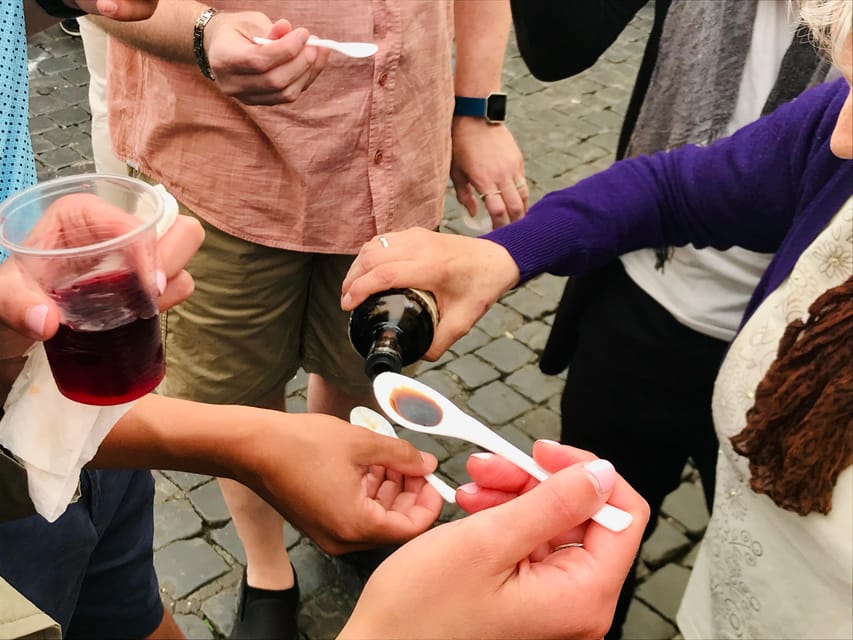
Between the bigger landmarks, the itinerary includes a shorter sightseeing segment (about 15 minutes). This is one of those parts that can be boring on a typical tour. Here, it helps because your food stops keep taking you to new micro-areas, and your brain needs a reset.
Think of it as a breathing space where the guide can point out street layout details, architectural fragments, and the kind of everyday Rome you’d otherwise miss when you’re only sprinting between major attractions. You’re also moving into the Jewish Ghetto zone, so the walk break helps you shift from market chaos to older, quieter streets near the Tiber.
If you like photography, this is usually where you’ll want to pause. Don’t expect huge monuments. Expect streetscape.
Theatre of Pompey Stop: A Roman Landmark Paired With Snacks
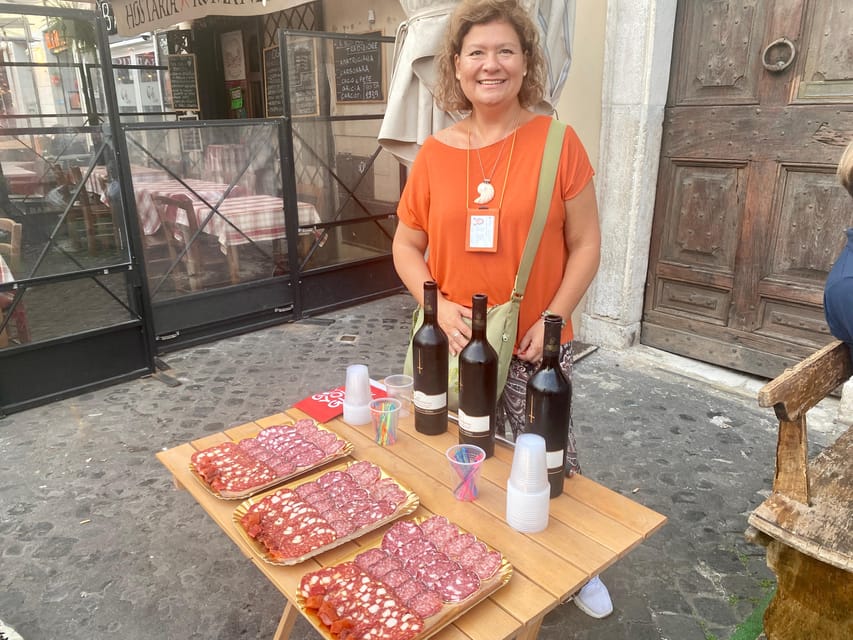
Next up is a stop near Teatro di Pompeo (the Theatre of Pompey area), with another short tasting time. This is where the tour does something helpful: it connects food to place, and place to time.
Rome’s theater sites aren’t just scenery. They’re reminders that the city’s public life used to revolve around gathering spaces. That helps explain why street food works the way it does today. You eat where people pass, pause, talk, and watch.
During this stop, you’re guided through additional regional street food bites. The itinerary keeps rotating between classic Roman favorites and specialty ingredients. Based on the tour description, you should be ready for more of the Roman comfort-food style, including the kind of fried, handheld items that travel well in a city center.
Via dei Chiavari: A Quick Beer Break That Feels Like a Real Stop, Not a Token Sip
You’ll walk a short distance to Via dei Chiavari, where the tour includes beer and a small tasting moment (about five minutes). This segment is brief, but it’s a good tool for keeping energy steady. If you’ve spent the morning (or first hour) eating and walking, a cold drink can reset everything.
The helpful part is that this stop isn’t placed randomly. It’s timed right after more food and before the Jewish Ghetto portion becomes more historical and heavier in context. The guide is likely preparing you for that shift, and a beer break keeps the mood relaxed instead of turning it into a museum march.
A few more Rome tours and experiences worth a look

Portico d’Ottavia and the Roman Ghetto: Eating While the Streets Explain Themselves
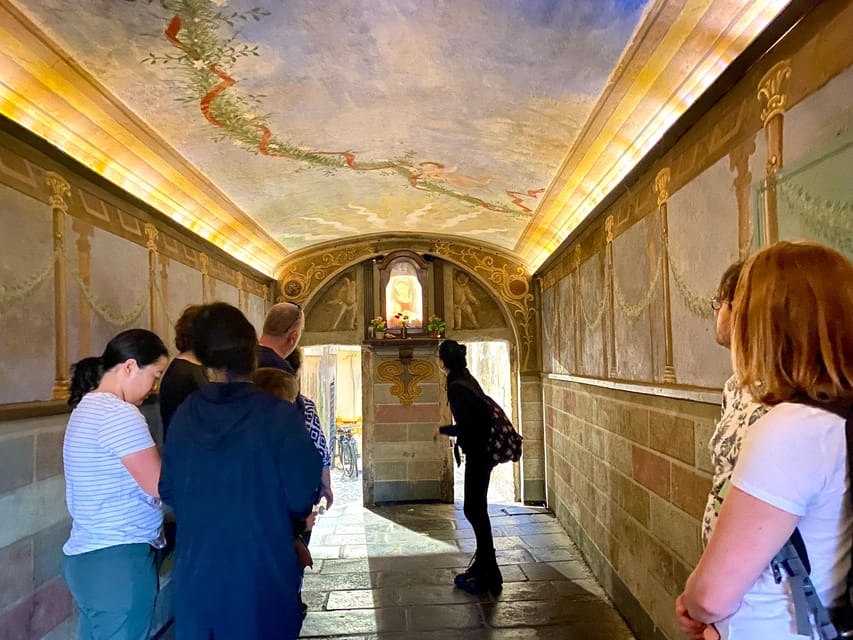
Now you move into the Jewish Quarter area around Rione Sant’Angelo, near the Tiber River. You’ll visit Portico d’Ottavia (about 15 minutes) and then pass by the Great Synagogue of Rome from outside (about 10 minutes). This isn’t a deep history lecture. It’s more like a walking explanation you can connect to what you’re about to eat.
What you’ll see matters because the neighborhood layout tells a story. Portico d’Ottavia gives you a sense of how people moved through the area historically, and it sets the stage for the food and daily life themes your guide will weave into your tastings.
This part is usually where a tour either feels respectful and grounded—or it feels like a food walk that accidentally happened near a landmark. This itinerary leans toward the respectful side because the tastings are tied to what the guide is saying: local Roman-Jewish specialties, and how culinary habits relate to identity, tradition, and neighborhood survival.
The Jewish Ghetto Food Stop: The Tastings That Give This Tour Its Name
The core Jewish Quarter moment comes next: a dedicated time in the Jewish Ghetto, Rome zone with street food tastings (about 20 minutes). This is where you get the payoff you paid for: foods tied to this community’s presence in Rome, alongside classic Roman street staples.
From the tour details, you can expect the guide to bring you to the area’s most famous Roman-Jewish specialty as you stroll. This is also where you’ll likely see more of the food that feels distinctly “this place,” not just general Roman street food.
One thing I’d do if I were you: listen for the pairing logic. If the guide mentions how certain flavors, ingredients, or formats became common, it’s easier to remember what you taste. Food history sticks when it explains the why.
You’ll also want to be ready for a mix of textures: some items are fried or melty, others are sauce-forward. That’s part of the charm. The Jewish Quarter food block is built to keep your palate changing while your surroundings shift from market squares to older streets and sightlines.
Theatre of Marcellus and Largo di Torre Argentina: End With Dessert Where the City Watches Itself
After the Jewish Ghetto segment, the itinerary continues with quick sightseeing stops, including Teatro di Marcello (about five minutes). This isn’t a long stop, so treat it as a photo break and a chance to let the guide point out what’s worth noticing quickly.
Then you finish at Largo di Torre Argentina, with about 15 minutes that include dessert. This finish location is practical and atmospheric. It’s the kind of place where you can slow down, eat something sweet, and take in the street rhythm after a full food-focused morning.
Why this ending works: the last taste gives your body a reset after multiple savory bites and drinks. And the setting makes it feel like you’re not just rushing to the next landmark.
Price and Value: Is $46 Reasonable for 2.5 Hours of Tastings?
For $46 per person and 2.5 hours, the math is mostly about what’s included. You get five different street food tastings, plus beer and wine samples. That’s not just “a few bites.” It’s a structure that tends to cover a meaningful portion of what you’d otherwise pay for at restaurants.
What makes the value feel real is the guide component. You’re not only tasting food; you’re walking through two major areas (Campo de’ Fiori and the Jewish Ghetto) and getting the cultural thread that helps you understand what you eat. A good guide can also prevent wasted time, like steering you toward vendors and food types that match the Roman street food style you want.
So yes, this isn’t a bargain like a supermarket picnic. But it’s also not overpriced for a tour that includes multiple tastings plus alcohol samples and guided stops at several key locations.
Who This Tour Fits Best (and Who Might Want to Skip It)
This is a strong fit if you want:
- Roman street food you can actually name (supplì, pizza al taglio)
- A walk that connects food + neighborhood context, not just food stops
- A manageable duration and frequent breaks between tastings
It’s a weaker fit if you:
- Need a vegan option (the tour is not suitable for vegans)
- Have gluten intolerance (not suitable)
- Are only interested in big museums and long monument time (this is about walking and eating)
Vegetarians can be accommodated if you advise in advance. If you have last-minute dietary needs, the guidance here is clear: requests won’t be accommodated at the last moment.
Practical Tips Before You Go (So the Market Doesn’t Beat You)
Here are the smart, real-world things that will make the tour better:
- Eat before you arrive only lightly. The tour includes multiple tastings, plus dessert at the end.
- Plan to ask the guide what’s included in the tastings versus what’s for purchase. That keeps you from accidentally paying restaurant-style prices for market items.
- If you plan to shop at the market after tasting, be careful with pricing. One past guest pointed out that market products could feel overpriced compared with quality and quantity. Your best move is to compare prices and decide with a calm head, not the hunger-fueled moment.
Also, wear shoes for stone streets. This is a walking tour, even with short transfers between stops.
Should You Book This Rome Jewish Quarter and Campo de’ Fiori Street Food Tour?
Book it if you want a single, well-paced experience that combines Campo de’ Fiori market energy with a Jewish Ghetto walking route and a line-up of Roman street foods you’ll remember. At $46, the included tastings, plus beer and wine samples, make it a good value for people who prefer learning by eating.
Skip it if your priority is strict dietary needs like vegan or gluten-free, or if you want long, museum-style sightseeing. In those cases, look for an itinerary built specifically around your constraints.
If you do book, show up ready to walk, taste, and ask questions. A good guide can turn this from a list of bites into a map you can carry home—especially around the Jewish Quarter, where the streets and the food start to explain each other.
FAQ
How long is the Rome Jewish Quarter and Campo de’ Fiori Street Food Tour?
The tour lasts 2.5 hours.
Where do I meet the guide?
Meet your guide at Campo dei Fiori square under the statue of Giordano Bruno located in the middle of the square.
What food and drinks are included in the tour price?
You get 5 different street food tastings, plus a sample of beer and a sample of wine. Dessert is included at the end of the tour.
Can vegetarians join this tour?
Vegetarians can be accommodated if you advise in advance for the vegetarian option.
Is this tour suitable for vegans or people with gluten intolerance?
No. The tour is not suitable for vegans or for people with gluten intolerance.
Is the Campo de’ Fiori market visit always available?
The market is closed in the afternoons, so what you see during the market-focused portion may depend on the time of your tour.