REVIEW · HONG KONG SAR
Private Food Tour: Hong Kong Island
Book on Viator →Operated by Hello Hong Kong · Bookable on Viator
Dim sum has a backstory worth hearing. This private Hong Kong Island food tour strings together old neighborhoods and classic Cantonese plates, with stories that explain the city’s Chinese-British food mix. I especially like how it starts with yum cha in Sheung Wan, where breakfast is served with real local theater (trolley-style), not just a plate handed to you.
I also love that you’re not stuck in a single restaurant. You move through places like Dried Seafood Street and Kai Fat Tea for sweets, then finish with the famous dan tat egg tart at a bakery with a long local reputation.
One drawback to plan around: it’s a walking tour that uses public transport, and it’s not suitable for vegetarians, gluten-free diets, or seafood allergies.
In This Review
- Quick takeaways
- Why this private Hong Kong Island food tour works so well
- Sheung Wan yum cha on trolley: the breakfast you’ll remember
- Seafood Street and Kai Fat Tea: ingredient city meets sweet tooth time
- Graham Street Market and old neighborhood streets: seeing Hong Kong through daily life
- Central District and Tai Kwun: where heritage meets modern foot traffic
- Mid-Levels Escalator and Ding Ding: the ride that keeps the day fun
- Roast meat char siu and Wan Chai’s energy: the big flavor payoff
- Price and logistics: is $236.69 worth it?
- Who this Hong Kong Island private food tour is best for
- Should you book this private food tour?
- FAQ
- How long is the private food tour on Hong Kong Island?
- Where do I meet, and where does the tour end?
- What food is included in the tour?
- Is hotel pickup available?
- Can vegetarians or people with gluten-free needs join this tour?
- Does the tour include a ride on the Ding Ding tram?
Quick takeaways
- Private and guided: you eat your way through Hong Kong Island with a pro guide and only your group on the tour.
- Old-School breakfast: yum cha served in a busy tea house atmosphere, with trolley delivery.
- Classic Hong Kong flavors: dim sum, wonton noodles, milk tea, Cantonese roast meats, and egg tart.
- Local shopping stops: dried seafood and a Chinese medicine shop show how ingredients and tonics fit daily life.
- Iconic city movement: a short ride on the Mid-Levels Escalator and a Ding Ding tram segment.
- Good for seeing neighborhoods on foot: Sheung Wan to Wan Chai, ending near lively street life.
Why this private Hong Kong Island food tour works so well
A good food tour does two things: it feeds you and it gives you a map for what you’re tasting. This one does both by focusing on Hong Kong’s Cantonese core while also pointing out how the British era left its fingerprints on things like milk tea and custard-style desserts.
The big value for you is the pacing. It’s built around a small chain of tastings across familiar Hong Kong Island districts, but you still get breaks to look around. That matters when you’re trying to go from tourist-photo mode to local-market mode without burning out.
And because it’s private, you can ask questions as you go—about ingredients, ordering, and why certain dishes show up again and again in local routines. Guides like Andy and Mel are specifically praised for being funny, pleasant, and strong on English, which makes the history part easy to follow rather than lecture-like.
You can also read our reviews of more food & drink experiences in Hong Kong SAR
Sheung Wan yum cha on trolley: the breakfast you’ll remember
The tour begins in Sheung Wan, near Des Voeux Road West, one of the island’s best starting points for understanding how the city “stacks.” This neighborhood is a mix of traditional beliefs, older shops, and modern shopping energy—perfect for getting oriented fast.
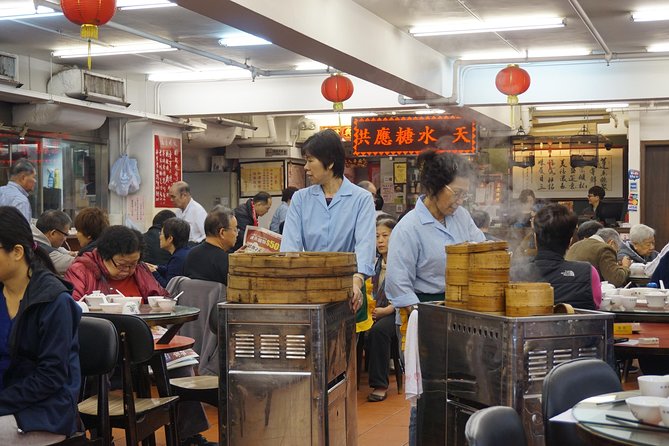
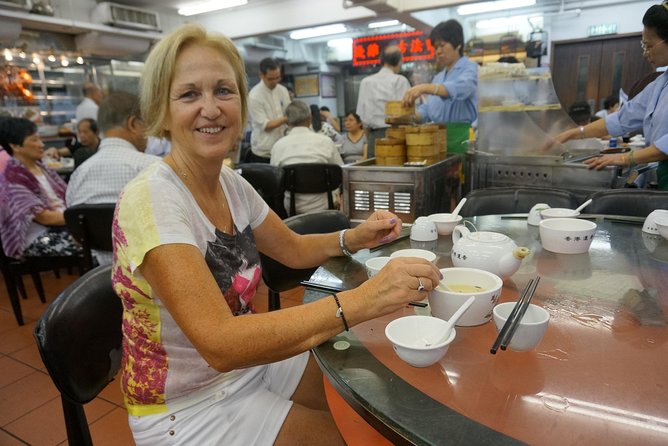
Stop 1 is the tea house experience. You’re in for a dim sum breakfast (yum cha) served by trolley, which means the action feels part of the restaurant. Instead of one pre-chosen plate, you get to watch how the room works: people come in hungry, orders move across tables, and the whole place hums with regulars.
Here’s why I think this matters for you: dim sum is easy to eat but harder to read. A good guide helps you notice the small differences that locals care about, and yum cha is where that “food culture” switch flips.
Practical note: the tour guidance says not to eat breakfast before you go. Do it. The tastings later are rich, and you don’t want that first dim sum to be a consolation prize.
Seafood Street and Kai Fat Tea: ingredient city meets sweet tooth time
Next comes Seafood Street, clustered around a section of Des Voeux Road West in Sheung Wan—well known for dried seafood trade. You’ll spend about 20 minutes here, enough time to see the sheer variety of dried ingredients and understand why Hong Kong cooking leans heavily on concentrated flavors and traditional tonics.
I like this stop because it changes your perspective. When you see dried seafood grouped like a specialty market, it makes wonton noodles and roast meat sauces feel less mysterious. These dishes aren’t random; they’re part of an ingredient ecosystem.
Then you head to Kai Fat Tea, tucked into narrow roads where tea, candies, and fruit-based sweets live side by side. This is a quick 15-minute stop, but it’s a smart palate reset. You get tastings of assorted candies and local snacks, which is great if you want a break from savory flavors without losing momentum.
Potential drawback here: if you’re the type who hates strong aromas, dried seafood markets can be intense. A quick look and a short chat is often enough, so just pace yourself and breathe through it.
Graham Street Market and old neighborhood streets: seeing Hong Kong through daily life
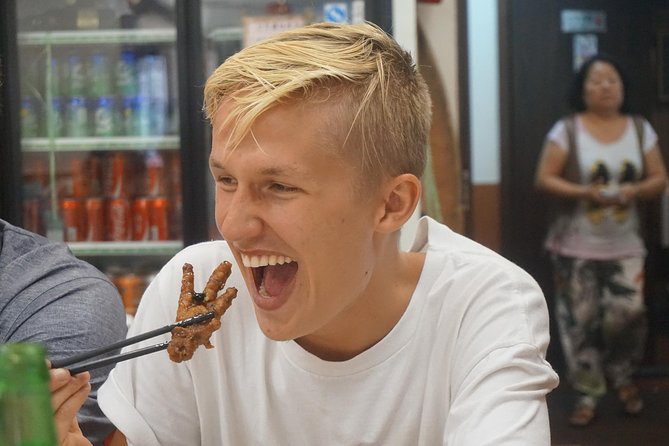
After the food-and-tea stops, the tour leans into market and street texture. You’ll pass through Graham Street Market, a sloped street with food stalls that sell everything from fresh vegetables to live seafood. It’s one of the classic ways to see what locals consider normal—not just what tourists think is “interesting.”
This is also where you’ll connect food to the everyday rhythm of the city. Hong Kong has a pace that can feel like a conveyor belt when you’re walking it alone. In a guided tour, you start to spot patterns: how shops group products, how people shop for small amounts, and how markets support quick meals.
Along the route, you also get time at other culinary-leaning venues, including a Chinese medicine shop. The point isn’t to turn this into a health seminar. It’s to show how ingredients and tonics sit in the same urban reality as your noodles and roast meats.
As you move onward, you’ll also experience streets like Gough Street, described as sitting right near the old European-Chinese boundary. That’s a useful context for why Hong Kong’s flavors feel hybrid. You see the colonial-era cues in the streetscape, and then the guide connects them to what shows up on menus.
Central District and Tai Kwun: where heritage meets modern foot traffic
In Central and Western District, the tour slows just enough for you to appreciate the mix of old and new. Central is one of the oldest yet most dynamic areas, with sloped streets and narrow alleys that make it feel like two cities overlapped.
This segment includes Tai Kwun, in the restored Central Police Station compound. It’s not a museum stop where you need a whole day to appreciate it. More like a chance to see how heritage buildings have been repurposed, and how that same idea of reuse shows up in Hong Kong’s food culture too.
Why this helps your food experience: once you understand the city’s habit of layering eras, the English-style custard tart and British-era milk tea stop feeling like random imports. They start feeling like local adaptations—things Hong Kongers kept, tweaked, and made their own.
A few more Hong Kong SAR tours and experiences worth a look
Mid-Levels Escalator and Ding Ding: the ride that keeps the day fun
If walking all day sounds like punishment, don’t worry. Hong Kong has built-in “moving breaks,” and this tour uses them.
You’ll take a short Mid-Levels Escalator ride, described as the longest outdoor escalator in the world. It’s a fast way to travel while still watching life unfold around you. The ride lasts about 15 minutes and the escalator is roughly 800 meters long, so it’s long enough to feel like a segment of the day, not just a photo stop.
Then you board Hong Kong Tramways (Ding Ding). The overview notes that the tram ride may be own expense, while the day’s stop list also mentions admission ticket free—so the safest move for you is to confirm what you’re paying for when you book. Either way, the tram experience is the kind of Hong Kong signature that makes your route feel like more than just eating.
This part also helps with pacing. You’re not just “moving to the next bite.” You’re reset-and-watch, which is especially useful if your group includes people who want culture without turning it into nonstop walking.
Roast meat char siu and Wan Chai’s energy: the big flavor payoff
Later in the tour you’ll reach a well-established bakery stop on Hong Kong Hennessy Road for the finale: the egg tart (dan tat). The bakery is described as having around 60 years of history and as a personal favorite of a former Hong Kong governor. Even if you don’t care about political connections (fair), the point is the age: this is a “locals go here” kind of place, not a one-season pop-up.
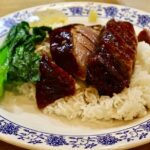
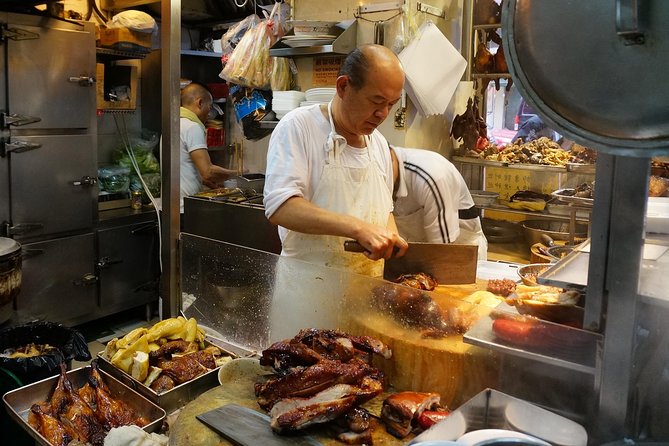
Before the dessert finish, you’ll also have a strong savory stop built around English roast meat (char siu) style flavors. You’ll sample a mixture of traditional roasted meats with homemade sauces served with rice, tied to a family-run restaurant with roots reaching back to the Qing dynasty.
This is one of the most valuable sections for you because char siu is one of those dishes where Hong Kong does its own version of a British-era influence—then brings it back into Cantonese daily eating. Pairing the roast meats with rice and sauces helps you notice how Hong Kong balances sweetness, salt, and aromatics.
After dessert, the tour ends in Wan Chai, with time around places like Southorn Playground and the surrounding area. Wan Chai has that East-meets-West energy: old tenement buildings near hip bars and busy restaurants. It’s a good ending because you leave with the city still awake around you, so you can keep the day going without needing a long commute.
Price and logistics: is $236.69 worth it?
At $236.69 per person, you’re paying for something most group tours don’t offer: privacy, a guide, and a thoughtfully sequenced set of tastings across multiple Hong Kong Island areas.
Here’s how I judge value for you:
- You’re getting multiple tastings (dim sum, wonton noodles, milk tea, BBQ meat/roast meats, egg tart) plus assorted candies and local snacks.
- You’re also getting structured storytelling—not just eating, but understanding why these foods look and taste the way they do in Hong Kong.
- The tour is designed as a 4-hour outing with a real walking route, plus public-transport movement and at least one iconic ride segment.
At the same time, there are two things to watch. First, the tour is walking-based and uses public transport even if pickup is offered. If you’re planning for mobility limits, you’ll want to evaluate that carefully. Second, it’s not a fit for vegetarians and it flags limitations around gluten-free and seafood allergies.
If you want a low-effort “show up and eat” day, this may feel like work. But if you want an efficient way to learn Hong Kong through food and streets, it’s a solid use of time.
Who this Hong Kong Island private food tour is best for
This tour is ideal for you if you fall into one (or more) of these buckets:
- You want a Hong Kong intro that goes past big-name landmarks and into food neighborhoods.
- Your group includes adults who enjoy chatting and learning, not just taking photos.
- You like food variety: dim sum breakfast, noodle soup, milk tea, roast meats, and dan tat is a well-balanced “savory to sweet” arc.
It’s not a great match if you require vegetarian meals, strict gluten-free options, or you need to avoid seafood. The tour also asks you to come hungry, so if that won’t work for your schedule, plan your morning accordingly.
And if you’re on a cruise day, the structure can be helpful because it packs a lot of atmosphere into a half-day format without requiring a long sit-down day.
Should you book this private food tour?
Book it if you want a guided Hong Kong Island day where you eat classics and understand the city behind the flavors. The combination of Sheung Wan yum cha, ingredient-market context like Dried Seafood Street, and a strong roast-meat-to-egg-tart finish gives you both variety and meaning.
Skip it (or choose another option) if you need vegetarian or gluten-free support, or if you know you’d struggle with a walking route and public transport connections. Also check the tram cost detail for Ding Ding since the descriptions point in slightly different directions.
If you’re on the fence, think of it this way: this tour is for people who want Hong Kong to make sense through food, not just through sights—and it’s priced like a private experience for exactly that reason.
FAQ
How long is the private food tour on Hong Kong Island?
It runs for about 4 hours.
Where do I meet, and where does the tour end?
You meet at 28號 Des Voeux Rd W, Sheung Wan, and the tour ends in Wan Chai.
What food is included in the tour?
You get food including variety of dim sum, milk tea, wonton noodle, BBQ meat/roast meats, and egg tart, plus tasting assorted candies and local snacks.
Is hotel pickup available?
Pickup is offered, but the tour is still a walking tour and uses public transport rather than a car tour.
Can vegetarians or people with gluten-free needs join this tour?
No. The tour is not suitable for vegetarians or for gluten-free needs.
Does the tour include a ride on the Ding Ding tram?
The plan includes boarding Hong Kong Tramways (Ding Ding), but the description notes it as own expense, so you should confirm what’s included for your booking.