REVIEW · OSAKA
Retro Osaka Street Food Tour: Shinsekai
Book on Viator →Operated by Arigato Japan KK · Bookable on Viator
Shinsekai is Osaka’s delicious throwback. This 3-hour retro street food walk hits iconic landmarks and lets you taste Osaka traditions while learning why this neighborhood feels so lived-in. Two things I especially like are the hands-on takoyaki making and the way the guide connects the food with what’s happening around you.
I also love the photo-friendly stops, like the Tsutenkaku area and the quirky sights tied to local folklore. The only real drawback to consider: it is not built for everyone—it’s not recommended for vegans and gluten-free diets, and the tour includes at least one beverage (minimum drinking age is listed as 21). If you have strict dietary needs, plan carefully before booking.
In This Review
- Key Things You’ll Notice on This Shinsekai Tour
- Shinsekai Feels Like Osaka From Another Decade
- Tsutenkaku Meeting Point: Start at the Right Icon
- The Real Star: Takoyaki Making Plus Mixed Juice
- Following the Icons: Billiken, Ja Jan Yokocho, and Isshin-ji
- Kuromon Ichiba Market and the Sennariya Coffee Finish
- What the Food Plan Actually Adds Up To
- Price and Value: Is $217 Reasonable?
- Guides Matter: The Difference Between Eating and Understanding
- Who This Tour Fits Best (And Who Should Skip It)
- Should You Book This Shinsekai Retro Street Food Tour?
- FAQ
- What time does the Shinsekai street food tour start?
- How long is the tour?
- How many food stops are included?
- Is takoyaki included, and do I make it myself?
- What else will I eat besides takoyaki?
- Where does the tour meet and where does it end?
- What’s included in the price?
- What dietary needs does this tour support?
- Is there an age or drinking restriction?
- What if the weather is bad?
Key Things You’ll Notice on This Shinsekai Tour
- Small group size (max 10) means easier conversation and less waiting in line
- Takoyaki making turns the tour from watching into doing
- Mixed juice and Osaka-style breakfast show flavors you won’t get from a generic menu
- Icon landmarks on foot help you get great photos without feeling like you’re rushing
- 4 food stops plus dinner in a restaurant adds up to a real meal plan
- Vegetarian and pescetarian friendly options are mentioned, but vegans/gluten-free are not
Shinsekai Feels Like Osaka From Another Decade
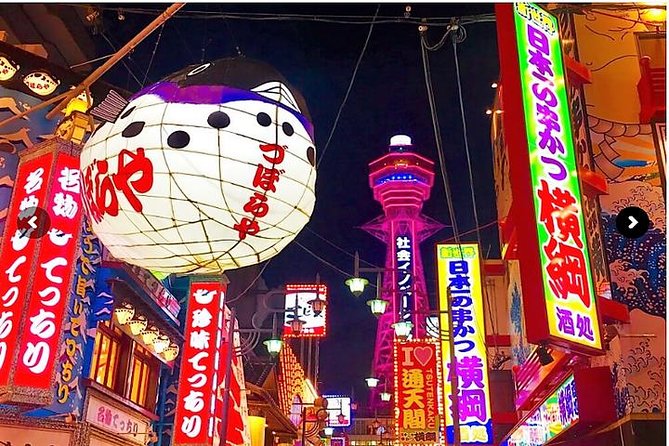
If you want Osaka’s story told through food, Shinsekai is a smart place to start. The district is known for its retro vibe, and it’s also where locals go for shopping, entertainment, and casual hanging out. You’re not hopping between distant must-sees; you’re walking through one neighborhood that has kept its character.
What makes this tour especially useful is that it focuses on food traditions that date back to the early 1900s. That means you’re tasting items with context, not just eating random street snacks. And because you’re with an English-speaking local guide, you can actually read the room and the menus without translating everything yourself.
You can also read our reviews of more food & drink experiences in Osaka

Tsutenkaku Meeting Point: Start at the Right Icon
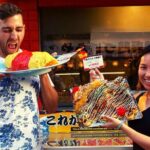
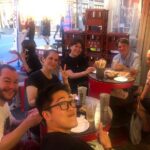
You’ll meet at Tsutenkaku around 5:00 pm, right at the start of the action. This matters more than you’d think. It gets you into Shinsekai while lights and foot traffic are building, so the atmosphere matches the food.
From the first stop, you’ll get a sense of what people mean when they say Shinsekai feels like old Osaka. Tsutenkaku is the visual anchor, and the guide’s explanations help you connect the landmark to the neighborhood’s identity. It’s also a great place to get your bearings fast—so later, when you’re in the smaller lanes, you don’t feel lost.
You should also know the pace is a walking tour through multiple spots, so wear shoes you don’t mind getting a bit crowded. Shinsekai is about close-up street-level details: signs, storefront menus, and the kind of food that gets ordered fast.
The Real Star: Takoyaki Making Plus Mixed Juice
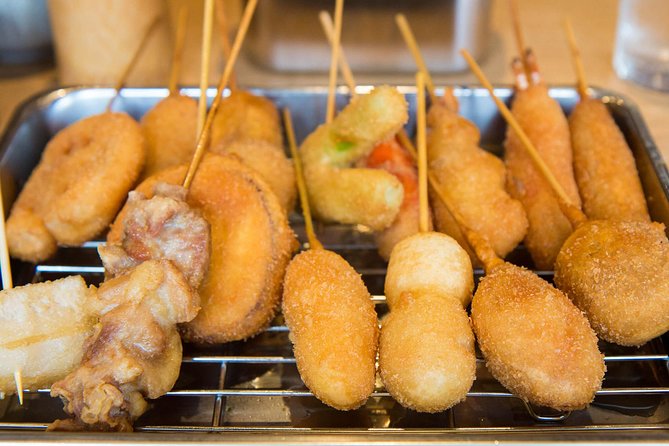
The highlights here are practical and fun: you learn Osaka food traditions, including the concept behind mixed juice, and you even make your own takoyaki. That hands-on step is what turns this into more than a tasting session.
Here’s why I think that matters for you. When you make takoyaki, you stop being a passive eater and start understanding what makes it good. You’ll also likely pay more attention to texture—crispy edges, the right doneness, and how the filling and sauce work together. It’s easier to appreciate the next shops you visit because you’ve already done the basics once.
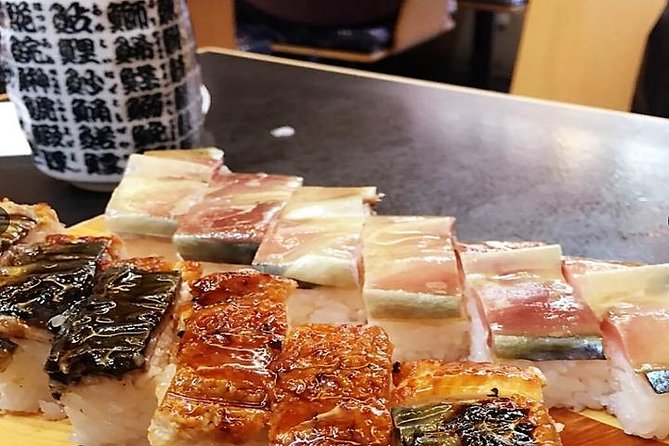
The tour also includes sampling different dishes and drinks across multiple shops, and the schedule mentions an Osaka-style breakfast as part of the tasting lineup. That’s a nice twist because many street food tours skip breakfast-style items or only do them in theory. Here, it’s part of the actual bite list.
Diet notes to keep you realistic: the tour is listed as vegetarian and pescetarian friendly, but it’s not recommended for vegans and gluten-free. If your needs are strict, it’s worth verifying what substitutes are possible before you go. The good news is that you won’t be guessing—your guide can help steer you toward what’s available.
Following the Icons: Billiken, Ja Jan Yokocho, and Isshin-ji
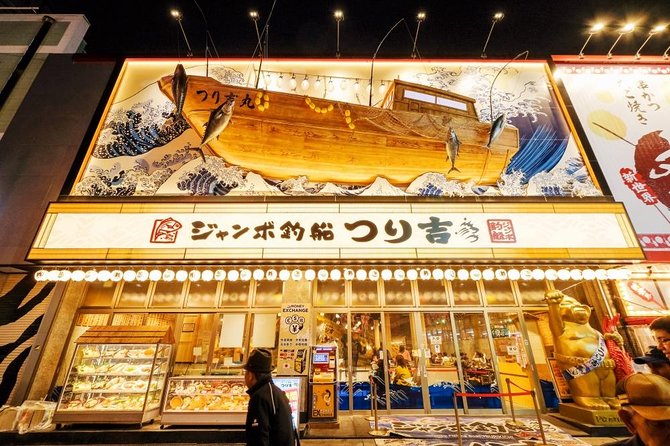
After Tsutenkaku, the walking route keeps you surrounded by recognizable Shinsekai features while also giving the food context behind them. The stop plan includes the Billiken shrine, Ja Jan Yokocho, and Isshin-ji—and each one adds a different kind of meaning to what you’re eating.
- Billiken shrine
This is one of those playful local landmarks you’ll see in Osaka culture references. Coming here on a food tour works because it breaks the day into story beats: taste, then a quick explanation, then taste again.
- Ja Jan Yokocho
This sounds exactly like what it is: a lane-style area known for snacks and casual eating. You’ll feel the rhythm of the neighborhood here—short stops, quick orders, and a more relaxed pace than a big attraction.
- Isshin-ji
Adding a temple stop gives the tour variety. Even if you’re mostly there for food, it helps you understand why people spend time in this neighborhood and not just pass through it.
The guide also explains how locals enjoy shopping and entertainment, not just where to eat. That’s a key difference between a tour that reads like a checklist and one that helps you understand the place.
Kuromon Ichiba Market and the Sennariya Coffee Finish
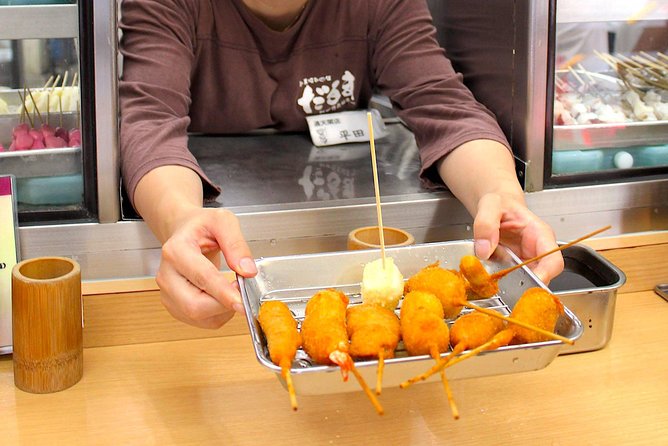
One of the most valuable parts of this tour is that you don’t only stay in neon lanes. You also hit Kuromon Ichiba Market, which is known for its food focus. A market stop can be a double win: you get variety, and you also get a sense of what’s fresh and popular in Osaka.
Then the tour ends at Sennariya Coffee. This finish point is a smart way to slow down after walking and eating. You can take a breather, cool your feet, and re-group before you head out on your own.
Also, ending with coffee helps you transition into evening plans. Osaka nights can be a lot—lights, crowds, and more food temptations. A calm last stop makes it easier to decide what to do next without feeling fried.
A few more Osaka tours and experiences worth a look



What the Food Plan Actually Adds Up To
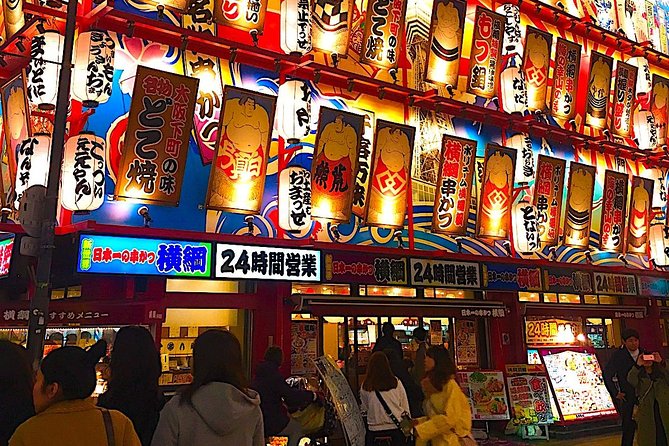
This tour includes 4 food stops plus dinner in a restaurant, and you’ll have 1 beverage included. In other words, you’re not just nibbling small samples that leave you hungry later.
The flavors listed across the experience—takoyaki, mixed juice, and Osaka-style breakfast—cover both comfort food and local drink culture. If you only eat takoyaki, you miss half the story; if you only do markets, you miss the everyday street snacks. Here, you get both.
You should also think about timing. At about 3 hours, this fits perfectly as an early dinner plan. Start at 5 pm, sample and make food along the way, then sit down for restaurant dinner and wrap at the coffee spot. If you try to do a long day of sightseeing first, Shinsekai can feel like you’re rushing; keep it lighter earlier in the day and you’ll enjoy the tour more.
Price and Value: Is $217 Reasonable?
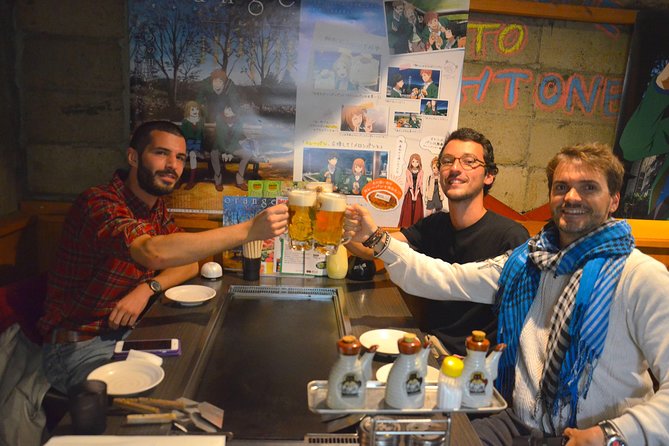
At $217 per person, this isn’t the cheapest way to eat around Osaka. But it also isn’t a vague “taste a few things” deal. You’re paying for an English-speaking local guide, multiple stops, included dinner in a restaurant, takoyaki-making hands-on time, and a beverage plus several tastings.
The small group size (max 10 travelers) also helps value. Fewer people means less waiting and more chance to ask questions—especially when you’re learning the reasoning behind certain foods and local habits. And since the tour is scheduled for a specific 5:00 pm start, you’re basically buying the planning and sequencing that keeps you moving between the right spots at the right time.
Where the price may feel less worth it is if you already know exactly what you want to eat and you’re confident ordering in Japanese. For most visitors, though, the guide and the structure do the heavy lifting.
Guides Matter: The Difference Between Eating and Understanding
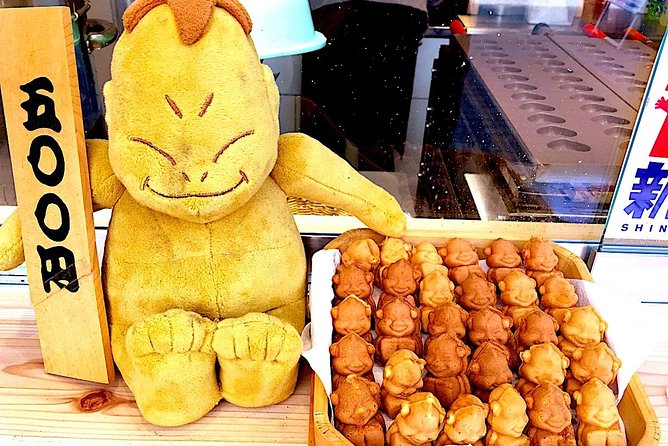
The best part of the experience, based on past guide styles you’ll likely encounter, is the combination of food guidance and neighborhood storytelling. Guides such as Ike, Eki, and Hiro are named as leading these walks, and the common theme is a relaxed, friendly flow that doesn’t turn into a lecture.
You get the benefit of an English-speaking guide when reading menus and figuring out what to order. But you also get the cultural context—how people spend time, why places exist, and how the area’s identity ties to what’s on the street.
In practice, that means you’re less likely to wander into the wrong shop at the wrong moment, and you’re more likely to leave with a personal map of Shinsekai: where you want to return and what you want to try next.
Who This Tour Fits Best (And Who Should Skip It)
This Shinsekai retro street food tour is a strong fit if you want:
- A guided food plan that helps you eat more confidently
- Takoyaki making as a fun activity, not just a tasting
- A small-group walking experience in one neighborhood
- A mix of street food + restaurant dinner + a market stop
It’s also listed as family-friendly, and children must be accompanied by an adult. There’s also a note that passport information copy is required for kids 10 and above—so if you’re traveling with younger kids, keep that paperwork ready.
You should think twice if you’re:
- Vegan or need gluten-free options. The tour is explicitly not recommended for gluten-free, and it notes it’s not recommended for vegans.
- Sensitive to beverage rules. The minimum drinking age is listed as 21, so the included beverage may involve alcohol depending on what’s served at the stop.
Finally, plan for walking. You’ll be moving between landmarks and food stops for about 3 hours, so comfortable shoes are non-negotiable.
Should You Book This Shinsekai Retro Street Food Tour?
I’d book it if you want Osaka food with local context and you like the idea of learning by doing—especially making takoyaki. The included structure (4 food stops, dinner, a beverage, and multiple landmark stops) makes it feel like a full evening plan rather than random snacks.
I’d hesitate if you’re vegan or strictly gluten-free, since the tour isn’t recommended for those diets. And if you already plan to eat independently in Shinsekai with your own list, you might feel the guide value depends on your comfort level with menus and ordering.
If you’re the kind of traveler who wants an evening where someone else handles the sequencing and you focus on eating, photos, and asking questions, this is a solid choice.
FAQ
What time does the Shinsekai street food tour start?
It starts at 5:00 pm.
How long is the tour?
The tour is about 3 hours.
How many food stops are included?
You’ll have 4 food stops.
Is takoyaki included, and do I make it myself?
Yes. The tour includes learning Osaka food traditions and making your own takoyaki.
What else will I eat besides takoyaki?
You’ll sample a mix of street food and drinks, including mixed juice and an Osaka-style breakfast as part of the tastings.
Where does the tour meet and where does it end?
You meet at Tsutenkaku (1-chōme-18-6 Ebisuhigashi, Naniwa Ward, Osaka). The tour ends back at the meeting point area, with an ending at Sennariya Coffee.
What’s included in the price?
Included are 1 beverage, dinner in a restaurant, a local guide, and 4 food stops.
What dietary needs does this tour support?
It’s vegetarian and pescetarian friendly, but it’s not recommended for vegans and gluten-free.
Is there an age or drinking restriction?
The tour lists a minimum drinking age of 21. Children must be accompanied by an adult, and passport information copy is required for kids 10 and above.
What if the weather is bad?
The tour requires good weather. If it’s canceled due to poor weather, you’ll be offered a different date or a full refund.