REVIEW · SINGAPORE
UNESCO Hawker Culture: Chinatown Food Tasting Tour
Book on Viator →Operated by LC Travel Planners · Bookable on Viator
UNESCO meets chicken rice. This 3-hour Chinatown food tasting tour ties Singapore’s hawker culture (UNESCO intangible heritage) to the streets, temples, and shophouses that give the city its flavor. You’ll taste up to 10 hand-picked dishes and drinks, then pause for a classic Singapore coffeehouse drink along the way.
I love how the food plan is not just random ordering. You get a guided shortcut through hawker courts by sampling 9–10 curated items (including Singapore favorites like chicken rice), rather than trying to guess what’s best when everything is screaming for attention.
The one downside to plan for: it’s a walking, standing, and tasting kind of outing. Expect to move between multiple stops over about 3 hours, so comfy shoes matter.
In This Review
- Key highlights worth your attention
- UNESCO Hawker Culture, Powered by a Local Guide
- Start at Bee Cheng Hiang, Then Walk Into Chinatown’s Story
- Sri Mariamman Temple: A 200-Year-Old Opening Act
- Ann Siang Hill Park: Shophouses and Chinese Immigrant Roots
- Maxwell Food Centre: Where Chicken Rice Shows Up for Real
- Buddha Tooth Relic Temple and Museum: Artful Break Time
- Chinatown Complex and Smith Street: Murals, Tilework, and Alley Feeling
- What You Actually Eat: 9–10 Dishes, Drinks, and a Coffeehouse Stop
- Quick practical advice for tastings
- Guides Who Turn Food Into Context: Ron, Silvia, Jeanette, and More
- Price and Value: Why $88.81 Often Feels Fair Here
- Timing, Shoes, and How to Fit It Into Your Day
- Should You Book This UNESCO Hawker Culture Tour?
- FAQ
- How long is the UNESCO Hawker Culture: Chinatown Food Tasting Tour?
- How much does the tour cost?
- What’s included in the tour price?
- How many people are in a group?
- Where does the tour start?
- Where does the tour end?
- What kinds of food do you taste?
- Is there an upgrade option?
- Do you have to pay for tips?
- What is the cancellation policy?
Key highlights worth your attention
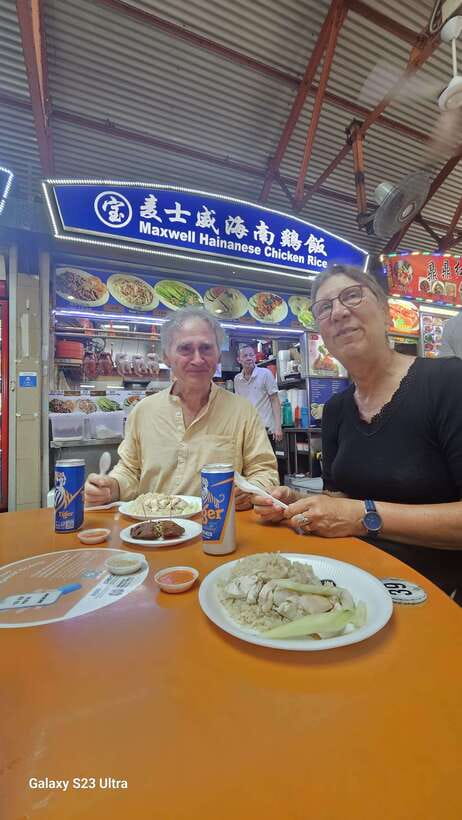
- UNESCO hawker culture theme: Singapore’s hawker food is recognized as part of the intangible food heritage of humanity.
- 9–10 hand-picked tastings: You’ll sample a lot without committing to full meals all day.
- Chinatown + temple stops: Stops like Sri Mariamman Temple and the Buddha Tooth Relic Temple add context behind the food.
- Photo-friendly street moments: Smith Street murals by local artist Yip Yew Chong plus restored shophouses.
- Small group size: Maximum of 10 travelers keeps things easy to ask questions and move at a human pace.
- Coffeehouse pause included: You sit down for a hot drink in a traditional Singapore coffeehouse.
UNESCO Hawker Culture, Powered by a Local Guide
Singapore hawker centers can feel like a food map with no legend. You walk in, see rows of stalls, and suddenly you’re stuck choosing between a few hundred options. That’s exactly why a guided tasting works so well here.
This tour is built around Singapore’s hawker culture being recognized by UNESCO as intangible food heritage of humanity. The point isn’t just to label it UNESCO and move on. The guide helps you connect the dots between what you’re eating and why it exists in a place where Malay, Indian, and Chinese cuisines overlap in everyday life.
It also helps that the food is not pick-your-own. The itinerary is designed so you sample up to 10 dishes and drinks at famous hawker centers, with options that include vendors recognized by Michelin in some cases (the tour also mentions Michelin Bid Gourmand Award dishes). In plain terms: you’re paying for good decision-making on your behalf.
You can also read our reviews of more food & drink experiences in Singapore


Start at Bee Cheng Hiang, Then Walk Into Chinatown’s Story
The tour meets at Bee Cheng Hiang 美珍香 on Pagoda Street. This matters because Pagoda Street is the kind of lane where you quickly feel the neighborhood vibe and start spotting the shophouses and signs you’d miss if you arrived only for one meal.
From there, the route builds in a smart order. You start with culturally important landmarks, then shift into the food-heavy parts of the route. You end in Chinatown’s core area near Chinatown Complex, and the tour notes Maxwell Station as the nearest MRT for the end point.
The group size cap is 10 travelers. That’s small enough that your guide can answer questions without turning it into a lecture hall. It’s also big enough that the tour feels social without being chaotic.
Sri Mariamman Temple: A 200-Year-Old Opening Act
Stop 1 is Sri Mariamman Temple, founded in 1827 by Naraina Pillai, a prominent figure in Singapore’s Indian community. The tour notes it as a National Monument for its architectural and historical significance.
You get about 10 minutes here. That short time is intentional. The goal is not to spend half your day in one place, but to set the tone: Singapore’s food story comes from migration, trade, faith, and community networks—not only from recipes.
If you like taking photos, temples are great for quick, respectful snapshots. If you prefer quiet moments, it’s also a natural reset before you head into the hawker crowd.
Ann Siang Hill Park: Shophouses and Chinese Immigrant Roots
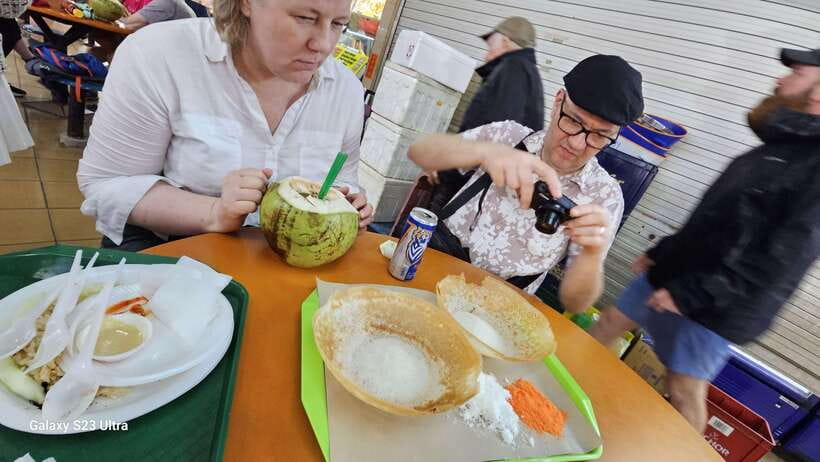
Stop 2 is Ann Siang Hill Park, which the tour describes as once a bustling business center for Chinese immigrants. You also get restored shophouses and the kind of street geometry that makes Singapore feel both old and constantly in use.
Time here is about 15 minutes. Expect a walk-and-look stop. This is the segment where you start seeing the physical shapes of history: the shophouses’ fronts, the street scale, and the way neighborhoods kept adapting rather than freezing in time.
This part also helps your food tasting make sense. You’ll be better prepared for the mix you’ll taste later—because Chinatown isn’t just one culture. It’s an intersection.
Maxwell Food Centre: Where Chicken Rice Shows Up for Real
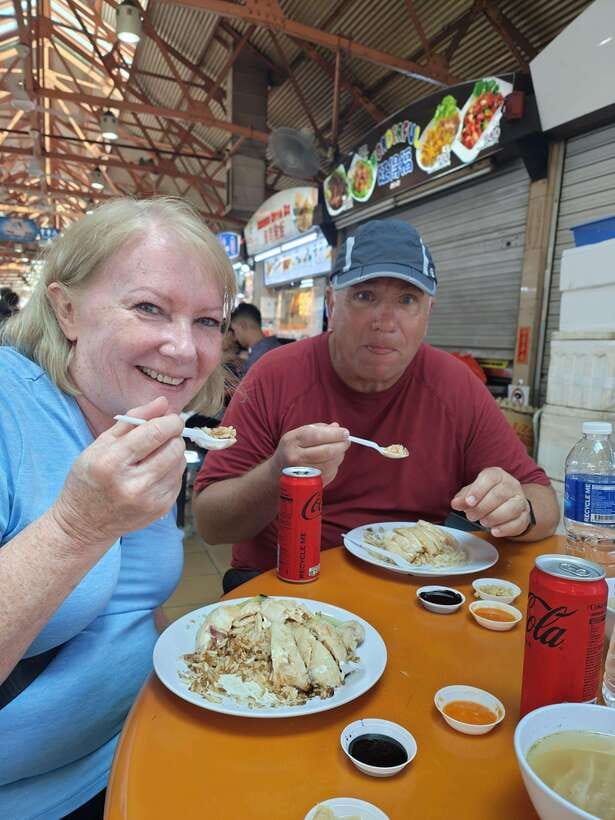
Stop 3 is Maxwell Food Centre. The tour frames it as a hawker delight hub with famous dishes like Singapore’s chicken rice and Fuzhou pancakes.
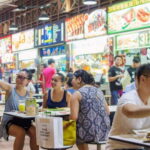
Time here is about 35 minutes, which is a useful length. You’re not rushing from stall to stall for photos only, and you’re not stuck waiting so long that your second and third tastings go cold. Hawker timing can be tricky on your own. With a planned tasting route, you’re more likely to hit peak availability.
Chicken rice is the star the tour calls out directly. In one guide-led experience, the tastings included Hainanese chicken rice and it’s easy to see why this dish is so often the gateway for first-time visitors. The chicken is simple, the rice is fragrant, and the sauces pull everything into focus.
A hawker center is also where you learn the real value of ordering for quantity. If you were alone, you might choose one dish and call it a day. Here, you’ll sample across flavors and styles, including Chinese and Indian-adjacent influences that show up naturally in a place like Chinatown.
A few more Singapore tours and experiences worth a look

Buddha Tooth Relic Temple and Museum: Artful Break Time
Stop 4 is Buddha Tooth Relic Temple and Museum. The tour describes it as a Tang-styled Chinese Buddhist temple with richly designed interiors and museum exhibits covering Buddhist art and history over thousands of years. The temple houses a relic said to be a tooth.
You get about 10 minutes. Think of this as a mental breather. Hawker centers are lively and busy by nature. A temple stop slows your pace and gives your camera a different subject too—gold details, careful design, and exhibits that explain cultural context without needing a museum ticket day.
If you’re traveling with kids or anyone who gets tired standing in food lines, these short cultural stops can be a lifesaver. One guest experience also showed how guides can adjust to real needs. The tour seems built to keep the flow workable for different groups.
Chinatown Complex and Smith Street: Murals, Tilework, and Alley Feeling
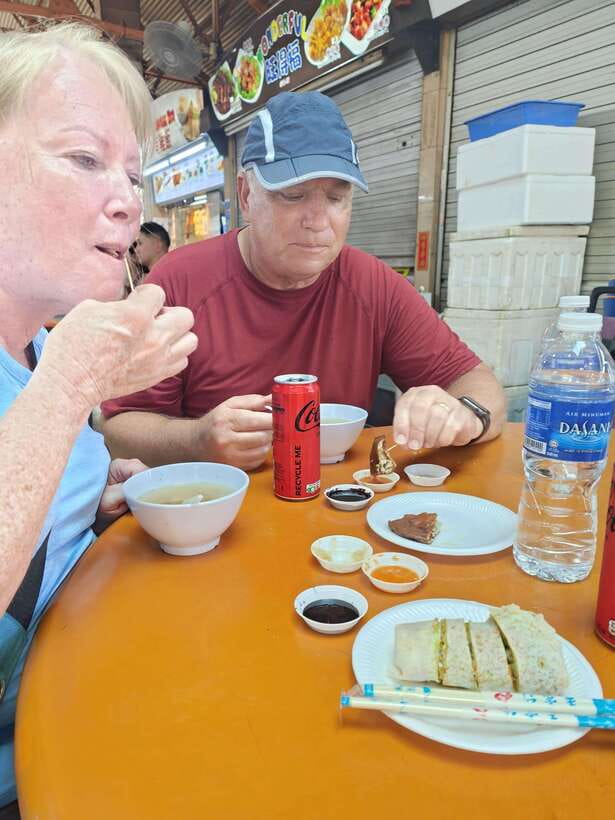
Stop 5 is Chinatown with time around Chinatown Complex. The tour notes it as a repository of unique architectural heritage, especially the shophouses with Chinese-style tile ornaments and motifs. It also points to the connection to street hawkers who once plied their trade in nearby areas.
Time here is about 20 minutes, which is enough to walk and orient without feeling like you’re trapped in a mall-like maze.
Stop 6 is Smith Street, about 30 minutes. This is where you get those small, memorable alley walks. The tour specifically mentions Instagrammable murals by local artist Yip Yew Chong, plus a rest stop at a traditional coffeeshop with nostalgia-grade coffee culture.
This is also where the tour’s structure makes sense. You’ve done temples and hawker centers. Then you end with a quieter, seated moment. It helps everything feel like a story instead of a checklist.
What You Actually Eat: 9–10 Dishes, Drinks, and a Coffeehouse Stop
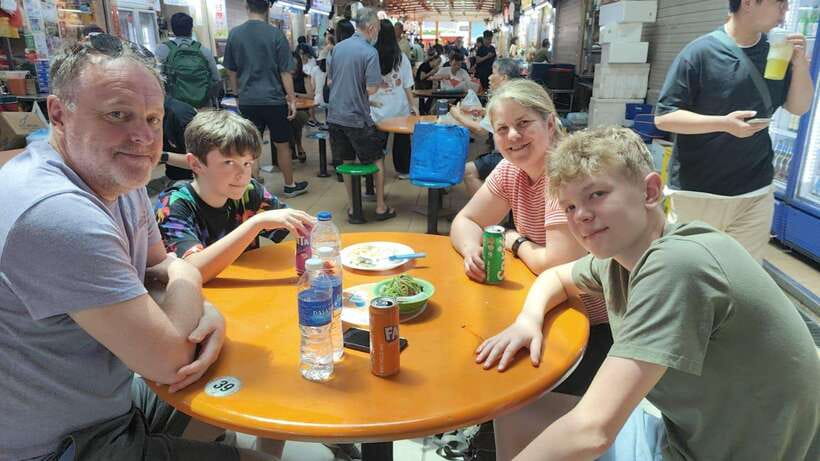
This is a tasting tour, so plan on smaller portions that add up. The tour includes 9–10 handpicked food at famous hawker centres plus a drink component, with a note that some dishes may come from vendors recognized by Michelin (specifically Michelin Bid Gourmand Award dishes). You’ll also receive 1 bottle of mineral water.
The signature called out is Singapore’s chicken rice. The itinerary also flags Fuzhou pancakes at Maxwell Food Centre, so you know the tasting won’t be only one type of food.
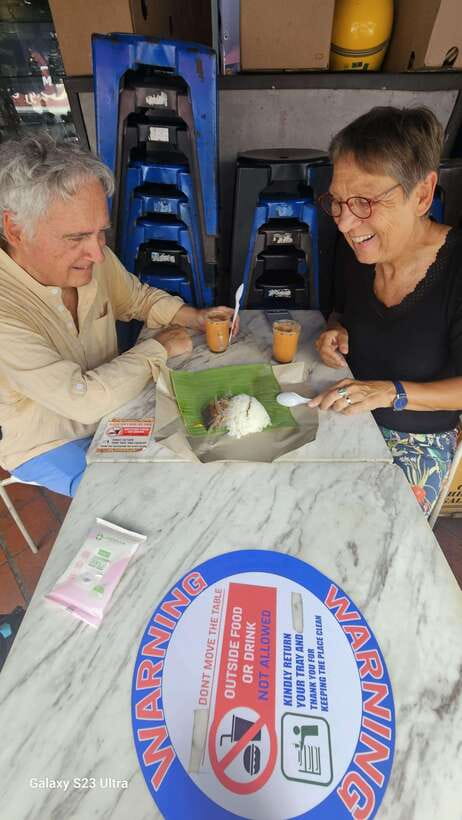
The coffeehouse stop is a real bonus. The tour says you’ll sit down for a hot drink in a traditional Singapore coffeehouse. That matters because it’s a break from the quick-bite rhythm. It’s also your chance to digest what you’ve eaten while still staying in the neighborhood vibe.
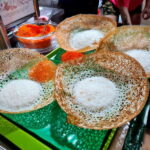
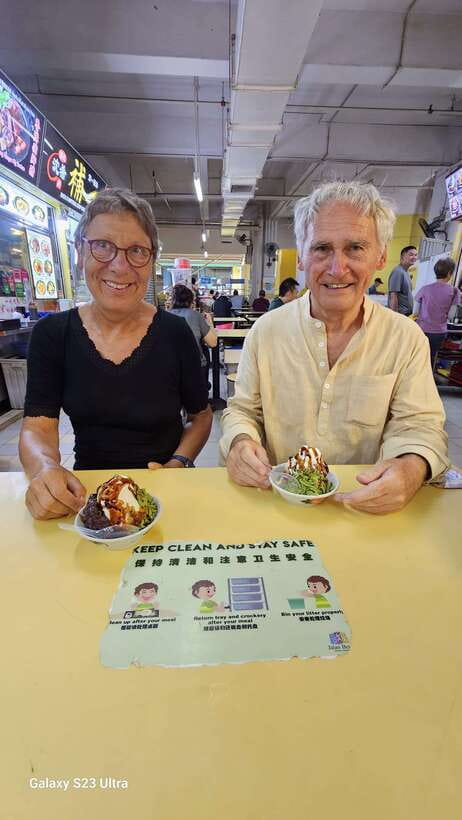
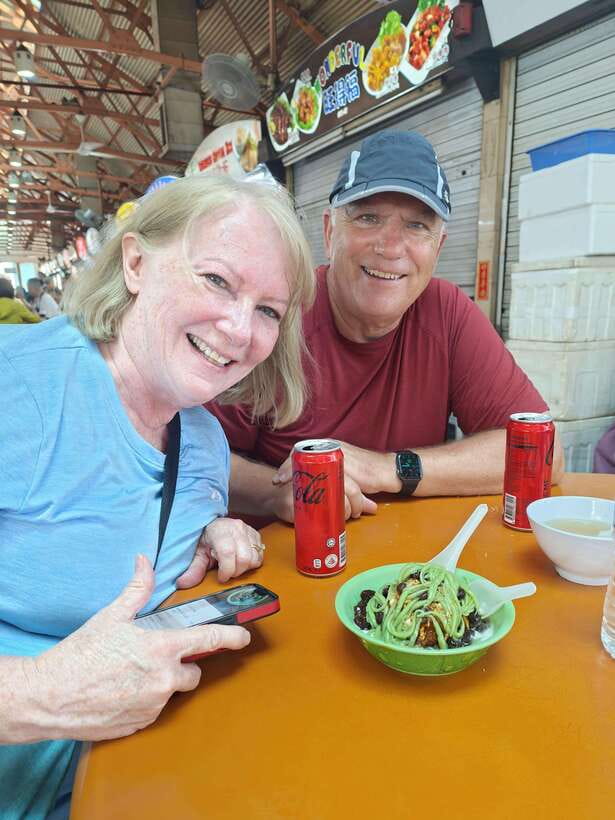
Sweet endings show up too. One guide-led experience mentioned chendol as a last dish, which makes sense because hawker desserts are part of Singapore’s everyday food life. I’d treat dessert as a “maybe, but likely” category: the exact list can vary based on availability, but the tour’s goal is variety.
Quick practical advice for tastings
- Pace yourself so you can enjoy the last stops too.
- If you have allergies or strict dietary needs, you’ll want to flag them in advance so the guide can steer you to safe options (the tour includes a set number of tastings, not a build-your-own menu).
Guides Who Turn Food Into Context: Ron, Silvia, Jeanette, and More
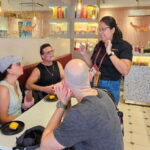
The reviews around this tour are heavy on one theme: the guide makes the experience. That tracks with the tour style—because you’re not just eating; you’re learning how the food connects to places.
Different guides highlight different flavors of storytelling. For example:
- Ron is mentioned as sharing history of the country in addition to current context, with lots of room for questions about economy and government.
- Silvia is described as friendly and well-informed about Chinatown, shaping the food choices into a memorable cultural walk.
- Kelvyn and Liang are praised for keeping the pace right while still adding cultural context and thoughtful care during the route.
- Ronnie is singled out for being entertaining and informative, and also for helping a disabled friend through the day.
- Jeanette is praised especially for helping solo travelers try foods they might skip on their own, while also sharing strong Chinatown context.
- Edwin is noted for pacing and helping people see many interesting sights without running on fumes.
- Pauline is mentioned as attentive, with the tour ending at tasty sweetness.
Those names matter because they signal how the tour works in real life. You’ll likely ask questions in the moment, and the guide is set up to answer them without making you feel like you’re slowing the group down.
Price and Value: Why $88.81 Often Feels Fair Here
At $88.81 per person, this tour isn’t the cheapest way to eat in Singapore. But you’re paying for several things at once.
First, you’re getting a licensed local guide for about three hours. That’s not just “someone who walks with you.” The guide’s job is to pick stalls, manage timing, and turn navigation into something you don’t have to stress over.
Second, you’re getting 9–10 handpicked food/drink tastings plus a bottle of mineral water. If you tried to recreate this on your own, you’d spend more time traveling between hawker centers, then gamble on what to order at each one. You’d also end up with either too much food or not enough variety, depending on how confident you are.
Third, the itinerary includes major stops beyond food—like Sri Mariamman Temple and Buddha Tooth Relic Temple and Museum—where free admission is noted in the schedule. Even if you plan to see these attractions anyway, the guide bundles the cultural pacing with the food.
The tour also notes group discounts, and it offers an upgrade to a more personal private tour with flexible timings. If you value flexibility and want a smaller, more custom feel, the private upgrade is a sensible path.
Timing, Shoes, and How to Fit It Into Your Day
The tour runs about 3 hours. The itinerary adds up quickly: Sri Mariamman Temple (10 minutes), Ann Siang Hill Park (15), Maxwell Food Centre (35), Buddha Tooth Relic Temple and Museum (10), Chinatown Complex (20), and Smith Street (30). That’s a lot of movement for a short timeframe.
So do two simple things:
- Wear comfortable walking shoes.
- Plan a lighter meal later that day, not an early, heavy dinner right after.
You’ll be on your feet for meaningful stretches, and hawker centers can be tight. This is why small group size and a guided plan matter—your guide helps keep the route smooth and the tastings aligned with the schedule.
Should You Book This UNESCO Hawker Culture Tour?
Book it if you want a smart first taste of Singapore that mixes hawker food and Chinatown context. It’s great for first-timers, food lovers who don’t want to overthink ordering, and travelers who like history but also want the best part—eating.
Skip it (or consider a private version) if you:
- Dislike walking for extended periods in a compact area.
- Want only one specific cuisine instead of the Malay/Indian/Chinese mix the tour is built around.
- Have complicated allergies or strict dietary requirements and need heavy customization.
If you’re on the fence, I’d treat this as a high-efficiency way to experience Singapore’s hawker culture in one afternoon—while still getting temples, murals, and shophouse street detail along the route.
FAQ
How long is the UNESCO Hawker Culture: Chinatown Food Tasting Tour?
It lasts about 3 hours.
How much does the tour cost?
It costs $88.81 per person.
What’s included in the tour price?
You get a licensed local guide for about 3 hours, 9–10 handpicked food and drinks at hawker centres, and 1 bottle of mineral water.
How many people are in a group?
The tour has a maximum of 10 travelers.
Where does the tour start?
It starts at Bee Cheng Hiang 美珍香, 69 Pagoda St, Singapore 059228.
Where does the tour end?
It ends at Chinatown Complex, 335 Smith St, Singapore 050335. The nearest MRT station to the end point is Maxwell Station.
What kinds of food do you taste?
You taste Singapore hawker classics, including signature chicken rice, plus other hand-picked dishes and drinks at the hawker centres on the route.
Is there an upgrade option?
Yes, you can upgrade for a more personal private tour with flexible timings.
Do you have to pay for tips?
Tips and gratuities are appreciated but not required.
What is the cancellation policy?
You can cancel up to 24 hours in advance for a full refund.