REVIEW · TOKYO
Shinjuku Golden Gai Food Tour
Book on Viator →Operated by Arigato Japan KK · Bookable on Viator
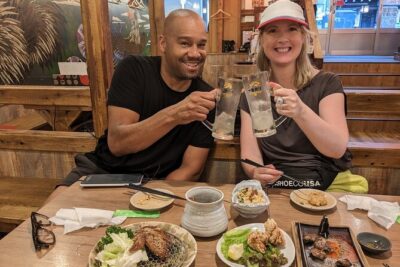
Shinjuku’s small alleys hit different at night. This tour strings together Kabukicho, Omoide Yokocho, and the legendary Golden Gai so you’re not guessing where to eat, order, or stand. I like that you get real food variety (ramen, yakitori, and more) plus a guide who helps you read what you’re seeing. I also like the social payoff: you end the night in a bar area built for wandering, conversation, and even karaoke. One thing to consider: it’s a walking food tour in noisy nightlife streets, and the last stop can involve tight spaces and standing.
For around 3 hours starting at 5:00 pm, you’ll move at an easy-to-moderate pace with a max group size of 10, which matters here. The route is timed for dinner, not for museums, so plan your hunger accordingly—and bring comfy shoes.
At $217 per person, the value isn’t just the sightseeing. You’re paying for a local guide, 4 food stops, and two drinks included, plus the convenience of hitting classic spots like Tajimaya Coffee, Omoide Yokocho, and Golden Gai without doing the research yourself. If you’re picky about food, the good news is that the tour is flexible for pescetarian and vegetarian diets, but you should still expect small tastings rather than full restaurant meals.
In This Review
- Four-Stop Night Eating in Shinjuku (Not a Random Bar Crawl)
- Price and Logistics: What You’re Really Paying For
- Tajimaya Coffee: The Calm Start Before the Alley Chaos
- Omoide Yokocho (Memory Lane): Old-School Atmosphere and Real Dining
- Kabukicho: Red-Light District Context with Food as the Anchor
- Hanazono Shrine: A Short Pause That Makes the Night Feel Human
- Golden Gai: Tiny Bars, Two Drinks, and the Most Fun Kind of Awkward
- The Food Stops: Four Tastings That Add Up
- Drinks Included: Why It’s Not Just a Perk
- How Hard Is the Walking, Really?
- Karaoke After Party: Optional Fun at the End
- Who This Tour Fits Best
- Should You Book the Shinjuku Golden Gai Food Tour?
- FAQ
- What time does the Shinjuku Golden Gai Food Tour start?
- How long is the tour?
- How many tastings and drinks are included?
- Where do you meet for the tour?
- Where does the tour end?
- Is the ticket delivered digitally?
- What dietary options are supported?
- What is the maximum group size?
- Is karaoke included?
- Can I get a refund if I cancel?
Four-Stop Night Eating in Shinjuku (Not a Random Bar Crawl)
This is the kind of tour that helps you “get it” fast. Shinjuku at night is loud, fast, and visually confusing, especially if you’ve only seen it from transit stations. By walking with someone who knows how the area works, you spend less time trying to interpret menus and more time eating and learning what each spot is about.
The itinerary is built around contrast. You start in Kabukicho’s orbit, hit Memory Lane style alley dining, cross toward Golden Gai’s maze of tiny bars, and finish where the nightlife is famous for a reason: there are hundreds of small venues packed into a small area.
Price and Logistics: What You’re Really Paying For
Let’s talk money like adults. $217 for a ~3-hour walking tour is not cheap. But in Tokyo nightlife, two things cost real time: getting into good places and figuring out how to order without messing up etiquette.
Here’s what your price includes:
- A local guide
- Four food stops
- Two drinks included
- A mobile ticket
It also helps that the tour is set up for a small group (up to 10) and starts at 5:00 pm, when hunger usually has the upper hand.
Not included is also important. You won’t get hotel pickup or drop-off, and transportation costs aren’t covered. So budget your own ride to the meeting point in Nishishinjuku, then plan to wrap up on foot around Golden Gai.
You can also read our reviews of more food & drink experiences in Tokyo
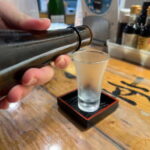

Tajimaya Coffee: The Calm Start Before the Alley Chaos
Your evening begins at Tajimaya Coffee in Nishishinjuku (Shinjuku City, Nishishinjuku, 1-chōme 26, Shinjuku Suisans Building). Expect a quick start—think orientation, warm-up conversation, and a smooth handoff into the eating route.
This stop is short on paper, but it’s a smart move in practice. Kabukicho can feel overwhelming the first time you walk in. Starting with coffee means you’re settled, your guide can set expectations, and you can get your bearings fast before you step into the tighter alley networks.
If you’re coming from another part of Tokyo, I’d treat this as your “arrival reset.” You’ll be eating later, so keep this as a light primer, not a full meal replacement.
Omoide Yokocho (Memory Lane): Old-School Atmosphere and Real Dining
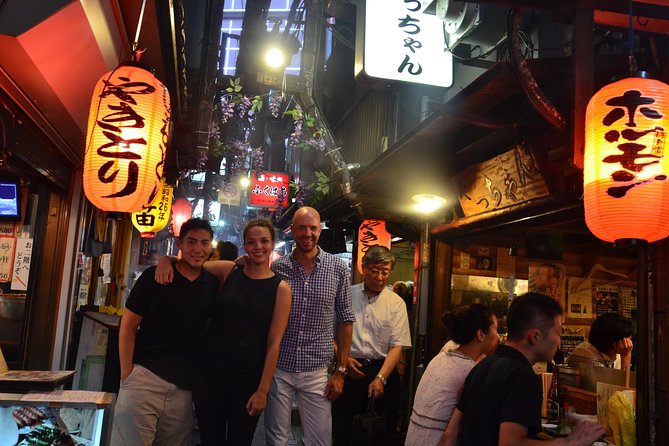
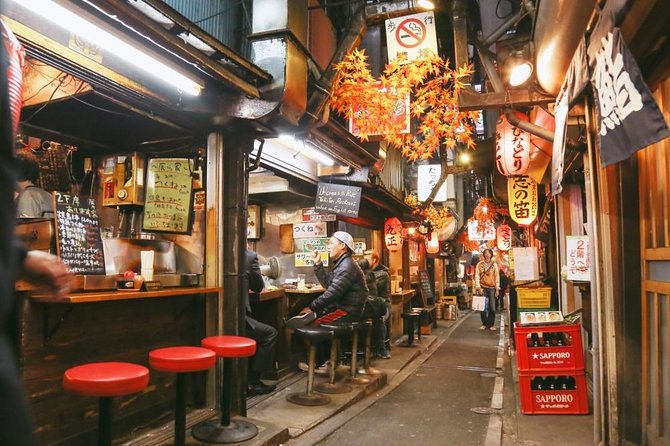
Next comes Omoide Yokocho, literally Memory Lane. This is where Shinjuku’s nightlife stops feeling like generic neon and starts feeling like a specific place with a long memory.
The tour description points out that you’ll pass bars that have remained unchanged since 1950. That detail matters because it frames what you’re seeing: this isn’t themed. It’s an area that has kept its identity while the city around it kept changing.
You’ll also dine in a way that’s more “local alley night” than “tourist restaurant.” The experience is set up around tasting—your guide helps you navigate what to eat and how to enjoy it in a crowded, small-space setting.
Practical note: expect the alley vibe to be loud and close. If you want quiet conversation, save it for Golden Gai’s side pockets or plan for shorter chats during ordering.
Kabukicho: Red-Light District Context with Food as the Anchor
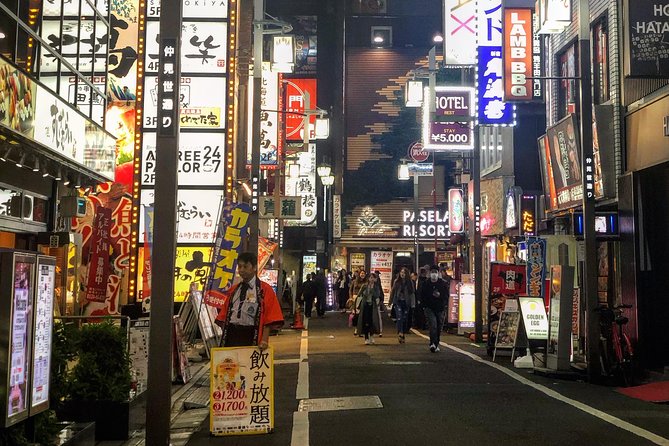
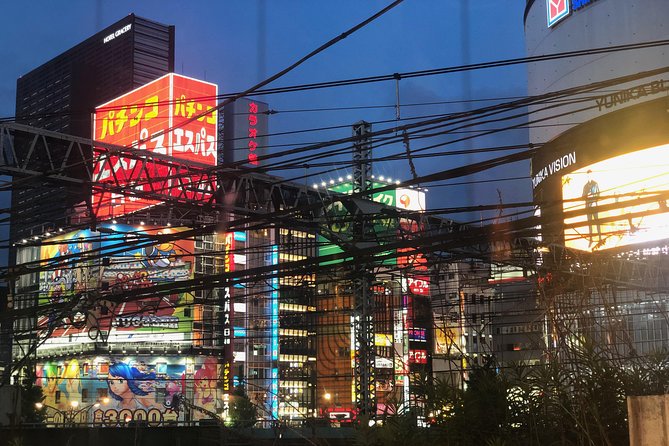
Now you step into Kabukicho, described as one of Asia’s largest and safest red-light districts. Love it or hate it, Kabukicho is a defining part of Shinjuku’s nighttime identity. This tour doesn’t try to sanitize it or romanticize it—it uses food and history context to help you understand why people come here and how the neighborhood functions.
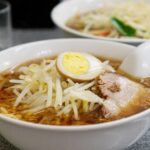
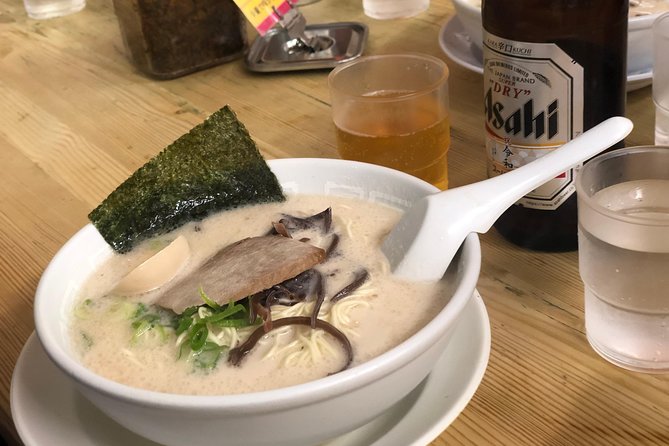
What’s smart is that the food is the anchor. You’re stopping for samples (the tour mentions a ramen stop at this stage), so the walking has a purpose: keep moving, keep tasting, and keep learning.
The “why this works” part for me: it reduces decision fatigue. Without a guide, many visitors wander through Kabukicho and end up with the nearest menu that looks English-friendly. With a guided route, you still get the chaos, but you’re eating thoughtfully instead of randomly.
Hanazono Shrine: A Short Pause That Makes the Night Feel Human
Between the food-and-alley segments, you’ll also visit Hanazono Shrine. This is a useful reset point.
Why it matters: nightlife areas can make everything feel like one continuous rush. A shrine stop breaks that rhythm. Even if you only spend a short time there, it gives the evening shape, like a breath between chapters.
It also adds a contrast that Tokyo does well. You get the modern party energy in Kabukicho and Golden Gai, then you shift into a quieter layer of city culture before you head into the most compact nightlife zone in the route.
A few more Tokyo tours and experiences worth a look




Golden Gai: Tiny Bars, Two Drinks, and the Most Fun Kind of Awkward
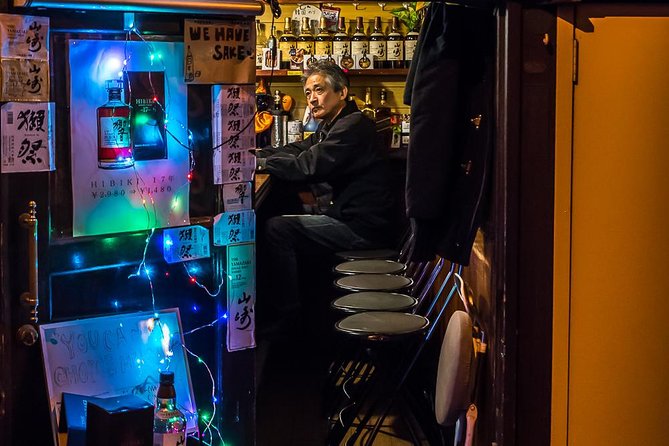
Golden Gai is the finish line for a reason. You’re walking into an area famous for its effervescent nightlife and its dense cluster of small pubs, stalls, and karaoke spots—more than 200 venues in a compact grid.
The tour ends at Araku Bar in Golden Gai. You’ll sip an included cool drink there. This last leg is about payoff: you’ve eaten your way across Shinjuku’s night texture, and now you get to sit in the kind of space that feels built for short conversations and repeat ordering.
Here’s the main consideration. Golden Gai venues are tiny by design. Even with a small group, you may encounter tight standing room or limited seating. The tour is set up to keep you moving, but don’t expect a comfortable, Western-style dining flow at the end.
If you’re the type who needs space to relax, bring that expectation into the planning. If you’re excited by the idea of squeezing into a bar atmosphere and treating it like an experience rather than a restaurant meal, you’ll probably love this part.
The Food Stops: Four Tastings That Add Up
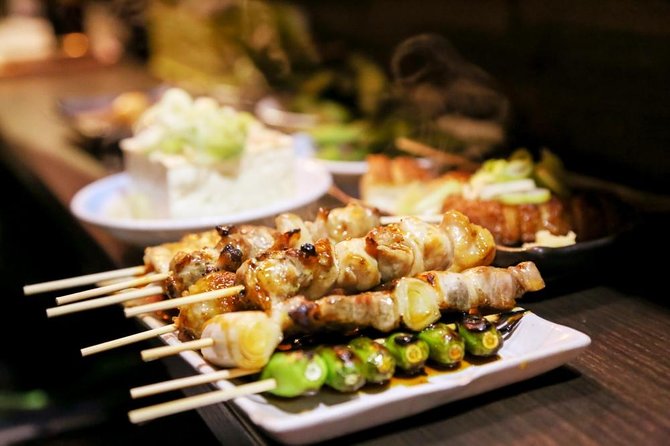
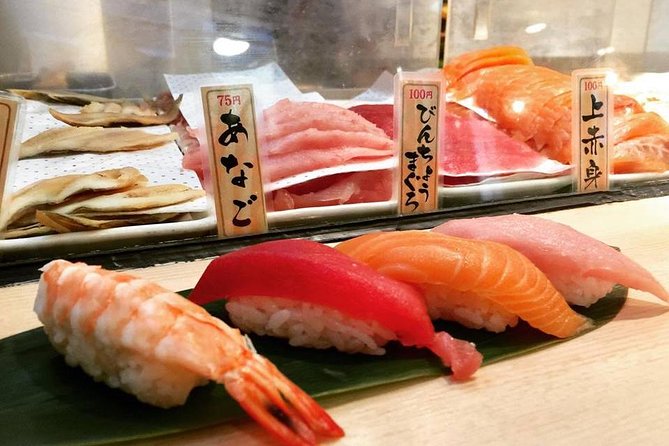
The tour highlights say you’ll try a diverse selection of Japanese dishes such as ramen and yakitori, and the itinerary description also mentions sushi. The exact mix can vary due to restaurant schedules and other factors, but the structure is consistent: 4 food stops, with tastings that are meant to be sampled, not stuffed.
So what should you expect in practice?
- Ramen as one anchor flavor (comfort food, and easy to compare across styles)
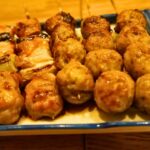
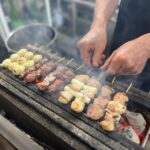
- Yakitori as a classic grilled-meat experience (simple, salty, satisfying)
- Another Japanese dish stop that could include seafood such as sushi, depending on the night’s plan
- Plus the shrine/alley segments likely act as timing beats, not just photo ops
The best way to enjoy tastings is to go in hungry but not reckless. This is exactly the kind of tour where eating a big snack beforehand can blunt the fun. I recommend keeping your pre-dinner light and saving your appetite for the planned stops.
Good dietary flexibility is clearly stated for pescetarian and vegetarian options. Still, Tokyo nightlife food can be soy-and-dashi heavy, so if you’re strict, tell your guide what you need early. The tour is flexible, but details matter.
Drinks Included: Why It’s Not Just a Perk
You get two drinks included. In a nightlife district, that’s more than a bonus—it’s part of how you’ll actually experience the venues.
Drinks help you:
- settle into the bar atmosphere faster
- stay comfortable while you’re standing and walking between stops
- make conversation easier at the end, when Golden Gai is at full volume
If you don’t drink alcohol, you still need to confirm how the two included drinks are handled with your preferences, since the tour data only says two drinks included, not drink types. When in doubt, ask during booking or right at the start.
How Hard Is the Walking, Really?
This tour calls for moderate physical fitness. Translation: you’re walking through busy streets and compact alleyways, likely with some stairs or tight turns near bars.
At the same time, the group size is small and the duration is reasonable (~3 hours). The tour isn’t an all-night marathon, and it’s scheduled to keep you at food rhythm rather than sightseeing crawl.
My practical advice:
- Wear shoes you can stand in, not just shoes that look good.
- Bring a light layer. Tokyo evenings can shift.
- If you get overstimulated by noise, plan to take in quick moments rather than trying to process everything at once.
Karaoke After Party: Optional Fun at the End
The tour notes that a karaoke after party is available. The default experience ends in Golden Gai with a drink, and karaoke is an add-on you can choose if the group energy is right.
Even if you don’t sing, karaoke can be a fun way to feel the social vibe of Golden Gai. The trick is to pace yourself. You’ve already had tastings and two included drinks, so decide early whether you want to keep it playful or stay low-key.
Who This Tour Fits Best
This is a great match if:
- you want a guided route through places that are hard to navigate on your own
- you like nightlife history, not just nightlife photos
- you’d rather follow a plan than gamble on where to eat
- you want a small-group experience that can still feel spontaneous
It might be less ideal if:
- you hate standing in compact venues
- you expect a guaranteed “sit-down” meal experience at every stop
- you’re a hardcore foodie chasing one specific category of restaurant (this is built around variety tastings, not a single high-end dinner)
Should You Book the Shinjuku Golden Gai Food Tour?
If you’re doing Shinjuku at night and you don’t want to waste your first hours guessing, I think this tour is a strong buy. The mix of Kabukicho context, Omoide Yokocho atmosphere, and Golden Gai’s tiny-bar finale gives you a full Shinjuku night story in about three hours.
I’d book it if you want:
- 4 tasting stops plus two included drinks
- a small group guided walk
- a plan that saves you time and gets you into the right parts of Shinjuku
I’d hesitate if you’re very price-sensitive or if you’re the kind of person who needs lots of seating and quiet during meals. Golden Gai is not built for that.
FAQ
What time does the Shinjuku Golden Gai Food Tour start?
It starts at 5:00 pm.
How long is the tour?
The duration is about 3 hours.
How many tastings and drinks are included?
The tour includes 4 food stops and two drinks included.
Where do you meet for the tour?
The meeting point is Shinjuku City, Nishishinjuku, 1-chōme 26, at the Shinjuku Suisans Building (address shown in the tour info).
Where does the tour end?
The tour ends in the Golden Gai area at Araku Bar.
Is the ticket delivered digitally?
Yes, the tour uses a mobile ticket.
What dietary options are supported?
The tour notes flexibility for pescetarian and vegetarian guests.
What is the maximum group size?
The tour has a maximum of 10 travelers.
Is karaoke included?
Karaoke after party is available, but it is not described as automatically included in the base tour.
Can I get a refund if I cancel?
Yes. There is free cancellation up to 24 hours before the experience’s start time for a full refund.