REVIEW · TOKYO
Tokyo: Ramen Tasting Tour with 6 Mini Bowls of Ramen
Book on GetYourGuide →Operated by Tokyo Ramen Tours · Bookable on GetYourGuide
Six ramen bowls. One smart tour. This is one of the fastest ways to get your bearings in Tokyo’s ramen world: three award-winning shops, six tour-only mini bowls, and a guide who explains what you’re actually tasting while you walk neighborhood-to-neighborhood.
What I like most is the setup. You’ll pick your 6 mini bowls from a menu of 11–12 ramen choices, so you’re not stuck with whatever the tour decides for you. I also really enjoy the teaching style: guides such as Sahori, Makayla, Daisy, Michaela, and Bunga use slides/handouts and answer questions so the history and techniques make sense while you’re eating.
One catch to consider: the route has about 3 kilometers (1.86 miles) of walking, and the broth in this tour contains chicken, pork, and fish—so it’s not a match for vegans or vegetarians (there’s a separate vegan/vegetarian ramen tour).
In This Review
- Key highlights to know before you go
- Why this ramen tour feels like a real ramen lesson
- The 6 mini bowls: enough variety to learn, small enough to finish
- How to choose your 6 wisely
- Route and pacing: walking about 3 km in 3 hours
- The Shibuya route: Hokkaido classic, tonkotsu fusion, and curry ramen
- Stop 1: Classic Hokkaido ramen
- Stop 2: Fusion tonkotsu (pork bone) ramen
- Stop 3: Savory curry ramen
- Possible drawback on this route
- The Shinjuku route: classic Tokyo ramen, rich tori paitan, and a luxe finale
- Stop 1: Classic Tokyo ramen
- Stop 2: Modern tori paitan (rich chicken ramen)
- Stop 3: Luxurious chicken or fish ramen
- Possible drawback on this route
- The Ueno route: Kyushu classic, tsukemen dipping, and modern Tokyo
- Stop 1: Classic Kyushu ramen
- Stop 2: Contemporary tsukemen (dipping)
- Stop 3: Modern Tokyo ramen
- Possible drawback on this route
- What you’ll actually learn at each stop (and how to remember it)
- Ordering and eating tips that make the tour smoother
- Food note you must know
- Price and value: why $122 can still make sense
- Who this tour fits best (and who should skip)
- Should you book this ramen tasting tour?
- FAQ
- How long is the Tokyo ramen tasting tour?
- How many ramen bowls will I eat?
- Can I choose which ramen I get?
- Where does the tour start and end?
- Does the tour include drinks?
- Is this tour vegetarian or vegan friendly?
- How much walking is involved?
Key highlights to know before you go
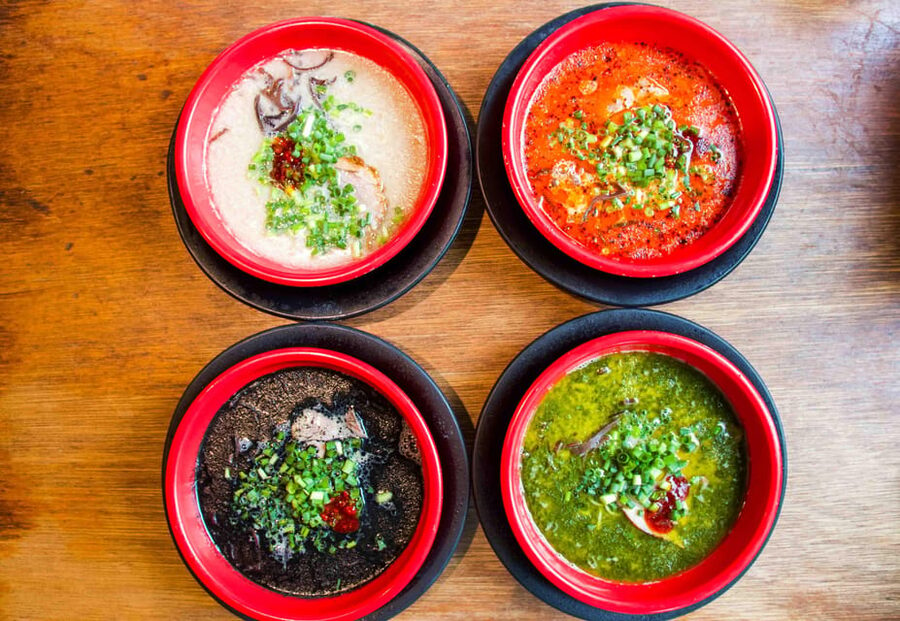
- Pick 6 from 11–12 options so you can mix styles instead of repeating flavors
- Six mini bowls across 3 shops lets you compare regional broth types without overload
- You’ll cover 10+ ramen styles in practice (with origins, types, and prep explained)
- Route options include Shibuya, Shinjuku, or Ueno depending on the day
- Small group size (up to 8) means more time for questions and food talk
- English live guide keeps the ramen nerd stuff clear and useful
Why this ramen tour feels like a real ramen lesson
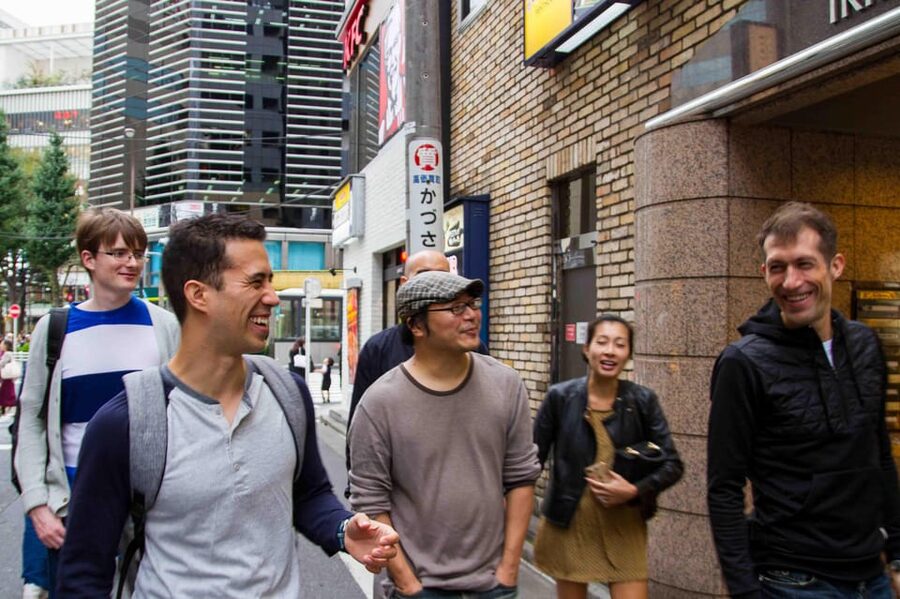
Tokyo ramen can look like one dish from far away. Up close, it’s a whole set of choices: broth base, seasoning style, noodle type, and how the toppings are built. This tour teaches those differences in a way you can taste immediately.
The guide’s job isn’t just to point at a menu. You’ll learn ramen origins, the big categories (like tonkotsu and tsukemen), and how preparation changes the final bowl. From what I’ve seen guides do—using visual slides and simple handouts—you should leave with a mental framework, not just “that was good.”
I especially like how the tour builds from basic to specific. You start noticing patterns (broth character and noodle texture), then you connect those patterns to where the style comes from. When guides like Sahori, Makayla, or Bunga explain the why behind a broth, it helps you order with confidence later—whether you’re pointing at a menu or trying a style you’ve never seen.
You can also read our reviews of more food & drink experiences in Tokyo

The 6 mini bowls: enough variety to learn, small enough to finish
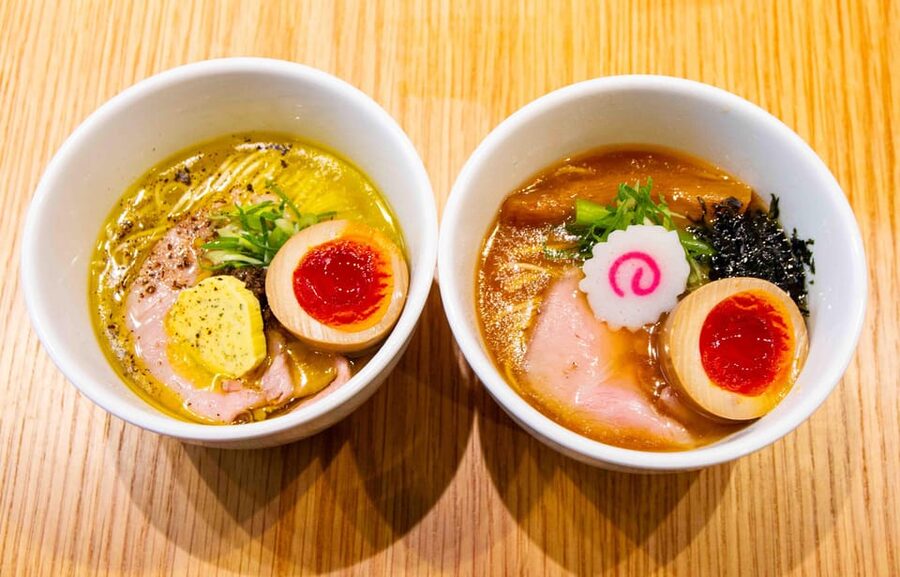
The “mini bowl” format is the smart part of this experience. Each serving is about one-quarter the size of a full ramen bowl, and that matters because the tour is built around comparison.
You’ll eat six completely different bowls from three ramen shops—so you’re tasting multiple broth styles in one afternoon. And because you choose your six ramen from a selection of 11–12 choices, you can steer the experience toward what you actually want to learn.
This is also why the timing works. Three hours sounds tight, but mini bowls keep you from hitting that full-food wall before stop three. Even so, plan your day like a ramen person. I’d skip a heavy lunch before you start—many people mention the total amount adds up fast.
How to choose your 6 wisely
You’ll be making choices while you’re already hungry, so having a quick strategy helps:
- Mix broth styles instead of picking six variations of the same thing
- Prioritize something you’ve never tried (curry, tsukemen, tori paitan, fusion styles)
- Pay attention to noodle feel. Same soup idea, different noodle shape and chew can change the whole bowl
- Save one “comfort classic” for a familiar baseline, then use the rest for curiosity
If you’re a first-timer, this format is ideal. If you’re a ramen regular, it’s still useful because it forces you to taste across categories, not just your usual favorite.
Route and pacing: walking about 3 km in 3 hours
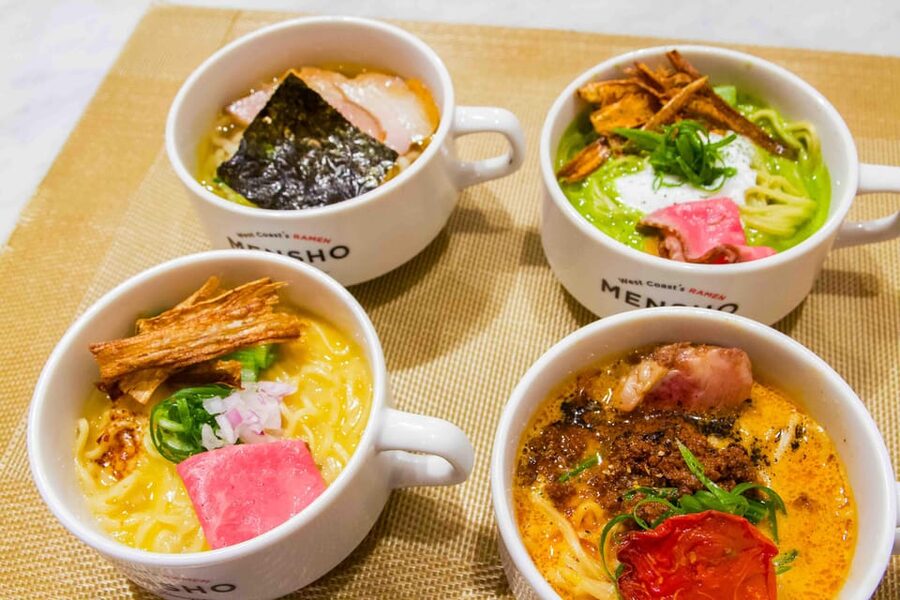
You should expect a good amount of movement. The tour involves roughly 3 kilometers (1.86 miles) of walking, plus getting from one ramen stop to the next within the neighborhoods. It’s not a sit-down food crawl.
That affects who should book:
- If you can handle a steady walking pace for a few hours, you’ll be fine.
- If you struggle with longer walking days, this might feel like a lot.
Timing-wise, you’ll be at three ramen shops during the 3-hour window. The tour also starts in Shibuya and ends in Ebisu (or Shinjuku, depending on the day). So even when the ramen is the star, you’re also seeing how Tokyo moves from one neighborhood flavor to another.
Small group size (limited to 8 participants) is a real advantage here. With fewer people, you get smoother table flow, faster answers to questions, and less chaos when the group is deciding what to order.
The Shibuya route: Hokkaido classic, tonkotsu fusion, and curry ramen
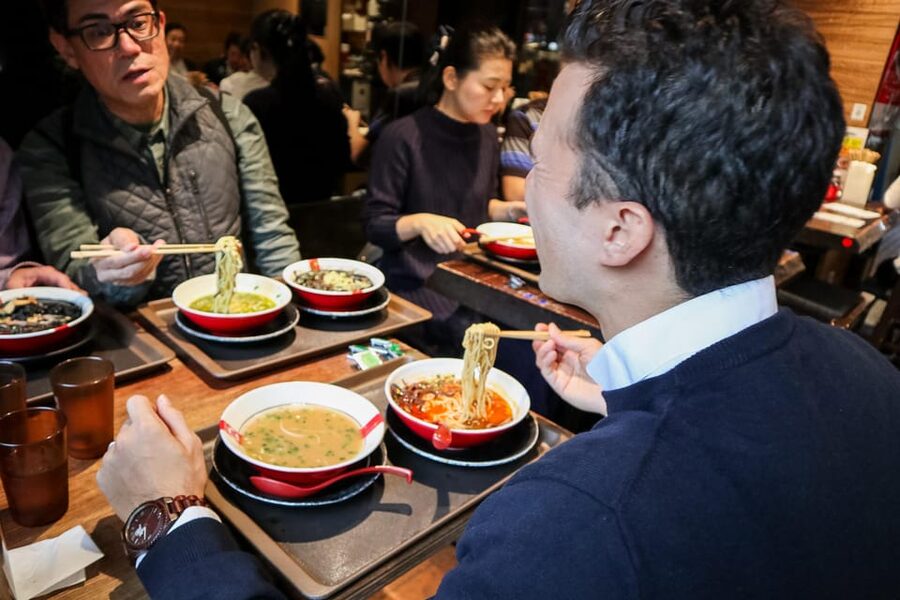
Some days run a Shibuya lineup. If your tour is on this route, your three shops aim to give you a strong regional spread.




Stop 1: Classic Hokkaido ramen
Hokkaido ramen often signals a different approach to broth and toppings than you might expect from Tokyo-only eating. This first bowl is a great way to “reset” your ramen assumptions and get your palate ready for what’s next.
What to watch for: how the flavor builds and how the toppings and seasonings balance the soup. This is your baseline bowl of the day—don’t rush it.
Stop 2: Fusion tonkotsu (pork bone) ramen
Tonkotsu is the word people know, but the “fusion” angle is where you can learn. You’re not just tasting a pork-bone bowl; you’re tasting someone’s interpretation of it.
Key learning moment: tonkotsu depends on time and technique, and fusion changes the final flavor profile. Pay attention to how the broth feels in your mouth—creamy, salty, or sharpened by added elements.
Stop 3: Savory curry ramen
Curry ramen is one of those styles that sounds odd until you taste it. The richness of curry pairs with ramen noodles in a way that feels comforting but still ramen-shaped.
Practical tip: curry can coat your tongue, so try to notice the difference between curry seasonings and broth seasoning. This stop usually gives people a new favorite category—especially if you like warm, spiced comfort foods.
Possible drawback on this route
This lineup can be heavy. Tonkotsu plus curry adds up fast, even with mini bowls. You’ll want to choose one “lighter” option if the selection allows it, and pace yourself between stops.
The Shinjuku route: classic Tokyo ramen, rich tori paitan, and a luxe finale
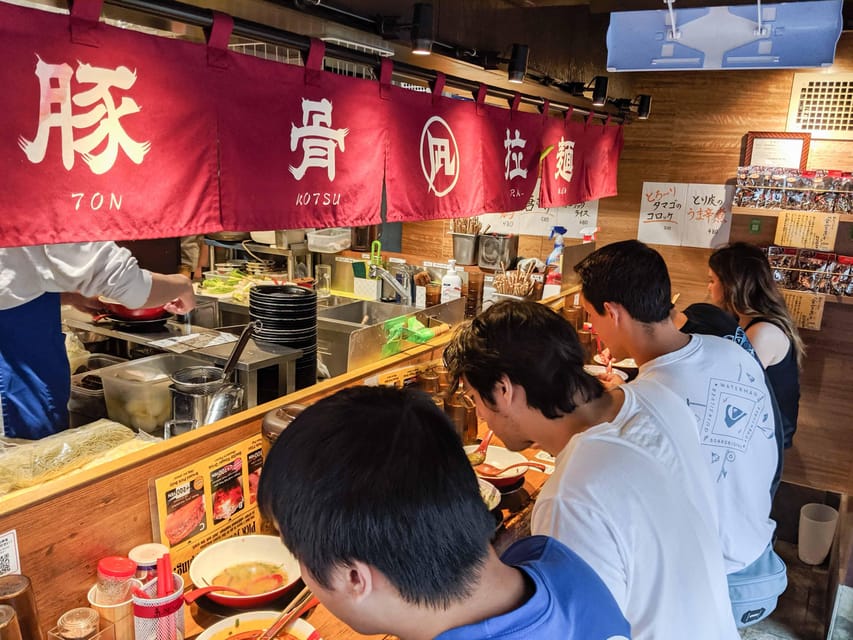
Other days switch to a Shinjuku lineup, which leans into Tokyo classics and chicken-forward styles.
Stop 1: Classic Tokyo ramen
This is the “get oriented” stop. It helps you understand the Tokyo baseline: what a classic Tokyo bowl tastes like and how seasoning style differs from regional soup approaches.
If you’ve only eaten ramen outside Japan, this stop often makes the biggest impression because the flavor structure is simpler and more direct.
Stop 2: Modern tori paitan (rich chicken ramen)
Tori paitan is chicken done in a richer, smoother direction. Instead of chasing pork-bone depth, you’re tasting chicken technique at a higher concentration level.
What to learn: chicken ramen can still be complex. Focus on mouthfeel and how the broth sits with the noodles. It’s a great counterpoint to tonkotsu for anyone who thinks pork is the only “serious” ramen.
Stop 3: Luxurious chicken or fish ramen
This last stop gives you a more refined finish. You may see chicken or fish here depending on the shop’s offering that day, but either way, the goal is a clean, polished bowl to cap the tour.
This is a good moment to compare how toppings and broth style change the overall effect. If you’re into seafood flavors, this is often the stop that makes people realize Tokyo ramen has more range than they expected.
Possible drawback on this route
If you’re craving pork-bone creaminess, this lineup may feel more subtle than you wanted—tori paitan and finishing bowls lean different than tonkotsu.
The Ueno route: Kyushu classic, tsukemen dipping, and modern Tokyo
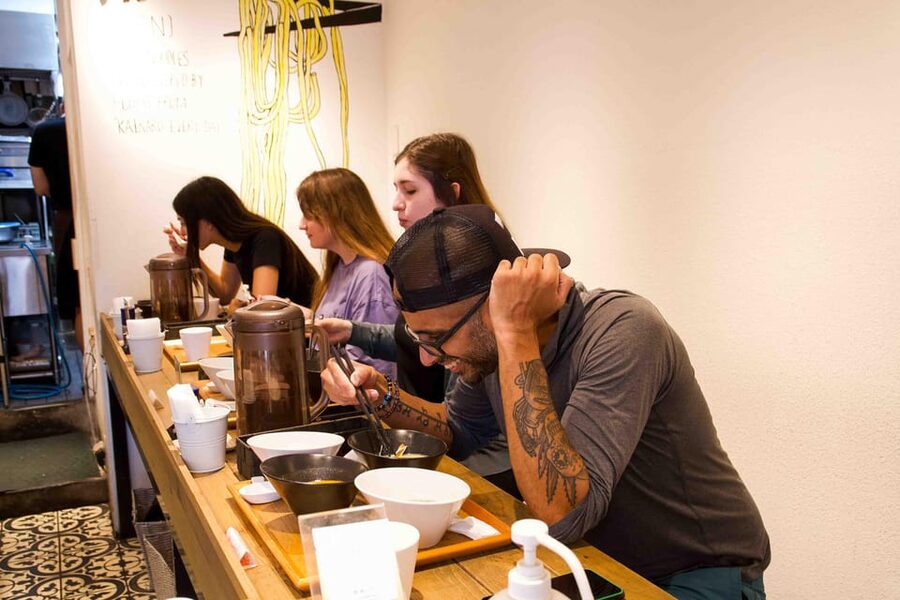
On some days, the route centers on Ueno. This version is especially good for people who want to learn a “process” ramen style, not just a flavor.
Stop 1: Classic Kyushu ramen
Kyushu ramen often signals bolder, more regional flavor thinking. This first stop helps you understand how far ramen can shift just by region.
Stop 2: Contemporary tsukemen (dipping)
Tsukemen is the format change. Instead of drinking soup straight from the bowl, you dip noodles into a separate broth. That changes everything: how noodles hold their texture, how flavors hit in layers, and how you manage the eating rhythm.
This stop is also a sneaky education tool. When you taste tsukemen after a standard ramen bowl, you learn to separate noodle character from soup character.
Stop 3: Modern Tokyo ramen
You end with a modern Tokyo style. It’s a nice reset: you compare regional influences back to Tokyo’s current preferences and technique style.
If you’re the kind of eater who loves seeing how styles evolve, this stop often lands well because you’re finishing with “what’s happening now.”
Possible drawback on this route
Tsukemen requires a slightly different eating pace. If you’re in a hurry or trying to eat fast, the dip-and-dramatic-noodle texture might feel less fun. Slow down and treat it like a two-part bowl.
What you’ll actually learn at each stop (and how to remember it)
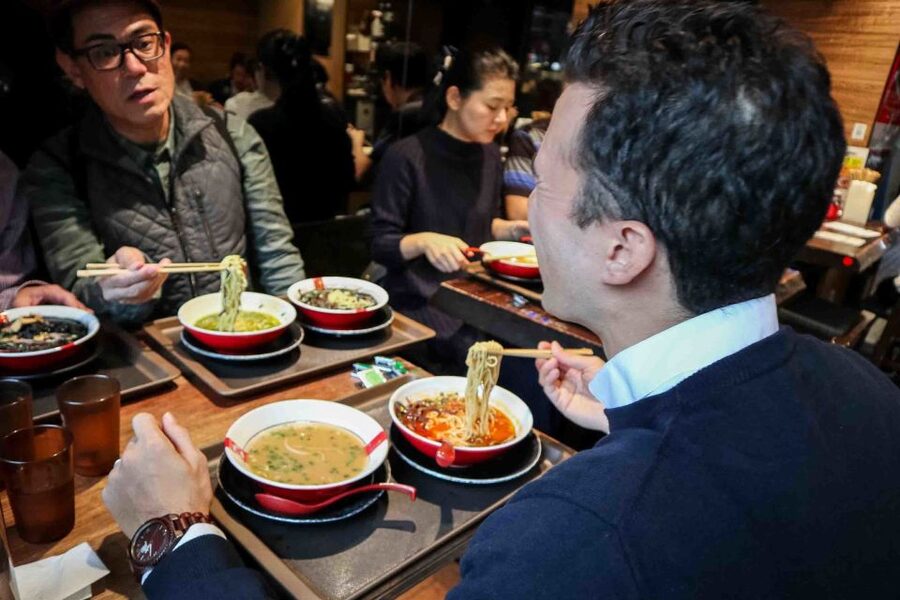
The tour isn’t just six bowls and a walk. You get explanations throughout, using slides and handouts. The best part is that the teaching is tied to what’s in front of you.
Here are the learning themes you should expect to pick up while eating:
- Ramen origins: how the dish developed and traveled into regional styles
- Major ramen types: like tonkotsu versus tori paitan and tsukemen format
- Broth logic: how preparation affects mouthfeel and flavor structure
- Technique details: why noodles and toppings change the way soup tastes
One review-style detail I’d treat as a real tip: some guides use visual tablets/presentations, which makes the differences easier to remember later when you’re ordering on your own. That’s huge. If you know what you’re looking for, ramen hunting becomes fun instead of guesswork.
Ordering and eating tips that make the tour smoother
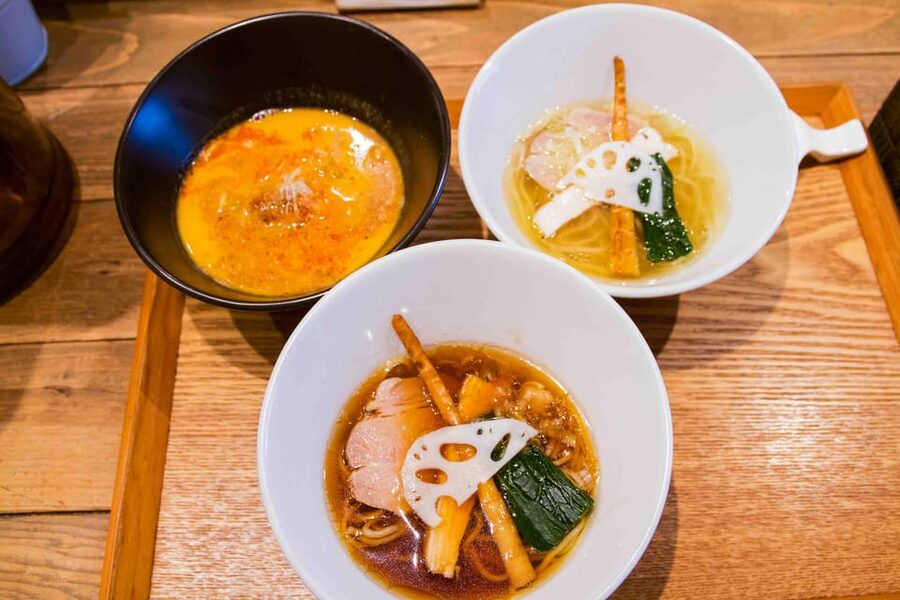
A tour like this has one rule: don’t sabotage yourself with a bad plan.
- Come hungry, but don’t overdo it. If your stomach is already full, six mini bowls can feel like a lot fast.
- Ask questions while you’re at the shop. This is when the guide can point out what makes each bowl special.
- Taste methodically. Take a few bites to evaluate broth first, then noodles and toppings.
- Use the mini format to compare instead of rushing for the finish.
You also get a beverage included. It’s there to keep you comfortable between shops, especially when you’re walking and eating back-to-back.
Food note you must know
All of the ramen broths in this tour contain chicken, pork, and fish. If you’re vegan or vegetarian, you should book the separate vegan/vegetarian ramen tasting tour instead.
Price and value: why $122 can still make sense
At $122 per person for about 3 hours, this isn’t the cheapest meal idea in Tokyo. So the question is: what are you buying besides ramen?
Here’s what you’re really paying for:
- Six tour-only mini bowls (about 1/4 size each) from three award-winning shops
- Your choice of 6 bowls from 11–12 options, not just one fixed set
- A live English guide who teaches origins and preparation while you taste
- Neighborhood coverage: you see multiple Tokyo areas (including Shibuya or Shinjuku depending on the day) rather than only one street
I think this is best value for people who want more than one bowl. If you’re the type who always orders the same thing, you’ll get less value. If you want variety and you like learning what you’re eating, the price starts to feel more reasonable quickly.
Yes, it’s a splurge. But you’re paying for a structured ramen education session with real restaurant access, not just a random food crawl.
Who this tour fits best (and who should skip)
This experience is a strong match for:
- Ramen fans who want to understand the differences between styles, not just taste them
- First-time visitors who want a safe, guided way to eat across multiple neighborhoods
- Food travelers who like short lessons while they eat (the slides/handouts make a difference)
It’s not a great match for:
- Anyone with low fitness, since there’s about 3 km of walking
- Vegans or vegetarians, because the broths contain chicken, pork, and fish
Also, if you’re traveling with kids, this can work if they handle walking and actually enjoy ramen. The format is portion-controlled, so it’s easier than full bowls.
Should you book this ramen tasting tour?
I’d book it if you fall into one of these buckets: you love ramen and want variety, you’re curious about how ramen styles differ, or you want a guided path through Tokyo’s ramen scene instead of guessing where to go.
I’d think twice if you’re sensitive to walking days or if your food restrictions don’t fit the chicken/pork/fish broth reality. And if your main goal is a single bowl of your favorite style, you might be happier grabbing ramen on your own.
If you decide to go, I’d aim to book it earlier in your Tokyo trip. Knowing what you like after this can help you order better later, instead of playing ramen roulette.
FAQ
How long is the Tokyo ramen tasting tour?
The tour lasts about 3 hours.
How many ramen bowls will I eat?
You’ll have 6 mini bowls of ramen.
Can I choose which ramen I get?
Yes. You choose 6 ramen from a selection of 11–12 options.
Where does the tour start and end?
It starts in Shibuya and ends in Ebisu (or Shinjuku, depending on the day).
Does the tour include drinks?
Yes. One beverage is included.
Is this tour vegetarian or vegan friendly?
No. All ramen broths on this tour contain chicken, pork, and fish. If you’re vegan or vegetarian, you’ll want the separate vegan/vegetarian ramen tasting tour.
How much walking is involved?
Expect about 3 kilometers (1.86 miles) of walking.